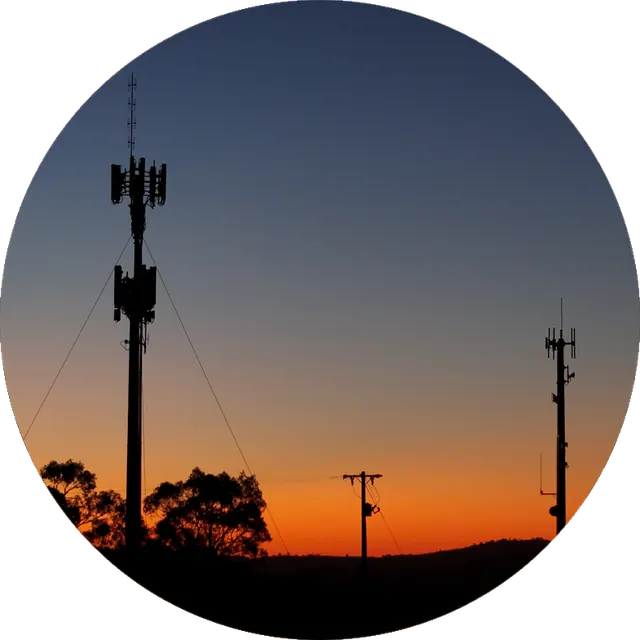
Telecommunications · Ireland

Network uptime starts with the sleep of the people behind it.

Network operations centres run 24/7 shifts and field crews work call-outs and storm restoration, driving long distances. Fatigue slows fault response and adds driving and height risk.

Telecommunications workforce

Who this page covers

  • Broadcasting - 24/7 master control
  • Data centres
  • Field network technicians and contractors
  • Telecommunications network operators

Regulation

Who regulates it, and what they expect

ComReg regulates networks, spectrum, post and the emergency call service; it sets nothing about your people's hours. The Organisation of Working Time Act 1997 governs your field engineers, network operations shifts and storm callouts. But the Organisation of Working Time (General Exemptions) Regulations 1998 exempt telecommunications production work, and work involving regular travel over significant distances, from the daily rest, break and weekly rest rules. That is no licence to work people harder: it converts those entitlements into a duty to give equivalent compensatory rest. The 48-hour average week still applies, with no opt-out.

Regulated by
  • Health and Safety AuthorityHSA

Logos identify the regulator and don’t imply endorsement.

Who regulates it

No telecoms regulator in Ireland touches working hours. ComReg's statutory functions under the Communications Regulation Act 2002 are electronic communications, spectrum and numbering, postal universal service and the emergency call answering service - nothing about staff, shifts or fatigue. Your working-hours obligations run to the Workplace Relations Commission and your safety duties to the Health and Safety Authority.

Your obligations

The baseline is 11 consecutive hours' rest in each 24 hours, a 15-minute break after 4.5 hours worked and 30 minutes after 6, and 24 consecutive hours' weekly rest. Where you rely on the 1998 General Exemptions for telecommunications production work, or for engineers regularly travelling significant distances, you must provide equivalent compensatory rest as soon as reasonably practicable; where that is genuinely impossible, appropriate protection such as improved facilities, refreshments or transport, not money. The 48-hour average week over 4 months applies regardless, with no opt-out. Keep working-time records for 3 years.

Consequences

A field engineer or network operations technician denied rest and given no compensatory rest can complain to a Workplace Relations Commission adjudication officer, who can order compliance and compensation of up to 2 years' remuneration, with appeal to the Labour Court - and relying on the 1998 exemption without a documented compensatory-rest arrangement is how these claims are lost. Safety-duty failures are prosecuted by the Health and Safety Authority, with personal liability for directors for consent, connivance or neglect. ComReg acts on network and service failures, never on how you crew them.

Penalties

Safety, Health and Welfare at Work Act 2005 s.78, in force since 2010: on summary conviction up to €5,000 and 12 months' imprisonment; on indictment up to €3,000,000 and 2 years, plus the HSA's costs. A Workplace Relations Commission working-time award is capped at 2 years' remuneration, and Organisation of Working Time Act record-keeping offences carry a summary fine of up to €2,500. Equality awards run to 104 weeks' pay or €40,000, whichever is greater. 2026 figures.

On the record

No Irish court, coroner, investigator or regulator has published a finding linking fatigue to an incident in telecommunications. The duty to manage fatigue still sits within the general duties of the Safety, Health and Welfare at Work Act 2005.

Sources: Organisation of Working Time (General Exemptions) Regulations 1998; WRC Code of Practice on Compensatory Rest Periods; Organisation of Working Time Act 1997; Safety, Health and Welfare at Work Act 2005 ss.77-78; Communications Regulation Act 2002 s.10; Road Safety Authority.

Fatigue-critical roles

Where fatigue matters most in telecommunications

The roles where a fatigued worker is most likely to cause serious harm, the tasks that carry the risk, and why fatigue builds up in them.

RoleRiskHigh-risk tasksWhy fatigue builds
Field technician
Rules
Regulatory designation
None specific - general duty (SHWWA 2005 ss 8, 19)
Hours and rest
OWTA 1997 with General Exemptions Regs 1998 for telecom production work
Critical riskAfter-hours fault restoration on copper, fibre and HFC, pole and pit work near power lines and traffic, driving to call-outs after a full dayOn-call call-outs at night, extended days during outages and storms, solo work and long rural drives
Data centre facilities technician
Rules
Regulatory designation
Night worker (OWTA 1997 s 16) - health assessment, GA Regs 2007 reg 157
Hours and rest
OWTA 1997: 48 h avg (no opt-out), 11 h daily rest; night worker avg 8 h in 24 (s 16)
Critical riskSwitching UPS, generator and HV/LV supplies during maintenance, battery room work, responding to cooling failures overnight, often alone24/7 rotating 12 h shifts, lone night cover at exchanges and data centres
Telecom rigger
Rules
Regulatory designation
None specific - general duty (SHWWA 2005 ss 8, 19)
Hours and rest
OWTA 1997: 48 h avg (no opt-out), 11 h daily rest; night worker avg 8 h in 24 (s 16)
High riskClimbing 30-100 m towers to install and maintain antennas, rigging loads, RF exposure management, rooftop work at nightTravelling crews with long drives between sites, compressed rollout schedules, weather windows, night maintenance windows
NOC engineer
Rules
Regulatory designation
Night worker (OWTA 1997 s 16) - health assessment, GA Regs 2007 reg 157
Hours and rest
OWTA 1997: 48 h avg (no opt-out), 11 h daily rest; night worker avg 8 h in 24 (s 16)
High riskMonitoring the core network overnight, triaging alarms, rerouting traffic, restoring emergency call carriage during outages24/7 rotating 12 h shifts incl. nights, screen vigilance, incident surges
Network engineer
Rules
Regulatory designation
None specific - general duty (SHWWA 2005 ss 8, 19)
Hours and rest
OWTA 1997: 48 h avg (no opt-out), 11 h daily rest; night worker avg 8 h in 24 (s 16)
High riskExecuting core routing, switching and software changes in 00:00-05:00 maintenance windows, rollback decisions, after a normal day of workNight change windows added on top of day duties, weekly or more, with little recovery time
Civils operative / fibre technician
Rules
Regulatory designation
None specific - general duty (SHWWA 2005 ss 8, 19)
Hours and rest
OWTA 1997: 48 h avg (no opt-out), 11 h daily rest; night worker avg 8 h in 24 (s 16)
High riskTrenching, directional drilling and pit installation near live services and traffic; aerial fibre on power poles; night works in city streetsEarly starts and night works under traffic permits, production-rate pay, travel between sites

How the suite fits

How each product connects to your obligations

Grades describe how strongly a product connects to an obligation. None discharges an obligation, and none carries a compliance warranty.

Sleepfit

Supports your general duty of care

For your network and field staff, Sleepfit supports s 19 risk assessment and s 22 health surveillance under the Safety, Health and Welfare at Work Act 2005, and Regulation 157 assessment of any night workers. It screens; diagnosis stays with your clinicians.

About Sleepfit

Fatiguefit4Duty

Supports your general duty of care

For your network and field staff, Fatiguefit4Duty supports your duties under ss 8 and 19 of the Safety, Health and Welfare at Work Act 2005. No Irish rule names a start-of-duty check. A fitness-for-duty check, not a fitness-for-duty decision - the duty call stays with you.

About Fatiguefit4Duty

Awareness eLearning

Supports your general duty of care

Awareness eLearning supplies fatigue and sleep content with a completion record for your network and field staff, supporting the general training duty in s 8(2)(g) and s 10 of the Safety, Health and Welfare at Work Act 2005. Your training programme stays yours.

About Awareness eLearning

Was It Fatigue?

Supports your general duty of care

Was It Fatigue? supports your review of incidents involving your network and field staff and of your s 19 risk assessment. Irish accident reporting rules require notification to the HSA, not a fatigue assessment. A structured judgement aid, not a determination of cause.

About Was It Fatigue?

SleepWellBaby

No Irish workplace rule reaches sleep in new-parent households. SleepWellBaby is offered to the working parents among your network and field staff as a wellbeing benefit, not as a step any Irish regulation requires.

About SleepWellBaby

Recommended bundle

Where we’d start in telecommunications

Every bundle is priced on prevalence: your whole cohort gets access, and you pay for the share predicted to need each product. How pricing works.

Recommended · Levels 2 and 3

Shift Worker Bundle

Sleep screening and a point-of-duty check for the workers who need it most.

Why this pairing in Ireland

No Irish rule names a fatigue tool, so this supports your duties under ss 8 and 19 of the SHWW Act 2005. Sleepfit screens your network and field staff for sleep disorders; Fatiguefit4Duty adds a point-of-duty self-check. Prevention adds Awareness eLearning with a completion record.

See what sleep and fatigue mean for your telecommunications workforce.

Tell us roughly how many people you employ. Your snapshot models how many are likely sleeping poorly and what it costs, from published research for telecommunications. Then choose who you’d cover, and we’ll take you to the right next step.

A sample workforce snapshot on a tablet: modelled sleep problems and the cost of poor sleep for 1,400 people in transport and logistics.