Uncover fatigue risk exposure and measure

Fatiguefit

Find out how your organisation manages fatigue today, and how fatigued your safety-sensitive people actually are, before you buy anything else.

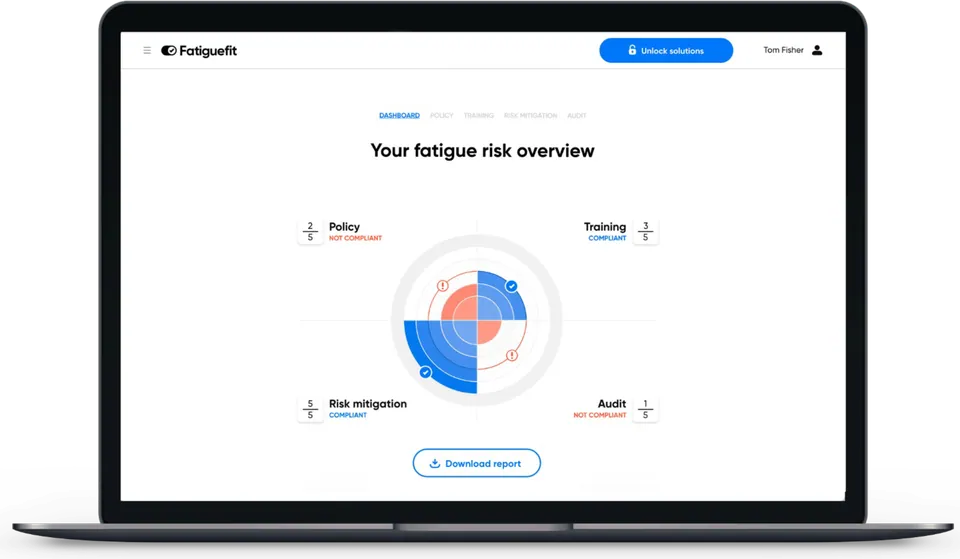
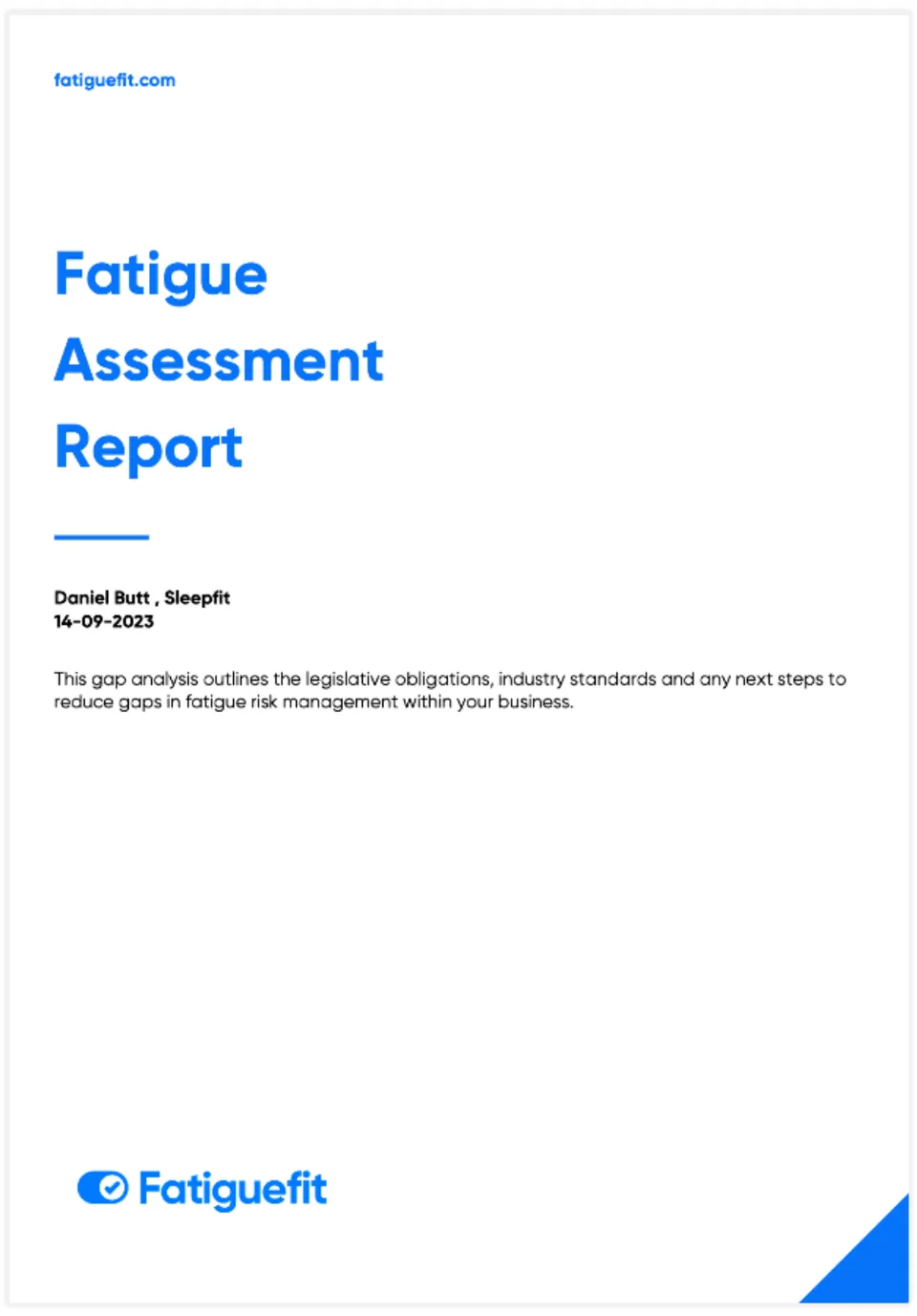
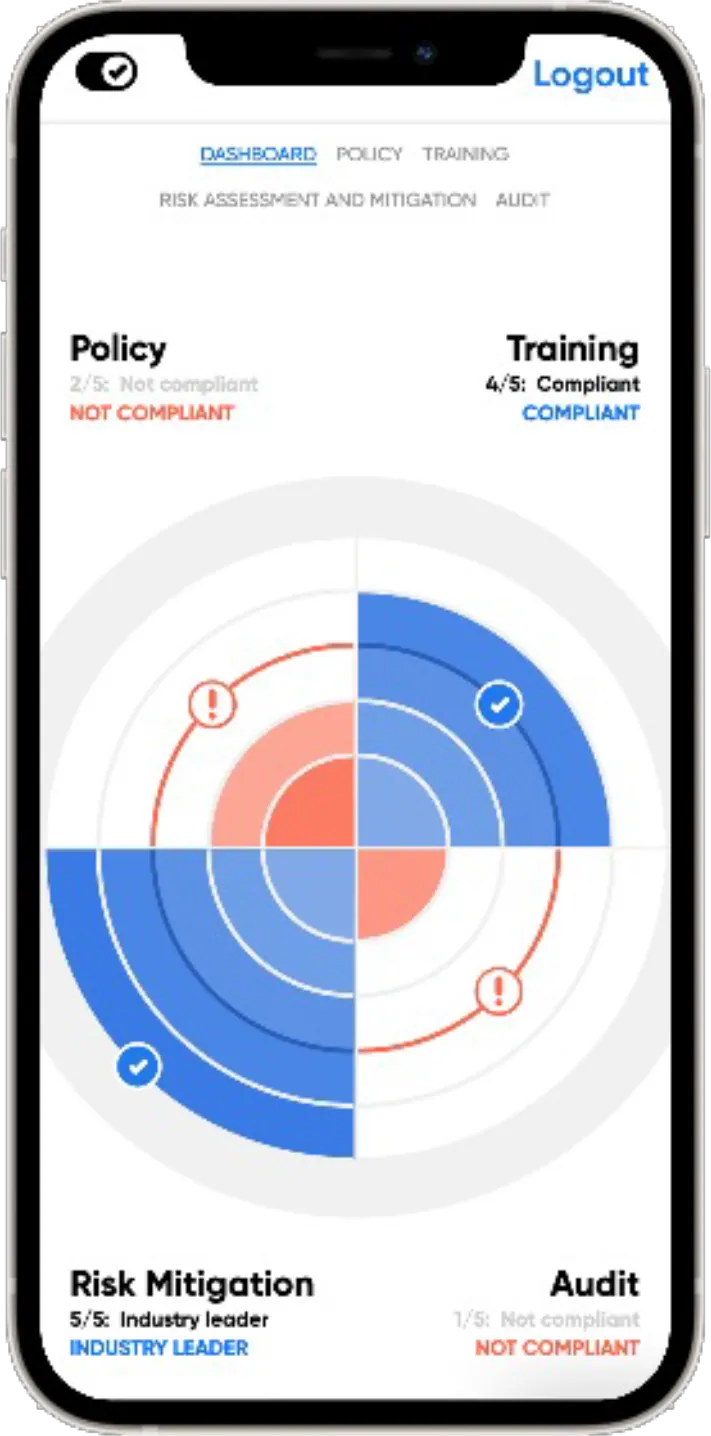
The Fatiguefit dashboard on a laptop: your fatigue risk overview across policy, training, risk mitigation and audit, with a report to download.The cover of a Fatiguefit Fatigue Assessment Report.The same fatigue risk overview on a phone.

The problem

Most fatigue programs are sized on a guess

Published benchmarks tell you how an industry sleeps on average. They do not tell you how your crews sleep, which rosters are working, or whether your policy would stand up after an incident.

The Census replaces the guess with your own measured baseline, stated with its denominator and its confidence interval, so every decision after it is made on your data.

How do I know if fatigue is an issue in my workplace? Watch the video · 1:21
Presented by Professor Drew Dawson

The size of the problem

National figures for Singapore, from published research. They are modelled, not measured in your workforce.

  • 27.6%have inadequate sleep2022 (SMHS 2016, fieldwork 2016-2018)
  • 13%of workplace injuries are linked to sleep problems2014
  • S$2,298lost productivity per affected employee each year
Sources
  1. Lee YY, et al. Sleep quality of Singapore residents: findings from the 2016 Singapore Mental Health Study. Sleep Medicine: X, 2022.
  2. Uehli K, et al. Sleep problems and work injuries: a systematic review and meta-analysis. Sleep Medicine Reviews, 2014.
  3. Rosekind MR, et al. The Cost of Poor Sleep: Workplace Productivity Loss and Associated Costs. Journal of Occupational and Environmental Medicine, 2010;52(1):91-98, applied to average earnings in Singapore (MOM, mean gross monthly income from work of full-time employed residents, 2Q 2026 preliminary, excluding bonuses).

Stories

What fatigue has cost organisations

Prosecutions, fines, verdicts and settlements against employers in Singapore and Australia over how they managed fatigue.

  • Apr 2020 · Victoria, Australia

    Four police officers killed: operator fined $2.31m and manager jailed over fatigue duty

    • Safety
    • Legal
    • Financial

    A heavy vehicle struck and killed four police officers at a roadside intercept on a Victorian freeway in 2020. In prosecutions by the National Heavy Vehicle Regulator after a police taskforce investigation, the interstate operator and its national operations manager were convicted of the most serious category of primary safety duty offence, with the regulator framing the outcome around driver fatigue management.

    Case AU-transport-01Report an issue
See all fatigue news

How it works

Measure first, then decide what you need

Fatiguefit assesses how your organisation manages fatigue today, across policy, training, risk identification and auditing, and measures how much sleep your safety-sensitive people are actually getting. It shows which levels of defence you already have covered, which are thin, and where to start, before you buy anything else.

  1. Step 01

    Risk Assessment

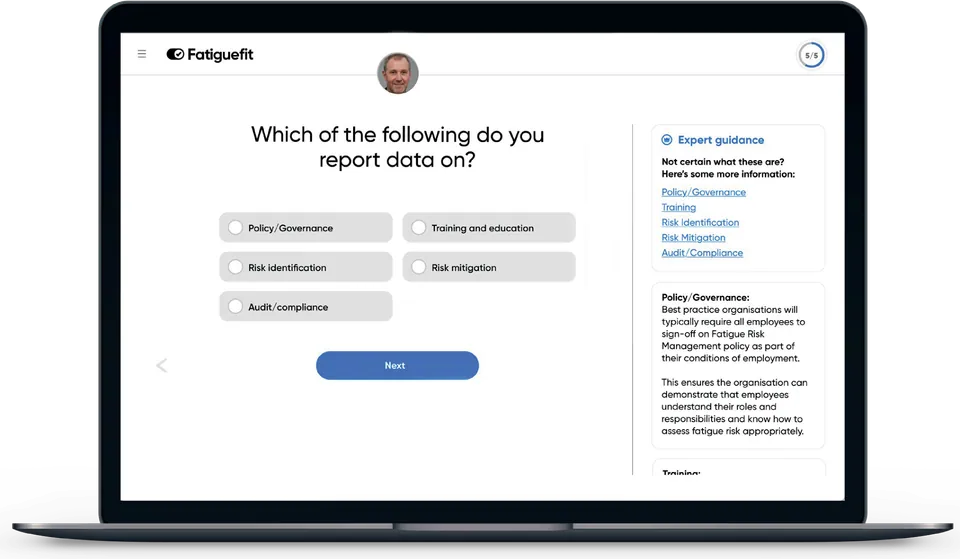
    An organisation-level assessment of how fatigue is identified, controlled and reviewed across your operation, set against the obligations that apply in your industry and jurisdiction.

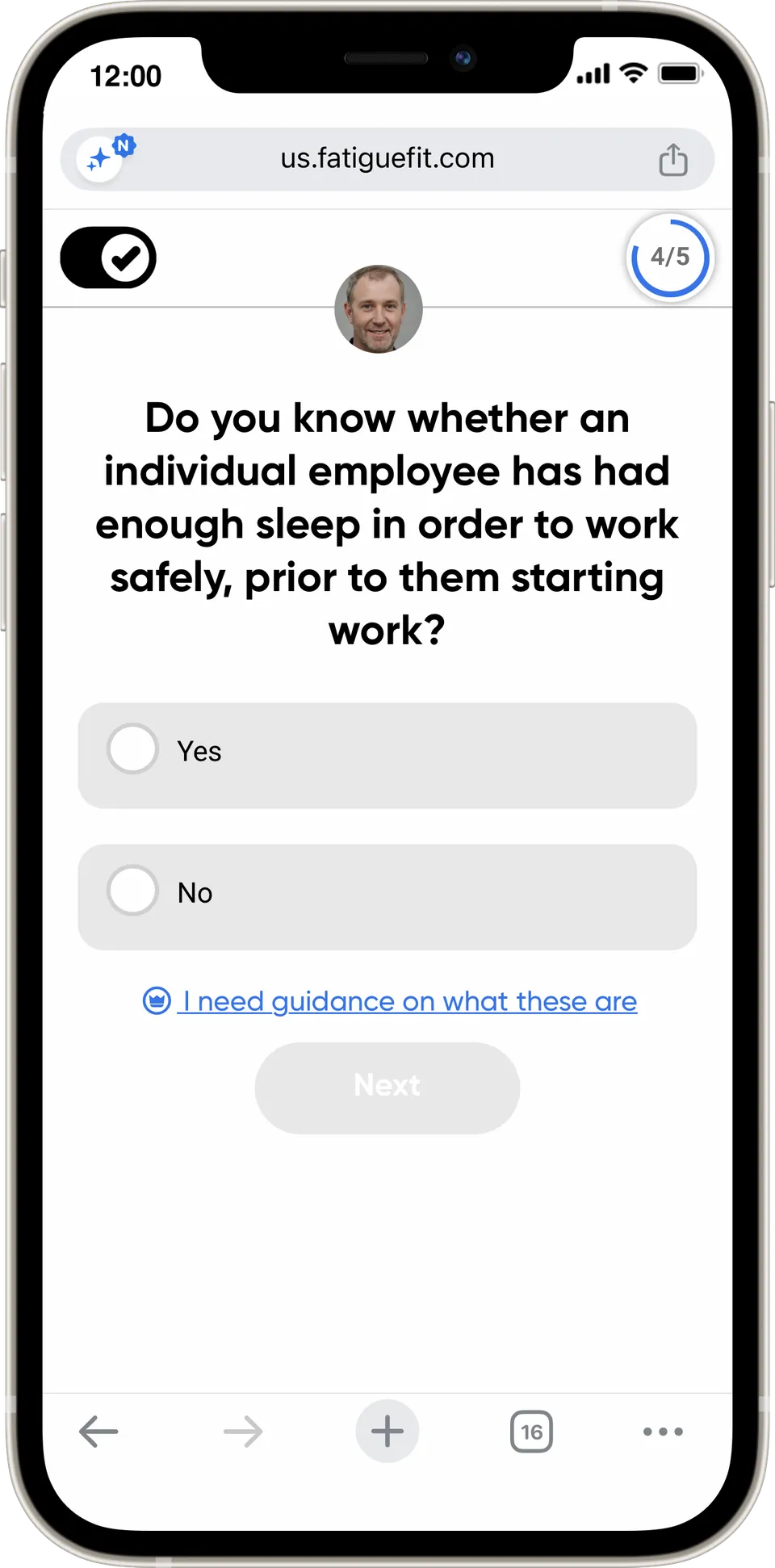
    The Fatiguefit risk assessment on a laptop: which areas do you report data on, with expert guidance on policy, training, risk identification, mitigation and audit.A risk assessment question on a phone: do you know whether an employee has had enough sleep to work safely before starting work?
  2. Step 02

    Identify the gaps

    Benchmarks how you manage fatigue across policy, training, risk identification and mitigation, and audit, and shows where the gaps are, so you know what to fix first.

    The Fatiguefit benchmark on a phone: policy, training, risk mitigation and audit, each rated compliant or not, with the gaps marked.
  3. Step 03

    Employee sampling (optional)

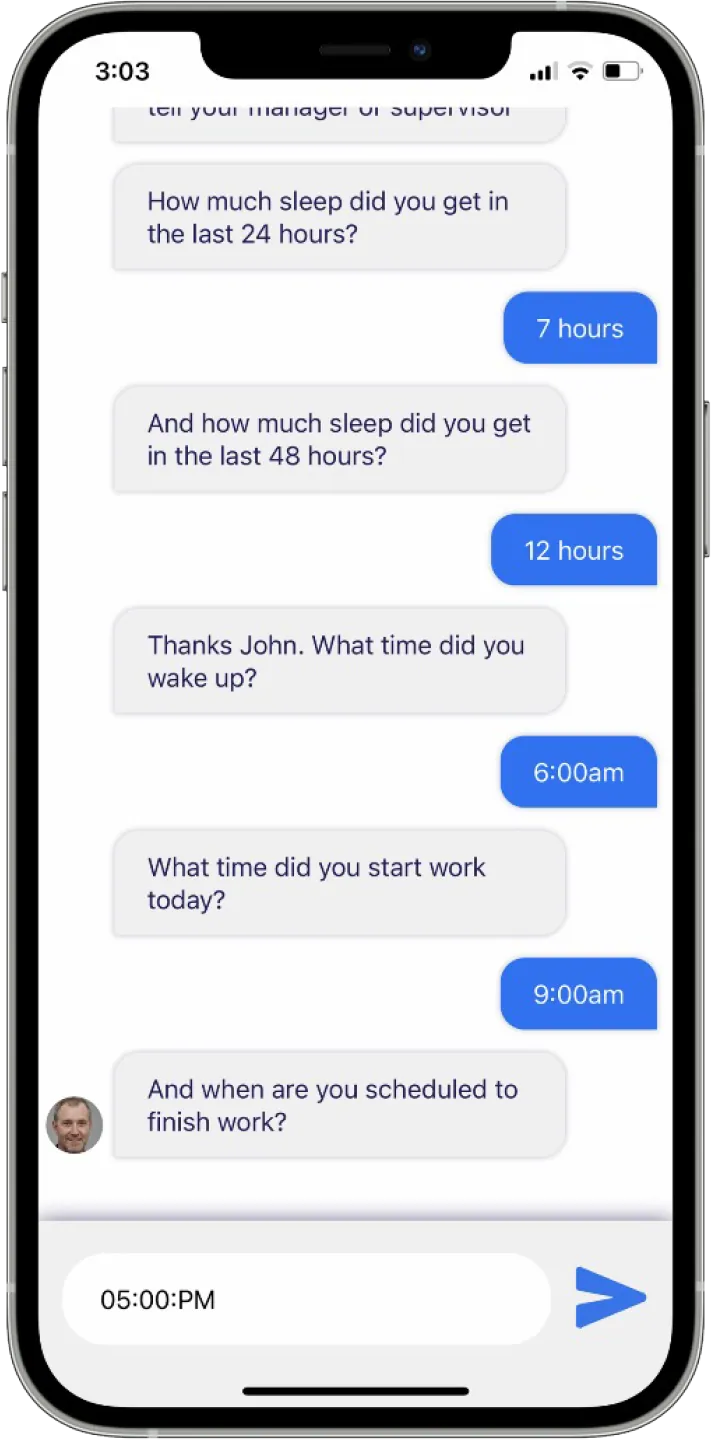
    Supervisors run a Fatiguefit4Duty point-of-duty assessment on their own phone, around thirty seconds each, across a sample of your safety-sensitive workforce.

    Employee sampling on a phone: how much sleep did you get in the last 24 and 48 hours, when did you wake, and when do you start and finish work?
  4. Step 04

    Results you can defend

    Sleep and fatigue-risk rates with denominators and 95% confidence intervals, what was measured versus modelled, and how your figures compare with the industry benchmark.

    The cover of a Fatiguefit Fatigue Assessment Report: a gap analysis of legislative obligations, industry standards and next steps.

Most organisations can’t tell you how fatigued their people actually are. They’re working from an industry average and a policy nobody has tested. I’d rather every employer started with their own measured baseline, before an investigator asks them for one.

Daniel PlattCo-founder and CEO

Rollout

How we roll it out

  1. Scope

    Agree the operations, roles and jurisdictions in scope, and whether to sample.

  2. Assess

    Work through the risk assessment with your safety leads, against the obligations that apply to you.

  3. Sample

    Optional: supervisors run point-of-duty assessments across a sample of safety-sensitive people.

  4. Report

    Your results, your draft policy, and where to act first, stated with their confidence.

What the client sees

Who sees what

Every percentage is shown with the number of people behind it and its confidence interval. Where a figure is modelled from a published baseline rather than measured in your workforce, it is labelled as such, never blended into a measured-looking number.

Priced on prevalence, not headcount. How pricing works.

  • Your safety and executive leads

    The full picture

    • The organisation-level risk assessment
    • A draft fatigue policy and procedure
    • Census results with denominators and confidence intervals
  • Sampled employees

    Counted in the totals

    • A thirty-second assessment, run by their supervisor
    • Being named in the census results

Evidence

What we can show

Sampling follows the Fatiguefit4Duty method: prior sleep and wake history, current sleepiness on the Karolinska Sleepiness Scale, and a role-based consequence rating, after Dawson & McCulloch (2005) and Dawson & Sprajcer (2020).

Measured results supersede the industry benchmark wherever you have them. Where they differ, we show the difference and what it is worth.

What it does not establish

A census measures a sample over a defined window. It is a baseline, not a diagnosis of any individual, and it does not discharge a regulatory obligation. Whether your program satisfies your regulator remains your determination on your own record.

FAQs

Questions we’re often asked

Do we have to sample our employees?

No. Sampling is optional. The risk assessment and the gap analysis stand on their own; sampling adds a measured baseline from your own people, which then takes the place of the industry benchmark wherever you have it.

How long does sampling take?

Around thirty seconds per person. A supervisor runs a Fatiguefit4Duty point-of-duty assessment on their own phone across a sample of your safety-sensitive workforce.

How confident can we be in the results?

Every rate is shown with the number of people behind it and its 95% confidence interval. Anything modelled from a published baseline rather than measured in your workforce is labelled as modelled, never blended into a measured-looking number.

Will the census satisfy our regulator?

No product can decide that for you. The census gives you a measured baseline and a policy you can adopt, consult on and file; whether your program satisfies your regulator remains your determination on your own record.

Who sees the results, and how is our data protected?

Your safety and executive leads receive the risk assessment, a draft policy and aggregate census results. The platform is certified to ISO/IEC 27001:2022.

Pathways

Where to go next

Fatiguefit and regulation across 33 industries in Singapore

The strongest fit among the solutions it leads into: Sleepfit, Fatiguefit4Duty, Was It Fatigue? and Awareness eLearning.

33 / 33

Supports your general duty of care

See how Fatiguefit fits the regulation in your industry, and what else we would start with there.

All 33 industries

Other solutions interconnected with Fatiguefit

Interested in Fatiguefit for your organisation?

Tell us a little about your organisation and which solutions you’re looking at, and our team will be in touch.

The Fatiguefit dashboard on a laptop: your fatigue risk overview across policy, training, risk mitigation and audit, with a report to download.The cover of a Fatiguefit Fatigue Assessment Report.The same fatigue risk overview on a phone.