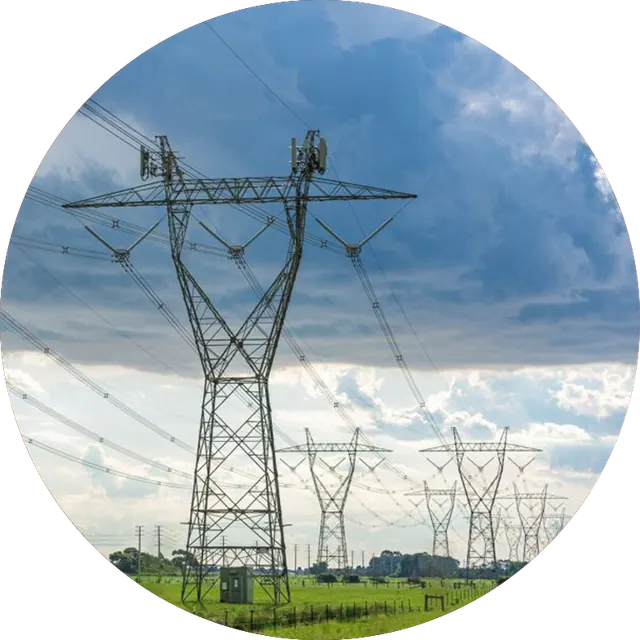
Utilities & Energy · Singapore

Keeping the lights on takes people who’ve slept.

Control rooms and field crews run 24/7 rosters, nights and emergency call-outs such as storm restoration. Low-stimulation night monitoring and high-consequence switching make fatigue a serious risk.

Change coming 1 Dec 2026

Utilities & Energy workforce

Who this page covers

  • Electricity distribution networks
  • Electricity generation - coal and gas
  • Electricity generation - hydro, wind and solar
  • Electricity transmission and system operation
  • Gas and liquids transmission pipelines
  • Gas distribution networks
  • Network services and line contractors
  • Nuclear power generation
  • Research reactors and nuclear science facilities
  • Water supply and wastewater

Reg Watch

What’s changed, and what’s coming

Regulatory change that affects how you manage fatigue in utilities & energy: what has changed in the last 12 months, and what is on the way.

Upcoming changeExpected from 1 December 2026Within 12 months

From 1 Dec 2026 MOM makes four heat-stress measures mandatory for workers exposed to heat, including a heat-stress training programme, cool water and emergency cooling. The Workplace Fairness Act 2025 (covering disability and mental health conditions) is targeted to commence around end-2027.

Regulatory changes checked as at 1 October 2026.

Regulation

Who regulates it, and what they expect

Utilities has no fatigue rule beyond the baseline, although control rooms, round-the-clock plant operations and emergency callouts fit the classic fatigue pattern. The WSH Council publishes no utilities-specific fatigue guidance, so the general 2010 fatigue guidelines are the reference. Field technicians and linesmen within the salary thresholds keep Employment Act caps.

Regulated by
  • Ministry of ManpowerMOM

Logos identify the regulator and don’t imply endorsement.

Who regulates it

The Energy Market Authority regulates electricity and gas, and PUB, the national water agency, regulates water; neither publishes rules on worker fatigue or hours. MOM enforces the baseline safety and employment law for utilities employers.

Your obligations

Baseline duties apply: keep staff safe and assess the risks of the work, including control-room night shifts, callouts, electrical and confined-space work; apply Employment Act caps to staff within the salary thresholds; and insure manual workers, including field technicians, for work injury. MOM's fatigue guidelines recommend shifts of no more than 12 hours including overtime.

Consequences

Baseline penalties apply: WSH Act fines of up to S$500,000 for a company and S$200,000 and/or two years' jail for an individual (WSH Act maxima, 2026); since 1 June 2024, up to S$50,000 for failing to conduct a risk assessment that is a major cause of serious harm; and stop-work orders that can halt the affected work.

Penalties

Baseline figures apply, including work injury compensation of up to S$269,000 for a death (from 1 November 2025). A control-room error can also bring supply-disruption costs well above any safety fine.

On the record

No Singapore court, coroner, investigator or regulator has published a finding linking fatigue to an incident in utilities. Fatigue risk still falls under the Workplace Safety and Health Act duty and MOM's fatigue management guidelines.

Sources: Energy Market Authority; PUB; Workplace Safety and Health Act 2006; WSH Council and MOM Fatigue Management Guidelines (2010); Employment Act 1968, Part IV.

Fatigue-critical roles

Where fatigue matters most in utilities & energy

The roles where a fatigued worker is most likely to cause serious harm, the tasks that carry the risk, and why fatigue builds up in them.

RoleRiskHigh-risk tasksWhy fatigue builds
Power system controller
Rules
Regulatory designation
None specific - general duty (WSHA 2006 s 12)
Hours and rest
Employment Act Part IV (covered pay bands): 12 h/day cap, 72 OT h/month, weekly rest day
Critical riskSwitching instructions and outage coordination overnight; contingency response to trips; issuing and cancelling access permits for line crews12 h rotating day/night shifts, long low-stimulus nights broken by storm or fault surges
Cable jointer / substation technician
Rules
Regulatory designation
Licensed Electrical Worker (Electricity Act 2001, EMA licence)
Hours and rest
Employment Act Part IV (covered pay bands): 12 h/day cap, 72 OT h/month, weekly rest day
Critical riskHV cable jointing and substation switching at night, fault restoration on the underground network, work in confined cable pitsOn-call call-outs at night, storm restoration runs of 16 h+ days for a week or more, travel to mutual-aid deployments
Gas emergency officer / licensed gas service worker
Rules
Regulatory designation
Licensed gas service worker (Gas Act 2001)
Hours and rest
Employment Act Part IV (covered pay bands): 12 h/day cap, 72 OT h/month, weekly rest day
Critical riskAttending reported gas escapes overnight, making safe and isolating supply, work in excavations near live mains; urgent driving to call-outsOn-call nights with attend-within targets, back-to-back call-outs, lone working
Power plant operator
Rules
Regulatory designation
None specific - general duty (WSHA 2006 s 12)
Hours and rest
Employment Act Part IV (covered pay bands): 12 h/day cap, 72 OT h/month, weekly rest day
High riskBoiler, turbine and generator control, isolations for maintenance, start-ups and trips overnight, coal and ash handling plant12 h continuous rotating shifts (day/night), lone rounds of the plant at night
Plant operator (water reclamation / waterworks)
Rules
Regulatory designation
None specific - general duty (WSHA 2006 s 12)
Hours and rest
Employment Act Part IV (covered pay bands): 12 h/day cap, 72 OT h/month, weekly rest day
High riskChlorine and fluoride dosing, responding to SCADA alarms overnight, confined-space entry at pump stations, lone call-outs to sewage overflowsOn-call nights, lone work at remote plants, call-outs after a full day shift

How the suite fits

How each product connects to your obligations

Grades describe how strongly a product connects to an obligation. None discharges an obligation, and none carries a compliance warranty.

Sleepfit

Supports your general duty of care

Sleepfit screens sleep health across your control room and field crews, supporting the risk assessment reg 3 of the WSH (Risk Management) Regulations requires you to conduct. No Singapore rule names a sleep screen. It screens; diagnosis stays with your clinicians.

About Sleepfit

Fatiguefit4Duty

Supports your general duty of care

Fatiguefit4Duty records a point-of-duty fatigue check for your control room operators and field crews, supporting your duty under s 12(1) of the WSH Act. No Singapore rule names the check. A fitness-for-duty check, not a fitness-for-duty decision - the duty call stays with you.

About Fatiguefit4Duty

Awareness eLearning

Supports your general duty of care

Awareness eLearning gives your control room and field crews recorded fatigue education, supporting your general duty under s 12(3)(e) of the WSH Act to provide adequate instruction, information and training. MOM's fatigue guidelines recommend it; no rule names it.

About Awareness eLearning

Was It Fatigue?

Supports your general duty of care

Was It Fatigue? structures a fatigue review after an incident, supporting the risk assessment review reg 7 of the Risk Management Regulations requires after an injury. Reporting rules name no cause. A structured judgement aid, not a determination of cause.

About Was It Fatigue?

SleepWellBaby

SleepWellBaby supports parents among your control room and field crews through the most broken months of infant sleep. No Singapore rule reaches sleep in new-parent households; it is offered as a benefit.

About SleepWellBaby

Recommended bundle

Where we’d start in utilities & energy

Every bundle is priced on prevalence: your whole cohort gets access, and you pay for the share predicted to need each product. How pricing works.

Why this pairing in Singapore

No Singapore utilities rule names a fatigue tool, so this supports your WSH Act s 12 duty. Sleepfit screens your control room and field crews, Fatiguefit4Duty adds a point-of-duty check and Awareness eLearning trains with a record. Fatigue Lifecycle adds Was It Fatigue? for the reg 7 review.

See what sleep and fatigue mean for your utilities & energy workforce.

Tell us roughly how many people you employ. Your snapshot models how many are likely sleeping poorly and what it costs, from published research for utilities & energy. Then choose who you’d cover, and we’ll take you to the right next step.

A sample workforce snapshot on a tablet: modelled sleep problems and the cost of poor sleep for 1,400 people in transport and logistics.