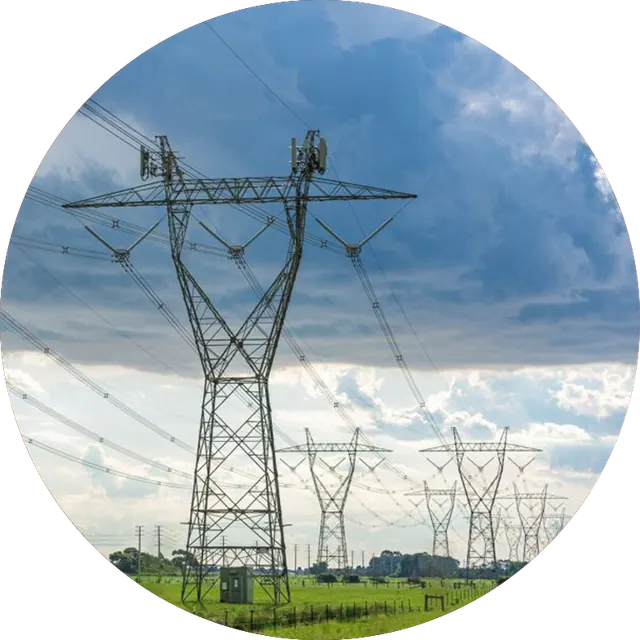
Utilities & Energy · United States

Keeping the lights on takes people who’ve slept.

Control rooms and field crews run 24/7 rosters, nights and emergency call-outs such as storm restoration. Low-stimulation night monitoring and high-consequence switching make fatigue a serious risk.

Regulation changed Jun 4, 2026

Utilities & Energy workforce

Who this page covers

  • Electricity distribution networks
  • Electricity generation - coal and gas
  • Electricity generation - hydro, wind and solar
  • Electricity transmission and system operation
  • Gas and liquids transmission pipelines
  • Gas distribution networks
  • Network services and line contractors
  • Nuclear power generation
  • Research reactors and nuclear science facilities
  • Water supply and wastewater

Reg Watch

What’s changed, and what’s coming

Regulatory change that affects how you manage fatigue in utilities & energy: what has changed in the last 12 months, and what is on the way.

Recent changeFrom June 4, 2026

Applies across industries in the United States

If you have workers in Colorado exposed to extreme heat or cold, a law signed 4 June 2026 requires a temperature illness prevention plan and worker training, with your plan due to the state by 1 September 2028.

Read the change

Upcoming changeNo date set yet

NRC proposed on 26 June 2026 to add a sequestration-event exception to Part 26 work-hour controls and end annual fatigue reporting; comments closed 27 July 2026. OSHA's heat proposal (August 2024) expects a supplemental proposal in December 2026 and final action in October 2027.

Regulatory changes checked as at October 1, 2026.

Regulation

Who regulates it, and what they expect

Utilities is three regimes, not one. If you operate a nuclear power reactor, 10 CFR Part 26 Subpart I is the most prescriptive fatigue rule in American industry: hard work-hour limits, minimum days off, a written fatigue policy, fatigue training, self-declaration and mandatory fatigue assessments. If you run a gas or hazardous liquid pipeline control room, 49 CFR 192.631(d) and 195.446(d) require you to schedule for eight hours of continuous sleep, train controllers in fatigue and set a maximum on controller hours. Everywhere else - line crews, plant operators, water utilities - there is no fatigue rule and the general duty carries it.

Regulated by
  • Pipeline and Hazardous Materials Safety AdministrationPHMSA

Logos identify the regulator and don’t imply endorsement.

Who regulates it

Gas and hazardous liquid pipeline control rooms are regulated by PHMSA, the federal pipeline safety agency, which has a specific controller fatigue rule. The bulk electric system is overseen by NERC under FERC, whose operations personnel standards cover training and task certification rather than fatigue or hours. The rest of the utilities workforce falls under OSHA, with the usual disability and leave protections.

Your obligations

Nuclear licensees: hold covered workers to 16 hours in any 24, 26 in any 48 and 72 in any 7 days; give a 10-hour break between work periods and a 34-hour break in any 9 days; meet the minimum days off set for each job category; keep a written fatigue policy and procedures; train workers on fatigue, sleep disorders and countermeasures; and run a fatigue assessment for cause, on self-declaration, after a reportable event and after a short break. Anyone working under a waiver who declares they are too fatigued must be stopped. Pipeline control rooms: schedule for eight hours of continuous sleep, train controllers and supervisors, and set your own maximum controller hours.

Consequences

The NRC treats a work-hour breach or a missing fatigue assessment as a violation of your fitness-for-duty program, citable and enforceable against the license. PHMSA cites a control room fatigue plan that is missing or not implemented as a pipeline safety violation, assessed for each day it continues. For the rest of the workforce the route is OSHA's general duty clause, where extended storm-restoration hours are shown to have created a recognized hazard, with workers' compensation exposure on top.

Penalties

NRC: up to $372,240 for each violation, with each day of a continuing violation counted separately - 2025 levels, in force for 2026. PHMSA: $272,926 per violation per day and $2,729,245 for a related series - 2025 levels, in force for 2026. OSHA: $16,550 serious or other-than-serious, $165,514 willful or repeat. No federal inflation adjustment was made for 2026, so the 2025 figures stand.

Sources: PHMSA's control room management rule, 49 CFR 192.631 and 195.446; PHMSA's control room fatigue mitigation program materials; NERC Reliability Standard PER-005-2, Operations Personnel Training; OSHA's worker fatigue guidance and 2026 penalty schedule.

Fatigue-critical roles

Where fatigue matters most in utilities & energy

The roles where a fatigued worker is most likely to cause serious harm, the tasks that carry the risk, and why fatigue builds up in them.

RoleRiskHigh-risk tasksWhy fatigue builds
System operator / transmission operator
Rules
Regulatory designation
NERC-certified system operator (Reliability Standard PER-003)
Hours and rest
No federal limit; NERC PER-005 covers training only
Critical riskSwitching instructions and outage coordination overnight; contingency response to trips; issuing and cancelling access permits for line crews12 h rotating day/night shifts, long low-stimulus nights broken by storm or fault surges
Lineman / journeyman line worker
Rules
Regulatory designation
Qualified employee for line work (29 CFR 1910.269)
Hours and rest
No federal cap; 1910.269 sets no hours rule
Critical riskPole and EWP work on HV lines, switching and earthing, restoring supply after storms; driving to call-outs on broken sleepOn-call call-outs at night, storm restoration runs of 16 h+ days for a week or more, travel to mutual-aid deployments
Licensed reactor operator / senior reactor operator; covered maintenance, HP/chemistry, fire brigade and security staff
Rules
Regulatory designation
Covered individual performing duties in 10 CFR 26.4(a)(1)-(5) (Part 26 Subpart I fatigue rules); RO/SRO licensed under 10 CFR Part 55
Hours and rest
10 CFR 26.205(d): max 16 h in 24 h, 26 h in 48 h, 72 h in 7 days; 10 h break between work periods (8 h at shift transitions); 34 h break in 9 days
Critical riskReactor and turbine control-room operation, surveillance tests, maintenance on safety-significant systems, fire brigade and armed security duties; outage work8-12 h rotating shifts; refuelling outages with extended hours and many consecutive days
Gas pipeline controller / operator-qualified field technician
Rules
Regulatory designation
Controller (49 CFR 192.631); qualified individual for covered tasks (49 CFR 192 Subpart N, Operator Qualification)
Hours and rest
192.631(d): shifts giving off-duty time for 8 h continuous sleep; operator-set maximum controller hours of service
Critical riskAttending reported gas escapes overnight, making safe and isolating supply, work in excavations near live mains; urgent driving to call-outsOn-call nights with attend-within targets, back-to-back call-outs, lone working
Power plant operator
Rules
Regulatory designation
None specific - general duty (OSH Act s 5(a)(1))
Hours and rest
No federal hours cap for adults; FLSA prices overtime only
High riskBoiler, turbine and generator control, isolations for maintenance, start-ups and trips overnight, coal and ash handling plant12 h continuous rotating shifts (day/night), lone rounds of the plant at night
Certified water / wastewater operator
Rules
Regulatory designation
Certified operator (state certification under SDWA s 1419 operator certification guidelines)
Hours and rest
No federal hours cap for adults; FLSA prices overtime only
High riskChlorine and fluoride dosing, responding to SCADA alarms overnight, confined-space entry at pump stations, lone call-outs to sewage overflowsOn-call nights, lone work at remote plants, call-outs after a full day shift

Stories

When fatigue made the record

Published findings and prosecutions from regulators, courts and investigators in the United States.

  • Mar 2007 · Pennsylvania, United States

    Nuclear plant guards inattentive in dim 'ready room' on 12-hour low-activity posts

    • Legal
    • Financial

    Security officers at a nuclear plant were videotaped inattentive to duty on four occasions in 2007 while posted in a dim, noisy, poorly ventilated 'ready room'. A special inspection by the regulator found some officers did not regard closing their eyes or putting their heads down as inattentiveness, and that management had not considered the human-factors effect of 12-hour shifts spent largely at a low-activity post. Hours were within the regulator's limits, showing that compliant rosters alone did not keep officers alert. The regulator later fined the plant operator.

    Case US-utilities-04Report an issue

See all utilities & energy news

How the suite fits

How each product connects to your obligations

Grades describe how strongly a product connects to an obligation. None discharges an obligation, and none carries a compliance warranty.

Sleepfit

Supports your general duty of care

No rule requires sleep screening across US utilities. At nuclear plants, 10 CFR 26.203(c) names sleep disorders in the fatigue training your workforce must receive, and Sleepfit supports it. It screens; diagnosis stays with your clinicians.

About Sleepfit

Fatiguefit4Duty

Supports your general duty of care

No rule requires a fitness check across US utilities. At nuclear plants, 10 CFR 26.209 requires you to act at once on a fatigue self-declaration, and Fatiguefit4Duty supports it. A fitness-for-duty check, not a fitness-for-duty decision - the duty call stays with you.

About Fatiguefit4Duty

Awareness eLearning

Supports your general duty of care

No rule names fatigue training across US utilities. At nuclear plants 10 CFR 26.203(c), and in pipeline control rooms 49 CFR 192.631(d), name fatigue training; Awareness eLearning supplies that content with a completion record.

About Awareness eLearning

Was It Fatigue?

Supports your general duty of care

No rule requires a fatigue review after incidents across US utilities. At nuclear plants, 10 CFR 26.211 requires a fatigue assessment after a reportable event, and Was It Fatigue? supports it. A structured judgment aid, not a determination of cause.

About Was It Fatigue?

SleepWellBaby

No utilities obligation engages infant sleep support. SleepWellBaby is voluntary here: a retention and wellbeing measure for shift-working parents, with no regulatory hook to claim.

About SleepWellBaby

Recommended bundle

Where we’d start in utilities & energy

Every bundle is priced on prevalence: your whole cohort gets access, and you pay for the share predicted to need each product. How pricing works.

Why this pairing in the United States

At nuclear plants 10 CFR 26.203(c) names fatigue training and 26.209 a self-declaration; elsewhere s 5(a)(1) applies. Awareness eLearning supplies that content, Fatiguefit4Duty supports the declaration and Sleepfit screens. Fatigue Lifecycle adds the 26.211 review.

See what sleep and fatigue mean for your utilities & energy workforce.

Tell us roughly how many people you employ. Your snapshot models how many are likely sleeping poorly and what it costs, from published research for utilities & energy. Then choose who you’d cover, and we’ll take you to the right next step.

A sample workforce snapshot on a tablet: modeled sleep problems and the cost of poor sleep for 1,400 people in transport and logistics.