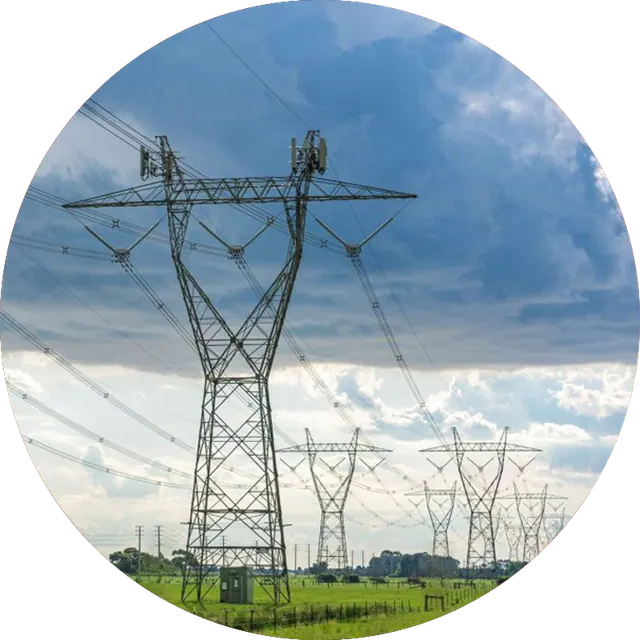
Utilities & Energy · Australia

Keeping the lights on takes people who’ve slept.

Control rooms and field crews run 24/7 rosters, nights and emergency call-outs such as storm restoration. Low-stimulation night monitoring and high-consequence switching make fatigue a serious risk.

Varies by jurisdiction: New South Wales – Fatigue-regulated

Regulation changed 1 July 2026

Utilities & Energy workforce

Who this page covers

  • Electricity distribution networks
  • Electricity generation - coal and gas
  • Electricity generation - hydro, wind and solar
  • Electricity transmission and system operation
  • Gas and liquids transmission pipelines
  • Gas distribution networks
  • Network services and line contractors
  • Nuclear power generation
  • Research reactors and nuclear science facilities
  • Water supply and wastewater

Reg Watch

What’s changed, and what’s coming

Regulatory change that affects how you manage fatigue in utilities & energy: what has changed in the last 12 months, and what is on the way.

Recent changeFrom 1 July 2026

Applies across industries in Australia

From 1 July 2026 NSW requires you to follow approved codes, including the fatigue code, or manage risk to an equal or higher standard. Victoria's psychological health regulations apply from 1 December 2025.

Read the change

Upcoming changeNo date set yet

Safe Work Australia's Best Practice Review of the model WHS laws was due to go to WHS ministers in August 2026. It is not yet public and no amendments are proposed, so no change date is set.

Regulatory changes checked as at 1 October 2026.

Regulation

Who regulates it, and what they expect

Australian utilities has no fatigue statute of its own. There is no hour limit for control-room operators, nothing capping a storm-restoration shift, and the electricity safety Acts do not mention fatigue at all. What binds you is the work health and safety duty to identify and control fatigue, sharpened by the psychosocial hazard regulations that reach shift design and on-call work, and - in New South Wales and the Northern Territory - an approved code of practice on managing fatigue. The Electrical Power Industry Award sets the only hard numbers you have.

Regulated by
  • Safe Work AustraliaSWA

Logos identify the regulator and don’t imply endorsement.

Who regulates it

There is no dedicated fatigue regulator for energy and utilities in Australia. Fatigue for control-room operators and field crews is regulated by your state or territory work health and safety regulator under the general safety duty, alongside the state electrical safety regulators for electrical work. AEMO sets technical and operational rules for the power system but imposes no fatigue or hours requirements.

Your obligations

Identify fatigue as a risk, eliminate or minimise it so far as is reasonably practicable, and consult your workers about the rosters that create it. The psychosocial hazard regulations reach the work design behind it - shift patterns, on-call rosters, storm callouts. Where the fatigue code of practice is approved, follow it or manage the hazard to an equivalent or higher standard; in New South Wales that has been enforceable, not merely admissible, since 1 July 2026. Under the Electrical Power Industry Award shiftworkers get a minimum ten-hour break between shifts and no more than eight shifts in any nine days.

Consequences

A fatigue-related incident is prosecuted as a failure of the primary duty, because there is no fatigue-specific offence for utilities. Where a worker dies and the conduct is negligent, every Australian jurisdiction now has an industrial or workplace manslaughter offence carrying 20 to 25 years' imprisonment. Your own fatigue standard becomes evidence: written thresholds show the risk was known and a control existed, so not following them builds the case against you. Workers compensation and common law damages sit on top.

Penalties

Work health and safety maximums, 1 July 2026 levels: a category 1 offence reaches $17,728,000 for a Commonwealth body corporate, $12,321,000 in the ACT, $11,606,824 in NSW, $3,500,000 in WA and $3,000,000 in Queensland, South Australia, Tasmania and the Northern Territory, with individual maximums from $600,000 to $3,546,000 and up to five years. Industrial manslaughter reaches $20,000,000 for a body corporate in NSW. Commonwealth, NSW and ACT figures index each 1 July.

Sources: Safe Work Australia's guidance on managing fatigue and psychosocial hazards at work; the Australian Energy Regulator's published review of Ausgrid's fatigue management standard; Energex's published Standard for Fatigue Management.

Fatigue-critical roles

Where fatigue matters most in utilities & energy

The roles where a fatigued worker is most likely to cause serious harm, the tasks that carry the risk, and why fatigue builds up in them.

RoleRiskHigh-risk tasksWhy fatigue builds
Network control operator / system operator
Rules
Regulatory designation
None specific - general duty (WHS Act s 19; WHS Regs psychosocial hazards incl. fatigue); switching authorisation under network safety rules
Hours and rest
No statutory cap: FW Act s 62 (38 h + reasonable additional hours); award or EA rest terms
Critical riskSwitching instructions and outage coordination overnight; contingency response to trips; issuing and cancelling access permits for line crews12 h rotating day/night shifts, long low-stimulus nights broken by storm or fault surges
Powerline worker (lineworker)
Rules
Regulatory designation
Authorised person under the network's electrical safety rules (network SMS, e.g. Electricity Supply (Safety and Network Management) Reg 2014 NSW); state electrical licence
Hours and rest
No statutory cap; network operators' internal fatigue standards are company policy, not law
Critical riskPole and EWP work on HV lines, switching and earthing, restoring supply after storms; driving to call-outs on broken sleepOn-call call-outs at night, storm restoration runs of 16 h+ days for a week or more, travel to mutual-aid deployments
Gas fitter / emergency response technician (gas distributor)
Rules
Regulatory designation
Licensed gas fitter (state licence); distributor's gas safety case (state gas safety Acts)
Hours and rest
No statutory cap: FW Act s 62 (38 h + reasonable additional hours); award or EA rest terms
Critical riskAttending reported gas escapes overnight, making safe and isolating supply, work in excavations near live mains; urgent driving to call-outsOn-call nights with attend-within targets, back-to-back call-outs, lone working
Power station operator (shift operator)
Rules
Regulatory designation
None specific - general duty (WHS Act s 19; WHS Regs psychosocial hazards incl. fatigue)
Hours and rest
No statutory cap: FW Act s 62 (38 h + reasonable additional hours); award or EA rest terms
High riskBoiler, turbine and generator control, isolations for maintenance, start-ups and trips overnight, coal and ash handling plant12 h continuous rotating shifts (day/night), lone rounds of the plant at night
Water treatment operator / wastewater operator
Rules
Regulatory designation
None specific - general duty (WHS Act s 19; WHS Regs psychosocial hazards incl. fatigue)
Hours and rest
No statutory cap: FW Act s 62 (38 h + reasonable additional hours); award or EA rest terms
High riskChlorine and fluoride dosing, responding to SCADA alarms overnight, confined-space entry at pump stations, lone call-outs to sewage overflowsOn-call nights, lone work at remote plants, call-outs after a full day shift

Stories

When fatigue made the record

Published findings and prosecutions from regulators, courts and investigators in Australia.

  • Jan 2015 · South Australia, Australia

    Power network night-shift roster delayed until fatigue directive and training in place

    • Legal

    An electricity distributor proposed moving about 26 workers who maintain a capital city's central business district network onto night shifts, and the electrical union took the dispute to the Fair Work Commission. Expert evidence said the roster should not start until the company's draft fatigue management directive was finalised and a worker education and training program was in place. The commission held that implementation should be delayed for further consultation and appropriate health and safety mechanisms, and a Full Bench dismissed the union's appeal in 2015.

    Case AU-utilities-01Report an issue

See all utilities & energy news

How the suite fits

How each product connects to your obligations

Grades describe how strongly a product connects to an obligation. None discharges an obligation, and none carries a compliance warranty.

Sleepfit

Supports your general duty of care

No Australian utilities rule requires screening. Sleepfit supports the general duty by showing which shiftworkers carry an undiagnosed sleep disorder, which a roster review cannot see.

About Sleepfit

Fatiguefit4Duty

Supports your general duty of care

There is no fitness-for-duty rule for utilities. Fatiguefit4Duty supports the duty to control fatigue by checking readiness at the point of work, which matters most in storm restoration.

About Fatiguefit4Duty

Awareness eLearning

Supports your general duty of care

Your WHS duty to inform and train does not name fatigue; in NSW the approved fatigue code names fatigue training and must be followed or matched. Awareness eLearning supplies fatigue and sleep content for your shift and on-call crews.

About Awareness eLearning

Was It Fatigue?

Supports your general duty of care

Utilities carries no fatigue-specific investigation duty. Was It Fatigue? supports incident review by testing sleep-wake history, which is what a regulator asks after a night-shift event.

About Was It Fatigue?

SleepWellBaby

Nothing in Australian utilities regulation engages infant sleep. SleepWellBaby is voluntary here: a wellbeing measure for shift-working parents, with no obligation for it to support.

About SleepWellBaby

Recommended bundle

Where we’d start in utilities & energy

Every bundle is priced on prevalence: your whole cohort gets access, and you pay for the share predicted to need each product. How pricing works.

Why this pairing in Australia

No utilities rule names a fatigue tool, so this supports your s 19 WHS duty. Sleepfit screens shift and on-call crews for sleep disorders; Fatiguefit4Duty adds a point-of-work check for storm restoration; Awareness eLearning trains with a record. Fatigue Lifecycle adds incident review.

See what sleep and fatigue mean for your utilities & energy workforce.

Tell us roughly how many people you employ. Your snapshot models how many are likely sleeping poorly and what it costs, from published research for utilities & energy. Then choose who you’d cover, and we’ll take you to the right next step.

A sample workforce snapshot on a tablet: modelled sleep problems and the cost of poor sleep for 1,400 people in transport and logistics.