Waste Management & Resource Recovery · Singapore

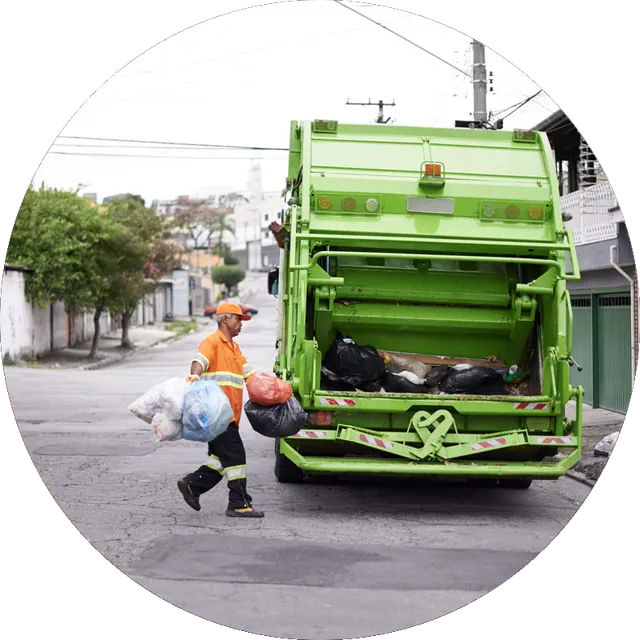
Waste and recycling starts before dawn. Sleep sets the day’s pace.

Collection crews start before dawn and drive heavy trucks among traffic and pedestrians; sleep cut short by early starts erodes alertness in one of the deadliest civilian industries.

Change coming 1 Dec 2026

Waste Management & Resource Recovery workforce

Who this page covers

  • Council waste crews (also see Government & Council)
  • Hazardous waste treatment and disposal
  • Kerbside collection
  • Liquid and hazardous waste collection and transport
  • Recycling and materials recovery facilities (MRFs)
  • Scrap metal recycling
  • Transfer stations and landfill

Reg Watch

What’s changed, and what’s coming

Regulatory change that affects how you manage fatigue in waste management & resource recovery: what has changed in the last 12 months, and what is on the way.

Upcoming changeExpected from 1 December 2026Within 12 months

From 1 Dec 2026 MOM makes four heat-stress measures mandatory for workers exposed to heat, including a training programme. An Employment Act review (incl. Part IV hours) reports in 2H 2026. The Workplace Fairness Act 2025 is targeted to commence around end-2027.

Regulatory changes checked as at 1 October 2026.

Regulation

Who regulates it, and what they expect

Singapore's waste sector is licensed, not fatigue-regulated. NEA licensing makes Progressive Wage Model wages and training mandatory for collection and materials recovery roles held by citizens and permanent residents, but that training does not address fatigue, and no Singapore law caps driving hours. Fatigue sits under the general safety duty, with MOM's 2010 fatigue guidelines showing how to treat it. Employment Act hours caps apply only to lower-paid staff.

Regulated by
  • Ministry of ManpowerMOM

Logos identify the regulator and don’t imply endorsement.

Who regulates it

The Ministry of Manpower enforces workplace safety and hours of work across collection and recovery. The National Environment Agency licenses public and general waste collectors and disposal facilities, and makes the Progressive Wage Model for waste workers a licence condition. The WSH Council publishes fatigue guidelines, which are guidance, not law.

Your obligations

Keep your workforce safe so far as is reasonably practicable, and assess and control the risks of collection, driving and sorting work. Meet Progressive Wage Model wage and training requirements for local collection and recovery staff, as your NEA licence requires. For workmen earning up to S$4,500 a month, keep work within 12 hours a day and overtime within 72 hours a month, with a weekly rest day. Insure manual workers for work injury.

Consequences

Workplace safety offences are criminal, with stop-work orders and prosecution of the company and responsible individuals. Failing a risk assessment that is a major cause of serious harm has carried its own penalty since June 2024. Employment Act hours breaches are separate offences. Falling short of Progressive Wage Model requirements puts your NEA licence conditions in question.

Penalties

WSH Act maximums in 2026: S$500,000 for a company and S$200,000 and/or two years' jail for an individual; up to S$50,000 since June 2024 for a failed risk assessment that is a major cause of serious harm. Employment Act hours breaches: up to S$5,000 per offence. Work injury compensation for a death: S$91,000 to S$269,000 from 1 November 2025.

On the record

No Singapore court, coroner, investigator or regulator has published a finding linking fatigue to an incident in waste collection. MOM's fatigue guidelines recommend checking rest before driving and keeping safety-critical work out of 2am to 6am where possible.

Sources: Workplace Safety and Health Act 2006; WSH (Risk Management) Regulations; Employment Act 1968, Part IV; NEA licensing and MOM Progressive Wage Model for waste management; WSH Council fatigue guidelines (2010).

Fatigue-critical roles

Where fatigue matters most in waste management & resource recovery

The roles where a fatigued worker is most likely to cause serious harm, the tasks that carry the risk, and why fatigue builds up in them.

RoleRiskHigh-risk tasksWhy fatigue builds
Refuse truck driver (public waste collector)
Rules
Regulatory designation
None specific - no driving-hours statute (MOT reply 12 Sep 2022); general duty (WSHA s 12); NEA-licensed collector (Waste Management Progressive Wage Model)
Hours and rest
Employment Act Part IV only (covered bands); MOM worker-lorry rule: 30 min rest after 6 h site work for dual-role drivers
Critical riskSingle-operator side-lift collection from 04:00-05:00, hundreds of lifts per shift, reversing in residential streets, school-zone and pedestrian conflictsVery early starts (04:00-05:00), task-and-finish runs, 10-12 h days, monotony
Toxic industrial waste collector driver
Rules
Regulatory designation
None specific - no driving-hours statute (MOT reply 12 Sep 2022); general duty (WSHA s 12); NEA-licensed toxic industrial waste collector
Hours and rest
Employment Act Part IV only (covered bands); MOM worker-lorry rule: 30 min rest after 6 h site work for dual-role drivers
Critical riskVacuum tanker work on grease traps and septic systems at night, hazardous waste loading, emergency spill call-outs, long rural runsNight and on-call work for commercial clients, emergency call-outs, long days
Refuse collector
Rules
Regulatory designation
None specific - general duty (WSHA 2006 s 12); Waste Management Progressive Wage Model
Hours and rest
Employment Act Part IV (covered pay bands): 12 h/day cap, 72 OT h/month, weekly rest day
High riskRunning bins to the hopper behind a moving truck, riding steps, working in the reversing zone, needle-stick and crush risk in the darkPre-dawn starts, fast task-and-finish pace, heat or cold, 10 h days
Plant operator (Semakau landfill / transfer station)
Rules
Regulatory designation
None specific - general duty (WSHA 2006 s 12)
Hours and rest
Employment Act Part IV (covered pay bands): 12 h/day cap, 72 OT h/month, weekly rest day
High riskOperating compactors and loaders on tip faces near pedestrians and tipping trucks, push-pit work at transfer stations, fire watchLong days 6-7 days a week, early opening, dust and heat, lone plant work
MRF operator
Rules
Regulatory designation
None specific - general duty (WSHA 2006 s 12)
Hours and rest
Employment Act Part IV (covered pay bands): 12 h/day cap, 72 OT h/month, weekly rest day
High riskClearing jams in balers and conveyors under lock-out, picking on fast sort lines, responding to lithium-battery fires overnightTwo or three-shift operation incl. nights, monotonous high-speed picking
Road sweeper / conservancy worker
Rules
Regulatory designation
None specific - general duty (WSHA 2006 s 12)
Hours and rest
Employment Act Part IV (covered pay bands): 12 h/day cap, 72 OT h/month, weekly rest day
High riskOperating road sweepers at night in city centres and on highways, litter picking on motorway verges beside live trafficNight shifts (about 22:00-06:00) to avoid traffic, monotony, lone vehicle work

How the suite fits

How each product connects to your obligations

Grades describe how strongly a product connects to an obligation. None discharges an obligation, and none carries a compliance warranty.

Sleepfit

Supports your general duty of care

No Singapore rule names a sleep screen for waste collection or recovery workers. Sleepfit supports the risk assessment reg 3 of the WSH (Risk Management) Regulations requires you to conduct. It screens; diagnosis stays with your clinicians.

About Sleepfit

Fatiguefit4Duty

Supports your general duty of care

Fatiguefit4Duty records a pre-shift fatigue check for your drivers and crews, supporting your s 12(1) WSH Act duty. No Singapore rule requires the check. A fitness-for-duty check, not a fitness-for-duty decision - the duty call stays with you.

About Fatiguefit4Duty

Awareness eLearning

Supports your general duty of care

Your NEA licence makes Progressive Wage Model training mandatory for collection and recovery roles, but it does not name fatigue. Awareness eLearning supplies fatigue content, supporting your s 12(3)(e) WSH Act training duty.

About Awareness eLearning

Was It Fatigue?

Supports your general duty of care

Was It Fatigue? structures a fatigue review after an incident, supporting the risk assessment review reg 7 of the Risk Management Regulations requires after an injury. Reporting rules name no cause. A structured judgement aid, not a determination of cause.

About Was It Fatigue?

SleepWellBaby

SleepWellBaby supports parents among your collection and recovery staff through the most broken months of infant sleep. No Singapore rule reaches sleep in new-parent households; it is offered as a benefit.

About SleepWellBaby

Recommended bundle

Where we’d start in waste management & resource recovery

Every bundle is priced on prevalence: your whole cohort gets access, and you pay for the share predicted to need each product. How pricing works.

Recommended · Levels 2 and 3

Shift Worker Bundle

Sleep screening and a point-of-duty check for the workers who need it most.

Why this pairing in Singapore

Your NEA licence requires Progressive Wage Model training, which does not name fatigue; WSH Act s 12 applies. Sleepfit screens your drivers and crews for sleep disorders; Fatiguefit4Duty adds a point-of-duty self-check. Prevention adds Awareness eLearning with a completion record.

See what sleep and fatigue mean for your waste management & resource recovery workforce.

Tell us roughly how many people you employ. Your snapshot models how many are likely sleeping poorly and what it costs, from published research for waste management & resource recovery. Then choose who you’d cover, and we’ll take you to the right next step.

A sample workforce snapshot on a tablet: modelled sleep problems and the cost of poor sleep for 1,400 people in transport and logistics.