Waste Management & Resource Recovery · New Zealand

Waste and recycling starts before dawn. Sleep sets the day’s pace.

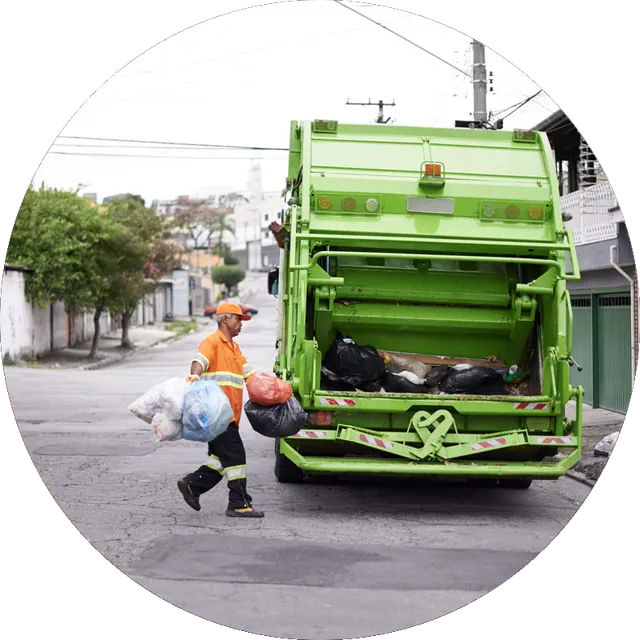
Collection crews start before dawn and drive heavy trucks among traffic and pedestrians; sleep cut short by early starts erodes alertness in one of the deadliest civilian industries.

Regulation changed 9 Jul 2026Change coming 1 Apr 2027

Waste Management & Resource Recovery workforce

Who this page covers

  • Council waste crews (also see Government & Council)
  • Hazardous waste treatment and disposal
  • Kerbside collection
  • Liquid and hazardous waste collection and transport
  • Recycling and materials recovery facilities (MRFs)
  • Scrap metal recycling
  • Transfer stations and landfill

Reg Watch

What’s changed, and what’s coming

Regulatory change that affects how you manage fatigue in waste management & resource recovery: what has changed in the last 12 months, and what is on the way.

Recent changeFrom 9 July 2026

Applies across industries in New Zealand

The Health and Safety at Work Amendment Act 2026 became law on 9 July 2026. Your duties do not change until most of it commences on 1 April 2027, so use the lead time to evidence fatigue as a serious-harm risk.

Read the change

Upcoming changeExpected from 1 April 2027Within 12 months

From 1 April 2027 HSWA centres on 'critical risks'; fatigue is not on the Schedule 1A list, so it counts only where likely to cause death or notifiable harm. Where the Land Transport Act manages the same risk, complying with it can satisfy the matching HSWA duty. Small firms (under 20 workers) manage critical risks only.

Regulatory changes checked as at 1 October 2026.

Regulation

Who regulates it, and what they expect

Waste in New Zealand runs under two layers. Your drivers of heavier trucks work to statutory work time limits enforced on the road. Everyone else - loaders, sorters, landfill and transfer staff - sits under the general duty to manage fatigue so far as is reasonably practicable, a duty the law says expressly reaches fatigue. Where a council contracts out collection, the council and the contractor each owe that duty for the work they share and must consult, cooperate and coordinate.

Regulated by
  • WorkSafe New ZealandWorkSafe
  • NZ Transport Agency Waka KotahiNZTA

Logos identify the regulator and don’t imply endorsement.

Who regulates it

WorkSafe New Zealand enforces the general safety duty across collection, transfer, landfill and recovery. NZ Transport Agency Waka Kotahi sets the work time and logbook rules for your drivers, and NZ Police enforce them on the road. ACC covers workplace injury on a no-fault basis.

Your obligations

Keep drivers within the Work Time and Logbooks Rule 2007: a 30-minute break after no more than 5.5 hours of work time, at most 13 hours of work time in a cumulative work day followed by 10 continuous hours' rest, and 24 hours' rest after 70 hours. The logbook exemption for work within 50 km of base covers only trucks needing a class 1 or 2 licence, so heavier collection trucks keep a logbook even on local rounds. Manage fatigue from early starts, heat and workload for your whole workforce.

Consequences

WorkSafe can issue notices or prosecute across three offence tiers, with reparation for the injured worker or family ordered on top of any fine. Drivers who breach work time limits face fines and licence suspension, and an operator whose scheduling pushes drivers into breaches can itself be fined. Keeping to the hours is no defence to a WorkSafe prosecution if a fatigued driver still crashes.

Penalties

Maximum fines for an organisation, in force in 2026 and unchanged since 2015: $500,000, $1.5 million and $3 million across the three offence tiers, with reparation on top. Work time breaches carry up to $2,000 per driver offence plus licence loss, logbook errors up to $500, and an operator whose pressure causes breaches up to $25,000 (2026).

On the record

No New Zealand court, coroner, investigator or regulator has published a finding linking fatigue to an incident in waste collection. Heavier collection trucks need a logbook even on rounds that never leave town, because the local-work exemption stops at class 2.

Sources: Health and Safety at Work Act 2015; Land Transport Rule: Work Time and Logbooks 2007; Land Transport Act 1998; NZ Transport Agency Waka Kotahi; Accident Compensation Act 2001.

Fatigue-critical roles

Where fatigue matters most in waste management & resource recovery

The roles where a fatigued worker is most likely to cause serious harm, the tasks that carry the risk, and why fatigue builds up in them.

RoleRiskHigh-risk tasksWhy fatigue builds
Refuse truck driver
Rules
Regulatory designation
Driver of a work-time vehicle (Land Transport Rule: Work Time and Logbooks 2007)
Hours and rest
Work Time Rule; logbook exemption only for Class 1-2 vehicles within 50 km (r 4.5(1))
Critical riskSingle-operator side-lift collection from 04:00-05:00, hundreds of lifts per shift, reversing in residential streets, school-zone and pedestrian conflictsVery early starts (04:00-05:00), task-and-finish runs, 10-12 h days, monotony
Liquid waste tanker driver
Rules
Regulatory designation
Driver of a work-time vehicle (Land Transport Rule: Work Time and Logbooks 2007)
Hours and rest
Work Time Rule: 30 min break after 5.5 h; max 13 h work per cumulative work day; 10 h continuous rest; 70 h then 24 h off
Critical riskVacuum tanker work on grease traps and septic systems at night, hazardous waste loading, emergency spill call-outs, long rural runsNight and on-call work for commercial clients, emergency call-outs, long days
Refuse collector (runner)
Rules
Regulatory designation
None specific - general duty (HSWA 2015 s 36; fatigue named in s 16 'hazard')
Hours and rest
No statutory maximum; ERA 2000 ss 69ZD-69ZE rest and meal breaks
High riskRunning bins to the hopper behind a moving truck, riding steps, working in the reversing zone, needle-stick and crush risk in the darkPre-dawn starts, fast task-and-finish pace, heat or cold, 10 h days
Landfill plant operator
Rules
Regulatory designation
None specific - general duty (HSWA 2015 s 36; fatigue named in s 16 'hazard')
Hours and rest
No statutory maximum; ERA 2000 ss 69ZD-69ZE rest and meal breaks
High riskOperating compactors and loaders on tip faces near pedestrians and tipping trucks, push-pit work at transfer stations, fire watchLong days 6-7 days a week, early opening, dust and heat, lone plant work
MRF sorter / plant operator
Rules
Regulatory designation
None specific - general duty (HSWA 2015 s 36; fatigue named in s 16 'hazard')
Hours and rest
No statutory maximum; ERA 2000 ss 69ZD-69ZE rest and meal breaks
High riskClearing jams in balers and conveyors under lock-out, picking on fast sort lines, responding to lithium-battery fires overnightTwo or three-shift operation incl. nights, monotonous high-speed picking
Street sweeper operator
Rules
Regulatory designation
None specific - general duty (HSWA 2015 s 36; fatigue named in s 16 'hazard')
Hours and rest
No statutory maximum; ERA 2000 ss 69ZD-69ZE rest and meal breaks
High riskOperating road sweepers at night in city centres and on highways, litter picking on motorway verges beside live trafficNight shifts (about 22:00-06:00) to avoid traffic, monotony, lone vehicle work

How the suite fits

How each product connects to your obligations

Grades describe how strongly a product connects to an obligation. None discharges an obligation, and none carries a compliance warranty.

Sleepfit

Supports your general duty of care

No New Zealand rule names a sleep screen for waste crews. Section 36(3)(g) of the Health and Safety at Work Act 2015 requires you to monitor worker health, and Sleepfit supports it. It screens; diagnosis stays with your clinicians.

About Sleepfit

Fatiguefit4Duty

Supports your general duty of care

Your drivers work under the Work Time and Logbooks Rule 2007, which limits hours and names no pre-duty check; s 16 of the 2015 Act counts fatigue as a hazard for every role. A fitness-for-duty check, not a fitness-for-duty decision - the duty call stays with you.

About Fatiguefit4Duty

Awareness eLearning

Supports your general duty of care

Section 36(3)(f) of the Health and Safety at Work Act 2015 requires the training needed to protect your crews but does not name fatigue. Awareness eLearning supplies fatigue and sleep content; your training programme stays yours.

About Awareness eLearning

Was It Fatigue?

Supports your general duty of care

You must notify WorkSafe of a notifiable event under s 56 of the Health and Safety at Work Act 2015; no rule requires you to assess whether fatigue contributed. Was It Fatigue? supports your review. A structured judgement aid, not a determination of cause.

About Was It Fatigue?

SleepWellBaby

No New Zealand rule reaches sleep in new-parent households. SleepWellBaby is offered to parents on your collection crews and at your sites as a benefit that protects their own sleep, not as a compliance step.

About SleepWellBaby

Recommended bundle

Where we’d start in waste management & resource recovery

Every bundle is priced on prevalence: your whole cohort gets access, and you pay for the share predicted to need each product. How pricing works.

Recommended · Levels 2 and 3

Shift Worker Bundle

Sleep screening and a point-of-duty check for the workers who need it most.

Why this pairing in New Zealand

Work time rules cap driving hours; HSWA 2015 s 36 reaches fatigue but names no tool. Sleepfit screens your drivers and crews for sleep disorders, supporting s 36(3)(g) health monitoring; Fatiguefit4Duty adds a point-of-duty self-check. Prevention adds Awareness eLearning with a completion record.

See what sleep and fatigue mean for your waste management & resource recovery workforce.

Tell us roughly how many people you employ. Your snapshot models how many are likely sleeping poorly and what it costs, from published research for waste management & resource recovery. Then choose who you’d cover, and we’ll take you to the right next step.

A sample workforce snapshot on a tablet: modelled sleep problems and the cost of poor sleep for 1,400 people in transport and logistics.