Waste Management & Resource Recovery · Australia

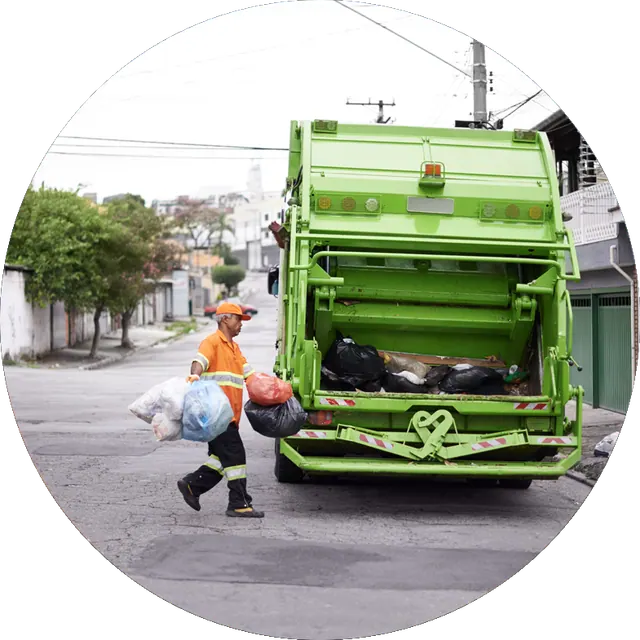
Waste and recycling starts before dawn. Sleep sets the day’s pace.

Collection crews start before dawn and drive heavy trucks among traffic and pedestrians; sleep cut short by early starts erodes alertness in one of the deadliest civilian industries.

Regulation changed 27 Mar 2026

Waste Management & Resource Recovery workforce

Who this page covers

  • Council waste crews (also see Government & Council)
  • Hazardous waste treatment and disposal
  • Kerbside collection
  • Liquid and hazardous waste collection and transport
  • Recycling and materials recovery facilities (MRFs)
  • Scrap metal recycling
  • Transfer stations and landfill

Reg Watch

What’s changed, and what’s coming

Regulatory change that affects how you manage fatigue in waste management & resource recovery: what has changed in the last 12 months, and what is on the way.

Recent changeFrom 27 March 2026

Specific to waste management & resource recovery

A NSW code on waste collection and transport took effect on 27 March 2026 and must be followed from 1 July 2026. From 1 August 2026 the amended HVNL bars your drivers from driving while unfit, including fatigued.

Read the change

Upcoming changeNo date set yet

If your fleet holds NHVAS fatigue accreditation (BFM or AFM), it runs alongside the new scheme for up to three years from 1 August 2026 and moves to Alternative Compliance Accreditation when it expires. Safe Work Australia's review of the model WHS laws is with ministers, with no change date set.

Regulatory changes checked as at 1 October 2026.

Regulation

Who regulates it, and what they expect

Waste sits under two fatigue regimes at once. Your collection trucks are heavy vehicles, so in the states that apply the Heavy Vehicle National Law your drivers work to set hours, must not drive while impaired by fatigue, and every party that schedules them owes a primary duty. Everyone else - loaders, sorters, landfill and transfer staff - sits under the general WHS duty and, in NSW and the NT, an approved fatigue code. The Waste Management Award lets ordinary hours start at 4.00 am, so pre-dawn starts are built in.

Regulated by
  • Safe Work AustraliaSWA
  • National Heavy Vehicle RegulatorNHVR

Logos identify the regulator and don’t imply endorsement.

Who regulates it

Your state or territory WHS regulator (SafeWork NSW, WorkSafe Victoria, WorkSafe Queensland, WorkSafe WA, NT WorkSafe and others) enforces the general safety duty across collection, transfer, landfill and recovery. The National Heavy Vehicle Regulator enforces heavy vehicle fatigue law for your fleet in NSW, Victoria, Queensland, SA, Tasmania and the ACT. The Fair Work Ombudsman enforces the Waste Management Award 2020.

Your obligations

Manage fatigue as a WHS hazard across your operation: early starts, workload, heat and travel. For heavy collection trucks in HVNL states, keep drivers within standard hours - 12 hours' work in any 24 with 7 continuous hours' stationary rest, plus set short breaks - and never let a fatigued driver drive. Local rounds within 100 km of base need no work diary, but the hours still apply. In WA, commercial driver fatigue rules sit in the WHS (General) Regulations 2022. Under the Award, give 10 consecutive hours off between shifts where practicable.

Consequences

A fatigue failure in your fleet can be prosecuted twice: under heavy vehicle law, where a driver who drives while fatigued and every party whose scheduling contributed can be charged, and under WHS law, where the most serious offences carry imprisonment and every jurisdiction has an industrial or workplace manslaughter offence where negligence causes a death. Hours breaches for drivers are graded by risk and carry demerit points. Award breaches on rest between shifts go to the Fair Work Ombudsman.

Penalties

Heavy vehicle law, schedule in force 1 August 2026 to 30 June 2027: driving while fatigued up to $28,230; work and rest breaches from $4,230 (minor) to $21,170 (critical); a category 1 primary duty breach up to $4,230,550 for a company. WHS maximums at 1 July 2025 levels, the latest published: category 1 up to $17,034,000 for a Commonwealth body corporate and $11,150,183 in NSW.

Sources: Heavy Vehicle National Law and NHVR penalty schedule (1 Aug 2026 to 30 Jun 2027); model WHS Act and approved fatigue code (NSW, NT); WA WHS (General) Regulations 2022; Waste Management Award 2020 (MA000043); Safe Work Australia penalty table.

Fatigue-critical roles

Where fatigue matters most in waste management & resource recovery

The roles where a fatigued worker is most likely to cause serious harm, the tasks that carry the risk, and why fatigue builds up in them.

RoleRiskHigh-risk tasksWhy fatigue builds
Waste collection driver (side-lift operator)
Rules
Regulatory designation
Fatigue-regulated heavy vehicle driver (HVNL s 7, GVM > 12 t); WA: commercial vehicle driver (WHS (General) Regs 2022 Pt 4.10)
Hours and rest
HVNL standard hours; Waste Management Award 2020: ordinary hours 04:00-17:00 Mon-Fri, 10 h off between days
Critical riskSingle-operator side-lift collection from 04:00-05:00, hundreds of lifts per shift, reversing in residential streets, school-zone and pedestrian conflictsVery early starts (04:00-05:00), task-and-finish runs, 10-12 h days, monotony
Liquid waste tanker driver
Rules
Regulatory designation
Fatigue-regulated heavy vehicle driver (HVNL s 7, GVM > 12 t); WA: commercial vehicle driver (WHS (General) Regs 2022 Pt 4.10); dangerous goods driver licence where applicable
Hours and rest
HVNL standard hours (solo truck): max 12 h work and min 7 h continuous stationary rest in any 24 h; BFM/AFM by accreditation
Critical riskVacuum tanker work on grease traps and septic systems at night, hazardous waste loading, emergency spill call-outs, long rural runsNight and on-call work for commercial clients, emergency call-outs, long days
Waste collection offsider (runner)
Rules
Regulatory designation
None specific - general duty (WHS Act s 19; WHS Regs psychosocial hazards incl. fatigue)
Hours and rest
Waste Management Award 2020 (ordinary hours 04:00-17:00)
High riskRunning bins to the hopper behind a moving truck, riding steps, working in the reversing zone, needle-stick and crush risk in the darkPre-dawn starts, fast task-and-finish pace, heat or cold, 10 h days
Landfill compactor operator / transfer station operator
Rules
Regulatory designation
None specific - general duty (WHS Act s 19; WHS Regs psychosocial hazards incl. fatigue)
Hours and rest
No statutory cap: FW Act s 62 (38 h + reasonable additional hours); award or EA rest terms
High riskOperating compactors and loaders on tip faces near pedestrians and tipping trucks, push-pit work at transfer stations, fire watchLong days 6-7 days a week, early opening, dust and heat, lone plant work
MRF sorter / baler operator
Rules
Regulatory designation
None specific - general duty (WHS Act s 19; WHS Regs psychosocial hazards incl. fatigue)
Hours and rest
No statutory cap: FW Act s 62 (38 h + reasonable additional hours); award or EA rest terms
High riskClearing jams in balers and conveyors under lock-out, picking on fast sort lines, responding to lithium-battery fires overnightTwo or three-shift operation incl. nights, monotonous high-speed picking
Street sweeper operator
Rules
Regulatory designation
None specific - general duty (WHS Act s 19; WHS Regs psychosocial hazards incl. fatigue)
Hours and rest
No statutory cap: FW Act s 62 (38 h + reasonable additional hours); award or EA rest terms
High riskOperating road sweepers at night in city centres and on highways, litter picking on motorway verges beside live trafficNight shifts (about 22:00-06:00) to avoid traffic, monotony, lone vehicle work

Stories

When fatigue made the record

Published findings and prosecutions from regulators, courts and investigators in Australia.

  • Oct 2021 · New South Wales, Australia

    Waste truck driver sacked for skipped fatigue breaks wins compensation: supervisors had encouraged the breaches

    • Legal
    • Financial

    A casual rear-lift waste collection driver was dismissed for falsifying run sheets to hide short and missed fatigue breaks, including one 12.75-hour shift with only two 15-minute breaks. The Fair Work Commission found the falsification was a valid reason for dismissal, but that supervisors had planned routes without proper breaks, told him to defer his break to fix a broken truck, signed off non-compliant run sheets and were never disciplined. Because the company's zero-tolerance fatigue policy was not applied in practice and only the driver was singled out, the dismissal was unfair and compensation was ordered.

    Case AU-waste-02Report an issue

See all waste management & resource recovery news

How the suite fits

How each product connects to your obligations

Grades describe how strongly a product connects to an obligation. None discharges an obligation, and none carries a compliance warranty.

Sleepfit

Supports your general duty of care

No Australian rule names a sleep screen for waste crews. Sleepfit supports your s 19 WHS duty and, in New South Wales and the Northern Territory, the approved fatigue code's attention to recovery between shifts. It screens; diagnosis stays with your clinicians.

About Sleepfit

Fatiguefit4Duty

Supports your general duty of care

In HVNL states your drivers must not drive a heavy vehicle while impaired by fatigue (s 228(1)), but no rule names a pre-start check; loaders and plant staff sit under the WHS duty. A fitness-for-duty check, not a fitness-for-duty decision - the duty call stays with you.

About Fatiguefit4Duty

Awareness eLearning

Supports your general duty of care

Awareness eLearning supplies fatigue and sleep content with a completion record for drivers, loaders and schedulers. In New South Wales the approved fatigue code names fatigue training and must be followed or matched; elsewhere the general training duty applies.

About Awareness eLearning

Was It Fatigue?

Supports your general duty of care

You must notify the regulator of a notifiable incident, but no Australian rule requires you to assess whether fatigue contributed to a collection vehicle crash or plant incident. Was It Fatigue? supports your own review. A structured judgement aid, not a determination of cause.

About Was It Fatigue?

SleepWellBaby

No Australian rule reaches sleep in new-parent households. SleepWellBaby supports parents on your collection crews and at your sites, whose early starts leave little room for broken nights; it is offered as a benefit.

About SleepWellBaby

Recommended bundle

Where we’d start in waste management & resource recovery

Every bundle is priced on prevalence: your whole cohort gets access, and you pay for the share predicted to need each product. How pricing works.

Recommended · Levels 2 and 3

Shift Worker Bundle

Sleep screening and a point-of-duty check for the workers who need it most.

Why this pairing in Australia

HVNL s 228(1) bars your drivers driving while fatigued; loaders sit under s 19 of the WHS Act. Sleepfit screens your drivers and loaders for sleep disorders; Fatiguefit4Duty adds a point-of-duty self-check with a record. Prevention adds Awareness eLearning with a completion record.

See what sleep and fatigue mean for your waste management & resource recovery workforce.

Tell us roughly how many people you employ. Your snapshot models how many are likely sleeping poorly and what it costs, from published research for waste management & resource recovery. Then choose who you’d cover, and we’ll take you to the right next step.

A sample workforce snapshot on a tablet: modelled sleep problems and the cost of poor sleep for 1,400 people in transport and logistics.