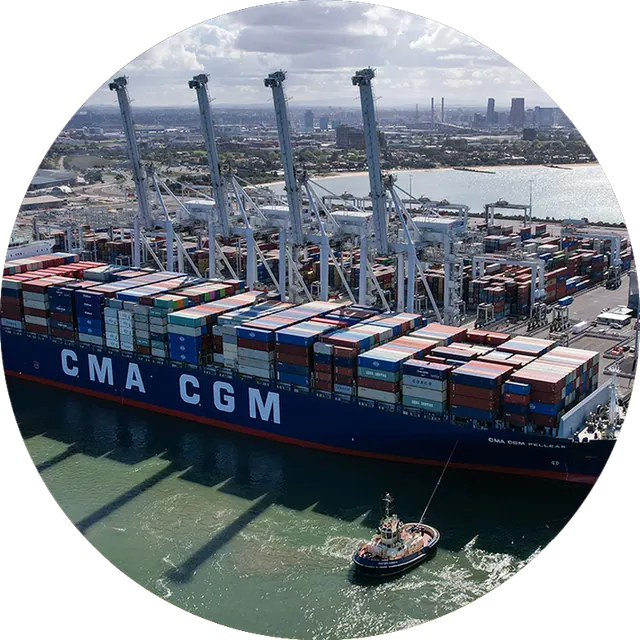
Maritime & Shipping · Ireland

Weeks of watches at sea test sleep like nothing else.

Seafarers stand watch systems such as six-on/six-off for weeks at a time, with broken sleep, noise and motion. Fatigue on watch raises the risk of grounding, collision and injury.

Maritime & Shipping workforce

Who this page covers

  • Coastal and domestic commercial vessels
  • Commercial fishing
  • Cruise lines
  • Dredging
  • Ferries and passenger vessels
  • Marine pilots, tugs and towage
  • Offshore supply and construction vessels (also see Oil & Gas)
  • Shipping lines - deep sea

Reg Watch

What’s changed, and what’s coming

Regulatory change that affects how you manage fatigue in maritime & shipping: what has changed in the last 12 months, and what is on the way.

Upcoming changeNo date set yet

Amendments to the Maritime Labour Convention agreed in 2025 (harassment and bullying, shore leave, repatriation, medical care) are expected to take effect internationally in December 2027. The ILO has called for joint work with the IMO on seafarer hours of work and rest; no new rest-hour rule has been proposed.


Regulatory changes checked as at 1 October 2026.

Regulation

Who regulates it, and what they expect

Seafarers are carved out of the general national working-hours rules and covered by international standards given effect through Irish law. Those require at least 10 hours' rest in every 24 and at least 77 hours' rest in every 7 days, structured differently from the shore-based regime - the daily floor is lower, the weekly total higher, and rest may be split into no more than two blocks. Compliance is verified by flag state survey and certification, and port state inspectors check the same records wherever the ship trades.

Regulated by
  • Department of Transport (Marine Survey Office)DoT

Logos identify the regulator and don’t imply endorsement.

Who regulates it

Seafarers on Irish-flagged ships sit outside the general national working-hours rules, under international maritime rest-hour standards instead. The Marine Survey Office, part of the Department of Transport, is the flag state authority that surveys and certifies Irish ships and inspects rest-hour records. Since January 2026 marine accidents are investigated by the new Marine Accident Investigation Unit.

Your obligations

Seafarers on Irish-flagged ships must get at least 10 hours' rest in any 24-hour period, split into no more than two blocks with one of at least 6 hours and no more than 14 hours between consecutive rest periods, and at least 77 hours' rest in any 7 days - put the other way, no more than 14 hours' work in 24 and 72 in a week. Ship operators must keep records of each seafarer's daily hours of rest, make them available for inspection, and hold the maritime labour certification confirming compliance, checked by government surveyors. Shore-based port and terminal staff stay on the ordinary national rules.

Consequences

If an Irish ship doesn't meet these rest-hour rules, the government can detain the vessel - meaning it simply can't sail - and can withdraw its compliance certificate, both immediately and severely costly for a shipping company. This can also be checked by foreign port authorities when an Irish ship visits another country, so getting it wrong carries international, not just domestic, consequences.

Penalties

The enforcement lever here is the ship, not a euro tariff. A vessel can be detained until it complies and its maritime labour certificate withheld or withdrawn, and the same rest-hour records are checked by port state inspectors abroad. Lost trading days, charter-party penalties and cargo-delay claims from a single detention typically dwarf the fines seen in general safety cases - which in Ireland run to €5,000 summarily and €3,000,000 on indictment.

Sources: Maritime Labour Convention 2006, Standard A2.3; STCW Convention as amended; Marine Survey Office, Department of Transport; Marine Accident Investigation Unit; Organisation of Working Time Act 1997 s.3(2).

Fatigue-critical roles

Where fatigue matters most in maritime & shipping

The roles where a fatigued worker is most likely to cause serious harm, the tasks that carry the risk, and why fatigue builds up in them.

RoleRiskHigh-risk tasksWhy fatigue builds
Officer in charge of a navigational watch
Rules
Regulatory designation
Seafarer (S.I. 314/2023 watchkeeping; S.I. 246/2014 medical certificate); OWTA Part II excluded for sea work
Hours and rest
MLC Standard A2.3 / STCW: 10 h rest in any 24 h and 77 h in any 7 days; at most 2 periods, one of at least 6 h
Critical riskKeeping a bridge watch alone in the 00:00-04:00 or 04:00-08:00 watch; collision avoidance in coastal traffic; port arrival straight after cargo work6-on/6-off or 4-on/8-off watches, port-call cargo work eating rest, time-zone changes, months-long tours
Engineer officer
Rules
Regulatory designation
Seafarer (S.I. 314/2023 watchkeeping; S.I. 246/2014 medical certificate); OWTA Part II excluded for sea work
Hours and rest
MLC Standard A2.3 / STCW: 10 h rest in any 24 h and 77 h in any 7 days; at most 2 periods, one of at least 6 h
Critical riskUnmanned machinery space on-call alarm response at night; engine-room watch; bunkering, fuel changeover and blackout recovery after broken sleepUMS on-call nights with repeated alarms, port maintenance during rest periods, heat and noise
Marine pilot (port company)
Rules
Regulatory designation
Licensed pilot (Harbours Act 1996)
Hours and rest
OWTA 1997; port company rostering
Critical riskConning large ships through pilotage waters at night; boarding by pilot ladder in swell; back-to-back jobs and long coastal pilotages24/7 on-call job lists, night jobs, long transits and travel between jobs, irregular rest
Tug master
Rules
Regulatory designation
Seafarer (S.I. 314/2023 watchkeeping; S.I. 246/2014 medical certificate); OWTA Part II excluded for sea work
Hours and rest
MLC Standard A2.3 / STCW: 10 h rest in any 24 h and 77 h in any 7 days; at most 2 periods, one of at least 6 h
Critical riskShip-assist and harbour towage at night on short notice; towline handling near girting risk; coastal barge towing on two-watch systemsOn-call 24 h harbour rosters, two-watch towing (6-on/6-off), back-to-back jobs
Skipper (fishing vessel); master (passenger boat)
Rules
Regulatory designation
Skipper or master; sea-fishing working-time rules (Dir 2000/34 transposition)
Hours and rest
Rest 10 h/24 h and 77 h/7 days for sea-fishing (verify transposing S.I.)
Critical riskSkippering a ferry or workboat with minimum crew on long days; night fishing then steaming home after hauling; lone watch on small vesselsLong seasonal days, early starts, split shifts on commuter ferries, multi-day trips with fragmented sleep
Able seafarer (watch rating)
Rules
Regulatory designation
Seafarer (S.I. 314/2023 watchkeeping; S.I. 246/2014 medical certificate); OWTA Part II excluded for sea work
Hours and rest
MLC Standard A2.3 / STCW: 10 h rest in any 24 h and 77 h in any 7 days; at most 2 periods, one of at least 6 h
High riskLookout and helm on night watches; mooring and anchor work during port calls that cut into rest; fire roundsWatch rotations, port-call work in rest periods, long tours

Stories

When fatigue made the record

Published findings and prosecutions from regulators, courts and investigators in Ireland.

  • Jul 2020 · At sea, off Ireland

    Trawler deckhand's leg crushed after only three hours' rest

    • Safety

    A crew member on a trawler suffered an open fracture of the leg when it was trapped during net recovery, and was in hospital for 10 days. The Marine Casualty Investigation Board concluded fatigue may well have been a factor, as the injured man had had only three hours' rest before the operation began and the crew was one person short.

    Case IE-maritime-06Report an issue

See all maritime & shipping news

How the suite fits

How each product connects to your obligations

Grades describe how strongly a product connects to an obligation. None discharges an obligation, and none carries a compliance warranty.

Fatiguefit4Duty

Supports a named obligation

Regulation 6(1) of S.I. 314/2023 requires your watchkeeping to have regard to STCW Code section A-VIII, under which watches must be rested and fit for duty. Fatiguefit4Duty supports that. A fitness-for-duty check, not a fitness-for-duty decision - the duty call stays with you.

About Fatiguefit4Duty

Was It Fatigue?

Supports your general duty of care

No Irish maritime rule names a fatigue assessment after a casualty or near miss. Was It Fatigue? supports your own investigation of incidents involving your seafarers and your safety management review. A structured judgement aid, not a determination of cause.

About Was It Fatigue?

SleepWellBaby

No Irish maritime rule reaches sleep in new-parent households. SleepWellBaby is offered to the working parents among your seafarers as a wellbeing benefit, not as a step any Irish regulation requires.

About SleepWellBaby

Recommended bundle

Where we’d start in maritime & shipping

Every bundle is priced on prevalence: your whole cohort gets access, and you pay for the share predicted to need each product. How pricing works.

Why this pairing in Ireland

S.I. 314/2023 reg 6(1) applies STCW A-VIII: watchkeepers must be rested and fit; Fatiguefit4Duty supports that with a pre-watch check. Awareness eLearning refreshes the STCW fatigue competence; Sleepfit screens between medicals. Fatigue Lifecycle adds casualty review.

See what sleep and fatigue mean for your maritime & shipping workforce.

Tell us roughly how many people you employ. Your snapshot models how many are likely sleeping poorly and what it costs, from published research for maritime & shipping. Then choose who you’d cover, and we’ll take you to the right next step.

A sample workforce snapshot on a tablet: modelled sleep problems and the cost of poor sleep for 1,400 people in transport and logistics.