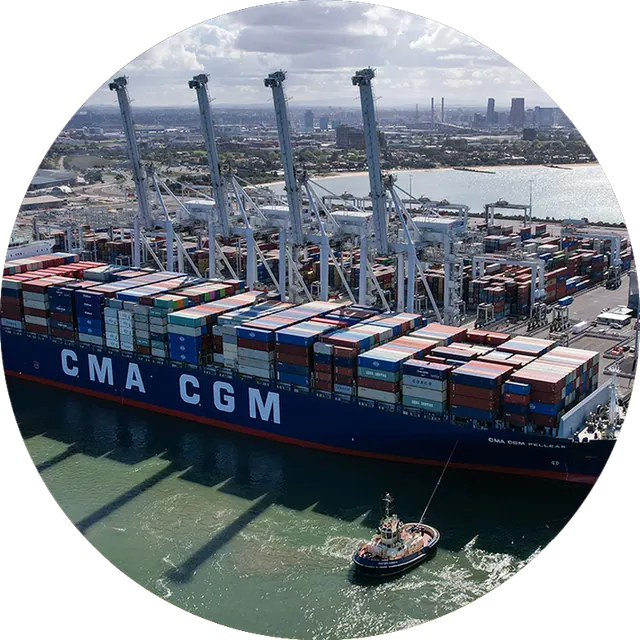
Maritime & Shipping · Singapore

Weeks of watches at sea test sleep like nothing else.

Seafarers stand watch systems such as six-on/six-off for weeks at a time, with broken sleep, noise and motion. Fatigue on watch raises the risk of grounding, collision and injury.

Maritime & Shipping workforce

Who this page covers

  • Coastal and domestic commercial vessels
  • Commercial fishing
  • Cruise lines
  • Dredging
  • Ferries and passenger vessels
  • Marine pilots, tugs and towage
  • Marine services - Singapore harbour craft
  • Offshore supply and construction vessels (also see Oil & Gas)
  • Shipping lines - deep sea

Reg Watch

What’s changed, and what’s coming

Regulatory change that affects how you manage fatigue in maritime & shipping: what has changed in the last 12 months, and what is on the way.

Upcoming changeExpected from 23 December 2027

Maritime Labour Convention amendments adopted 6 Jun 2025 (shore leave, repatriation costs, a legal ban on onboard harassment) are expected in force 23 Dec 2027. The Workplace Fairness Act 2025 (covering disability and mental health conditions) is targeted to commence around end-2027.


Regulatory changes checked as at 1 October 2026.

Regulation

Who regulates it, and what they expect

Maritime has binding fatigue rules. Seafarers on Singapore-registered ships must have at least 10 hours' rest in any 24 hours and 77 hours in any seven days, in no more than two periods, one of at least six hours, with no more than 14 hours between rest periods. The master keeps daily rest records. Seafarers are outside the Employment Act; port, shipyard and other shore staff follow the baseline.

Regulated by
  • Maritime and Port Authority of SingaporeMPA

Logos identify the regulator and don’t imply endorsement.

Who regulates it

The Maritime and Port Authority of Singapore (MPA) enforces seafarers' hours of rest on Singapore-registered ships under the Merchant Shipping (Maritime Labour Convention) Act 2014 and the STCW Convention, including through inspection and detention. The Transport Safety Investigation Bureau investigates marine casualties. Shore-based staff fall under MOM.

Your obligations

As shipowner you must ensure your seafarers get the minimum hours of rest - 10 in any 24 hours and 77 in any seven days - with the master recording rest daily in the standard format and giving seafarers a monthly copy. Your manning and safety management arrangements must make those hours achievable in practice, including after crew changes. Shore-based port and shipyard workers are covered by the baseline safety and employment law.

Consequences

A shipowner who fails to provide minimum rest commits an offence punishable by a fine of up to S$10,000 (Merchant Shipping (MLC) Act 2014, in force 2026). MPA can detain a non-compliant ship until deficiencies are fixed, and sailing in breach of a detention notice carries up to S$50,000 and/or two years' jail for owner and master. TSIB publishes its fatigue findings in named reports.

Penalties

Fines are modest - up to S$10,000 per rest-hours offence (2026) - but detention stops a ship earning. A fatigue finding in a published TSIB report, as in the Hafnia Nile collision, carries reputational and charter consequences well beyond any fine.

Sources: Merchant Shipping (Maritime Labour Convention) Act 2014; STCW Convention; Maritime and Port Authority of Singapore; Transport Safety Investigation Bureau report on Hafnia Nile and Ceres I (December 2025).

Fatigue-critical roles

Where fatigue matters most in maritime & shipping

The roles where a fatigued worker is most likely to cause serious harm, the tasks that carry the risk, and why fatigue builds up in them.

RoleRiskHigh-risk tasksWhy fatigue builds
Officer in charge of a navigational watch (deck officer)
Rules
Regulatory designation
Seafarer (Merchant Shipping (MLC) Act 2014; s 7 medical fitness certificate)
Hours and rest
MS (MLC) Act 2014 s 16: 10 h rest in any 24 h and 77 h in any 7 days
Critical riskKeeping a bridge watch alone in the 00:00-04:00 or 04:00-08:00 watch; collision avoidance in coastal traffic; port arrival straight after cargo work6-on/6-off or 4-on/8-off watches, port-call cargo work eating rest, time-zone changes, months-long tours
Marine engineer officer
Rules
Regulatory designation
Seafarer (Merchant Shipping (MLC) Act 2014; s 7 medical fitness certificate)
Hours and rest
MS (MLC) Act 2014 s 16: 10 h rest in any 24 h and 77 h in any 7 days
Critical riskUnmanned machinery space on-call alarm response at night; engine-room watch; bunkering, fuel changeover and blackout recovery after broken sleepUMS on-call nights with repeated alarms, port maintenance during rest periods, heat and noise
Harbour pilot (PSA Marine)
Rules
Regulatory designation
Pilot licensed by the Maritime and Port Authority of Singapore
Hours and rest
MPA pilotage licence conditions; Employment Act Part IV only within thresholds
Critical riskConning large ships through pilotage waters at night; boarding by pilot ladder in swell; back-to-back jobs and long coastal pilotages24/7 on-call job lists, night jobs, long transits and travel between jobs, irregular rest
Tug master (harbour craft)
Rules
Regulatory designation
Harbour craft licence holder (MPA)
Hours and rest
Employment Act Part IV within thresholds
Critical riskShip-assist and harbour towage at night on short notice; towline handling near girting risk; coastal barge towing on two-watch systemsOn-call 24 h harbour rosters, two-watch towing (6-on/6-off), back-to-back jobs
Harbour craft / ferry master
Rules
Regulatory designation
Harbour craft licence holder (MPA)
Hours and rest
Employment Act Part IV within thresholds
Critical riskSkippering a ferry or workboat with minimum crew on long days; night fishing then steaming home after hauling; lone watch on small vesselsLong seasonal days, early starts, split shifts on commuter ferries, multi-day trips with fragmented sleep
Able seaman (watch rating)
Rules
Regulatory designation
Seafarer (Merchant Shipping (MLC) Act 2014; s 7 medical fitness certificate)
Hours and rest
MS (MLC) Act 2014 s 16: 10 h rest in any 24 h and 77 h in any 7 days
High riskLookout and helm on night watches; mooring and anchor work during port calls that cut into rest; fire roundsWatch rotations, port-call work in rest periods, long tours

Stories

When fatigue made the record

Published findings and prosecutions from regulators, courts and investigators in Singapore.

Jul 2024 · At sea, South China Sea

Tanker collision: officer of the watch had under 2 hours' rest in 38.5

  • Safety

In 2024 a Singapore-registered tanker collided with another tanker in the South China Sea; both ships caught fire and a shore worker on the other tanker later died. Singapore's Transport Safety Investigation Bureau found the officer of the watch had under two hours' unbroken rest in the 38.5 hours before his midnight watch and was likely fatigued. He had joined after overnight travel, and an unannounced fire-alarm test woke him.

Case SG-maritime-01Report an issue

See all maritime & shipping news

How the suite fits

How each product connects to your obligations

Grades describe how strongly a product connects to an obligation. None discharges an obligation, and none carries a compliance warranty.

Sleepfit

Supports your general duty of care

Sleepfit screens sleep health across your crew. The Merchant Shipping (Maritime Labour Convention) Act 2014 sets hours of rest in s 16 and a general health and safety duty in s 40; neither names a sleep screen. It screens; diagnosis stays with your clinicians.

About Sleepfit

Fatiguefit4Duty

Supports your general duty of care

Fatiguefit4Duty records a pre-watch fatigue check for your watchkeepers, supporting the general duty in s 40 of the Merchant Shipping (Maritime Labour Convention) Act 2014. A fitness-for-duty check, not a fitness-for-duty decision - the duty call stays with you.

About Fatiguefit4Duty

Awareness eLearning

Supports your general duty of care

Awareness eLearning gives your crew recorded fatigue education, supporting the general health and safety duty in s 40 of the Merchant Shipping (Maritime Labour Convention) Act 2014. The Act names no fatigue training content.

About Awareness eLearning

Was It Fatigue?

Supports your general duty of care

Was It Fatigue? structures a fatigue review after a shipboard incident, supporting the general duty in s 40 of the Merchant Shipping (Maritime Labour Convention) Act 2014. No Singapore rule requires a fatigue review. A structured judgement aid, not a determination of cause.

About Was It Fatigue?

SleepWellBaby

SleepWellBaby supports parents among your crew and shore staff through the most broken months of infant sleep. No Singapore shipping rule reaches sleep in new-parent households; it is offered as a benefit.

About SleepWellBaby

Recommended bundle

Where we’d start in maritime & shipping

Every bundle is priced on prevalence: your whole cohort gets access, and you pay for the share predicted to need each product. How pricing works.

Why this pairing in Singapore

The Merchant Shipping (Maritime Labour Convention) Act 2014 sets rest hours (s 16) and a general duty (s 40), naming no fatigue tool. Sleepfit screens crew, Fatiguefit4Duty adds a pre-watch check, Awareness eLearning trains. Fatigue Lifecycle adds shipboard incident review.

See what sleep and fatigue mean for your maritime & shipping workforce.

Tell us roughly how many people you employ. Your snapshot models how many are likely sleeping poorly and what it costs, from published research for maritime & shipping. Then choose who you’d cover, and we’ll take you to the right next step.

A sample workforce snapshot on a tablet: modelled sleep problems and the cost of poor sleep for 1,400 people in transport and logistics.