Maritime & Shipping · United States

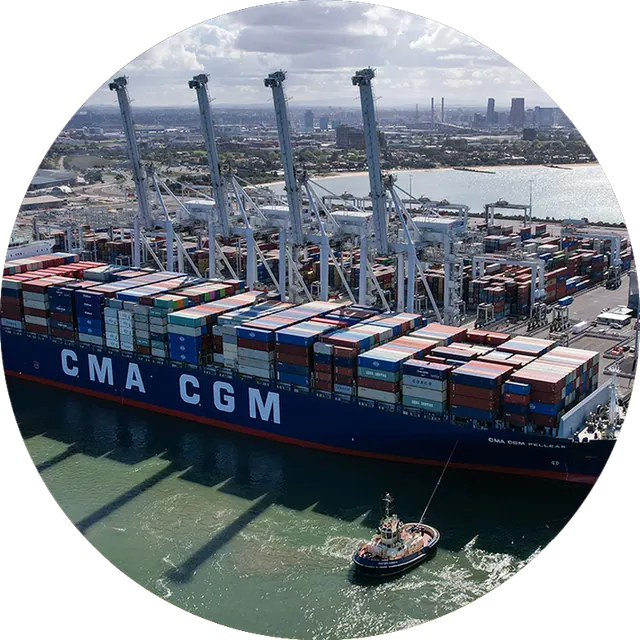
Weeks of watches at sea test sleep like nothing else.

Seafarers stand watch systems such as six-on/six-off for weeks at a time, with broken sleep, noise and motion. Fatigue on watch raises the risk of grounding, collision and injury.

Change coming Oct 2027

Maritime & Shipping workforce

Who this page covers

  • Coastal and domestic commercial vessels
  • Commercial fishing
  • Cruise lines
  • Dredging
  • Ferries and passenger vessels
  • Marine pilots, tugs and towage
  • Offshore supply and construction vessels (also see Oil & Gas)
  • Shipping lines - deep sea

Reg Watch

What’s changed, and what’s coming

Regulatory change that affects how you manage fatigue in maritime & shipping: what has changed in the last 12 months, and what is on the way.

Upcoming changeExpected from October 2027Within 12 months

OSHA's heat injury and illness standard, proposed August 2024 and covering shipyard and other maritime work, is still a proposal: a supplemental proposal is projected for December 2026 and final action for October 2027. No Coast Guard change to hours of rest is proposed.

Regulatory changes checked as at October 1, 2026.

Regulation

Who regulates it, and what they expect

Maritime is one of very few US industries with a numeric, legally binding rest requirement - enforced by the Coast Guard, not OSHA. Watchkeeping officers, watch ratings and crew with designated safety or security duties on seagoing vessels beyond the boundary line have minimum rest hours under the STCW rules. Separately, work-hour and watch limits in the shipping statute bind towing vessel operators and crews on larger merchant vessels. Fishing vessels, barges, inland-waters vessels and vessels under 200 gross tons fall outside the STCW rest rules altogether.

Regulated by
  • United States Coast GuardUSCG

Logos identify the regulator and don’t imply endorsement.

Who regulates it

The US Coast Guard, not OSHA, is the primary safety regulator for vessels and seafarers - including rest-hour rules. OSHA's reach is largely limited to shoreside terminals and offices. Injury compensation runs through the federal Jones Act and Longshore and Harbor Workers' Compensation Act rather than state workers' comp.

Your obligations

On seagoing vessels beyond the boundary line, covered personnel must get at least 10 hours rest in any 24 and 77 hours in any 7 days, in no more than two blocks with one of at least 6 hours and no more than 14 hours between them, with daily rest records kept aboard and copied to each crew member. A licensed towing vessel operator may not work more than 12 hours in any 24 except in an emergency. Licensed officers, sailors and oilers on merchant vessels over 100 gross tons must be in at least three watches at sea. On tankers the limit is 15 hours in 24.

Consequences

Coast Guard civil penalties for watch and manning violations run to $23,647 per violation, and vessel inspection violations to $14,988, on the schedule applying to assessments issued after 29 December 2025. Rest-hour breaches are cited at inspection and at Port State Control and can put a certificate of inspection at risk. The larger exposure is civil: under the Jones Act an injured seafarer brings an uncapped negligence claim, and a rest record showing hours that were available but not slept is the document the plaintiff will use.

Penalties

Coast Guard civil penalty maximums: $23,647 per violation for watch and manning breaches under 46 U.S.C. 8104(i) and (j) and 8101(f); $14,988 for vessel inspection violations under 46 U.S.C. 3318(a). Applies to assessments issued after 29 December 2025.

Sources: US Coast Guard hours-of-rest rule (46 CFR 15.1111); federal watch and 12-hour rules (46 U.S.C. 8104); Coast Guard civil penalty schedule (33 CFR 27.3); the Jones Act; Longshore and Harbor Workers' Compensation Act; NTSB report on the Elliot Cheramie.

Fatigue-critical roles

Where fatigue matters most in maritime & shipping

The roles where a fatigued worker is most likely to cause serious harm, the tasks that carry the risk, and why fatigue builds up in them.

RoleRiskHigh-risk tasksWhy fatigue builds
Mate (licensed deck officer)
Rules
Regulatory designation
Officer in charge of a navigational watch (46 CFR 15.1111); credentialed mariner (46 CFR Part 10)
Hours and rest
46 CFR 15.1111: 10 h rest in any 24 h and 77 h in any 7 days; at most 2 periods, one of at least 6 h; 46 U.S.C. 8104(a): 6 h off in the prior 12 before taking the deck watch on leaving port
Critical riskKeeping a bridge watch alone in the 00:00-04:00 or 04:00-08:00 watch; collision avoidance in coastal traffic; port arrival straight after cargo work6-on/6-off or 4-on/8-off watches, port-call cargo work eating rest, time-zone changes, months-long tours
Assistant engineer (licensed engineer)
Rules
Regulatory designation
Credentialed mariner (46 CFR Part 10); watchstander (46 CFR 15.1111)
Hours and rest
46 CFR 15.1111 (beyond the boundary line): 10 h rest in any 24 h and 77 h in any 7 days; at most 2 periods, one of at least 6 h; 46 U.S.C. 8104 watch rules
Critical riskUnmanned machinery space on-call alarm response at night; engine-room watch; bunkering, fuel changeover and blackout recovery after broken sleepUMS on-call nights with repeated alarms, port maintenance during rest periods, heat and noise
State pilot / bar pilot
Rules
Regulatory designation
State-licensed pilot (state pilotage commission); federal first-class pilot endorsement (46 CFR Part 11)
Hours and rest
State commission rest rules where they exist; no federal hours rule for state pilots
Critical riskConning large ships through pilotage waters at night; boarding by pilot ladder in swell; back-to-back jobs and long coastal pilotages24/7 on-call job lists, night jobs, long transits and travel between jobs, irregular rest
Towing vessel operator (master / mate - pilot of towing vessels)
Rules
Regulatory designation
Credentialed towing-vessel officer (46 CFR Part 10; Subchapter M)
Hours and rest
46 U.S.C. 8104(h): no more than 12 h work in 24 except in an emergency; two-watch allowed (8104(g))
Critical riskShip-assist and harbor towage at night on short notice; towline handling near girting risk; coastal barge towing on two-watch systemsOn-call 24 h harbor rosters, two-watch towing (6-on/6-off), back-to-back jobs
Master / operator (passenger vessel); fishing vessel captain
Rules
Regulatory designation
Credentialed mariner (46 CFR Part 10); fishing vessel operator (46 CFR Part 28)
Hours and rest
46 U.S.C. 8104(b): vessels of 100 GT or less 9 h/24 in port, 12 h/24 at sea; fishing largely exempt
Critical riskSkippering a ferry or workboat with minimum crew on long days; night fishing then steaming home after hauling; lone watch on small vesselsLong seasonal days, early starts, split shifts on commuter ferries, multi-day trips with fragmented sleep
Able seaman (AB) / ordinary seaman on watch
Rules
Regulatory designation
Rating forming part of a navigational watch (46 CFR 15.1111); credentialed mariner
Hours and rest
46 CFR 15.1111 (beyond the boundary line): 10 h rest in any 24 h and 77 h in any 7 days; at most 2 periods, one of at least 6 h; 46 U.S.C. 8104 watch rules
High riskLookout and helm on night watches; mooring and anchor work during port calls that cut into rest; fire roundsWatch rotations, port-call work in rest periods, long tours

Stories

When fatigue made the record

Published findings and prosecutions from regulators, courts and investigators in the United States.

  • Sep 2024 · Washington, United States

    Captain working while ill with COVID-19 falls asleep at the helm; towboat hits coast guard docks

    • Safety
    • Financial

    Shortly after midday a towing vessel veered out of a marked channel and struck the docks of a coast guard station, causing about $750,000 in damage and a small diesel spill. The National Transportation Safety Board found the captain had fallen asleep while navigating, likely because of increased fatigue from an acute COVID-19 infection that degraded his sleep quality, even though he reported getting enough sleep. He had felt unwell the night before and taken unprescribed medication, and was diagnosed with COVID-19 and a partial lung collapse later that day.

    Case US-maritime-09Report an issue

Story 1 of 23

See all maritime & shipping news

How the suite fits

How each product connects to your obligations

Grades describe how strongly a product connects to an obligation. None discharges an obligation, and none carries a compliance warranty.

Sleepfit

Supports your general duty of care

Sleepfit supports what the rest-hour rules cannot reach: what crew actually sleep in the hours the schedule gave them. Rest records show opportunity; only measurement shows sleep obtained.

About Sleepfit

Fatiguefit4Duty

Supports your general duty of care

No US maritime rule requires a fitness check at the point of work; 46 CFR 15.1111 governs rest hours. Fatiguefit4Duty supports the record that a master acted on a fatigued watchstander. A fitness-for-duty check, not a fitness-for-duty decision - the duty call stays with you.

About Fatiguefit4Duty

Awareness eLearning

Supports your general duty of care

No US maritime rule names fatigue training; STCW and 46 CFR training requirements do not reach it. Awareness eLearning supplies fatigue and sleep content with a completion record for masters, mates and watch officers.

About Awareness eLearning

Was It Fatigue?

Supports your general duty of care

Marine casualties must be reported under 46 CFR Part 4, and no rule names fatigue as something you must examine. Was It Fatigue? supports your investigation and the record a Jones Act claim will test. A structured judgment aid, not a determination of cause.

About Was It Fatigue?

SleepWellBaby

SleepWellBaby is a voluntary benefit with no Coast Guard requirement behind it. It supports crew with infants at home during shore rotations, when recovery sleep is meant to happen.

About SleepWellBaby

Recommended bundle

Where we’d start in maritime & shipping

Every bundle is priced on prevalence: your whole cohort gets access, and you pay for the share predicted to need each product. How pricing works.

Why this pairing in the United States

46 CFR 15.1111 sets rest hours, which show opportunity, not sleep. Sleepfit measures sleep obtained; Fatiguefit4Duty adds a pre-watch check and a record that the master acted; Awareness eLearning trains watchkeepers. Fatigue Lifecycle adds review of Part 4 casualties.

See what sleep and fatigue mean for your maritime & shipping workforce.

Tell us roughly how many people you employ. Your snapshot models how many are likely sleeping poorly and what it costs, from published research for maritime & shipping. Then choose who you’d cover, and we’ll take you to the right next step.

A sample workforce snapshot on a tablet: modeled sleep problems and the cost of poor sleep for 1,400 people in transport and logistics.