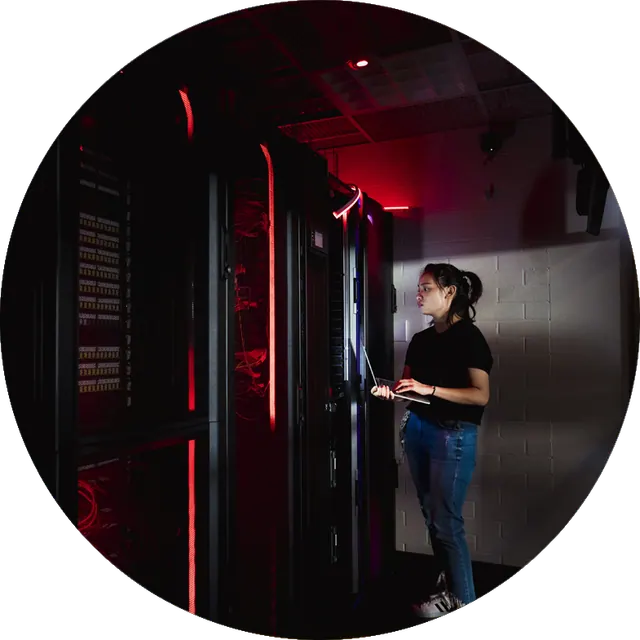
On-call rosters and late releases run on borrowed sleep.
Largely daytime office work; fatigue comes from on-call rosters, incident call-outs and cross-time-zone meetings. The safety consequence is low; the cost is errors, productivity and burnout.
IT managed services and 24/7 operations centres (also see Telecommunications)
IT services and consulting
Software and SaaS companies
Regulation
Who regulates it, and what they expect
Ireland sets no tech-specific hours rule. The Organisation of Working Time Act 1997 governs your engineers, on-call rotas and out-of-hours escalations, capping the average week at 48 hours with no individual opt-out. The WRC's Code of Practice on the Right to Disconnect, published in March 2021 under section 20 of the Workplace Relations Act 2015, is a code of practice, not a statutory right: breaching it is not an offence and gives no cause of action, but it is admissible in evidence before the WRC, the Labour Court and the courts. Since 7 March 2024 staff may also request remote working.
Regulated by
HSA
Logos identify the regulator and don’t imply endorsement.
Who regulates it
No tech-specific hours regulator exists in Ireland. The Health and Safety Authority enforces your safety duties and the Workplace Relations Commission hears working-time complaints. The WRC also issues the Code of Practice on the Right to Disconnect and the code on the right to request flexible and remote working - codes of practice, not free-standing rights, but admissible in evidence in a WRC or Labour Court hearing.
Your obligations
You owe 11 consecutive hours' rest in each 24 hours, a 15-minute break after 4.5 hours worked and 30 minutes after 6, 24 consecutive hours' weekly rest and an average 48-hour week over 4 months, with no individual opt-out; night workers average no more than 48 hours over 2 months. Keep working-time records for 3 years. The Right to Disconnect code asks you to set a policy on out-of-hours contact and not to penalise refusal to engage outside normal hours; it binds nothing by itself. A remote-working request from someone with 6 months' service must be answered within 4 weeks, extendable by up to 8.
Consequences
Rest, break and 48-hour breaches are complaints to a Workplace Relations Commission adjudication officer, who can order compliance and up to 2 years' remuneration per employee, with appeal to the Labour Court. Ignoring the Right to Disconnect code carries no penalty on its own - but where an employee complains that after-hours contact ate into their 11-hour rest, the code and your policy, or its absence, go into evidence. Mishandling a remote-working request costs up to 4 weeks' pay, though the WRC reviews only your process, not your decision. Safety-duty failures are prosecuted by the Health and Safety Authority.
Penalties
Safety, Health and Welfare at Work Act 2005 s.78, the figures in force since 2010: on summary conviction up to €5,000 and 12 months' imprisonment; on indictment up to €3,000,000 and 2 years, plus an order to pay the HSA's costs. A Workplace Relations Commission working-time award is capped at 2 years' remuneration; an Employment Equality Acts award at 104 weeks' pay or €40,000, whichever is greater. A mishandled remote-working request costs up to 4 weeks' pay.
On the record
No Irish court, coroner, investigator or regulator has published a finding linking fatigue to an incident in the technology sector. The duty to manage fatigue still sits within the general duties of the Safety, Health and Welfare at Work Act 2005.
Sources: WRC Code of Practice on the Right to Disconnect (2021); WRC code on the right to request flexible and remote working; Work Life Balance and Miscellaneous Provisions Act 2023 Part 3; Organisation of Working Time Act 1997; Safety, Health and Welfare at Work Act 2005 ss.77-78.
Fatigue-critical roles
Where fatigue matters most in technology & software
The roles where a fatigued worker is most likely to cause serious harm, the tasks that carry the risk, and why fatigue builds up in them.
Role
Risk
High-risk tasks
Why fatigue builds
Data centre technician / critical facilities engineerRules
Regulatory designation
Night worker (OWTA 1997 s 16) - free night-work health assessment, GA Regs 2007 reg 157
Hours and rest
OWTA 1997: night worker avg 8 h per 24 (s 16); 48 h avg (s 15, no opt-out); 11 h daily rest (s 11)
High risk
HV/LV switching and isolations, generator and UPS transfers, battery-room work, fault response at 03:00 where an error causes electrocution, arc flash or site-wide outage
24/7 12 h rotating shifts (e.g. 4-on-4-off days and nights), lone night cover at smaller sites, call-outs
Field service engineerRules
Regulatory designation
None specific - general duty (SHWWA 2005 ss 8, 19)
Hours and rest
OWTA 1997: 48 h avg (s 15, no opt-out), 11 h daily rest (s 11), breaks (s 12)
High risk
Driving to 4 h SLA call-outs for ATMs, POS, network and server hardware; overnight install windows; lifting and ladder work at customer sites
On-call overnight SLA response, long regional drives, night change windows followed by day work
Site reliability engineer (SRE) / on-call engineerRules
Regulatory designation
None specific - general duty (SHWWA 2005 ss 8, 19); night worker (OWTA s 16) only if night work is normal
Hours and rest
OWTA 1997: 48 h avg (s 15, no opt-out), 11 h daily rest (s 11), breaks (s 12)
Elevated risk
Responding to overnight production incidents, database failovers and rollbacks, cyber-incident triage; time-pressured changes that can cause major outages or data loss
1-in-4 to 1-in-8 weekly on-call with night pages, follow-the-sun gaps, release windows outside business hours
How the suite fits
How each product connects to your obligations
Grades describe how strongly a product connects to an obligation. None discharges an obligation, and none carries a compliance warranty.
Sleepfit
Supports your general duty of care
For your technology staff, Sleepfit supports s 19 risk assessment and s 22 health surveillance under the Safety, Health and Welfare at Work Act 2005, and Regulation 157 assessment of any night workers. It screens; diagnosis stays with your clinicians.
Awareness eLearning supplies fatigue and sleep content with a completion record for your technology staff, supporting the general training duty in s 8(2)(g) and s 10 of the Safety, Health and Welfare at Work Act 2005. Your training programme stays yours.
Was It Fatigue? supports your review of incidents involving your technology staff and of your s 19 risk assessment. Irish accident reporting rules require notification to the HSA, not a fatigue assessment. A structured judgement aid, not a determination of cause.
No Irish workplace rule reaches sleep in new-parent households. SleepWellBaby is offered to the working parents among your technology staff as a wellbeing benefit, not as a step any Irish regulation requires.
Fatiguefit4Duty is built for safety-sensitive roles at the point of duty. Technology and software roles are generally not safety-sensitive and no Irish rule requires a fitness-for-duty check, so nothing is engaged.
Your technology staff hold no safety-sensitive roles, so your duty is SHWW Act 2005 s 8 and a s 19 risk assessment. Sleepfit screens; Awareness eLearning supplies content with a completion record; SleepWellBaby is an employee benefit. Family is the lighter option.
See what sleep and fatigue mean for your technology & software workforce.
Tell us roughly how many people you employ. Your snapshot models how many are likely sleeping poorly and what it costs, from published research for technology & software. Then choose who you’d cover, and we’ll take you to the right next step.