
Technology & Software · United States

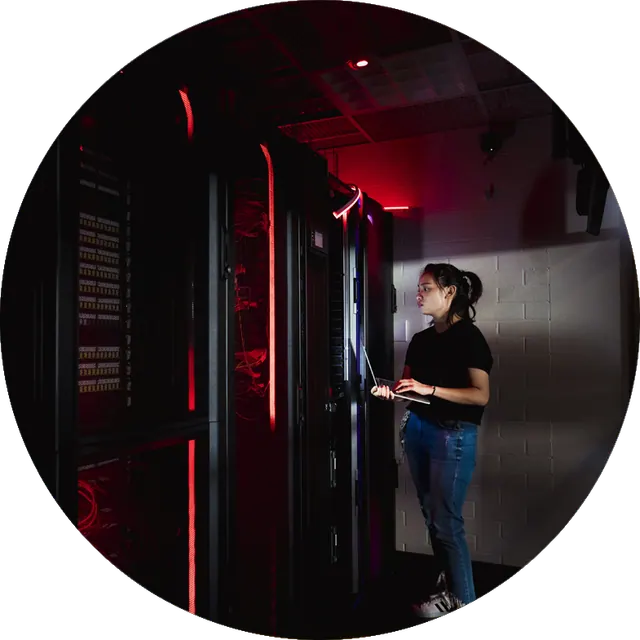
On-call rosters and late releases run on borrowed sleep.

Largely daytime office work; fatigue comes from on-call rosters, incident call-outs and cross-time-zone meetings. The safety consequence is low; the cost is errors, productivity and burnout.

Technology & Software workforce

Who this page covers

  • IT managed services and 24/7 operations centers (also see Telecommunications)
  • IT services and consulting
  • Software and SaaS companies

Regulation

Who regulates it, and what they expect

No US law limits how long you can keep an engineer on call. Federal wage law prices overtime and sets no ceiling, and at the salary level the Department of Labor currently enforces almost every engineer, product manager and analyst you employ is exempt from overtime altogether, so nothing in your pay system even records their hours. Your fatigue exposure runs through one duty: keep the workplace free of recognized hazards. Fatigue is not named in it, and no federal or state rule addresses paging rotations, incident response or follow-the-sun cover.

Regulated by
  • Occupational Safety and Health AdministrationOSHA

Logos identify the regulator and don’t imply endorsement.

Who regulates it

No technology-specific regulator exists for fatigue. The general federal workplace-safety and disability protections that apply to every US employer are what govern here.

Your obligations

Keep your workplace free of recognized hazards likely to cause death or serious harm; where a follow-the-sun roster or a paging rotation creates one and a feasible control exists, that duty reaches fatigue. Pay overtime past forty hours to anyone who is not exempt. Accommodate a diagnosed sleep disorder through the interactive process. If you screen your people, run it as a voluntary health program, keep results on separate forms in separate confidential medical files, and take no adverse action on a refusal. In California, give every worker one day's rest in seven.

Consequences

An inspection that finds fatigue was a recognized hazard you left unaddressed produces a citation, an abatement order and a public record, and a repeat finding moves you into the willful tier. Screening handled badly, with participation pressed, results filed in a personnel record or a refusal punished, is a charge with the Equal Employment Opportunity Commission and federal litigation, separate from any accommodation claim. Workers' compensation covers your own injured worker. It does nothing for the third party your fatigued engineer hits driving home.

Penalties

OSHA maximums are at 2025 levels and carry into 2026 unchanged, because the federal inflation adjustment was cancelled this year: $16,550 per serious or other-than-serious violation, $165,514 per willful or repeat violation, and $16,550 per day for failure to abate. Disability discrimination damages are capped by headcount from $50,000 to $300,000, with back pay uncapped. Third-party negligence damages are uncapped.

Sources: General federal workplace-safety guidance on long hours and irregular shifts; the standard federal safety, disability, and leave protections that apply to all US employers.

Fatigue-critical roles

Where fatigue matters most in technology & software

The roles where a fatigued worker is most likely to cause serious harm, the tasks that carry the risk, and why fatigue builds up in them.

RoleRiskHigh-risk tasksWhy fatigue builds
Critical facilities engineer / data center technician
Rules
Regulatory designation
Qualified person for electrical work (29 CFR 1910.332-.333; NFPA 70E consensus standard); otherwise general duty
Hours and rest
No federal hours cap for adults; FLSA prices overtime only
High riskHV/LV switching and isolations, generator and UPS transfers, battery-room work, fault response at 03:00 where an error causes electrocution, arc flash or site-wide outage24/7 12 h rotating shifts (e.g. 4-on-4-off days and nights), lone night cover at smaller sites, call-outs
Field service engineer / field technician
Rules
Regulatory designation
None specific - general duty (OSH Act s 5(a)(1); public employers only in State Plan states)
Hours and rest
No federal hours cap for adults; FLSA prices overtime only
High riskDriving to 4 h SLA call-outs for ATMs, POS, network and server hardware; overnight install windows; lifting and ladder work at customer sitesOn-call overnight SLA response, long regional drives, night change windows followed by day work
Site reliability engineer (SRE) / on-call engineer
Rules
Regulatory designation
None specific - general duty (OSH Act s 5(a)(1); public employers only in State Plan states)
Hours and rest
No federal hours cap for adults; FLSA prices overtime only
Elevated riskResponding to overnight production incidents, database failovers and rollbacks, cyber-incident triage; time-pressured changes that can cause major outages or data loss1-in-4 to 1-in-8 weekly on-call with night pages, follow-the-sun gaps, release windows outside business hours

Stories

When fatigue made the record

Published findings and prosecutions from regulators, courts and investigators in the United States.

  • Jun 2012 · Ohio, United States

    IT support worker 'almost daily falling asleep at work' with micro sleeps is reprimanded and fired; untreated sleep problems not a disability under federal law

    • Legal

    An IT support worker at a family services agency in Ohio was criticised for slow response times and "almost daily falling asleep at work", and told supervisors he had a sleeping disorder causing fatigue and micro sleeps, but did not seek treatment while employed. A sleep specialist had earlier noted very poor sleep habits and a probable sleep apnea that was never confirmed because he declined testing. After a reprimand noting he "continually [fell] asleep during the workday, trainings and meetings" and a demotion, he was fired in 2012, and the U.S. Court of Appeals upheld judgment for the employer because he had not shown a disability.

    Case US-tech-01Report an issue

See all technology & software news

How the suite fits

How each product connects to your obligations

Grades describe how strongly a product connects to an obligation. None discharges an obligation, and none carries a compliance warranty.

Sleepfit

Supports your general duty of care

Sleepfit measures sleep obtained across your engineering cohort and screens for the disorders behind it, supporting the recognized-hazard case you would make to OSHA. Results are confidential and aggregated.

About Sleepfit

Awareness eLearning

Supports your general duty of care

Awareness eLearning gives your engineers a documented fatigue education record. No US rule requires it; it evidences a feasible abatement measure if OSHA ever puts a recognized hazard to you.

About Awareness eLearning

Was It Fatigue?

Supports your general duty of care

29 CFR Part 1904 requires you to record injuries, not to investigate their cause, and no US rule names a fatigue review. Was It Fatigue? supports your own investigation. A structured judgment aid, not a determination of cause.

About Was It Fatigue?

SleepWellBaby

SleepWellBaby supports parents returning to work after a birth, when broken infant sleep is at its worst. No US regulation requires it and none is engaged; it is offered as a benefit, not an obligation.

About SleepWellBaby

Fatiguefit4Duty

Fatiguefit4Duty is built for safety-sensitive roles at the point of duty. Technology and software roles are generally not safety-sensitive and no US rule requires a fitness-for-duty check, so nothing is engaged.

About Fatiguefit4Duty

Recommended bundle

Where we’d start in technology & software

Every bundle is priced on prevalence: your whole cohort gets access, and you pay for the share predicted to need each product. How pricing works.

Why this pairing in the United States

Your engineering teams hold no safety-sensitive roles, so your duty is the General Duty Clause, OSH Act s 5(a)(1). Sleepfit screens confidentially; Awareness eLearning supplies content with a completion record; SleepWellBaby is an employee benefit. Family is the lighter option.

See what sleep and fatigue mean for your technology & software workforce.

Tell us roughly how many people you employ. Your snapshot models how many are likely sleeping poorly and what it costs, from published research for technology & software. Then choose who you’d cover, and we’ll take you to the right next step.

A sample workforce snapshot on a tablet: modeled sleep problems and the cost of poor sleep for 1,400 people in transport and logistics.