Food & Beverage Processing · New Zealand

In food and beverage processing, sleep is a key ingredient.

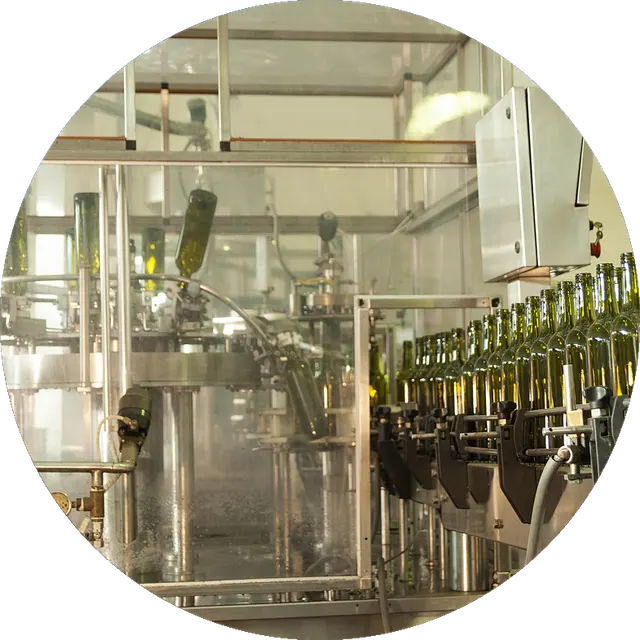
Processing lines run nights and rotating shifts with repetitive, monotonous tasks near moving machinery. Fatigue raises the risk of machinery injury and food safety lapses.

Regulation changed 9 Jul 2026Change coming 1 Apr 2027

Food & Beverage Processing workforce

Who this page covers

  • Airline catering
  • Beverages and breweries
  • Dairy processing
  • Flour and grain milling
  • Industrial bakeries
  • Meat processing
  • Poultry processing
  • Seafood processing
  • Sugar milling
  • Wineries (production) (also see Agriculture)

Reg Watch

What’s changed, and what’s coming

Regulatory change that affects how you manage fatigue in food & beverage processing: what has changed in the last 12 months, and what is on the way.

Recent changeFrom 9 July 2026

Applies across industries in New Zealand

The Health and Safety at Work Amendment Act 2026 became law on 9 July 2026. Your duties do not change until most of it commences on 1 April 2027, so use the lead time to evidence fatigue as a serious-harm risk.

Read the change

Upcoming changeExpected from 1 April 2027Within 12 months

From 1 April 2027 HSWA centres on 'critical risks'. Fatigue is not on the Schedule 1A list, so it counts only where it is likely to cause death or notifiable harm. Firms under 20 workers manage critical risks only; following an approved code is deemed compliance; officer duties become governance-level.

Regulatory changes checked as at 1 October 2026.

Regulation

Who regulates it, and what they expect

Food and meat processing carries no industry-specific fatigue or hours rule in New Zealand. MPI's codes of practice for meat processing govern hygiene, temperature control, equipment and traceability, and say nothing about worker hours, shifts or rest, and New Zealand has no award system of the kind that carries such rules in Australia. Hours are set by individual or collective employment agreements. So you manage fatigue under the same general safety duty as any other employer, against real sector risks: night and rotating shifts, seasonal peaks, cold environments, repetitive work and machinery-heavy lines.

Regulated by
  • WorkSafe New ZealandWorkSafe

Logos identify the regulator and don’t imply endorsement.

Who regulates it

Food and meat processing in New Zealand is regulated on two separate tracks. The Ministry for Primary Industries oversees food safety - making sure products are safe, properly handled and labelled - through detailed Codes of Practice. Worker safety, including fatigue, is handled entirely separately by WorkSafe New Zealand, the same general regulator that covers every other industry.

Your obligations

Food and meat processing employers manage worker fatigue under the same general safety law as every other New Zealand business - there's no extra food-industry-specific fatigue rulebook. They separately have detailed, unrelated obligations around food safety and hygiene under the Ministry for Primary Industries' rules, but those don't touch worker hours or rest. Rest breaks, meal breaks, and the general duty to manage fatigue as a safety hazard apply in full, just as in any other sector.

Consequences

Failing to manage worker fatigue is dealt with under general safety law. WorkSafe can issue improvement and prohibition notices and prosecute the company in the District Court, and directors and other officers can be charged personally for failing their due-diligence duty. Rest and meal break failures go to the Employment Relations Authority. This is a separate track from food safety: a recall, an infringement or a suspended risk management programme under the Food Act 2014 or Animal Products Act 1999 is MPI's enforcement of product safety and carries no weight either way in a WorkSafe worker-safety prosecution. Meeting one regulator's standard is no answer to the other.

Penalties

Health and Safety at Work Act 2015 fines are unchanged since 2015 and not indexed: up to $1.5m for the company, $300,000 for a director or other officer and $150,000 for any other individual where a worker is exposed to death or serious injury, rising to $3m, $600,000 and $300,000 for reckless breaches, with up to five years' imprisonment for an individual. Lesser duty failures reach $500,000. Reparation to the injured worker is fixed first and added on top of the fine.

Sources: Ministry for Primary Industries Processed Meats Code of Practice; Food Act 2014; Animal Products Act 1999; Employment Relations Act 2000; WorkSafe New Zealand fatigue guidance and prosecution records; Health and Safety at Work Act 2015.

Fatigue-critical roles

Where fatigue matters most in food & beverage processing

The roles where a fatigued worker is most likely to cause serious harm, the tasks that carry the risk, and why fatigue builds up in them.

RoleRiskHigh-risk tasksWhy fatigue builds
Hygiene operator / night cleaner
Rules
Regulatory designation
None specific - general duty (HSWA 2015 s 36; fatigue named in s 16 'hazard')
Hours and rest
No statutory maximum; ERA 2000 ss 69ZD-69ZE rest and meal breaks
Critical riskCleaning inside conveyors, mixers and saws under lock-out, caustic and acid CIP, high-pressure hosing on wet floors, overnight between production runsNight-only shifts (about 23:00-07:00) after production, often contract labour with second jobs
Milk tanker driver
Rules
Regulatory designation
Driver of a work-time vehicle (Land Transport Rule: Work Time and Logbooks 2007)
Hours and rest
Work Time Rule: 30 min break after 5.5 h; max 13 h work per cumulative work day; 10 h continuous rest; 70 h then 24 h off
Critical riskNight farm-gate milk collection on narrow rural roads and steep tracks, coupling trailers in the dark; dawn bakery and fresh-food deliveriesOvernight collection runs, split or rotating shifts, long rural distances, seasonal peak milk flow
Meat worker (boner, slaughterman)
Rules
Regulatory designation
None specific - general duty (HSWA 2015 s 36; fatigue named in s 16 'hazard')
Hours and rest
No statutory maximum; ERA 2000 ss 69ZD-69ZE rest and meal breaks
High riskKnife work at chain speed in boning and slicing rooms, kill-floor stunning, band saw and dicer use; repetitive cutting while coldStarts from 04:00-05:00, 10 h shifts on mechanised chains, cold rooms, tally or line-speed pressure
Production operator
Rules
Regulatory designation
None specific - general duty (HSWA 2015 s 36; fatigue named in s 16 'hazard')
Hours and rest
No statutory maximum; ERA 2000 ss 69ZD-69ZE rest and meal breaks
High riskOvernight bakery and dairy production, filling and palletising lines, clearing jams on fillers and wrappers, CIP chemical changeoversNight shifts to meet morning dispatch (bakeries often 22:00-06:00), seasonal peaks, monotony
Cool-store forklift operator
Rules
Regulatory designation
None specific - general duty (HSWA s 36); F endorsement only if driven on a road
Hours and rest
No statutory maximum; ERA 2000 ss 69ZD-69ZE rest and meal breaks
High riskReach truck and forklift work in -25 C freezers and chillers, high-bay racking, loading refrigerated trailers at docks overnightNight and early shifts aligned to dispatch, cold exposure, repetitive cycles
Refrigeration engineer
Rules
Regulatory designation
None specific - general duty (HSWA 2015 s 36; fatigue named in s 16 'hazard')
Hours and rest
No statutory maximum; ERA 2000 ss 69ZD-69ZE rest and meal breaks
High riskPlant checks and valve isolations on anhydrous ammonia systems, oil draining, responding to leak alarms after hoursOn-call nights and lone call-outs, sometimes after a full day shift

Stories

When fatigue made the record

Published findings and prosecutions from regulators, courts and investigators in New Zealand.

  • Nov 2022 · Waikato, New Zealand

    Night-shift worker on heavy overtime crosses centreline driving home; killed in collision with school bus

    • Safety

    A night-shift worker who worked 9pm to 7am shifts, commuted about an hour and a half each way and had been doing a large amount of overtime crossed the centreline at 7.37am while driving home and collided with a school bus. He died at the scene. Police crash investigators found fatigue was a contributing factor, and the coroner used the finding to warn that night shift workers face the greatest risk of sleep disruption and that once fatigue sets in only sleep will help.

    Case NZ-food-01Report an issue

See all food & beverage processing news

How the suite fits

How each product connects to your obligations

Grades describe how strongly a product connects to an obligation. None discharges an obligation, and none carries a compliance warranty.

Sleepfit

Supports your general duty of care

No New Zealand food and beverage processing rule names a sleep screen. Section 36(3)(g) of the Health and Safety at Work Act 2015 requires you to monitor worker health, and Sleepfit supports that for production shift crews. It screens; diagnosis stays with your clinicians.

About Sleepfit

Fatiguefit4Duty

Supports your general duty of care

No New Zealand food and beverage processing rule names a pre-duty check. Your s 36 duty under the Health and Safety at Work Act 2015 reaches fatigue, named in s 16 as a source of hazard. A fitness-for-duty check, not a fitness-for-duty decision - the duty call stays with you.

About Fatiguefit4Duty

Awareness eLearning

Supports your general duty of care

Section 36(3)(f) of the Health and Safety at Work Act 2015 requires the training needed to protect workers but does not name fatigue. Awareness eLearning supports it with fatigue and sleep content for production shift crews.

About Awareness eLearning

Was It Fatigue?

Supports your general duty of care

You must notify WorkSafe of a notifiable event under s 56 of the Health and Safety at Work Act 2015; no New Zealand food and beverage processing rule requires you to assess fatigue. A structured judgement aid, not a determination of cause.

About Was It Fatigue?

SleepWellBaby

No New Zealand food and beverage processing rule reaches sleep in new-parent households. SleepWellBaby is offered to parents of infants in your workforce as a benefit that protects their own sleep, not as a compliance step.

About SleepWellBaby

Recommended bundle

Where we’d start in food & beverage processing

Every bundle is priced on prevalence: your whole cohort gets access, and you pay for the share predicted to need each product. How pricing works.

Recommended · Levels 2 and 3

Shift Worker Bundle

Sleep screening and a point-of-duty check for the workers who need it most.

Why this pairing in New Zealand

HSWA 2015 s 36 reaches fatigue, a hazard under s 16, but names no tool. Sleepfit screens your production shift crews for sleep disorders, supporting s 36(3)(g) health monitoring; Fatiguefit4Duty adds a point-of-duty self-check. Prevention adds Awareness eLearning with a completion record.

See what sleep and fatigue mean for your food & beverage processing workforce.

Tell us roughly how many people you employ. Your snapshot models how many are likely sleeping poorly and what it costs, from published research for food & beverage processing. Then choose who you’d cover, and we’ll take you to the right next step.

A sample workforce snapshot on a tablet: modelled sleep problems and the cost of poor sleep for 1,400 people in transport and logistics.