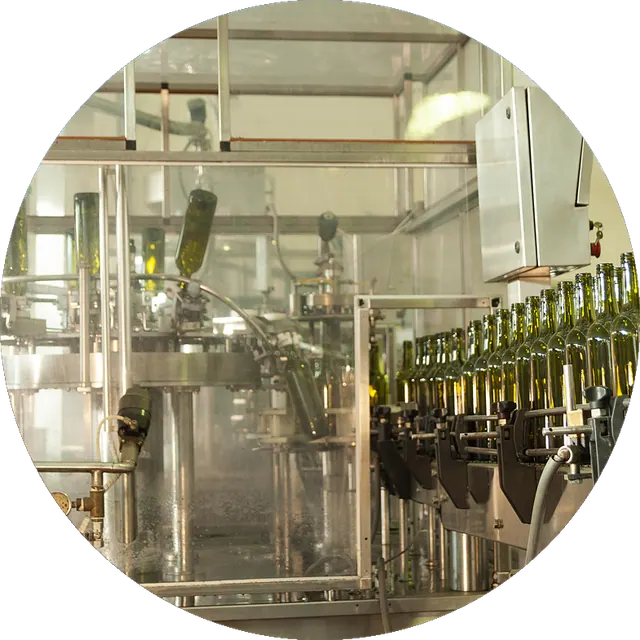
Food & Beverage Processing · Australia

In food and beverage processing, sleep is a key ingredient.

Processing lines run nights and rotating shifts with repetitive, monotonous tasks near moving machinery. Fatigue raises the risk of machinery injury and food safety lapses.

Regulation changed 1 July 2026

Food & Beverage Processing workforce

Who this page covers

  • Airline catering
  • Beverages and breweries
  • Dairy processing
  • Flour and grain milling
  • Industrial bakeries
  • Meat processing
  • Poultry processing
  • Seafood processing
  • Sugar milling
  • Wineries (production) (also see Agriculture)

Reg Watch

What’s changed, and what’s coming

Regulatory change that affects how you manage fatigue in food & beverage processing: what has changed in the last 12 months, and what is on the way.

Recent changeFrom 1 July 2026

Applies across industries in Australia

From 1 July 2026 NSW requires you to follow approved codes, including the fatigue code, or manage risk to an equal or higher standard. Victoria's psychological health regulations apply from 1 December 2025.

Read the change

Upcoming changeNo date set yet

Safe Work Australia's Best Practice Review of the model WHS laws was due to go to WHS ministers in August 2026. It is not yet public and no amendments are proposed, so no change date is set.

Regulatory changes checked as at 1 October 2026.

Regulation

Who regulates it, and what they expect

Food processing and food service run on shift work, and Australia now has a published standard for it. New South Wales approved a code of practice on managing the risk of fatigue at work on 20 February 2026, and from 1 July 2026 an approved code in New South Wales is enforceable, not just admissible: you either comply with it or manage the hazard to an equal or better standard. The Northern Territory approved it in March 2026. Tasmania publishes it without stating it is approved. Queensland, South Australia, Western Australia, the ACT, the Commonwealth and Victoria have not.

Regulated by
  • Safe Work AustraliaSWA

Logos identify the regulator and don’t imply endorsement.

Who regulates it

The Fair Work Ombudsman and Fair Work Commission, which set the sector's awards, and the general workplace safety regulators.

Your obligations

Eliminate or minimise fatigue risk so far as is reasonably practicable, and manage the psychosocial hazards that long or badly timed hours create. In New South Wales the approved code sets out what that looks like on a shift-based site: at least 12 hours between shifts, a 30-minute break every five hours, two consecutive nights of sleep opportunity between shift blocks, no more than three night shifts in a row, no more than five days in a row, one full day off each week, and training about fatigue available to workers on every shift. Your award sets meal and rest breaks on top.

Consequences

In New South Wales, from 1 July 2026, departing from the approved fatigue code without an equally good alternative is itself a failure to meet your duty - not merely something a court may take into account. Elsewhere the code is evidence of what was known and what was reasonably practicable. Award breaches are a separate track: the Fair Work Ombudsman recovers back pay and seeks civil penalties, and meeting one obligation does not answer the other. Serious injuries run through the state compensation scheme regardless of fault.

Penalties

Work health and safety maxima from 1 July 2026, indexed annually in New South Wales, the ACT and the Commonwealth: for the most serious category, $3,546,000 for an individual and $17,728,000 for a body corporate under Commonwealth law, $2,413,809 and $11,606,824 in New South Wales, $600,000 and $3,000,000 in Queensland, South Australia, Tasmania and the Northern Territory. Every jurisdiction now has industrial or workplace manslaughter, carrying 20 to 25 years.

Sources: Meat Industry Award 2020; Food, Beverage and Tobacco Manufacturing Award 2020; Work Health and Safety Act 2011 and state equivalents; SafeWork NSW Code of Practice - Managing the risk of fatigue at work (February 2026).

Fatigue-critical roles

Where fatigue matters most in food & beverage processing

The roles where a fatigued worker is most likely to cause serious harm, the tasks that carry the risk, and why fatigue builds up in them.

RoleRiskHigh-risk tasksWhy fatigue builds
Hygiene / sanitation operator
Rules
Regulatory designation
None specific - general duty (WHS Act s 19; WHS Regs psychosocial hazards incl. fatigue)
Hours and rest
No statutory cap: FW Act s 62 (38 h + reasonable additional hours); award or EA rest terms
Critical riskCleaning inside conveyors, mixers and saws under lock-out, caustic and acid CIP, high-pressure hosing on wet floors, overnight between production runsNight-only shifts (about 23:00-07:00) after production, often contract labour with second jobs
Milk tanker driver
Rules
Regulatory designation
Fatigue-regulated heavy vehicle driver (HVNL s 7, GVM > 12 t); WA: commercial vehicle driver (WHS (General) Regs 2022 Pt 4.10)
Hours and rest
HVNL standard hours (solo truck): max 12 h work and min 7 h continuous stationary rest in any 24 h; BFM/AFM by accreditation
Critical riskNight farm-gate milk collection on narrow rural roads and steep tracks, coupling trailers in the dark; dawn bakery and fresh-food deliveriesOvernight collection runs, split or rotating shifts, long rural distances, seasonal peak milk flow
Boner / slicer / slaughterer (meat worker)
Rules
Regulatory designation
None specific - general duty (WHS Act s 19; WHS Regs psychosocial hazards incl. fatigue)
Hours and rest
Meat Industry Award 2020 cl 14.1(e): max 10 ordinary hours a day; cl 15.1(a): no more than 5 h without a 30 min meal break
High riskKnife work at chain speed in boning and slicing rooms, kill-floor stunning, band saw and dicer use; repetitive cutting while coldStarts from 04:00-05:00, 10 h shifts on mechanised chains, cold rooms, tally or line-speed pressure
Production worker (bakery / dairy / beverage)
Rules
Regulatory designation
None specific - general duty (WHS Act s 19; WHS Regs psychosocial hazards incl. fatigue)
Hours and rest
No statutory cap: FW Act s 62 (38 h + reasonable additional hours); award or EA rest terms
High riskOvernight bakery and dairy production, filling and palletising lines, clearing jams on fillers and wrappers, CIP chemical changeoversNight shifts to meet morning dispatch (bakeries often 22:00-06:00), seasonal peaks, monotony
Cold-store forklift driver
Rules
Regulatory designation
High risk work licence holder - forklift LF/LO (WHS Regs reg 81, Sch 3)
Hours and rest
No statutory cap: FW Act s 62 (38 h + reasonable additional hours); award or EA rest terms
High riskReach truck and forklift work in -25 C freezers and chillers, high-bay racking, loading refrigerated trailers at docks overnightNight and early shifts aligned to dispatch, cold exposure, repetitive cycles
Refrigeration mechanic / plant operator
Rules
Regulatory designation
None specific - general duty (WHS Act s 19; WHS Regs psychosocial hazards incl. fatigue); refrigerant handling licence where applicable
Hours and rest
No statutory cap: FW Act s 62 (38 h + reasonable additional hours); award or EA rest terms
High riskPlant checks and valve isolations on anhydrous ammonia systems, oil draining, responding to leak alarms after hoursOn-call nights and lone call-outs, sometimes after a full day shift

Stories

When fatigue made the record

Published findings and prosecutions from regulators, courts and investigators in Australia.

  • May 2023 · Victoria, Australia

    Night-shift apprentice baker falls asleep driving home after 10 pm to 6 am shift; oncoming driver killed

    • Safety
    • Legal

    An apprentice baker rostered on night shifts from 10 pm to 6 am, five nights a week, set off on his 42 km drive home just after finishing work. About 15 km from home he fell asleep, crossed the centre line and collided with an oncoming ute, killing its driver. He had slept less than usual that weekend and felt exhausted, but did not stop for the power nap he sometimes took. The court found he was fatigued and fell asleep, took into account expert evidence on how night shift affects alertness, and imposed a three-year community corrections order and licence disqualification.

    Case AU-food-06Report an issue

See all food & beverage processing news

How the suite fits

How each product connects to your obligations

Grades describe how strongly a product connects to an obligation. None discharges an obligation, and none carries a compliance warranty.

Sleepfit

Supports your general duty of care

No Australian food rule names a sleep screen. Sleepfit supports your s 19 WHS duty on night and early-start rosters; in NSW the approved fatigue code, which names sleep disorders, must be followed or matched. It screens; diagnosis stays with your clinicians.

About Sleepfit

Fatiguefit4Duty

Supports your general duty of care

No rule requires a fitness check on a line or in a kitchen. Fatiguefit4Duty supports your WHS duty for safety-sensitive tasks, as the NSW fatigue code suggests where risk is high. A fitness-for-duty check, not a fitness-for-duty decision - the duty call stays with you.

About Fatiguefit4Duty

Awareness eLearning

Supports your general duty of care

Your WHS training duty does not name fatigue; the NSW approved fatigue code says fatigue training should reach workers on every shift, and must be followed or matched. Awareness eLearning supplies that content to a 24-hour site.

About Awareness eLearning

Was It Fatigue?

Supports your general duty of care

WHS law requires notifiable incidents to be reported, and the fatigue code does not require a fatigue review. Was It Fatigue? supports your own look at whether fatigue contributed on a shift-based site. A structured judgement aid, not a determination of cause.

About Was It Fatigue?

SleepWellBaby

No Australian food rule reaches sleep in new-parent households. SleepWellBaby supports staff who come to a 5am start after a broken night with an infant; it is offered as a wellbeing benefit, not a compliance step.

About SleepWellBaby

Recommended bundle

Where we’d start in food & beverage processing

Every bundle is priced on prevalence: your whole cohort gets access, and you pay for the share predicted to need each product. How pricing works.

Recommended · Levels 2 and 3

Shift Worker Bundle

Sleep screening and a point-of-duty check for the workers who need it most.

Why this pairing in Australia

No food rule names a fatigue tool, so this supports your s 19 WHS duty. Sleepfit screens your night and early-start staff for sleep disorders; Fatiguefit4Duty adds a point-of-duty self-check with a record. Prevention adds Awareness eLearning with a completion record.

See what sleep and fatigue mean for your food & beverage processing workforce.

Tell us roughly how many people you employ. Your snapshot models how many are likely sleeping poorly and what it costs, from published research for food & beverage processing. Then choose who you’d cover, and we’ll take you to the right next step.

A sample workforce snapshot on a tablet: modelled sleep problems and the cost of poor sleep for 1,400 people in transport and logistics.