Agriculture · Australia

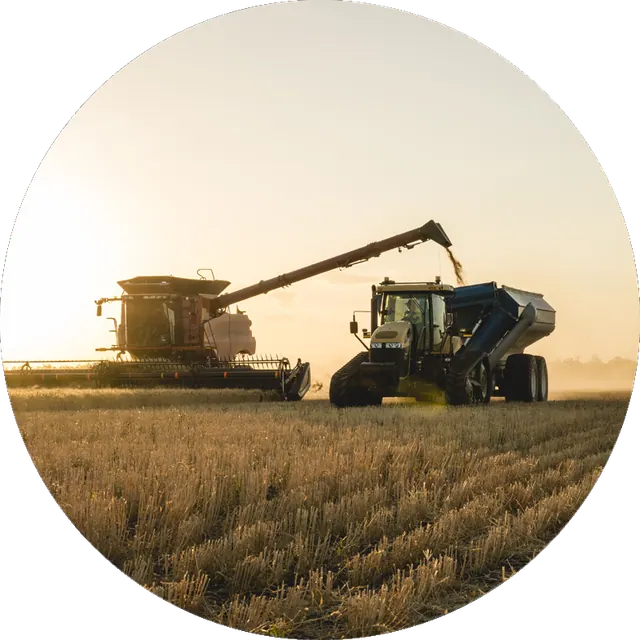
Harvest and milking don’t wait. Sleep keeps farms going.

Seasonal peaks bring very long days, early starts and night harvesting or milking, often alone and far from help. Fatigue at the wheel of vehicles and machinery is a serious injury risk.

Regulation changed 1 July 2026

Agriculture workforce

Who this page covers

  • Aquaculture - salmon, oysters, mussels
  • Beef and sheep farming and pastoral stations
  • Broadacre cropping and grain
  • Cattle feedlots
  • Dairy farming
  • Horticulture and seasonal harvest
  • Shearing and agricultural contracting
  • Vineyards (also see Food & Beverage Processing)

Reg Watch

What’s changed, and what’s coming

Regulatory change that affects how you manage fatigue in agriculture: what has changed in the last 12 months, and what is on the way.

Recent changeFrom 1 July 2026

Applies across industries in Australia

From 1 July 2026 NSW requires you to follow approved codes, including the fatigue code, or manage risk to an equal or higher standard. Victoria's psychological health regulations apply from 1 December 2025.

Read the change

Upcoming changeNo date set yet

Safe Work Australia's Best Practice Review of the model WHS laws was due to go to WHS ministers in August 2026. It is not yet public and no amendments are proposed, so no change date is set.

Regulatory changes checked as at 1 October 2026.

Regulation

Who regulates it, and what they expect

Australian farm workers are not carved out of safety law the way American farm workers often are: the same duty of care applies on a family farm as in a factory, and an unincorporated farming business is a duty holder like any other. What agriculture does not have is any farm-specific rule that names fatigue. The nearest published standard is the fatigue code of practice approved in New South Wales in February 2026 and in the Northern Territory in March 2026, which sets out expected breaks, rest days and night-shift limits for any shift-based work.

Regulated by
  • Safe Work AustraliaSWA

Logos identify the regulator and don’t imply endorsement.

Who regulates it

Agriculture sits under the same WHS regulators, Fair Work Ombudsman, and Fair Work Commission as every other Australian industry, plus state labour hire licensing regulators in Queensland, Victoria, South Australia and the ACT for seasonal-worker supply chains, and the Commonwealth's PALM scheme for Pacific seasonal workers.

Your obligations

Eliminate or minimise fatigue risk so far as is reasonably practicable, and manage the psychosocial hazards that long or badly timed hours create. In New South Wales, from 1 July 2026, you must either follow the approved fatigue code or manage the hazard to an equal or better standard: at least 12 hours between shifts, a 30-minute break every five hours, no more than three night shifts in a row, no more than five days in a row, and one full day off each week. If you consign, load or pack freight onto a heavy vehicle, you carry heavy vehicle chain of responsibility duties in your own right.

Consequences

In New South Wales, departing from the approved fatigue code without an equally good alternative is now a failure to meet your duty rather than something a court merely weighs. Elsewhere it is evidence of what was known and what was reasonably practicable. Chain of responsibility breaches are prosecuted separately by the heavy vehicle regulator against the consignor, packer or loader, not just the operator. Fair Work pursues award and underpayment breaches on its own track, and injured workers claim through the state scheme regardless of fault.

Penalties

Work health and safety maxima from 1 July 2026, indexed annually in NSW, the ACT and the Commonwealth: for the most serious category, $2,413,809 for an individual and $11,606,824 for a body corporate in NSW, and $600,000 and $3,000,000 in Qld, SA, Tas and NT. Heavy vehicle fatigue offences run from $4,230 to $21,170 by risk tier on the schedule in force to 30 June 2027, with a category 1 corporate maximum of $4,230,550.

Sources: Model Work Health and Safety Act and state equivalents; SafeWork NSW Code of Practice - Managing the risk of fatigue at work (February 2026); Fair Work Act 2009; Horticulture Award 2020; state labour hire licensing laws; Pacific Australia Labour Mobility scheme.

Fatigue-critical roles

Where fatigue matters most in agriculture

The roles where a fatigued worker is most likely to cause serious harm, the tasks that carry the risk, and why fatigue builds up in them.

RoleRiskHigh-risk tasksWhy fatigue builds
Header driver / harvest contractor
Rules
Regulatory designation
None specific - general duty (WHS Act s 19; WHS Regs psychosocial hazards incl. fatigue)
Hours and rest
No statutory cap: FW Act s 62 (38 h + reasonable additional hours); award or EA rest terms
Critical riskRunning headers, chaser bins and forage harvesters through the night, moving wide machinery on public roads, auger and PTO workHarvest runs of 14-18 h days for weeks, night harvesting when conditions allow, contractors moving between farms
Station hand / farmhand (quad bike use)
Rules
Regulatory designation
None specific - general duty (WHS Act s 19; WHS Regs psychosocial hazards incl. fatigue)
Hours and rest
No statutory cap: FW Act s 62 (38 h + reasonable additional hours); award or EA rest terms
Critical riskNight checks during calving and lambing, quad bike and side-by-side use on slopes, handling cattle in yards, lone work far from helpBroken sleep for 6-10 weeks of calving or lambing, early starts, lone work
Grain truck driver (harvest)
Rules
Regulatory designation
Fatigue-regulated heavy vehicle driver (HVNL s 7, GVM > 12 t); WA: commercial vehicle driver (WHS (General) Regs 2022 Pt 4.10)
Hours and rest
HVNL standard hours (solo truck): max 12 h work and min 7 h continuous stationary rest in any 24 h; BFM/AFM by accreditation
Critical riskCarting grain and produce from paddock to silo through the night at harvest, overloaded-axle risk, long queues at receival sites, rural roadsHarvest-season 14 h+ days, night carting, queuing, short sleep between loads
Dairy farmhand
Rules
Regulatory designation
None specific - general duty (WHS Act s 19; WHS Regs psychosocial hazards incl. fatigue)
Hours and rest
No statutory cap: FW Act s 62 (38 h + reasonable additional hours); award or EA rest terms
High risk04:00 milking in rotary or herringbone sheds, handling cows at close quarters, chemical teat dips and cleaning, then tractor workSplit shifts from 03:30-04:30 plus afternoon milking, 11-12 day rosters, long days
Seasonal worker (PALM scheme) / packhouse worker
Rules
Regulatory designation
None specific - general duty (WHS Act s 19; WHS Regs psychosocial hazards incl. fatigue)
Hours and rest
Horticulture Award 2020: casuals 12 h/day ordinary cap; pieceworkers excluded from Award overtime
High riskNight packhouse grading lines at peak, ladder and platform picking, driving co-workers in vans at dawnPeak-season 10-12 h days 6-7 days a week, piece rates, shared accommodation, long van commutes

Stories

When fatigue made the record

Published findings and prosecutions from regulators, courts and investigators in Australia.

  • 2017 · New South Wales, Australia

    Labour hire chicken farm hand loses forearm after falling asleep driving home; fatigue linked to heavy work

    • Safety
    • Legal

    A labour hire farm hand placed at a chicken farm fell asleep driving home after a day of strenuous manual labour, shovelling dirt in a hot, unventilated shed without mechanical help while the farm ran short of staff. His car crashed on a bend and he suffered a crush injury that required amputation of his forearm. The NSW Workers Compensation Commission found a real and substantial connection between the work and the crash, rejected the insurer's argument that a second job caused the fatigue, and ordered weekly compensation and medical expenses.

    Case AU-agriculture-03Report an issue

See all agriculture news

How the suite fits

How each product connects to your obligations

Grades describe how strongly a product connects to an obligation. None discharges an obligation, and none carries a compliance warranty.

Sleepfit

Supports your general duty of care

No Australian farm rule names a sleep screen. Sleepfit supports your s 19 WHS duty through long seasonal hours; in NSW the approved fatigue code, which names sleep disorders, must be followed or matched. It screens; diagnosis stays with your clinicians.

About Sleepfit

Fatiguefit4Duty

Supports your general duty of care

No rule requires a fitness check before a worker gets on a machine or behind a wheel. Fatiguefit4Duty supports your WHS duty, as the NSW fatigue code suggests where risk is high. A fitness-for-duty check, not a fitness-for-duty decision - the duty call stays with you.

About Fatiguefit4Duty

Awareness eLearning

Supports your general duty of care

Your WHS training duty does not name fatigue; the NSW approved fatigue code says fatigue training should reach workers on every shift. Awareness eLearning supplies that content to seasonal crews that turn over each harvest.

About Awareness eLearning

Was It Fatigue?

Supports your general duty of care

WHS law requires notifiable incidents to be reported, and no rule requires a fatigue review after a machinery or vehicle incident. Was It Fatigue? supports your own investigation. A structured judgement aid, not a determination of cause.

About Was It Fatigue?

SleepWellBaby

No Australian farm or safety rule reaches sleep in new-parent households. SleepWellBaby supports farm and seasonal workers whose sleep is broken by an infant at home; it is offered as a wellbeing benefit, not a compliance step.

About SleepWellBaby

Recommended bundle

Where we’d start in agriculture

Every bundle is priced on prevalence: your whole cohort gets access, and you pay for the share predicted to need each product. How pricing works.

Recommended · Levels 2 and 3

Shift Worker Bundle

Sleep screening and a point-of-duty check for the workers who need it most.

Why this pairing in Australia

No farm rule names a fatigue tool, so this supports your s 19 WHS duty in long seasons. Sleepfit screens your seasonal crews for sleep disorders; Fatiguefit4Duty adds a point-of-duty self-check with a record. Prevention adds Awareness eLearning with a completion record.

See what sleep and fatigue mean for your agriculture workforce.

Tell us roughly how many people you employ. Your snapshot models how many are likely sleeping poorly and what it costs, from published research for agriculture. Then choose who you’d cover, and we’ll take you to the right next step.

A sample workforce snapshot on a tablet: modelled sleep problems and the cost of poor sleep for 1,400 people in transport and logistics.