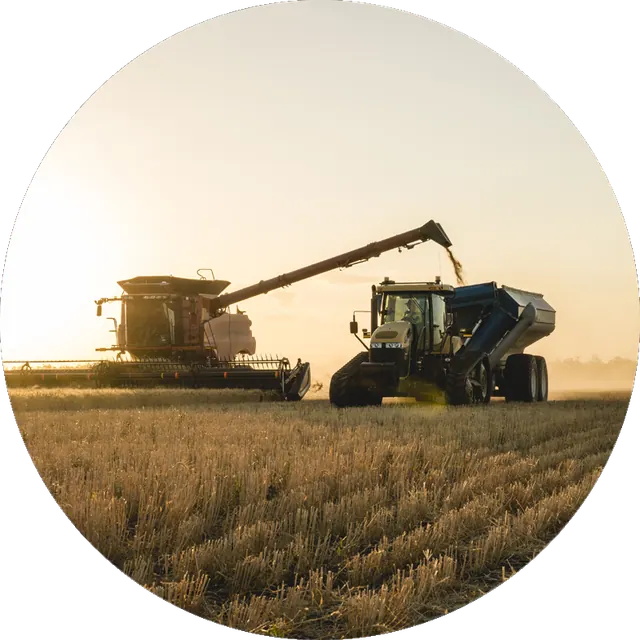
Harvest and milking don’t wait. Sleep keeps farms going.
Seasonal peaks bring very long days, early starts and night harvesting or milking, often alone and far from help. Fatigue at the wheel of vehicles and machinery is a serious injury risk.
Regulatory change that affects how you manage fatigue in agriculture: what has changed in the last 12 months, and what is on the way.
Upcoming changeExpected from 1 December 2026Within 12 months
From 1 Dec 2026 MOM makes four heat-stress measures mandatory for workers exposed to heat, including a heat-stress training programme, cool water and emergency cooling. The Workplace Fairness Act 2025 (covering disability and mental health conditions) is targeted to commence around end-2027.
Regulatory changes checked as at 1 October 2026.
Regulation
Who regulates it, and what they expect
Singapore has no agriculture-specific fatigue or hours rule. The sector is small and largely high-tech - vertical farms, indoor growing and fish farms - and its workers are covered by the same baseline as any Singapore employer: the safety duty, Employment Act hours caps for staff within the salary thresholds, and compulsory work injury insurance for manual workers.
Regulated by
MOM
Logos identify the regulator and don’t imply endorsement.
Who regulates it
The Singapore Food Agency regulates food production and food safety, not working conditions. Farm and aquaculture employers fall under MOM and the baseline safety and employment law.
Your obligations
Baseline only: keep workers safe so far as is reasonably practicable and assess the risks of the work, including machinery, work at height in vertical farms and work on water; apply the Employment Act hours caps to staff within the salary thresholds; and insure manual workers for work injury.
Consequences
Baseline WSH Act penalties apply: up to S$500,000 for a company and S$200,000 and/or two years' jail for an individual (WSH Act maxima, 2026). Employment Act hours breaches carry up to S$5,000 per offence, and S$10,000 and/or 12 months' jail on repeat (2026).
Penalties
Baseline figures apply, including work injury compensation limits raised on 1 November 2025: up to S$269,000 for a death and S$346,000 for permanent incapacity.
On the record
No Singapore court, coroner, investigator or regulator has published a finding linking fatigue to an incident in agriculture. Fatigue risk still falls under the Workplace Safety and Health Act duty and MOM's fatigue management guidelines.
Sources: Singapore Food Agency; Workplace Safety and Health Act 2006; Employment Act 1968, Part IV; Work Injury Compensation Act 2019.
How the suite fits
How each product connects to your obligations
Grades describe how strongly a product connects to an obligation. None discharges an obligation, and none carries a compliance warranty.
Sleepfit
Supports your general duty of care
Sleepfit screens sleep health across your farm workers, supporting the risk assessment reg 3 of the WSH (Risk Management) Regulations requires you to conduct. No Singapore rule names a sleep screen. It screens; diagnosis stays with your clinicians.
Fatiguefit4Duty records a point-of-duty fatigue check for your machinery operators and drivers, supporting your duty under s 12(1) of the WSH Act. No Singapore rule names the check. A fitness-for-duty check, not a fitness-for-duty decision - the duty call stays with you.
Awareness eLearning gives your farm workers recorded fatigue education, supporting your general duty under s 12(3)(e) of the WSH Act to provide adequate instruction, information and training. MOM's fatigue guidelines recommend it; no rule names it.
Was It Fatigue? structures a fatigue review after an incident, supporting the risk assessment review reg 7 of the Risk Management Regulations requires after an injury. Reporting rules name no cause. A structured judgement aid, not a determination of cause.
SleepWellBaby supports parents among your farm workers through the most broken months of infant sleep. No Singapore rule reaches sleep in new-parent households; it is offered as a benefit.
No Singapore rule names a fatigue tool, so this supports your WSH Act 2006 s 12 duty and reg 3 risk assessment. Sleepfit screens your farm workers for sleep disorders; Fatiguefit4Duty adds a point-of-duty self-check. Prevention adds Awareness eLearning with a completion record.
See what sleep and fatigue mean for your agriculture workforce.
Tell us roughly how many people you employ. Your snapshot models how many are likely sleeping poorly and what it costs, from published research for agriculture. Then choose who you’d cover, and we’ll take you to the right next step.