Agriculture · United Kingdom

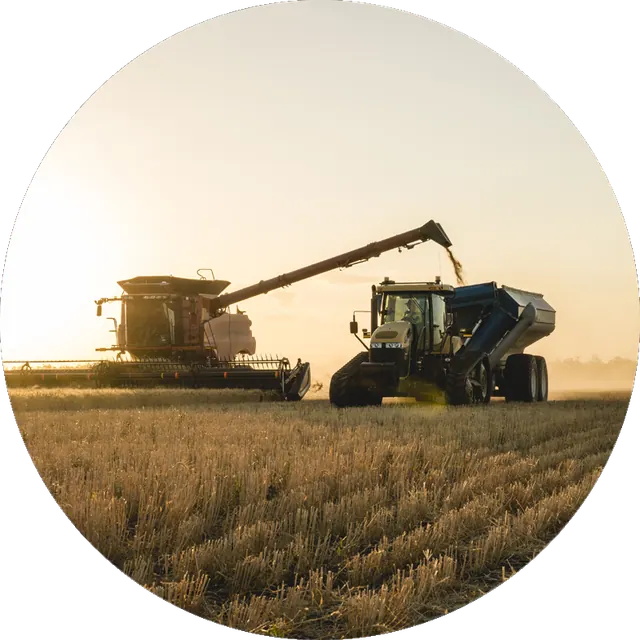
Harvest and milking don’t wait. Sleep keeps farms going.

Seasonal peaks bring very long days, early starts and night harvesting or milking, often alone and far from help. Fatigue at the wheel of vehicles and machinery is a serious injury risk.

Regulation changed 6 Apr 2026Change coming 30 Oct 2026

Agriculture workforce

Who this page covers

  • Aquaculture - salmon, oysters, mussels
  • Beef and sheep farming and pastoral stations
  • Broadacre cropping and grain
  • Cattle feedlots
  • Dairy farming
  • Horticulture and seasonal harvest
  • Shearing and agricultural contracting
  • Vineyards (also see Food & Beverage Processing)

Reg Watch

What’s changed, and what’s coming

Regulatory change that affects how you manage fatigue in agriculture: what has changed in the last 12 months, and what is on the way.

Recent changeFrom 6 April 2026

Applies across industries in the United Kingdom

In Great Britain, from 6 Apr 2026 sick pay is due from the first day of sickness and you must keep holiday records for 6 years; from 1 Oct 2026 most tribunal claims can be brought up to 6 months after the event.

Read the change

Upcoming changeExpected from 30 October 2026Within 12 months

From October 2026 (expected 30 Oct) you must take all reasonable steps to prevent sexual harassment of staff, including by customers and other third parties. From 1 Jan 2027 unfair dismissal protection starts after 6 months' service. Guaranteed hours and shift-notice rights for zero-hours workers are listed for 2027, timing to follow consultation.

Regulatory changes checked as at 1 October 2026.

Regulation

Who regulates it, and what they expect

No farming-specific fatigue or working-hours law exists anywhere in the UK - the general rules apply, including the individual opt-out from the 48-hour week. Even so: HSE reports 27 deaths from agriculture-related work in 2022/23 and a fatal injury rate around 21 times the all-industry average, with long, irregular hours at harvest, lambing and calving, lone working and heavy machinery all recognised contributors. Agricultural pay and conditions are devolved and diverge across the four nations. A large share of people working on UK farms are self-employed, outside working-time protection while the safety duty still falls on them personally.

Regulated by
  • Health and Safety ExecutiveHSE

Logos identify the regulator and don’t imply endorsement.

Who regulates it

HSE regulates farming as it does any industry, with a dedicated agriculture team; there is no separate farming regulator. Two things are distinctive: self-employed people in agriculture, forestry included, keep the general safety duty most self-employed workers lost in 2015; and agricultural pay and conditions are devolved. Wales, Scotland and Northern Ireland still run agricultural wages boards; England abolished its in 2013.

Your obligations

Farm businesses, and self-employed farmers and contractors personally, must manage safety so far as is reasonably practicable, which HSE treats as including fatigue - particularly at seasonal peaks and around machinery and livestock. Employed farm workers get the standard 48-hour average week, daily and weekly rest and rest breaks. Wales goes further: its agricultural wages order gives a 30-minute break to a worker aged 18 or over working more than 5.5 hours a day, plus night work pay. Scotland and Northern Ireland run their own orders; England's ended in 2013. Genuinely self-employed farmers and unpaid family workers fall outside working-time law.

Consequences

With no farming-specific fatigue rule, the general machinery applies: HSE improvement and prohibition notices, criminal prosecution where a fatigue-linked death or injury traces back to a risk you failed to manage, employment tribunal claims for employed workers, and civil claims funded by employers' liability insurance. Agriculture is unusual: self-employed farmers and contractors still carry the general safety duty personally - most self-employed people were taken out of it in 2015, but agriculture, forestry included, was deliberately kept in - so a sole trader can be prosecuted in their own name. The flip side is that a self-employed farmer injured through their own fatigue has no employer to claim against.

Penalties

Health and safety prosecutions are sentenced under the Sentencing Council's 2016 guideline by culpability, harm and turnover: up to £450,000 for a micro business turning over under £2m, up to £1.6m for a small one, and unlimited in the Crown Court. Individuals, self-employed farmers included, face up to two years' imprisonment. A death can be charged as corporate manslaughter, at £180,000 to £20m. HSE also charges £188 an hour (April 2026 rate) to investigate.

On the record

No UK court, coroner, investigator or regulator has published a finding linking fatigue to an incident in agriculture. The duty to manage fatigue still sits within the general duties of the Health and Safety at Work etc. Act 1974.

Sources: Health and Safety at Work etc. Act 1974; HSWA (Prescribed Undertakings) Regulations 2015 (SI 2015/1583); Working Time Regulations 1998; HSE agriculture fatal injury statistics; agricultural wages orders for Wales, Scotland and Northern Ireland; Sentencing Council guideline (2016).

Fatigue-critical roles

Where fatigue matters most in agriculture

The roles where a fatigued worker is most likely to cause serious harm, the tasks that carry the risk, and why fatigue builds up in them.

RoleRiskHigh-risk tasksWhy fatigue builds
Combine driver / agricultural contractor
Rules
Regulatory designation
None specific - general duty (HSWA 1974 s 2; MHSWR 1999 reg 3)
Hours and rest
WTR 1998: 48 h avg (opt-out allowed), 11 h daily rest, night work avg 8 h in 24 (reg 6)
Critical riskRunning headers, chaser bins and forage harvesters through the night, moving wide machinery on public roads, auger and PTO workHarvest runs of 14-18 h days for weeks, night harvesting when conditions allow, contractors moving between farms
Stockperson / shepherd (lambing)
Rules
Regulatory designation
None specific - general duty (HSWA 1974 s 2; MHSWR 1999 reg 3)
Hours and rest
WTR 1998: 48 h avg (opt-out allowed), 11 h daily rest, night work avg 8 h in 24 (reg 6)
Critical riskNight checks during calving and lambing, quad bike and side-by-side use on slopes, handling cattle in yards, lone work far from helpBroken sleep for 6-10 weeks of calving or lambing, early starts, lone work
Agricultural haulage driver (tractor and trailer / HGV)
Rules
Regulatory designation
Driver in scope of assimilated Reg 561/2006 and RT(WT) Regs 2005 (mobile worker), or GB domestic drivers' hours; agricultural tractor exemptions from EU drivers' hours
Hours and rest
EU/AETR: 9 h driving (10 h twice weekly), 45 min break after 4.5 h, 11 h daily rest; GB domestic: 10 h driving, 11 h duty
Critical riskCarting grain and produce from paddock to silo through the night at harvest, overloaded-axle risk, long queues at receival sites, rural roadsHarvest-season 14 h+ days, night carting, queuing, short sleep between loads
Herdsperson / relief milker
Rules
Regulatory designation
None specific - general duty (HSWA 1974 s 2; MHSWR 1999 reg 3)
Hours and rest
WTR 1998: 48 h avg (opt-out allowed), 11 h daily rest, night work avg 8 h in 24 (reg 6)
High risk04:00 milking in rotary or herringbone sheds, handling cows at close quarters, chemical teat dips and cleaning, then tractor workSplit shifts from 03:30-04:30 plus afternoon milking, 11-12 day rosters, long days
Seasonal worker (horticulture)
Rules
Regulatory designation
None specific - general duty (HSWA 1974 s 2; MHSWR 1999 reg 3)
Hours and rest
WTR 1998: 48 h avg (opt-out allowed), 11 h daily rest, night work avg 8 h in 24 (reg 6)
High riskNight packhouse grading lines at peak, ladder and platform picking, driving co-workers in vans at dawnPeak-season 10-12 h days 6-7 days a week, piece rates, shared accommodation, long van commutes

How the suite fits

How each product connects to your obligations

Grades describe how strongly a product connects to an obligation. None discharges an obligation, and none carries a compliance warranty.

Sleepfit

Supports your general duty of care

No UK rule names a sleep screen for farming. Sleepfit supports your regulation 3 risk assessment under the Management of Health and Safety at Work Regulations 1999 where poor sleep is a foreseeable risk. It screens; diagnosis stays with your clinicians.

About Sleepfit

Fatiguefit4Duty

Supports your general duty of care

No UK rule names a pre-duty fitness check for farming. Fatiguefit4Duty supports your general duty under s 2 of the Health and Safety at Work etc. Act 1974. A fitness-for-duty check, not a fitness-for-duty decision - the duty call stays with you.

About Fatiguefit4Duty

Awareness eLearning

Supports your general duty of care

Awareness eLearning supports the training you must give under s 2(2)(c) of the Health and Safety at Work etc. Act 1974 and regulation 13 of the 1999 Management Regulations with fatigue and sleep content. No UK rule names fatigue training for farming.

About Awareness eLearning

Was It Fatigue?

Supports your general duty of care

RIDDOR 2013 requires you to report and record specified incidents in farming but names no cause, and no fatigue review is required. Was It Fatigue? supports your own investigation. A structured judgement aid, not a determination of cause.

About Was It Fatigue?

SleepWellBaby

No UK rule reaches sleep in new-parent households in farming. SleepWellBaby supports your working parents through the most disrupted period of their own sleep; it is offered as a wellbeing benefit, not a compliance step.

About SleepWellBaby

Recommended bundle

Where we’d start in agriculture

Every bundle is priced on prevalence: your whole cohort gets access, and you pay for the share predicted to need each product. How pricing works.

Recommended · Levels 2 and 3

Shift Worker Bundle

Sleep screening and a point-of-duty check for the workers who need it most.

Why this pairing in the United Kingdom

No UK rule names a fatigue tool, so this supports your HSWA 1974 s 2 duty and reg 3 risk assessment. Sleepfit screens your farm workers for sleep disorders; Fatiguefit4Duty adds a point-of-duty self-check. Prevention adds Awareness eLearning with a completion record.

See what sleep and fatigue mean for your agriculture workforce.

Tell us roughly how many people you employ. Your snapshot models how many are likely sleeping poorly and what it costs, from published research for agriculture. Then choose who you’d cover, and we’ll take you to the right next step.

A sample workforce snapshot on a tablet: modelled sleep problems and the cost of poor sleep for 1,400 people in transport and logistics.