Agriculture · United States

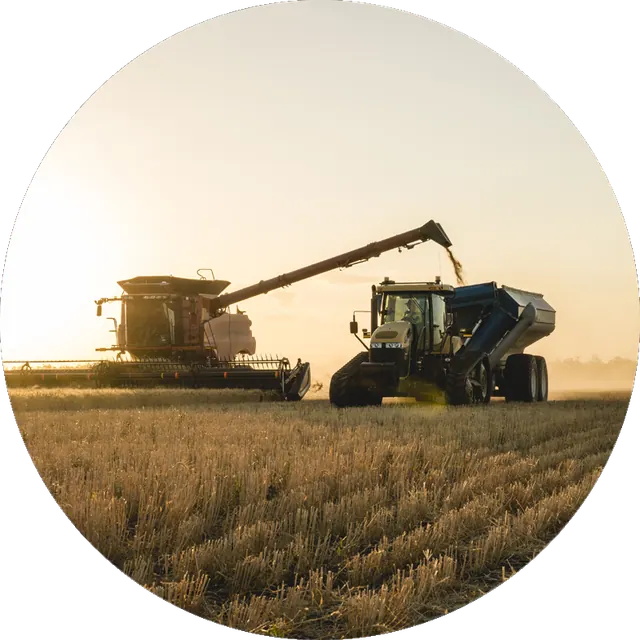
Harvest and milking don’t wait. Sleep keeps farms going.

Seasonal peaks bring very long days, early starts and night harvesting or milking, often alone and far from help. Fatigue at the wheel of vehicles and machinery is a serious injury risk.

Regulation changed Jun 4, 2026Change coming Oct 2027

Agriculture workforce

Who this page covers

  • Aquaculture - salmon, oysters, mussels
  • Beef and sheep farming and pastoral stations
  • Broadacre cropping and grain
  • Cattle feedlots
  • Dairy farming
  • Horticulture and seasonal harvest
  • Shearing and agricultural contracting
  • Vineyards (also see Food & Beverage Processing)

Reg Watch

What’s changed, and what’s coming

Regulatory change that affects how you manage fatigue in agriculture: what has changed in the last 12 months, and what is on the way.

Recent changeFrom June 4, 2026

Applies across industries in the United States

If you have workers in Colorado exposed to extreme heat or cold, a law signed 4 June 2026 requires a temperature illness prevention plan and worker training, with your plan due to the state by 1 September 2028.

Read the change

Upcoming changeExpected from October 2027Within 12 months

OSHA's heat injury and illness standard, proposed August 2024, is still a proposal: a supplemental proposal is projected for December 2026 and final action for October 2027, with no compliance date set. Colorado plans are due 1 September 2028; Virginia must adopt heat rules by 1 May 2028.

Regulatory changes checked as at October 1, 2026.

Regulation

Who regulates it, and what they expect

Agriculture is regulated toward more fatigue exposure, not less. Federal law exempts farm labor from overtime pay, so the usual cost brake on very long days is missing, and no federal rule caps a farm worker's hours. Eight states have legislated their own farm overtime, from 40 hours a week in California and Washington to 60 in Maryland, and three of them mandate paid cool-down rest in heat. Federal rules also lift hours-of-service limits off agricultural driving entirely, so a worker who has been in a field since dawn can then drive a heavy vehicle with no legal limit.

Regulated by
  • Occupational Safety and Health AdministrationOSHA

Logos identify the regulator and don’t imply endorsement.

Who regulates it

Federal labor law (via the Department of Labor) and, in California, the state Labor Commissioner and Cal/OSHA are the relevant regulators. There is no federal 'agriculture safety agency' equivalent to the FAA or FRA - the general workplace-safety baseline (OSHA, ADA, FMLA) is what mostly applies, with California layering on its own rest-break and overtime rules.

Your obligations

No federal law limits how long a farm worker may work, and farm labor is exempt from federal overtime. Seven states set a farm-specific weekly trigger: 40 in California and Washington, 48 in Oregon and Colorado, 52 in New York this year, 60 in Maryland, and 40 in Hawaii except in up to 20 elected weeks, with farms under 20 employees excluded. Minnesota's general 48-hour overtime threshold catches farm work incidentally. California requires shade above 80F and a paid 10-minute cool-down every two hours at 95F. New York gives farm laborers 24 consecutive hours off each week.

Consequences

In the eight overtime states the labor agency recovers back pay, and in California a single worker can bring a Private Attorneys General Act action on the state's behalf for the whole crew. Missing a mandated cool-down break brings a state citation. Where federal inspectors can enforce, a fatigue-related injury can be cited under the duty to keep a workplace free of recognized hazards, and the citation becomes evidence in the civil claim. Because agricultural driving sits outside hours-of-service law, a crash on the way from the field is defended on your rosters alone.

Penalties

Federal safety maximums where they apply, 2025 levels in force through 2026: $16,550 per serious or other-than-serious violation, $165,514 per willful or repeat, $16,550 for each day a cited hazard goes uncorrected. California heat and rest-break penalties run on the state's own schedule, and unpaid overtime is recovered as wages with liquidated damages in most states. Federal enforcement is barred on farms with 10 or fewer employees that have had no temporary labor camp in the past year.

Sources: Fair Labor Standards Act s.13(b)(12) (farm overtime exemption); state farm overtime laws in California, Washington, Oregon, New York and Maryland; California heat illness standard (Title 8 s.3395); federal field sanitation standard; OSHA General Duty Clause and penalty schedule.

Fatigue-critical roles

Where fatigue matters most in agriculture

The roles where a fatigued worker is most likely to cause serious harm, the tasks that carry the risk, and why fatigue builds up in them.

RoleRiskHigh-risk tasksWhy fatigue builds
Combine operator / custom harvester
Rules
Regulatory designation
None specific - general duty (OSH Act s 5(a)(1))
Hours and rest
No federal cap; FLSA overtime exemption for agriculture (29 U.S.C. 213(b)(12))
Critical riskRunning headers, chaser bins and forage harvesters through the night, moving wide machinery on public roads, auger and PTO workHarvest runs of 14-18 h days for weeks, night harvesting when conditions allow, contractors moving between farms
Ranch hand
Rules
Regulatory designation
None specific - general duty (OSH Act s 5(a)(1))
Hours and rest
No federal cap; FLSA overtime exemption for agriculture (29 U.S.C. 213(b)(12))
Critical riskNight checks during calving and lambing, quad bike and side-by-side use on slopes, handling cattle in yards, lone work far from helpBroken sleep for 6-10 weeks of calving or lambing, early starts, lone work
Grain hauler
Rules
Regulatory designation
CDL driver performing safety-sensitive functions (49 CFR 382.107); carrier must not permit fatigued driving (49 CFR 392.3); agricultural commodities hours exemption (49 CFR 395.1(k))
Hours and rest
395.1(k): HOS do not apply within 150 air-miles of the source during planting and harvest (state-designated)
Critical riskCarting grain and produce from paddock to silo through the night at harvest, overloaded-axle risk, long queues at receival sites, rural roadsHarvest-season 14 h+ days, night carting, queuing, short sleep between loads
Dairy milker
Rules
Regulatory designation
None specific - general duty (OSH Act s 5(a)(1))
Hours and rest
No federal hours cap for adults; FLSA prices overtime only
High risk04:00 milking in rotary or herringbone sheds, handling cows at close quarters, chemical teat dips and cleaning, then tractor workSplit shifts from 03:30-04:30 plus afternoon milking, 11-12 day rosters, long days
Farmworker (H-2A)
Rules
Regulatory designation
None specific - general duty (OSH Act s 5(a)(1))
Hours and rest
FLSA overtime exemption (29 U.S.C. 213(b)(12)); state farm overtime laws (CA, WA, OR, NY)
High riskNight packhouse grading lines at peak, ladder and platform picking, driving co-workers in vans at dawnPeak-season 10-12 h days 6-7 days a week, piece rates, shared accommodation, long van commutes

Stories

When fatigue made the record

Published findings and prosecutions from regulators, courts and investigators in the United States.

  • Apr 2025 · Massachusetts, United States

    Fishing captain on 8 hours' broken sleep in 48 hours falls asleep at helm; $720,000 vessel lost

    • Safety

    A commercial fishing vessel grounded on an island at 0731 while the captain navigated alone on autopilot and the two deckhands slept. The NTSB found the captain fell asleep due to fatigue from accumulated sleep debt and poor sleep quality: in the 48 hours before the grounding, during which he made three fishing trips totalling 29 hours of fishing, he slept about 8 hours, in two 2-hour segments and one 4-hour segment. The vessel was a constructive total loss; it had no watch alarm, which the NTSB said may have woken him.

    Case US-agriculture-08Report an issue

Story 1 of 18

See all agriculture news

How the suite fits

How each product connects to your obligations

Grades describe how strongly a product connects to an obligation. None discharges an obligation, and none carries a compliance warranty.

Sleepfit

Supports your general duty of care

No US farm rule requires sleep screening, though pre-dawn starts and seasonal weeks are typical. Sleepfit supports your general duty case under s 5(a)(1) of the OSH Act, as a voluntary program. It screens; diagnosis stays with your clinicians.

About Sleepfit

Fatiguefit4Duty

Supports your general duty of care

Where a worker moves from a long field shift to a vehicle or machine, a check at the point of work supports the general duty. It does not answer California's heat and cool-down rules, which are timed and separate.

About Fatiguefit4Duty

Awareness eLearning

Supports your general duty of care

On farms where the supervisor is the whole safety function, training them to recognize fatigue and heat illness supports the general duty. No rule names fatigue training.

About Awareness eLearning

Was It Fatigue?

Supports your general duty of care

Agricultural driving sits outside hours-of-service law and no rule names a fatigue review, so a crash is defended on your own records. Was It Fatigue? supports building them. A structured judgment aid, not a determination of cause.

About Was It Fatigue?

SleepWellBaby

No US agricultural rule reaches sleep in new-parent households. SleepWellBaby supports farmworkers whose sleep is broken by an infant at home; it is offered as a wellbeing benefit, not a compliance step.

About SleepWellBaby

Recommended bundle

Where we’d start in agriculture

Every bundle is priced on prevalence: your whole cohort gets access, and you pay for the share predicted to need each product. How pricing works.

Recommended · Levels 2 and 3

Shift Worker Bundle

Sleep screening and a point-of-duty check for the workers who need it most.

Why this pairing in the United States

No farm rule names a fatigue tool, so this supports your s 5(a)(1) case in seasonal weeks. Sleepfit screens your field and machine crews for sleep disorders, confidentially; Fatiguefit4Duty adds a point-of-duty self-check. Prevention adds Awareness eLearning with a completion record.

See what sleep and fatigue mean for your agriculture workforce.

Tell us roughly how many people you employ. Your snapshot models how many are likely sleeping poorly and what it costs, from published research for agriculture. Then choose who you’d cover, and we’ll take you to the right next step.

A sample workforce snapshot on a tablet: modeled sleep problems and the cost of poor sleep for 1,400 people in transport and logistics.