Agriculture · Canada

Harvest and milking don’t wait. Sleep keeps farms going.

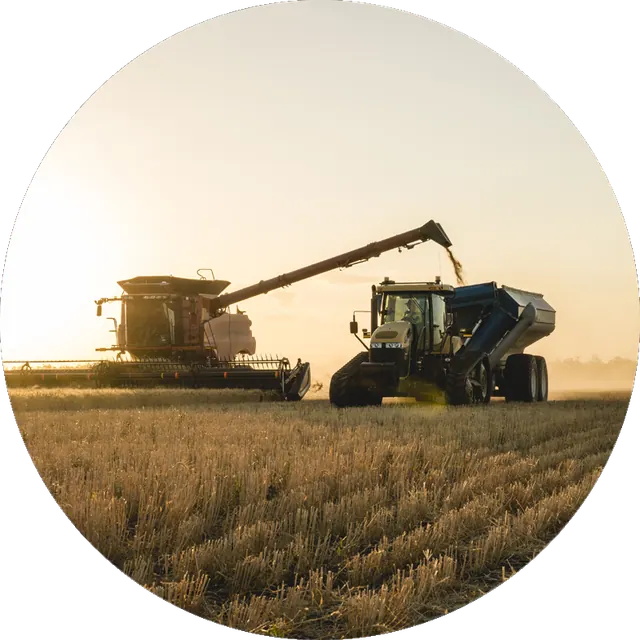
Seasonal peaks bring very long days, early starts and night harvesting or milking, often alone and far from help. Fatigue at the wheel of vehicles and machinery is a serious injury risk.

Regulation changed Oct 6, 2025Change coming Oct 6, 2026

Agriculture workforce

Who this page covers

  • Aquaculture - salmon, oysters, mussels
  • Beef and sheep farming and pastoral stations
  • Broadacre cropping and grain
  • Cattle feedlots
  • Dairy farming
  • Horticulture and seasonal harvest
  • Shearing and agricultural contracting
  • Vineyards (also see Food & Beverage Processing)

Reg Watch

What’s changed, and what’s coming

Regulatory change that affects how you manage fatigue in agriculture: what has changed in the last 12 months, and what is on the way.

Recent changeFrom October 6, 2025

Applies across industries in Canada

In Quebec, since 6 October 2025 every establishment must identify and analyze psychosocial risks, including heavy workload, in a prevention program (20+ workers) or action plan.

Read the change

Upcoming changeExpected from October 6, 2026Within 12 months

Quebec employers have until 6 October 2026 to have a prevention program (20 or more workers) or action plan in place that addresses psychosocial risks, including heavy workload.

Regulatory changes checked as at October 1, 2026.

Regulation

Who regulates it, and what they expect

Agriculture is where Canadian law gives workers less, not more. Ontario farm employees in primary production are excluded from the Employment Standards Act rules on daily and weekly hours, daily rest, time off between shifts, weekly rest, eating periods and overtime - and from minimum wage, public holidays and vacation pay. British Columbia excludes farm workers from the hours and overtime Part altogether; Saskatchewan exempts primary production from most standards; Alberta exempts farms from hours and overtime, and exempts operations with five or fewer waged non-family employees entirely. Safety law is not exempted where there are paid workers.

Who regulates it

Provincial labor ministries, safety regulators and workers' compensation boards cover farms like other employers - but every major farming province also runs an agricultural carve-out that strips out hours, rest and overtime protection. In Ontario it is O. Reg. 285/01 under the Employment Standards Act, 2000, and a separate regulation, O. Reg. 414/05, governs how the Occupational Health and Safety Act applies to farms.

Your obligations

There is no statutory hours ceiling or mandated rest period for primary farm work in Ontario, British Columbia, Alberta or Saskatchewan, so your rostering is limited by nothing but your own judgment. The exemptions are narrow: they cover primary production. Processing, packing beyond initial washing and grading, retail, trucking, and in Ontario landscape gardening, all keep the ordinary hours, break and overtime rules. Safety law is untouched: Ontario's Occupational Health and Safety Act applies to every farming operation with a paid worker, so fatigue must be managed as a hazard under the duty to take every precaution reasonable in the circumstances.

Consequences

Working farm employees long hours without rest is not an employment standards offence, so that enforcement route does not exist here. Three others do. If a fatigue-related incident occurs, the provincial safety regulator can issue orders and prosecute, and the absence of any hours rule is no defense - the general duty still asks what precautions you took. If the exemption is claimed for work that is really processing, packing, retail or transport, the employment standards branch can order back pay covering unpaid overtime, minimum wage, public holidays and vacation pay for the whole misclassified period, with penalties on top. And every fatigue-related injury still becomes a workers' compensation claim.

Penalties

There is no fine for working farm employees long hours, because no hours rule applies to them. Where the exemption is misapplied, employment standards orders cover unpaid wages, overtime, holiday and vacation pay for the affected period, plus penalties. Where a fatigue-related incident leads to a safety prosecution, Ontario's 2026 maximums apply: $2,000,000 for a corporation, $1,500,000 for a director or officer and $500,000 for any other individual.

Sources: Ontario Employment Standards Act, 2000 and O. Reg. 285/01; Ontario Ministry of Labour guidance on agricultural employees; Ontario OHSA s.66 and O. Reg. 414/05 (farming operations); BC Employment Standards Regulation s.34.1; Alberta and Saskatchewan employment standards guidance.

Fatigue-critical roles

Where fatigue matters most in agriculture

The roles where a fatigued worker is most likely to cause serious harm, the tasks that carry the risk, and why fatigue builds up in them.

RoleRiskHigh-risk tasksWhy fatigue builds
Combine operator
Rules
Regulatory designation
None specific - general duty (provincial OHS Act; CLC Part II s 124 for federal works)
Hours and rest
Farm employees exempt from provincial hours rules in several provinces (e.g. Ont. O. Reg 285/01)
Critical riskRunning headers, chaser bins and forage harvesters through the night, moving wide machinery on public roads, auger and PTO workHarvest runs of 14-18 h days for weeks, night harvesting when conditions allow, contractors moving between farms
Farm worker (livestock)
Rules
Regulatory designation
None specific - general duty (provincial OHS Act; CLC Part II s 124 for federal works)
Hours and rest
Provincial ESA, e.g. Ont. ESA: 11 h daily rest, 8 h between shifts, 48 h/wk unless agreed
Critical riskNight checks during calving and lambing, quad bike and side-by-side use on slopes, handling cattle in yards, lone work far from helpBroken sleep for 6-10 weeks of calving or lambing, early starts, lone work
Grain truck driver
Rules
Regulatory designation
Commercial vehicle driver (Commercial Vehicle Drivers Hours of Service Regs SOR/2005-313; provincial HOS, NSC Standard 9); farm vehicles often outside federal HOS (provincial rules)
Hours and rest
SOR/2005-313: 13 h driving and 14 h on duty per day, 8 h off before driving, 10 h off per day; 70 h/7 d or 120 h/14 d
Critical riskCarting grain and produce from paddock to silo through the night at harvest, overloaded-axle risk, long queues at receival sites, rural roadsHarvest-season 14 h+ days, night carting, queuing, short sleep between loads
Dairy herdsperson
Rules
Regulatory designation
None specific - general duty (provincial OHS Act; CLC Part II s 124 for federal works)
Hours and rest
Provincial ESA, e.g. Ont. ESA: 11 h daily rest, 8 h between shifts, 48 h/wk unless agreed
High risk04:00 milking in rotary or herringbone sheds, handling cows at close quarters, chemical teat dips and cleaning, then tractor workSplit shifts from 03:30-04:30 plus afternoon milking, 11-12 day rosters, long days
Seasonal agricultural worker (SAWP)
Rules
Regulatory designation
None specific - general duty (provincial OHS Act; CLC Part II s 124 for federal works)
Hours and rest
Ont. farm employees exempt from ESA hours (O. Reg 285/01)
High riskNight packhouse grading lines at peak, ladder and platform picking, driving co-workers in vans at dawnPeak-season 10-12 h days 6-7 days a week, piece rates, shared accommodation, long van commutes

Stories

When fatigue made the record

Published findings and prosecutions from regulators, courts and investigators in Canada.

  • Sep 2023 · Quebec, Canada

    Acutely fatigued trawler master who stayed at the helm through a 3-day redfish trip slow to respond as vessel sinks; three die

    • Safety

    The master of a stern trawler stayed at the helm for most of a three-day redfish trip with only occasional breaks, and gear failures disrupted his and the crew's sleep. About four hours after the crew stood down to rest, the overloaded vessel began to sink during the night. The Transportation Safety Board found that the master was acutely fatigued, which likely reduced his ability to recognize and respond to the emergency. Three of the six people on board died.

    Case CA-agriculture-09Report an issue

See all agriculture news

How the suite fits

How each product connects to your obligations

Grades describe how strongly a product connects to an obligation. None discharges an obligation, and none carries a compliance warranty.

Sleepfit

Supports your general duty of care

No Canadian agricultural rule requires a sleep health screen for farm workers. Sleepfit supports your general duty to protect worker health under provincial OHS law, such as s 25(2)(h) of Ontario's OHS Act. It screens; diagnosis stays with your clinicians.

About Sleepfit

Fatiguefit4Duty

Supports your general duty of care

No Canadian agricultural rule names a point-of-duty fatigue check. Fatiguefit4Duty supports your general duty under provincial OHS law. A fitness-for-duty check, not a fitness-for-duty decision - the duty call stays with you.

About Fatiguefit4Duty

Awareness eLearning

Supports your general duty of care

Your duty to give farm workers the information, instruction and training they need, under provincial OHS law, such as s 25(2)(a) of Ontario's OHS Act, does not name fatigue. Awareness eLearning supplies fatigue and sleep content with a completion record.

About Awareness eLearning

Was It Fatigue?

Supports your general duty of care

Your duty to investigate workplace incidents under provincial OHS law does not name fatigue in agricultural work. Was It Fatigue? supports that investigation. A structured judgment aid, not a determination of cause.

About Was It Fatigue?

SleepWellBaby

No Canadian agricultural rule reaches sleep in new-parent households. SleepWellBaby is offered as a benefit to parents on your farms; it is not a compliance step and sits outside your health and safety obligations.

About SleepWellBaby

Recommended bundle

Where we’d start in agriculture

Every bundle is priced on prevalence: your whole cohort gets access, and you pay for the share predicted to need each product. How pricing works.

Recommended · Levels 2 and 3

Shift Worker Bundle

Sleep screening and a point-of-duty check for the workers who need it most.

Why this pairing in Canada

No rule names a fatigue tool, so this supports your duty under your provincial OHS Act. Sleepfit screens your farm workers for sleep disorders; Fatiguefit4Duty adds a point-of-duty self-check with a record. Prevention adds Awareness eLearning with a completion record.

See what sleep and fatigue mean for your agriculture workforce.

Tell us roughly how many people you employ. Your snapshot models how many are likely sleeping poorly and what it costs, from published research for agriculture. Then choose who you’d cover, and we’ll take you to the right next step.

A sample workforce snapshot on a tablet: modeled sleep problems and the cost of poor sleep for 1,400 people in transport and logistics.