
Incident and Accident Analysis

Was It Fatigue?

Structured post-incident analysis of whether fatigue contributed to an event, and through which pathway.

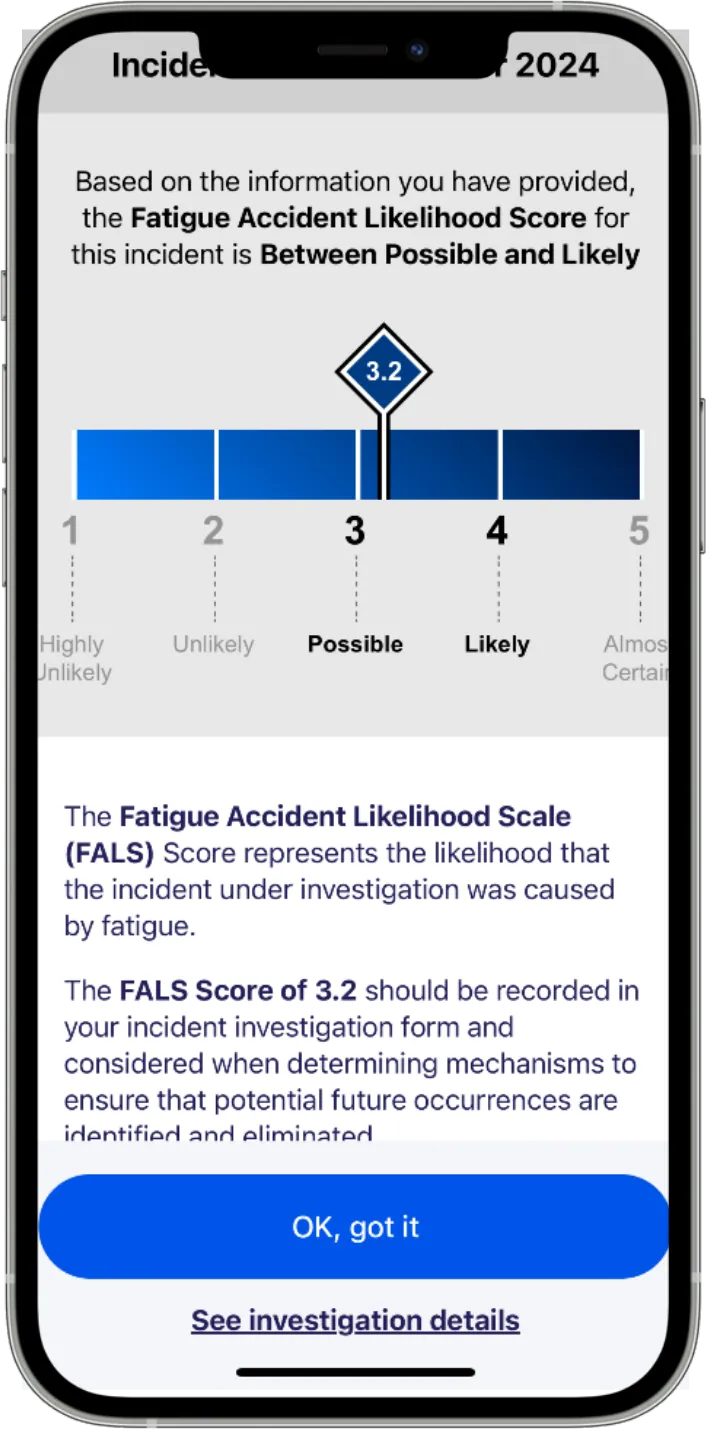
A Was It Fatigue? finding on a phone: a Fatigue Accident Likelihood Score of 3.2, between Possible and Likely, with how to record it.

The problem

Serious incidents must be investigated. Few investigations ask properly about fatigue.

Fatigue is easy to assert and hard to establish after the fact. Investigations tend either to miss it or to blame it without testing the alternatives.

Was It Fatigue? gives your investigators a consistent, repeatable way to ask, and a record that shows the alternatives were tested.

See how Was It Fatigue? works Watch the video · 0:33
Presented by Professor Drew Dawson

The size of the problem

National figures for Canada, from published research. They are modeled, not measured in your workforce.

  • 13%of workplace injuries are linked to sleep problems2014
  • 33%get less than 7 hours' sleep2017 (CHMS 2007-2013)
  • C$2,030lost productivity per affected employee each year
Sources
  1. Uehli K, et al. Sleep problems and work injuries: a systematic review and meta-analysis. Sleep Medicine Reviews, 2014.
  2. Chaput J-P, Wong SL, Michaud I. Duration and quality of sleep among Canadians aged 18 to 79. Health Reports (Statistics Canada), 2017.
  3. Rosekind MR, et al. The Cost of Poor Sleep: Workplace Productivity Loss and Associated Costs. Journal of Occupational and Environmental Medicine, 2010;52(1):91-98, applied to average earnings in Canada (Statistics Canada, Survey of Employment, Payrolls and Hours, May 2026).

Stories

The biggest incidents fatigue played a part in

Findings from investigators, coroners and courts in Canada that fatigue contributed, the most harmful first.

  • Jan 2004 · Ontario, Canada

    Charter pilot on about 5 hours' sleep after cross-continent trip takes off iced and overweight; 10 killed

    • Safety
    • Financial

    A single-engine turboprop on a charter flight took off from an island airstrip in freezing precipitation, about 15 percent over its maximum weight and with ice on the airframe, and struck the frozen surface of a lake, killing the pilot and all nine passengers. The Transportation Safety Board of Canada found the decision to take off was out of character for the pilot and was likely affected by stress and fatigue. The night before, he had returned from a trip to California across three time zones and could have slept at most 5 hours 15 minutes before reporting for duty at 4:45 am.

    Case CA-aviation-05Report an issue
See all fatigue news

How it works

A structured answer to “was it fatigue?”

After an incident or near miss, investigators work through a structured method: was fatigue present, and was the error the kind fatigue produces once other explanations are tested? It sits at the last level of defense, after something has gone wrong, and feeds each finding back into the levels before it: rosters, sleep and in-shift controls.

  1. Step 01

    Event

    An investigator opens an assessment against a specific incident.

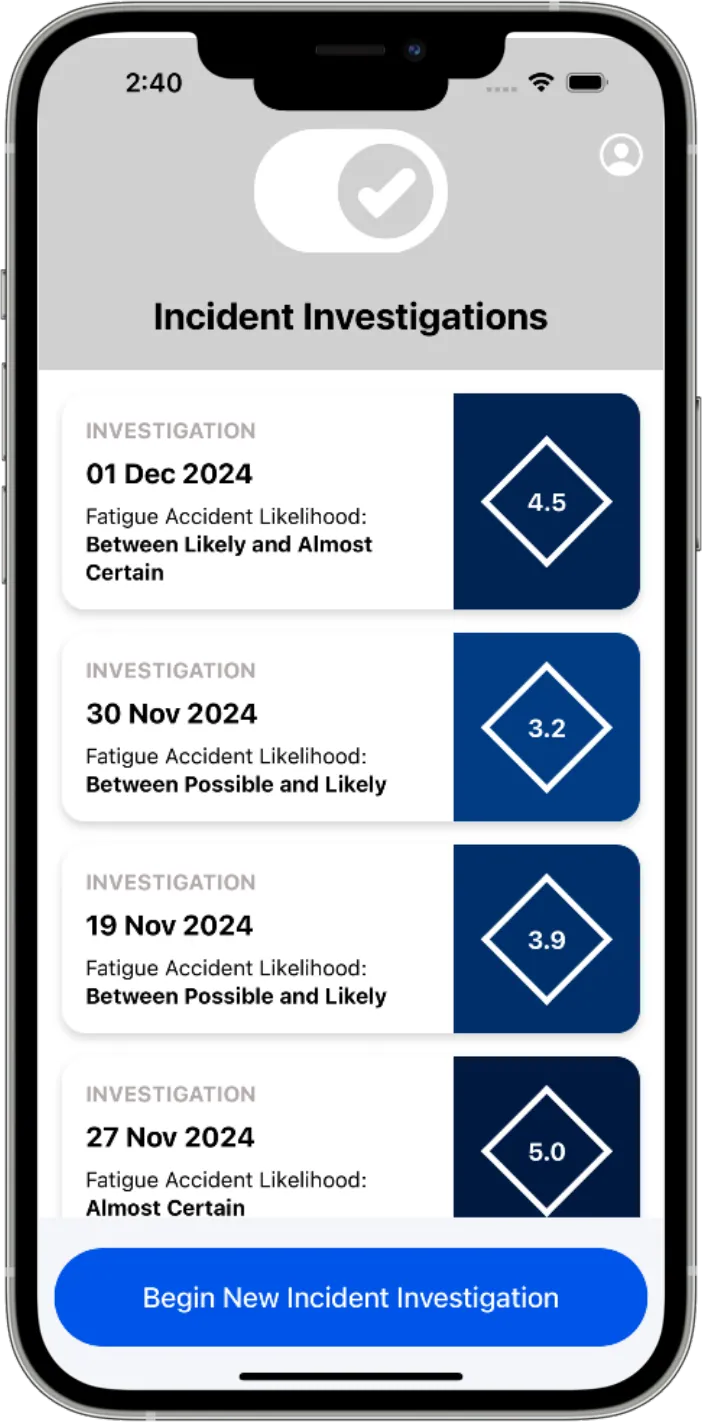
    The Was It Fatigue? investigations list on a phone, each with its Fatigue Accident Likelihood, and a button to begin a new investigation.
  2. Step 02

    Was fatigue present?

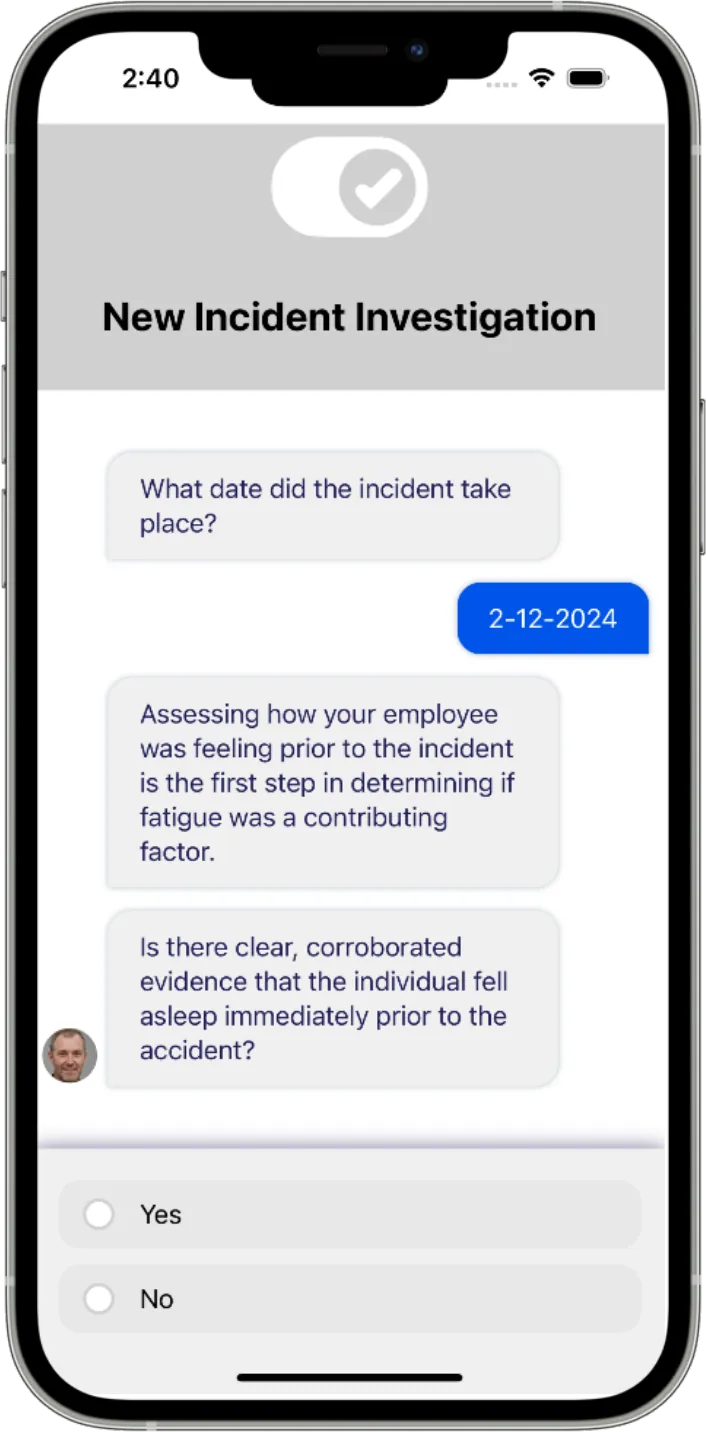
    The Fatigue Likelihood Score, from four questions: falling asleep immediately prior, behavioral symptoms in the preceding fifteen minutes, prior sleep and wake history, and sleep opportunity in the roster.

    A new Was It Fatigue? investigation on a phone: the date of the incident, then whether there is clear evidence the person fell asleep immediately before it.
  3. Step 03

    Was it a fatigue-type error?

    The Fatigue Error Likelihood Score tests alternative explanations at every level before attributing the error to fatigue.

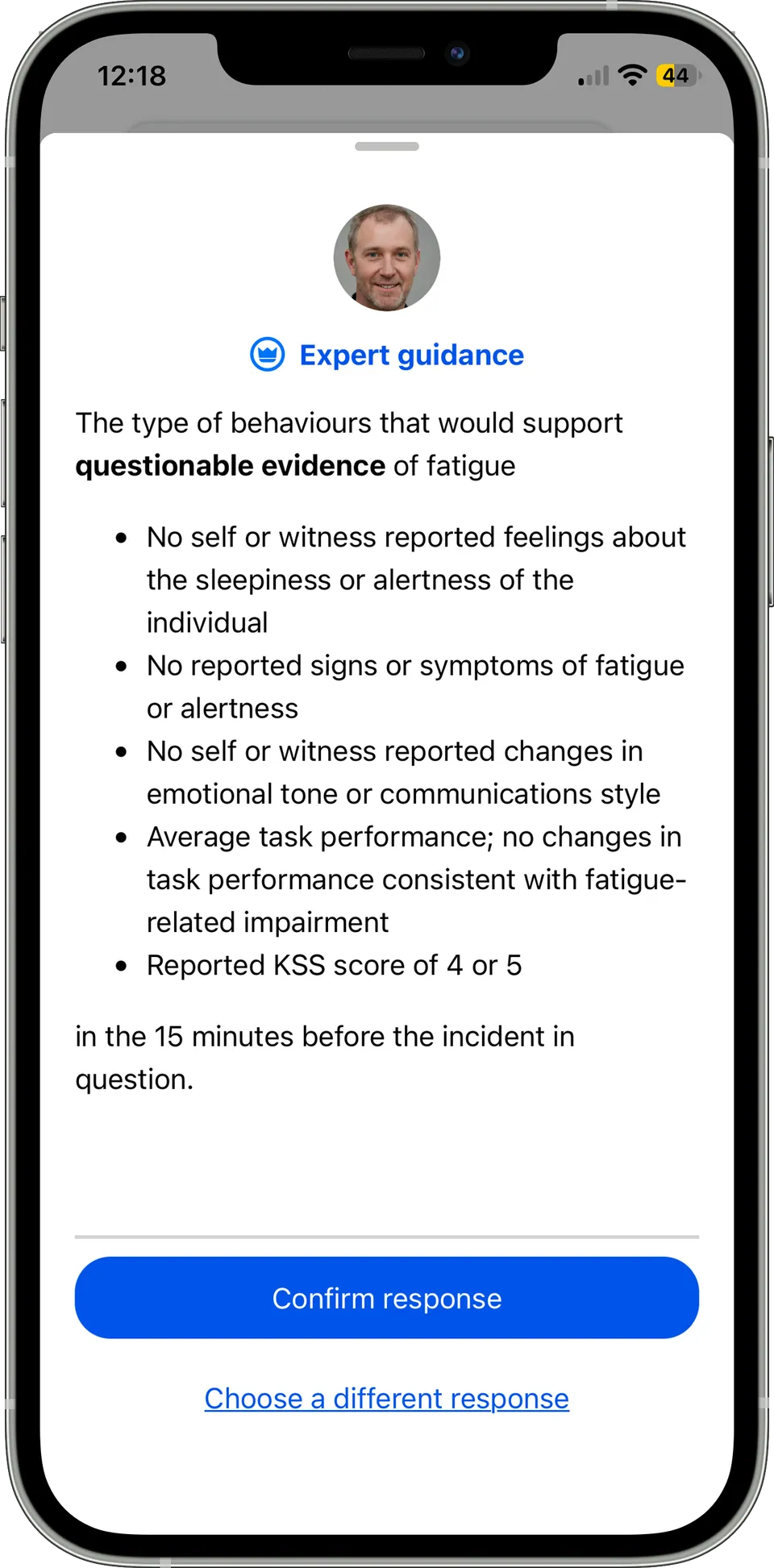
    Expert guidance in Was It Fatigue?: the behaviors that would support questionable evidence of fatigue in the 15 minutes before the incident, with a button to confirm the response.
  4. Step 04

    Combined finding

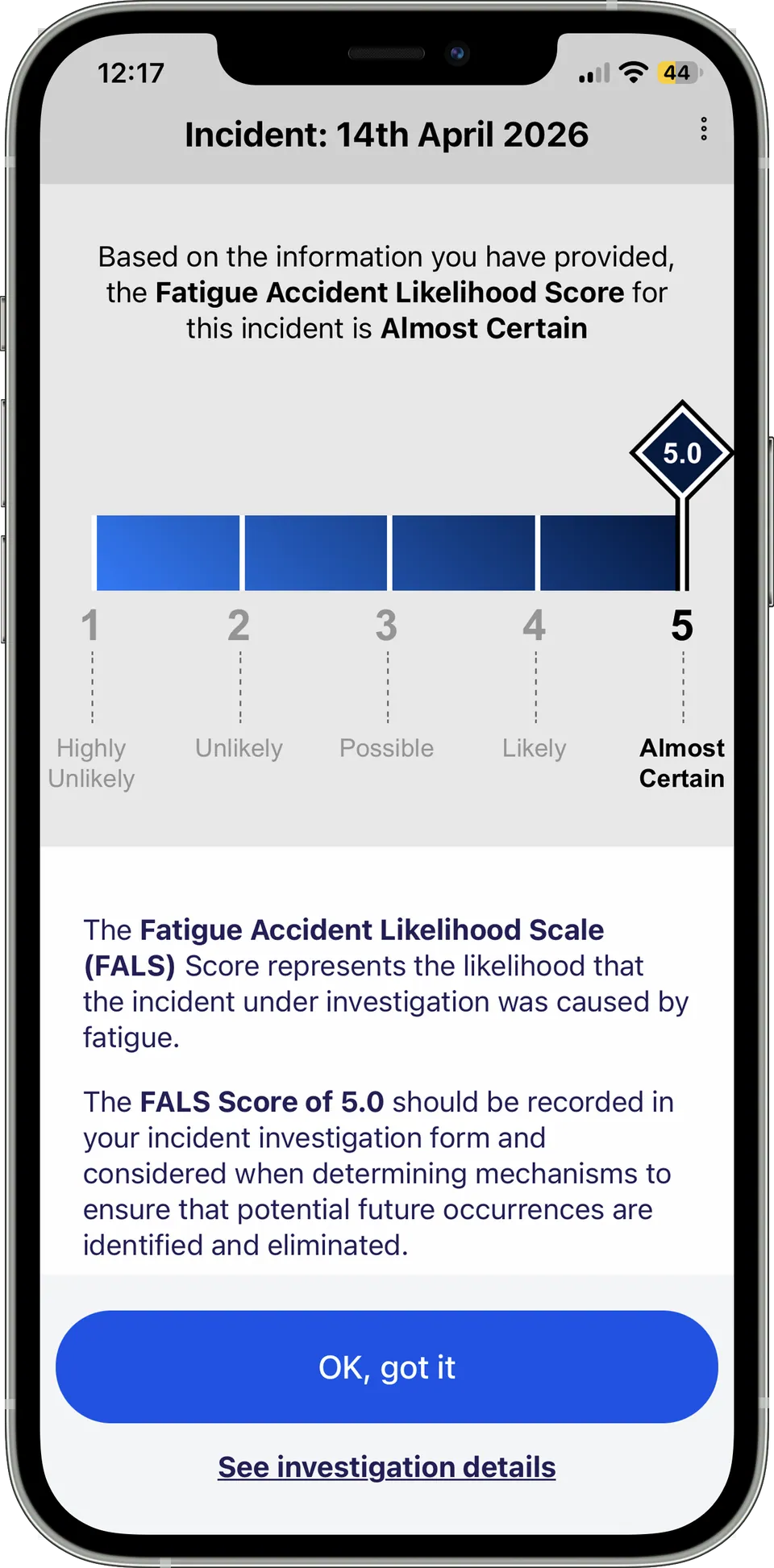
    A Fatigue Attributable Likelihood Score on a 1–5 band with the pathway named, which feeds back into roster, sleep and in-shift controls.

    A Was It Fatigue? finding: a Fatigue Accident Likelihood Score of 5.0, Almost Certain, with what the score means and how to record it.

After an incident, fatigue is either missed or blamed without testing the alternatives. Neither helps the people involved, and neither tells you which control failed. I wanted investigators to have a consistent way to ask the question properly, and a record that shows they did.

Daniel PlattCo-founder and CEO

Rollout

How we roll it out

  1. Scope

    Agree which events call for an assessment, and who investigates.

  2. Set up

    Investigator access, fitted to your existing incident process.

  3. Train

    Investigators learn the method and work a first case together with us.

  4. Review

    Findings feed back into roster, sleep and in-shift controls.

What the client sees

Who sees what

Each record names the fatigue pathway and documents the alternatives tested. It is priced on investigation volume, not headcount: the only event-priced product in the suite.

Priced on prevalence, not headcount. How pricing works.

  • Your investigators

    The full record

    • Every answer and score
    • The alternative explanations tested
    • The fatigue pathway named
  • The employer

    One record per event

    • A structured, repeatable investigation record
    • Findings to feed back into roster, sleep and in-shift controls

Evidence

What we can show

Its construction requires both the presence of fatigue and a fatigue-signature error, and tests alternative explanations throughout. That is what stops it inferring causation from fatigue alone.

It is the only product in the suite that looks across all levels, including roster adequacy, retrospectively after an event.

What it does not establish

It is retrospective. It does not predict an event, does not size a population, and one investigation does not establish a pattern. It is not a validated instrument and no validation claim is made for it. Records produced are discoverable.

In practice

Rail · North America

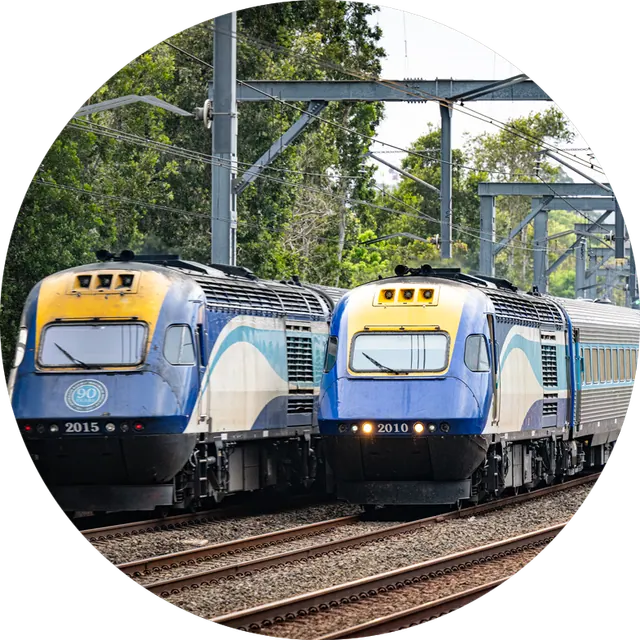
A Class I railroad uses Was It Fatigue? to determine whether fatigue contributed to an incident or near miss.

Its investigators ask the same structured questions after every event, so each record assesses how likely it is that fatigue was present and that the error was the kind fatigue produces, and shows which other explanations were tested.

FAQs

Questions we’re often asked

Who uses it?

Your investigators, who open an assessment against a specific incident or near miss.

How does it avoid blaming fatigue by default?

It requires both the presence of fatigue and an error of the kind fatigue produces, and tests alternative explanations at every level before attributing an error to fatigue.

What does the finding look like?

A Fatigue Attributable Likelihood Score on a 1–5 band with the fatigue pathway named, which feeds back into roster, sleep and in-shift controls.

Is it a validated instrument?

No, and no validation claim is made for it. It is a structured, repeatable method. It is retrospective: it does not predict an event, and one investigation does not establish a pattern. Records produced are discoverable.

How is it priced?

On investigation volume, not headcount: it is the only event-priced product in the suite.

How is investigation data protected?

The platform is certified to ISO/IEC 27001:2022.

Pathways

Where to go next

Was It Fatigue? and regulation across 33 industries in Canada

1 / 33

The regulation names this step

32 / 33

Supports your general duty of care

See how Was It Fatigue? fits the regulation in your industry, and what else we would start with there.

All 33 industries

Other solutions interconnected with Was It Fatigue?

Interested in Was It Fatigue? for your organization?

Tell us a little about your organization and which solutions you’re looking at, and our team will be in touch.

A Was It Fatigue? finding on a phone: a Fatigue Accident Likelihood Score of 3.2, between Possible and Likely, with how to record it.