Science

It’s about sleep, not hours.

The science behind the suite: our scientific and clinical leads, how we work, the studies of our programs, and our evidence, graded by the strength of the claim it supports.

370,000+

research papers on sleep.

And science still can’t say for certain why we sleep.

Here are the ones we build on.

Papers indexed in PubMed for “sleep”, October 2026.

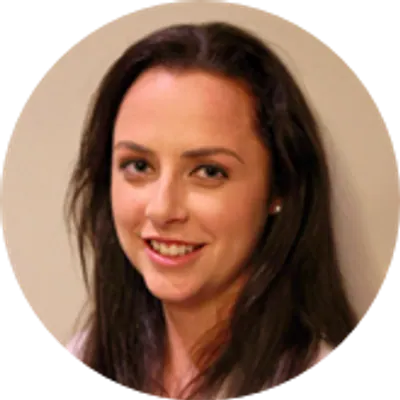
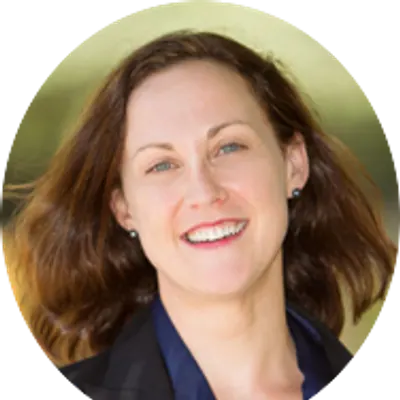
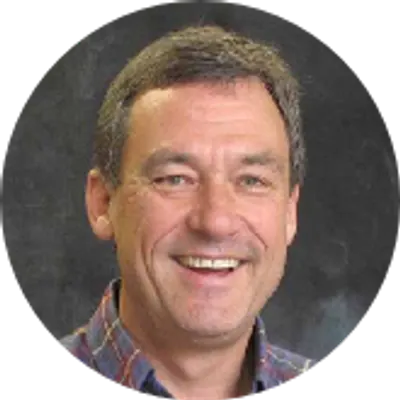
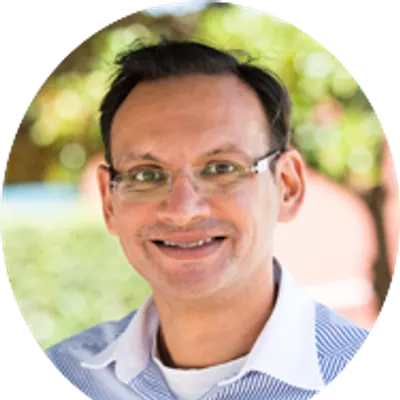
Scientific lead

Scientific advisor

Professor Drew Dawson

Drew Dawson is an internationally recognized authority on shift work and fatigue, with more than 200 peer-reviewed publications over 30 years. He pioneered risk-based approaches to fatigue management built on ISO 31000, and was the founding Director of CQUniversity’s Appleton Institute in Australia.

In North America he has been a scientific policy adviser to regulators including the Federal Railroad Administration, the Federal Motor Carrier Safety Administration and the Railway Association of Canada, and he has consulted to most of the Class 1 railroads in the US and Canada. In Australia he has advised the national rail, heavy vehicle and aviation regulators.

Drew is our scientific lead, in an advisory role. Together we have built out the Fatiguefit suite of tools, grounding each one in his research on fatigue risk management.

Clinical lead

Clinical lead for SleepWellBaby

Tresillian

For more than a century, Tresillian has helped families through the early years of parenting. It is our clinical lead for SleepWellBaby, which brings Tresillian’s approach to infant sleep and settling into parents’ homes.

We work closely with teams right across Tresillian, so the program reflects how its nurses and clinicians support families every day, from a first phone call to a full stay.

Teams we work with
  • Day Services
  • Parent’s Help Line
  • Virtual Residential Service
  • Integrations and partnerships
Past and present collaborators
  • Dr Jenny Smit
  • Dr Deborah Stockton
  • Associate Professor Rob Mills
  • Debrah Davis
  • Sharon Donaldson
  • and many more
Built together

Foundations

Our former advisory board

Dr Anup Desai, Dr Grace Vincent and Dr Erica Crome sat on our advisory board and laid down the clinical and scientific basis for our solutions. That groundwork is still in everything we build.

Former advisory board

Dr Anup Desai

Dr Anup Desai is a sleep and respiratory physician with a PhD in sleep medicine from the University of Sydney. He is a Senior Staff Specialist at Prince of Wales Hospital in Randwick and practises at Sydney Sleep Centre in the CBD. He has particular interests in insomnia, narcolepsy and unexplained daytime sleepiness, and extensive experience in obstructive sleep apnoea and driver safety, including helping draft regulatory guidelines in that area. He previously headed the sleep medicine clinical trials unit at the Woolcock Institute of Medical Research.

Built together
Former advisory board

Dr Grace Vincent

Associate Professor Grace Vincent is a sleep and shiftwork researcher at CQUniversity’s Appleton Institute. Her research focuses on the sleep health of shift workers in high-risk jobs, such as miners, doctors, nurses and firefighters, and on practical ways to make workplaces safer and healthier. She co-authored two Australian Government guidelines on managing fatigue and sleep at work. Her awards include a South Australian Tall Poppy Award and the Australasian Sleep Association’s Nick Antic Career Development Award.

Built together
Former advisory board

Dr Erica Crome

Dr Erica Crome is a clinical psychologist and health manager with broad expertise in mental health, sleep and digital health. She was Sleepfit’s Chief Operating Officer and later an advisor to Sleepfit Solutions. Erica designs evidence-based programs that improve mental health at scale, combining clinical best practice with user-centred design, and has published more than 20 peer-reviewed papers. She holds a PhD, a Master of Clinical Psychology from Macquarie University and a Master of Health Management from UNSW.

Built together

The framework

Managing fatigue: it’s about sleep

Across all five levels, the operational predictor of impairment is prior sleep and wake history, not hours on duty. That is why a fully compliant roster can still put a fatigued crew to work, and why our products measure sleep.

  1. Level 1

    Sleep opportunity

    The roster does not allow enough time for adequate sleep. The failure is in the work pattern, before anyone has slept badly.

    How it is controlled

    Hours-of-service rules and roster design, supported by bio-mathematical modeling of work patterns.

    Where we sit

    Not coveredWe do not operate at this level. Nothing we provide reduces your hours-of-service obligation or substitutes for roster design.

  2. Level 2

    Sleep obtained

    The opportunity to sleep existed, but the sleep did not follow: an undiagnosed disorder, psychological distress, life stage, environment or habit.

    How it is controlled

    Measuring the sleep actually obtained across a workforce, and acting on what it shows.

  3. Level 3

    Behavioral symptoms at work

    Fatigue is present in the shift and is showing in behavior, whether or not the person has recognized it.

    How it is controlled

    Structured assessment at role and task level: sleepiness scales, symptom checklists and trained observation.

  4. Level 4

    Fatigue-related errors

    Fatigue is present and has produced an error. The only question left is whether the system catches it before it reaches the operation.

    How it is controlled

    Fatigue-proofing: task design, cross-checking, error-tolerant procedures and timing critical work away from the circadian low.

    Where we sit

    Not coveredWe do not operate at this level. It is engineered into your safety management system, and awareness training is not a substitute for it.

  5. Level 5

    Fatigue-related incidents

    It has already happened. The value now is in what the organization learns from it.

    How it is controlled

    Structured investigation of whether fatigue contributed and through which pathway, feeding back into the levels above.

    Where we sitWas It Fatigue?

Framework: Dawson D & McCulloch K, "Managing fatigue: it's about sleep", Sleep Medicine Reviews, 2005. Level 4 fatigue-proofing after Dawson, Chapman & Thomas, 2012.

Clinical studies

Our programs, under study

Three peer-reviewed studies of our programs: two of Sleepfit, by researchers at CQUniversity’s Appleton Institute, and one of SleepWellBaby, with researchers from the University of Sydney and Tresillian. Professor Drew Dawson, our scientific lead, had left the Institute before the Sleepfit studies and was not involved in them. What each one found, including its limits.

Sleepfit

Improving sleep health in paramedics through an app-based intervention: a randomised waitlist control pilot trial

Shriane AE, Vincent GE, Ferguson SA, Rebar A, Kolbe-Alexander T, Rigney G. BMC Public Health 2024;24:2395.

Randomised waitlist-control pilot trial · 58 paramedics

Insomnia severity and sleep hygiene improved after using Sleepfit. The pilot found no significant difference from the waitlist group, and high drop-out ruled out the three-month follow-up.

Read the paper
Sleepfit

Examining the feasibility of an app-based sleep intervention for shiftworkers using the RE-AIM framework

Thorne H, Sophocleous RM, Sprajcer M, et al. Behavioral Sleep Medicine 2025;23(3):369–384.

Single-arm feasibility study · 110 shift workers · 14 days

85% of shift workers who completed the baseline survey downloaded and used Sleepfit, and the shift-work modules drew the most engagement. Lack of time, inconvenience and losing interest were the reasons people gave for stopping.

Read the paper
SleepWellBaby

Engagement, acceptability, and impact of a parenting app to support infant sleep and parent well-being: quasi-experimental study

Appleton J, Maxwell AM, Cheng H, Taki S, Stockton D, Fethney J, Debelin A, Denney-Wilson E, Reilly N. JMIR Pediatrics and Parenting 2026;9:e88948.

Pre-post quasi-experimental study · 391 parents of infants under six months

Parents who engaged more with SleepWellBaby reported larger falls in fatigue, and most found it easy to follow and trustworthy. Regular use fell from 58% at seven days to 23% at 30 days.

Read the paper

Evidence

What we can prove, and at what strength

Graded by the strength of the claim it supports rather than by how well it reads.

  1. Tier 1

    Measured in your operation

    Your census: sampling fraction, denominators and 95% confidence intervals for every rate. This is the tier the others exist to support.

  2. Tier 2

    Measured in our deployments

    In a rail operator deployment, 62% of employees identified with elevated sleep-disorder risk took action toward treatment. In a large shift-working rail workforce, more than 1,000 employees completed a sleep assessment and a quarter of them a second, a mean of 93 days later.

  3. Tier 3

    Peer-reviewed

    Two independent studies from CQUniversity’s Appleton Institute found significant improvement in subjective sleep health and insomnia severity after using Sleepfit. Neither was powered to establish efficacy against a control group. That sentence is the whole claim.

  4. Tier 4

    Published literature

    Industry benchmarks and cost estimates from published sources, such as Glick and colleagues’ 2023 study of the economic impact of insufficient and disturbed sleep in the workplace. Each industry page cites its sources.

  5. Tier 5

    Not established, and stated as such

    No outcome effect size is claimed. No reduction in incidents is claimed. The Fatiguefit4Duty risk band and Was It Fatigue? are defensible methods, not validated instruments, and no validation study is claimed for either.

How we work

Art, science, design and engineering

Our main design discipline is a cycle. Art, science, design and engineering form one interconnected creative and analytical loop: each discipline converts the work of the one before it into something the next can build on, and the best work happens where they intersect.

SleepArtScienceEngineeringDesignPerceptionKnowledgeUtilityBehavior
  • SciencePerception → Knowledge

    Science turns what we notice into knowledge we can rely on: sleep and circadian science, fatigue risk research with Professor Drew Dawson, clinical practice with Tresillian, and the studies that test our programs.

  • EngineeringKnowledge → Utility

    Engineering turns that knowledge into tools that work, at scale and under audit: assessments that run on a phone at the start of a shift, reporting that stands up to scrutiny, and a platform certified to ISO/IEC 27001.

  • DesignUtility → Behavior

    Design turns a working tool into one people actually use, and keep using: a program a tired parent can follow at 3am, a check-in a shift worker can finish in a minute, a report a manager can act on.

  • ArtBehavior → Perception

    Art turns how people live with a product into a new way of seeing the problem: the stories, language and images that change how people think about their sleep, and the questions that send us back to the science.

Where they intersect

Science × EngineeringMeasurement

Instruments that turn sleep science into numbers you can defend: the census, the Fatiguefit4Duty risk band, Was It Fatigue?

Engineering × DesignProduct

Tools that are robust and humane at once: secure enough for an auditor, quick enough for the start of a shift.

Design × ArtCommunication

Stories and language that make sleep feel personal rather than clinical, so people see themselves in the program.

Art × ScienceInquiry

New questions. What people tell us, and how they respond, shapes what we study next.

Every turn of the cycle starts and ends in the same place: how people actually sleep. That’s what we measure, what we design for, and what we’ll be judged on.

After Neri Oxman’s Krebs Cycle of Creativity (“Age of Entanglement”, Journal of Design and Science, 2016).

The strongest evidence is your own.

Published studies tell you what’s possible. A census tells you what’s true in your operation, with denominators and confidence intervals for every rate. That’s Tier 1, and your workforce snapshot is the first step towards it.

Researching sleep or fatigue? We’ve worked with CQUniversity, the University of Sydney and Tresillian, and we’re open to new studies. Talk to us

A sample workforce snapshot on a tablet: modeled sleep problems and the cost of poor sleep for 1,400 people in transport and logistics.