Agriculture · New Zealand

Harvest and milking don’t wait. Sleep keeps farms going.

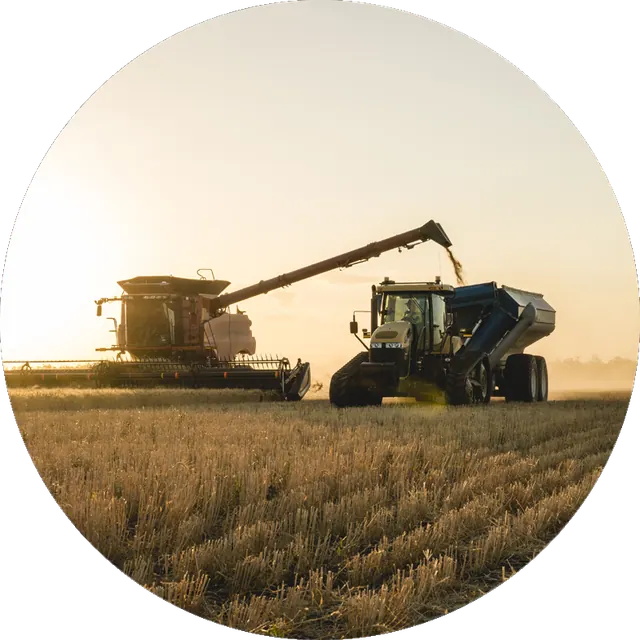
Seasonal peaks bring very long days, early starts and night harvesting or milking, often alone and far from help. Fatigue at the wheel of vehicles and machinery is a serious injury risk.

Regulation changed 9 Jul 2026Change coming 1 Apr 2027

Agriculture workforce

Who this page covers

  • Aquaculture - salmon, oysters, mussels
  • Beef and sheep farming and pastoral stations
  • Broadacre cropping and grain
  • Cattle feedlots
  • Dairy farming
  • Horticulture and seasonal harvest
  • Shearing and agricultural contracting
  • Vineyards (also see Food & Beverage Processing)

Reg Watch

What’s changed, and what’s coming

Regulatory change that affects how you manage fatigue in agriculture: what has changed in the last 12 months, and what is on the way.

Recent changeFrom 9 July 2026

Applies across industries in New Zealand

The Health and Safety at Work Amendment Act 2026 became law on 9 July 2026. Your duties do not change until most of it commences on 1 April 2027, so use the lead time to evidence fatigue as a serious-harm risk.

Read the change

Upcoming changeExpected from 1 April 2027Within 12 months

From 1 April 2027 HSWA centres on 'critical risks'. Fatigue is not on the Schedule 1A list, so it is critical only where likely to cause death or notifiable harm. With fewer than 20 workers you manage critical risks only. Firms of 20 or more manage all risks. A new approved code of practice for farm vehicles, used from 1 April 2027, says a worker who is tired or cannot stay alert should not operate a farm vehicle.

Regulatory changes checked as at 2 November 2026.

Regulation

Who regulates it, and what they expect

Farming in New Zealand gets no exemption or lighter treatment under safety or employment law. WorkSafe names fatigue as a risk farms must manage alongside quad bikes and machinery, but there is no farming-specific rulebook with fixed hour limits and no statutory maximum working week: the Minimum Wage Act's 40-hour default can be varied by agreement, so the real limit on hours is your duty to keep workers safe. Rest and meal breaks apply in full. Farms hiring through the Recognised Seasonal Employer scheme carry an extra layer, with Immigration New Zealand checking accommodation and pastoral care as a condition of accreditation.

Regulated by
  • WorkSafe New ZealandWorkSafe

Logos identify the regulator and don’t imply endorsement.

Who regulates it

Farms in New Zealand answer to the same four regulators as every industry - there's no separate farming safety authority. WorkSafe covers safety, the Human Rights Commission covers discrimination, employment authorities cover hours and pay, and ACC covers injury compensation. Farms hiring seasonal workers via the Recognised Seasonal Employer scheme also face Immigration NZ checks on accommodation and welfare.

Your obligations

You must actively manage worker fatigue as a genuine safety hazard, so far as is reasonably practicable, and the regulator specifically flags it for farms, especially through calving, lambing, harvest and shearing when long hours, vehicles and machinery combine. Owners and directors are officers with a personal duty to verify it is being managed, not just documented. Farm workers get the same rest and meal breaks as any other employee, with no reduced standard, and no statutory ceiling on weekly hours applies. RSE scheme farms must also meet approved accommodation and welfare standards to hold accreditation.

Consequences

With no farming-specific rulebook, a fatigue-related incident is dealt with under general safety law. WorkSafe can issue improvement and prohibition notices and prosecute the farm business in the District Court, and owners, directors and other officers can be charged personally for failing their due-diligence duty. This is not theoretical: WorkSafe has already prosecuted an agricultural contractor over a worker's death where fatigue was the identified cause, and the court found the absence of a formal fatigue plan against the company. Rest and meal break failures go to the Employment Relations Authority. Farms in the seasonal worker scheme can also lose accreditation if welfare and accommodation standards slip.

Penalties

Health and Safety at Work Act 2015 fines are unchanged since 2015: exposing a worker to death or serious injury carries up to $1.5m for the company, $300,000 for a director or other officer and $150,000 for any other individual, rising to $3m, $600,000 and $300,000 for reckless breaches. Reparation to the victim is fixed first and added on top. In New Zealand's first fatigue sentencing the court took a $650,000 starting point and ordered $80,000 reparation.

Sources: WorkSafe New Zealand agriculture guidance and prosecution records; Health and Safety at Work Act 2015; Employment Relations Act 2000; Minimum Wage Act 1983; Immigration New Zealand Recognised Seasonal Employer scheme rules.

Fatigue-critical roles

Where fatigue matters most in agriculture

The roles where a fatigued worker is most likely to cause serious harm, the tasks that carry the risk, and why fatigue builds up in them.

RoleRiskHigh-risk tasksWhy fatigue builds
Agricultural contractor (harvester / tractor driver)
Rules
Regulatory designation
None specific - general duty (HSWA 2015 s 36; fatigue named in s 16 'hazard')
Hours and rest
No statutory maximum; ERA 2000 ss 69ZD-69ZE rest and meal breaks
Critical riskRunning headers, chaser bins and forage harvesters through the night, moving wide machinery on public roads, auger and PTO workHarvest runs of 14-18 h days for weeks, night harvesting when conditions allow, contractors moving between farms
Farm worker / dairy farm assistant
Rules
Regulatory designation
None specific - general duty (HSWA 2015 s 36; fatigue named in s 16 'hazard')
Hours and rest
No statutory maximum; ERA 2000 ss 69ZD-69ZE rest and meal breaks
Critical riskNight checks during calving and lambing, quad bike and side-by-side use on slopes, handling cattle in yards, lone work far from helpBroken sleep for 6-10 weeks of calving or lambing, early starts, lone work
Agricultural haulage driver
Rules
Regulatory designation
Driver of a work-time vehicle (Land Transport Rule: Work Time and Logbooks 2007)
Hours and rest
Work Time Rule: 30 min break after 5.5 h; max 13 h work per cumulative work day; 10 h continuous rest; 70 h then 24 h off
Critical riskCarting grain and produce from paddock to silo through the night at harvest, overloaded-axle risk, long queues at receival sites, rural roadsHarvest-season 14 h+ days, night carting, queuing, short sleep between loads
Dairy farm assistant / herd manager
Rules
Regulatory designation
None specific - general duty (HSWA 2015 s 36; fatigue named in s 16 'hazard')
Hours and rest
No statutory maximum; ERA 2000 ss 69ZD-69ZE rest and meal breaks
High risk04:00 milking in rotary or herringbone sheds, handling cows at close quarters, chemical teat dips and cleaning, then tractor workSplit shifts from 03:30-04:30 plus afternoon milking, 11-12 day rosters, long days
RSE worker / packhouse worker
Rules
Regulatory designation
None specific - general duty (HSWA 2015 s 36; fatigue named in s 16 'hazard')
Hours and rest
No statutory maximum; ERA 2000 ss 69ZD-69ZE rest and meal breaks
High riskNight packhouse grading lines at peak, ladder and platform picking, driving co-workers in vans at dawnPeak-season 10-12 h days 6-7 days a week, piece rates, shared accommodation, long van commutes

Seasonal fatigue risk

When fatigue risk rises in agriculture.

Season alone moves fatigue risk modestly. The sharper effects come from specific weeks and workloads. These are the periods that matter for agriculture in New Zealand in 2027, including the ones that affect every workforce.

  1. Dec to Feb · Measured

    Warmest nights

    Warm nights shorten sleep

  2. Feb to Apr · Measured

    Horticulture harvest

    Injury rates climb from January and peak February to April

  3. 4 Apr · Measured

    Clocks go back

    No net change in crash risk

  4. 26 Sep · Measured

    Clocks spring forward

    Lost hour; injury and crash risk rise the following week

Measured: a published study found a change in sleep, injuries or crashes. Documented: a recorded change in workload or exposure, such as overtime or deployments. Dates are for 2027 and move each year. Our reading of published evidence, refreshed every November.

Stories

When fatigue made the record

Published findings and prosecutions from regulators, courts and investigators in New Zealand.

  • Jul 2021 · New Zealand

    Fishing skipper awake 20 hours as sole watchkeeper; trawler hits container ship at 4am

    • Safety

    At about 4 am a small fishing vessel on autopilot, with no one keeping watch in the wheelhouse, ran into a stationary container ship off the New Zealand coast. The skipper, the only qualified watchkeeper on board, had been awake about 20 hours after a 5-6 hour sleep and was in the engine room at the time. The Transport Accident Investigation Commission found it about as likely as not that fatigue influenced the skipper's decisions, and that the vessel's crewing meant the skipper could not keep compliant watches without becoming chronically fatigued.

    Case NZ-agriculture-02Report an issue

See all agriculture news

How the platform fits

How each product connects to your obligations

Grades describe how strongly a product connects to an obligation. None discharges an obligation, and none carries a compliance warranty.

Sleepfit

Supports your general duty of care

No New Zealand agriculture rule names a sleep-health questionnaire. Section 36(3)(g) of the Health and Safety at Work Act 2015 requires you to monitor worker health, and Sleepfit supports that for seasonal and machinery crews. It identifies employees who may benefit from clinical evaluation; diagnosis stays with your clinicians.

About Sleepfit

Fatiguefit4Duty

Supports your general duty of care

Your s 36 duty reaches fatigue, which s 16 of the Health and Safety at Work Act 2015 names as a source of hazard; the Work Time and Logbooks Rule only limits driving hours. A fitness-for-duty check, not a fitness-for-duty decision - the duty call stays with you.

About Fatiguefit4Duty

Awareness eLearning

Supports your general duty of care

Section 36(3)(f) of the Health and Safety at Work Act 2015 requires the training needed to protect workers but does not name fatigue. Awareness eLearning supports it with fatigue and sleep content for seasonal and machinery crews.

About Awareness eLearning

Was It Fatigue?

Supports your general duty of care

You must notify WorkSafe of a notifiable event under s 56 of the Health and Safety at Work Act 2015; no New Zealand agriculture rule requires you to assess fatigue. A structured judgement aid, not a determination of cause.

About Was It Fatigue?

SleepWellBaby

No New Zealand agriculture rule reaches sleep in new-parent households. SleepWellBaby is offered to parents of infants in your workforce as a benefit that protects their own sleep, not as a compliance step.

About SleepWellBaby

Level 4: fatigue-related errors

When fatigue gets through, catch the error.

Level 4 controls trap or detect fatigue-related errors before they cause harm. They are designed into equipment, tasks and procedures by others: we don’t supply or endorse them, and we can point you to providers. These are the types that apply in agriculture.

  • Detect fatigue in the task

    In-cab fatigue and distraction detection

    A camera watches the operator's eyes, gaze and head position and alerts them, and often a monitoring centre, at signs of drowsiness or distraction.

    What it doesn’t do: It reacts once impairment shows; it does not predict fatigue, measure sleep or fix rosters.

    Examples: Road freight and buses: in-cab cameras with 24/7 monitoring. Mining: haul-truck operator monitoring. Warehousing: forklift kits.

  • Trap the error

    Driver assistance and emergency braking

    The vehicle brakes or steers to prevent or soften a crash when the driver does not react in time.

    What it doesn’t do: It reduces crash likelihood or severity; it does not detect or manage fatigue.

    Examples: Trucks and buses: autonomous emergency braking. Fleet cars: lane keeping.

  • Procedural cross-check

    Two-person checks

    A second qualified person checks critical actions so one tired person's slip is caught.

    What it doesn’t do: Both people may be fatigued on the same roster, so it relies on fatigue-aware rostering behind it.

    Examples: Rail: two-person crews and call-outs. Aviation: two-pilot cross-checks. Utilities: switching verification. Hospitals: double checks.

  • Remove exposure

    Scheduling critical tasks away from the early-morning low

    Moves the highest-risk tasks out of the early-morning hours when errors are most likely.

    What it doesn’t do: It reduces exposure but does not trap the error; it depends on planners knowing when fatigue peaks.

    Examples: Maintenance: critical work scheduled off night shift. Hospitals: elective procedures in daytime.

Most of the evidence for fatigue-detection technology comes from the vendors themselves. Ask for independent evaluation before you rely on it.

In industries like agriculture, trusted by

See what sleep and fatigue mean for your agriculture workforce.

Tell us roughly how many people you employ. Your snapshot models how many are likely sleeping poorly and what it costs, from published research for agriculture. Then tell us what you want to focus on, and we’ll show you how open access would work for you, and what it would cost.

A sample workforce snapshot on a tablet: modelled sleep problems and the cost of poor sleep for 1,400 people in transport and logistics.