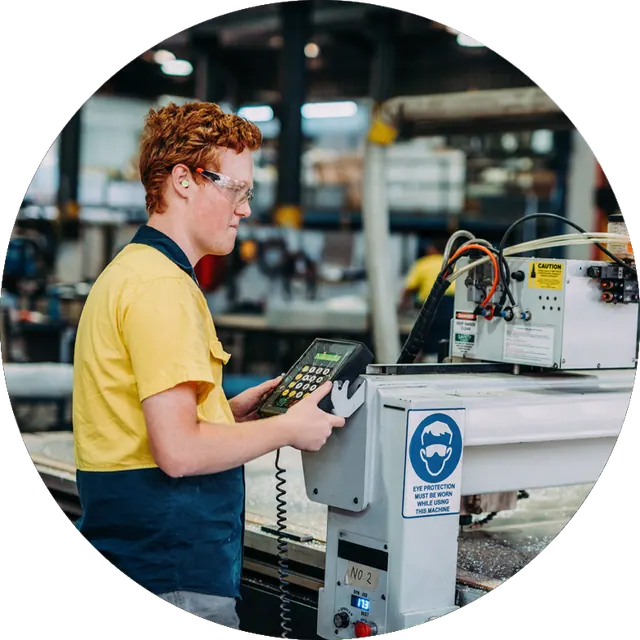
Manufacturing · New Zealand

Manufacturing never stops. Sleep is part of the process.

Continuous-process plants run rotating 8- and 12-hour shifts including nights. Fatigue on monotonous tasks near machinery and forklifts raises the risk of injury, defects and process incidents.

Regulation changed 9 Jul 2026Change coming 1 Apr 2027

Manufacturing workforce

Who this page covers

  • Aircraft manufacturing
  • Aluminium smelting and alumina refining (standalone)
  • Cement and building products
  • Chemicals and petrochemicals
  • Defence industry primes (non-ship)
  • Explosives and fertiliser manufacturing
  • Motor vehicle manufacturing
  • Paper and packaging
  • Pharmaceuticals and biologics
  • Plastics and rubber products
  • Rolling stock manufacturing
  • Sawmills and timber processing
  • Shipbuilding and naval shipyards
  • Steel making and metal fabrication
  • Truck, bus and trailer body building

Reg Watch

What’s changed, and what’s coming

Regulatory change that affects how you manage fatigue in manufacturing: what has changed in the last 12 months, and what is on the way.

Recent changeFrom 9 July 2026

Applies across industries in New Zealand

The Health and Safety at Work Amendment Act 2026 became law on 9 July 2026. Your duties do not change until most of it commences on 1 April 2027, so use the lead time to evidence fatigue as a serious-harm risk.

Read the change

Upcoming changeExpected from 1 April 2027Within 12 months

From 1 April 2027 HSWA centres on 'critical risks'. Fatigue is not on the Schedule 1A list, so it counts only where it is likely to cause death or notifiable harm. Firms under 20 workers manage critical risks only; following an approved code is deemed compliance; officer duties become governance-level.

Regulatory changes checked as at 1 October 2026.

Regulation

Who regulates it, and what they expect

There is no manufacturing-specific fatigue or hours-of-work rule in New Zealand. WorkSafe's manufacturing guidance covers machine guarding, noise, hazardous substances and manual handling, not shift scheduling, so rotating shifts, night work and overtime sit under the general duty to control foreseeable risks. One exception matters: a plant holding hazardous substances above the scheduled quantities is a major hazard facility, and WorkSafe expects those sites' safety management systems to include systems that reduce fatigue and manage shift work as part of fitness for work.

Regulated by
  • WorkSafe New ZealandWorkSafe

Logos identify the regulator and don’t imply endorsement.

Who regulates it

WorkSafe New Zealand does have a manufacturing-focused resource section, but it's about physical hazards like machinery, noise, and chemical safety - not fatigue or working hours. For fatigue purposes, manufacturing employers are covered by the same general bodies as every other New Zealand industry: WorkSafe, the Human Rights Commission, Employment New Zealand, and ACC.

Your obligations

Manufacturers must manage fatigue as a foreseeable safety risk - rotating and night shifts, 12-hour rosters and overtime during production peaks all count - and must provide the rest and meal breaks every employee is entitled to, consider adjustments for staff with sleep or health conditions, and pay ACC levies at the rate set for their industry classification. If your site holds hazardous substances above the threshold quantities it is a major hazard facility, and its safety management system is expected to cover fitness for work, including fatigue and shift-work management. No regulation caps a manufacturing shift.

Consequences

A fatigue-related incident in manufacturing is judged against the general duty, so the question is whether the risk was foreseeable and what you did about it. WorkSafe can issue improvement and prohibition notices, stop a machine or a line, and prosecute the company and its directors personally. In practice most manufacturing prosecutions start with a machine or plant failure and fatigue surfaces inside the wider systems finding, which still counts against you at sentencing. For a major hazard facility, WorkSafe can also act on the safety case itself, and courts fix compensation to the injured worker before setting any fine.

Penalties

Health and Safety at Work Act 2015 maximums, unchanged since 2015 and current in August 2026: reckless exposure to a risk of death or serious injury - $3,000,000 for a company, $600,000 and up to five years' prison for an officer, $300,000 for a worker; without recklessness - $1,500,000/$300,000/$150,000; other breaches - $500,000/$100,000/$50,000. Courts fix reparation to the victim or family before the fine, often exceeding it. No manufacturing-specific scale exists.

Sources: WorkSafe New Zealand manufacturing and major hazard facilities guidance; Health and Safety at Work (Major Hazard Facilities) Regulations 2016; Health and Safety at Work Act 2015; WorkSafe New Zealand v Michael Vining Contracting Ltd [2018] NZDC 6971.

Fatigue-critical roles

Where fatigue matters most in manufacturing

The roles where a fatigued worker is most likely to cause serious harm, the tasks that carry the risk, and why fatigue builds up in them.

RoleRiskHigh-risk tasksWhy fatigue builds
Process operator
Rules
Regulatory designation
None specific - general duty (HSWA 2015 s 36; fatigue named in s 16 'hazard')
Hours and rest
No statutory maximum; ERA 2000 ss 69ZD-69ZE rest and meal breaks
Critical riskRunning reactors, furnaces, kilns or paper machines via DCS overnight; isolations, sampling, start-up and shutdown; tapping or handling molten metal12 h continuous rotating rosters (e.g. 4-on/4-off day/night), 06:00/18:00 handovers, overtime to cover absences
Machine operator
Rules
Regulatory designation
None specific - general duty (HSWA 2015 s 36; fatigue named in s 16 'hazard')
Hours and rest
No statutory maximum; ERA 2000 ss 69ZD-69ZE rest and meal breaks
High riskClearing jams and changeovers on presses, extruders and conveyors; bypass and lock-out decisions at 03:00; inspection at line speedRotating 8 h or 12 h shifts incl. nights, repetitive paced work, overtime
Forklift operator
Rules
Regulatory designation
None specific - general duty (HSWA s 36); F endorsement only if driven on a road
Hours and rest
No statutory maximum; ERA 2000 ss 69ZD-69ZE rest and meal breaks
High riskMoving coils, pallets and dies with forklifts near pedestrians; loading trailers at docks; working at height on order pickers on night shiftRotating shifts incl. nights, repetitive short cycles, congested aisles
Maintenance engineer / electrician
Rules
Regulatory designation
None specific - general duty (HSWA 2015 s 36; fatigue named in s 16 'hazard'); registered electrical worker (Electricity Act 1992)
Hours and rest
No statutory maximum; ERA 2000 ss 69ZD-69ZE rest and meal breaks
High riskIsolation and lock-out, working inside machine guards, electrical fault-finding near live parts, overhead crane repairs; call-outs after a day shiftNight cover rosters, on-call call-outs with broken sleep, shutdown overtime
Shift supervisor
Rules
Regulatory designation
None specific - general duty (HSWA 2015 s 36; fatigue named in s 16 'hazard')
Hours and rest
No statutory maximum; ERA 2000 ss 69ZD-69ZE rest and meal breaks
High riskAccepting handover, issuing permits and authorising lock-out bypasses, deciding whether a fatigued operator stays on task, running the night aloneRotating 12 h shifts, the only decision-maker on site overnight, overtime to cover gaps

Stories

When fatigue made the record

Published findings and prosecutions from regulators, courts and investigators in New Zealand.

  • May 2020 · Auckland, New Zealand

    Packaging plant worker killed in unguarded rollers after a week plus weekend night shifts; regulator says fatigue could have played a role

    • Safety
    • Legal
    • Financial

    A worker at a packaging manufacturer's food packaging plant in Auckland was drawn into unguarded counter-rotating rollers on a foam sheet extrusion line and killed. In sentencing the company, the court noted he had worked five weekdays and then 12 hours and eight hours on the two weekend days on night shift, and that the WorkSafe New Zealand investigation concluded fatigue could have played a role. The company was fined NZ$480,000, with the sentence driven mainly by the lack of guarding.

    Case NZ-manufacturing-09Report an issue

See all manufacturing news

How the suite fits

How each product connects to your obligations

Grades describe how strongly a product connects to an obligation. None discharges an obligation, and none carries a compliance warranty.

Sleepfit

Supports your general duty of care

No New Zealand manufacturing rule names a sleep screen. Section 36(3)(g) of the Health and Safety at Work Act 2015 requires you to monitor worker health, and Sleepfit supports that for rotating shift crews. It screens; diagnosis stays with your clinicians.

About Sleepfit

Fatiguefit4Duty

Supports your general duty of care

No New Zealand manufacturing rule names a pre-duty check. Your s 36 duty under the Health and Safety at Work Act 2015 reaches fatigue, named in s 16 as a source of hazard. A fitness-for-duty check, not a fitness-for-duty decision - the duty call stays with you.

About Fatiguefit4Duty

Awareness eLearning

Supports your general duty of care

Section 36(3)(f) of the Health and Safety at Work Act 2015 requires the training needed to protect workers but does not name fatigue. Awareness eLearning supports it with fatigue and sleep content for rotating shift crews.

About Awareness eLearning

Was It Fatigue?

Supports your general duty of care

You must notify WorkSafe of a notifiable event under s 56 of the Health and Safety at Work Act 2015; no New Zealand manufacturing rule requires you to assess fatigue. A structured judgement aid, not a determination of cause.

About Was It Fatigue?

SleepWellBaby

No New Zealand manufacturing rule reaches sleep in new-parent households. SleepWellBaby is offered to parents of infants in your workforce as a benefit that protects their own sleep, not as a compliance step.

About SleepWellBaby

Recommended bundle

Where we’d start in manufacturing

Every bundle is priced on prevalence: your whole cohort gets access, and you pay for the share predicted to need each product. How pricing works.

Recommended · Levels 2 and 3

Shift Worker Bundle

Sleep screening and a point-of-duty check for the workers who need it most.

Why this pairing in New Zealand

HSWA 2015 s 36 reaches fatigue, a hazard under s 16, but names no tool. Sleepfit screens your rotating shift crews for sleep disorders, supporting s 36(3)(g) health monitoring; Fatiguefit4Duty adds a point-of-duty self-check. Prevention adds Awareness eLearning with a completion record.

See what sleep and fatigue mean for your manufacturing workforce.

Tell us roughly how many people you employ. Your snapshot models how many are likely sleeping poorly and what it costs, from published research for manufacturing. Then choose who you’d cover, and we’ll take you to the right next step.

A sample workforce snapshot on a tablet: modelled sleep problems and the cost of poor sleep for 1,400 people in transport and logistics.