Manufacturing · Singapore

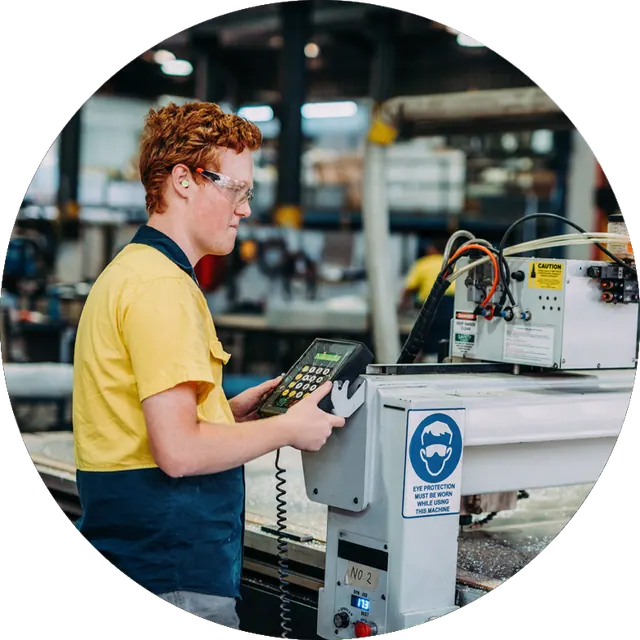
Manufacturing never stops. Sleep is part of the process.

Continuous-process plants run rotating 8- and 12-hour shifts including nights. Fatigue on monotonous tasks near machinery and forklifts raises the risk of injury, defects and process incidents.

Change coming 1 Dec 2026

Manufacturing workforce

Who this page covers

  • Aircraft manufacturing
  • Aluminium smelting and alumina refining (standalone)
  • Cement and building products
  • Chemicals and petrochemicals
  • Defence industry primes (non-ship)
  • Explosives and fertiliser manufacturing
  • Motor vehicle manufacturing
  • Paper and packaging
  • Pharmaceuticals and biologics
  • Plastics and rubber products
  • Rolling stock manufacturing
  • Sawmills and timber processing
  • Ship repair and marine engineering - Singapore marine and offshore (also see Maritime & Shipping)
  • Shipbuilding and naval shipyards
  • Steel making and metal fabrication
  • Truck, bus and trailer body building

Reg Watch

What’s changed, and what’s coming

Regulatory change that affects how you manage fatigue in manufacturing: what has changed in the last 12 months, and what is on the way.

Upcoming changeExpected from 1 December 2026Within 12 months

From 1 Dec 2026 MOM makes four heat-stress measures mandatory where workers are exposed to heat, including a training programme. An Employment Act review (incl. Part IV hours) reports in 2H 2026. The Workplace Fairness Act 2025 is targeted to commence around end-2027.

Regulatory changes checked as at 1 October 2026.

Regulation

Who regulates it, and what they expect

Manufacturing has no sector fatigue rule, but the baseline bites: round-the-clock shifts are common, from precision engineering to semiconductor and chemical plants, and many production and technician staff earn within the Employment Act salary thresholds, so the hours caps apply. Machinery risk makes fatigue a live safety hazard.

Regulated by
  • Ministry of ManpowerMOM

Logos identify the regulator and don’t imply endorsement.

Who regulates it

MOM enforces the WSH Act in manufacturing, with the WSH Council publishing sector guidance. The fatigue guidance that applies is the general 2010 WSH Council and MOM guidelines, not a manufacturing-specific rule.

Your obligations

Keep workers safe and assess the risks of the work, including fatigue on night and rotating shifts. For staff within the salary thresholds, apply the 12-hour daily cap, 72 hours' overtime a month and a weekly rest day - 30 continuous hours for shift workers. Insure manual workers for work injury. MOM's fatigue guidelines recommend shifts of no more than 12 hours including overtime.

Consequences

Baseline WSH Act penalties apply: up to S$500,000 for a company and S$200,000 and/or two years' jail for an individual (WSH Act maxima, 2026); since 1 June 2024, up to S$50,000 for failing to conduct a risk assessment that is a major cause of serious harm. Manufacturing is among the sectors MOM targets in enforcement operations.

Penalties

In the first half of 2025, MOM's inspections of higher-risk industries found nearly 7,000 breaches and led to S$1.5 million in composition fines and 28 stop-work orders. Employment Act hours breaches carry up to S$5,000 per offence (2026). Work injury compensation limits rose on 1 November 2025.

On the record

No Singapore court, coroner, investigator or regulator has published a finding linking fatigue to an incident in manufacturing. Fatigue risk still falls under the Workplace Safety and Health Act duty and MOM's fatigue management guidelines.

Sources: Workplace Safety and Health Act 2006; WSH (Risk Management) Regulations; WSH Council and MOM Fatigue Management Guidelines (2010); Employment Act 1968, Part IV; Work Injury Compensation Act 2019.

Fatigue-critical roles

Where fatigue matters most in manufacturing

The roles where a fatigued worker is most likely to cause serious harm, the tasks that carry the risk, and why fatigue builds up in them.

RoleRiskHigh-risk tasksWhy fatigue builds
Process technician (petrochemical / semiconductor fab)
Rules
Regulatory designation
None specific - general duty (WSHA 2006 s 12); shift personnel at an MHI where applicable (WSH (MHI) Regs 2017)
Hours and rest
Employment Act Part IV (covered pay bands): 12 h/day cap, 72 OT h/month, weekly rest day
Critical riskRunning reactors, furnaces, kilns or paper machines via DCS overnight; isolations, sampling, start-up and shutdown; tapping or handling molten metal12 h continuous rotating rosters (e.g. 4-on/4-off day/night), 06:00/18:00 handovers, overtime to cover absences
Production operator
Rules
Regulatory designation
None specific - general duty (WSHA 2006 s 12)
Hours and rest
Employment Act Part IV (covered pay bands): 12 h/day cap, 72 OT h/month, weekly rest day
High riskClearing jams and changeovers on presses, extruders and conveyors; bypass and lock-out decisions at 03:00; inspection at line speedRotating 8 h or 12 h shifts incl. nights, repetitive paced work, overtime
Forklift driver
Rules
Regulatory designation
None specific - general duty (WSHA s 12); MOM-accredited forklift course
Hours and rest
Employment Act Part IV (covered pay bands): 12 h/day cap, 72 OT h/month, weekly rest day
High riskMoving coils, pallets and dies with forklifts near pedestrians; loading trailers at docks; working at height on order pickers on night shiftRotating shifts incl. nights, repetitive short cycles, congested aisles
Maintenance technician
Rules
Regulatory designation
None specific - general duty (WSHA 2006 s 12); Licensed Electrical Worker for electrical installations (Electricity Act 2001)
Hours and rest
Employment Act Part IV (covered pay bands): 12 h/day cap, 72 OT h/month, weekly rest day
High riskIsolation and lock-out, working inside machine guards, electrical fault-finding near live parts, overhead crane repairs; call-outs after a day shiftNight cover rosters, on-call call-outs with broken sleep, shutdown overtime
Shift supervisor
Rules
Regulatory designation
None specific - general duty (WSHA 2006 s 12)
Hours and rest
Employment Act Part IV (covered pay bands): 12 h/day cap, 72 OT h/month, weekly rest day
High riskAccepting handover, issuing permits and authorising lock-out bypasses, deciding whether a fatigued operator stays on task, running the night aloneRotating 12 h shifts, the only decision-maker on site overnight, overtime to cover gaps

How the suite fits

How each product connects to your obligations

Grades describe how strongly a product connects to an obligation. None discharges an obligation, and none carries a compliance warranty.

Sleepfit

Supports your general duty of care

Sleepfit screens sleep health across your production workers, supporting the risk assessment reg 3 of the WSH (Risk Management) Regulations requires you to conduct. No Singapore rule names a sleep screen. It screens; diagnosis stays with your clinicians.

About Sleepfit

Fatiguefit4Duty

Supports your general duty of care

Fatiguefit4Duty records a point-of-duty fatigue check for your machine operators and shift crews, supporting your duty under s 12(1) of the WSH Act. No Singapore rule names the check. A fitness-for-duty check, not a fitness-for-duty decision - the duty call stays with you.

About Fatiguefit4Duty

Awareness eLearning

Supports your general duty of care

Awareness eLearning gives your production workers recorded fatigue education, supporting your general duty under s 12(3)(e) of the WSH Act to provide adequate instruction, information and training. MOM's fatigue guidelines recommend it; no rule names it.

About Awareness eLearning

Was It Fatigue?

Supports your general duty of care

Was It Fatigue? structures a fatigue review after an incident, supporting the risk assessment review reg 7 of the Risk Management Regulations requires after an injury. Reporting rules name no cause. A structured judgement aid, not a determination of cause.

About Was It Fatigue?

SleepWellBaby

SleepWellBaby supports parents among your production workers through the most broken months of infant sleep. No Singapore rule reaches sleep in new-parent households; it is offered as a benefit.

About SleepWellBaby

Recommended bundle

Where we’d start in manufacturing

Every bundle is priced on prevalence: your whole cohort gets access, and you pay for the share predicted to need each product. How pricing works.

Recommended · Levels 2 and 3

Shift Worker Bundle

Sleep screening and a point-of-duty check for the workers who need it most.

Why this pairing in Singapore

No Singapore rule names a fatigue tool, so this supports your WSH Act 2006 s 12 duty and reg 3 risk assessment. Sleepfit screens your production workers for sleep disorders; Fatiguefit4Duty adds a point-of-duty self-check. Prevention adds Awareness eLearning with a completion record.

See what sleep and fatigue mean for your manufacturing workforce.

Tell us roughly how many people you employ. Your snapshot models how many are likely sleeping poorly and what it costs, from published research for manufacturing. Then choose who you’d cover, and we’ll take you to the right next step.

A sample workforce snapshot on a tablet: modelled sleep problems and the cost of poor sleep for 1,400 people in transport and logistics.