Manufacturing · United Kingdom

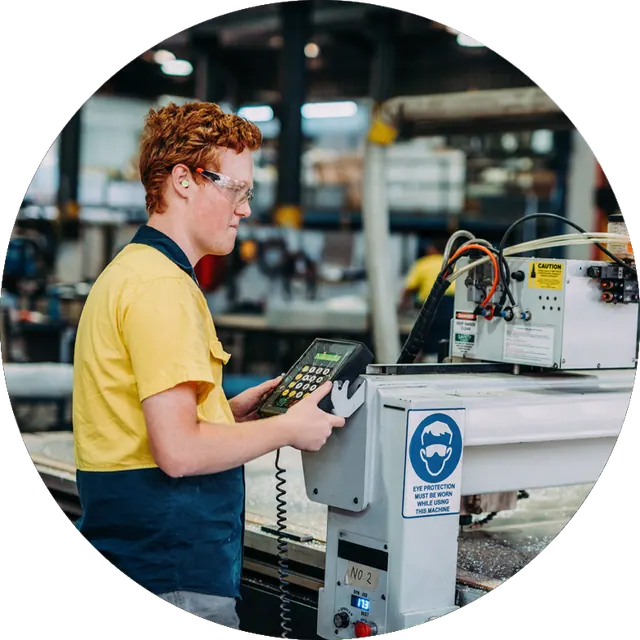
Manufacturing never stops. Sleep is part of the process.

Continuous-process plants run rotating 8- and 12-hour shifts including nights. Fatigue on monotonous tasks near machinery and forklifts raises the risk of injury, defects and process incidents.

Regulation changed 6 Apr 2026Change coming 30 Oct 2026

Manufacturing workforce

Who this page covers

  • Aircraft manufacturing
  • Aluminium smelting and alumina refining (standalone)
  • Cement and building products
  • Chemicals and petrochemicals
  • Defence industry primes (non-ship)
  • Explosives and fertiliser manufacturing
  • Motor vehicle manufacturing
  • Paper and packaging
  • Pharmaceuticals and biologics
  • Plastics and rubber products
  • Rolling stock manufacturing
  • Sawmills and timber processing
  • Shipbuilding and naval shipyards
  • Steel making and metal fabrication
  • Truck, bus and trailer body building

Reg Watch

What’s changed, and what’s coming

Regulatory change that affects how you manage fatigue in manufacturing: what has changed in the last 12 months, and what is on the way.

Recent changeFrom 6 April 2026

Applies across industries in the United Kingdom

In Great Britain, from 6 Apr 2026 sick pay is due from the first day of sickness and you must keep holiday records for 6 years; from 1 Oct 2026 most tribunal claims can be brought up to 6 months after the event.

Read the change

Upcoming changeExpected from 30 October 2026Within 12 months

From October 2026 (expected 30 Oct) you must take all reasonable steps to prevent sexual harassment of staff, including by customers and other third parties. From 1 Jan 2027 unfair dismissal protection starts after 6 months' service. Guaranteed hours and shift-notice rights for zero-hours workers are listed for 2027, timing to follow consultation.

Regulatory changes checked as at 1 October 2026.

Regulation

Who regulates it, and what they expect

There is no manufacturing-specific fatigue law, but for higher-hazard sites there is a real requirement. If you are an upper-tier COMAH establishment, your safety report is assessed against HSE's human factors criteria, which ask you to explain the method by which staffing levels were set for normal and abnormal operations, and to set out a framework covering shift patterns, rest and rotation, limits on working hours, monitoring, and educating people about fatigue. Outside COMAH, machinery and chemical rules say nothing about hours, and fatigue on rotating and night shifts is governed by the general safety duty and the Working Time Regulations.

Regulated by
  • Health and Safety ExecutiveHSE

Logos identify the regulator and don’t imply endorsement.

Who regulates it

HSE regulates manufacturing under the Health and Safety at Work etc. Act 1974 and, for higher-hazard sites, jointly with the environment regulator as the COMAH competent authority. Employment Tribunals hear working time and disability claims. HSE's manufacturing guidance is about machinery, chemicals and manual handling; its fatigue and shift work guidance is separate and generic to all industries.

Your obligations

Every manufacturer must control fatigue as a hazard for shift-working staff and meet the general working time rules - a 48-hour average week with individual opt-out, 11-hour daily rest, weekly rest, in-shift breaks and night worker health assessments - plus reasonable adjustments where a sleep disorder amounts to a disability. HSE is explicit that complying with the Working Time Regulations alone does not meet the fatigue duty. Above COMAH thresholds you must go further, and show in your safety report how staffing levels were set and how shift patterns, rest, rotation, hours and monitoring control fatigue.

Consequences

A fatigue-related failure is enforced as a breach of the general duty to control a foreseeable risk: improvement or prohibition notices, recovery of HSE's investigation time, and prosecution. On a COMAH site the exposure starts earlier - the competent authority assesses your safety report against its human factors criteria and can require it to be revised, so a thin account of staffing and shift patterns is a problem before anything goes wrong. Managers can be prosecuted personally where a failure is attributable to their neglect. Workers can bring hours, rest break and disability claims in an Employment Tribunal.

Penalties

HSE prosecutions are sentenced on the Sentencing Council's 2016 guideline: fines banded by turnover - micro under £2m, small £2m-£10m, medium £10m-£50m, large above £50m - and by culpability and harm. At the top band a large organisation starts at £4m, range £2.6m-£10m, unlimited in the Crown Court. Individuals face up to 2 years in prison. A death from gross management failure can bring corporate manslaughter under the 2007 Act: £4.8m-£20m for a large organisation.

On the record

No UK court, coroner, investigator or regulator has published a finding linking fatigue to an incident in manufacturing. The duty to manage fatigue still sits within the general duties of the Health and Safety at Work etc. Act 1974.

Sources: Health and Safety at Work etc. Act 1974; Control of Major Accident Hazards Regulations 2015 and HSE's human factors assessment criteria; Working Time Regulations 1998; HSE fatigue guidance; Sentencing Council guideline (2016); Eyres v Atkinsons Kitchens [2007] EWCA Civ 365.

Fatigue-critical roles

Where fatigue matters most in manufacturing

The roles where a fatigued worker is most likely to cause serious harm, the tasks that carry the risk, and why fatigue builds up in them.

RoleRiskHigh-risk tasksWhy fatigue builds
Process operator
Rules
Regulatory designation
Night worker (WTR 1998 reg 2) - free health assessment, reg 7; COMAH 2015 establishment where applicable
Hours and rest
WTR 1998: 48 h avg (opt-out allowed), 11 h daily rest, night work avg 8 h in 24 (reg 6)
Critical riskRunning reactors, furnaces, kilns or paper machines via DCS overnight; isolations, sampling, start-up and shutdown; tapping or handling molten metal12 h continuous rotating rosters (e.g. 4-on/4-off day/night), 06:00/18:00 handovers, overtime to cover absences
Machine operator / production operative
Rules
Regulatory designation
Night worker (WTR 1998 reg 2) - free health assessment, reg 7
Hours and rest
WTR 1998: 48 h avg (opt-out allowed), 11 h daily rest, night work avg 8 h in 24 (reg 6)
High riskClearing jams and changeovers on presses, extruders and conveyors; bypass and lock-out decisions at 03:00; inspection at line speedRotating 8 h or 12 h shifts incl. nights, repetitive paced work, overtime
FLT driver
Rules
Regulatory designation
Lift truck operator - adequate training (PUWER 1998 reg 9; ACOP L117); night worker (WTR 1998 reg 2) - free health assessment, reg 7
Hours and rest
WTR 1998: 48 h avg (opt-out allowed), 11 h daily rest, night work avg 8 h in 24 (reg 6)
High riskMoving coils, pallets and dies with forklifts near pedestrians; loading trailers at docks; working at height on order pickers on night shiftRotating shifts incl. nights, repetitive short cycles, congested aisles
Multi-skilled maintenance engineer
Rules
Regulatory designation
Night worker (WTR 1998 reg 2) - free health assessment, reg 7; Electricity at Work Regs 1989 reg 16 competence
Hours and rest
WTR 1998: 48 h avg (opt-out allowed), 11 h daily rest, night work avg 8 h in 24 (reg 6)
High riskIsolation and lock-out, working inside machine guards, electrical fault-finding near live parts, overhead crane repairs; call-outs after a day shiftNight cover rosters, on-call call-outs with broken sleep, shutdown overtime
Shift manager / team leader
Rules
Regulatory designation
Night worker (WTR 1998 reg 2) - free health assessment, reg 7
Hours and rest
WTR 1998: 48 h avg (opt-out allowed), 11 h daily rest, night work avg 8 h in 24 (reg 6)
High riskAccepting handover, issuing permits and authorising lock-out bypasses, deciding whether a fatigued operator stays on task, running the night aloneRotating 12 h shifts, the only decision-maker on site overnight, overtime to cover gaps

How the suite fits

How each product connects to your obligations

Grades describe how strongly a product connects to an obligation. None discharges an obligation, and none carries a compliance warranty.

Sleepfit

Supports a named obligation

Where your shift workers work nights, regulation 7 of the Working Time Regulations 1998 says you must offer a free health assessment before night work starts and at regular intervals. Sleepfit supports it. It screens; diagnosis stays with your clinicians.

About Sleepfit

Fatiguefit4Duty

Supports your general duty of care

No UK rule names a pre-duty fitness check for manufacturing plants. Fatiguefit4Duty supports your general duty under s 2 of the Health and Safety at Work etc. Act 1974. A fitness-for-duty check, not a fitness-for-duty decision - the duty call stays with you.

About Fatiguefit4Duty

Awareness eLearning

Supports your general duty of care

Awareness eLearning supports the training you must give under s 2(2)(c) of the Health and Safety at Work etc. Act 1974 and regulation 13 of the 1999 Management Regulations with fatigue and sleep content. No UK rule names fatigue training for manufacturing plants.

About Awareness eLearning

Was It Fatigue?

Supports your general duty of care

RIDDOR 2013 requires you to report and record specified incidents in manufacturing plants but names no cause, and no fatigue review is required. Was It Fatigue? supports your own investigation. A structured judgement aid, not a determination of cause.

About Was It Fatigue?

SleepWellBaby

No UK rule reaches sleep in new-parent households in manufacturing plants. SleepWellBaby supports your working parents through the most disrupted period of their own sleep; it is offered as a wellbeing benefit, not a compliance step.

About SleepWellBaby

Recommended bundle

Where we’d start in manufacturing

Every bundle is priced on prevalence: your whole cohort gets access, and you pay for the share predicted to need each product. How pricing works.

Alternative · Levels 2 and 3

Shift Worker Bundle

Sleep screening and a point-of-duty check for the workers who need it most.

Why this pairing in the United Kingdom

Working Time Regulations 1998 reg 7 requires a free health assessment for your night shift workers; Sleepfit screening supports it. Fatiguefit4Duty adds a pre-shift check and Awareness eLearning trains under HSWA 1974 s 2(2)(c). Shift worker is the lighter option.

See what sleep and fatigue mean for your manufacturing workforce.

Tell us roughly how many people you employ. Your snapshot models how many are likely sleeping poorly and what it costs, from published research for manufacturing. Then choose who you’d cover, and we’ll take you to the right next step.

A sample workforce snapshot on a tablet: modelled sleep problems and the cost of poor sleep for 1,400 people in transport and logistics.