
Upcoming changeExpected from 2027
The Workplace Fairness Act 2025, which will bar discrimination including on disability and mental health conditions, has passed but is not yet in force; MOM targets commencement around end-2027.
Rail · Singapore
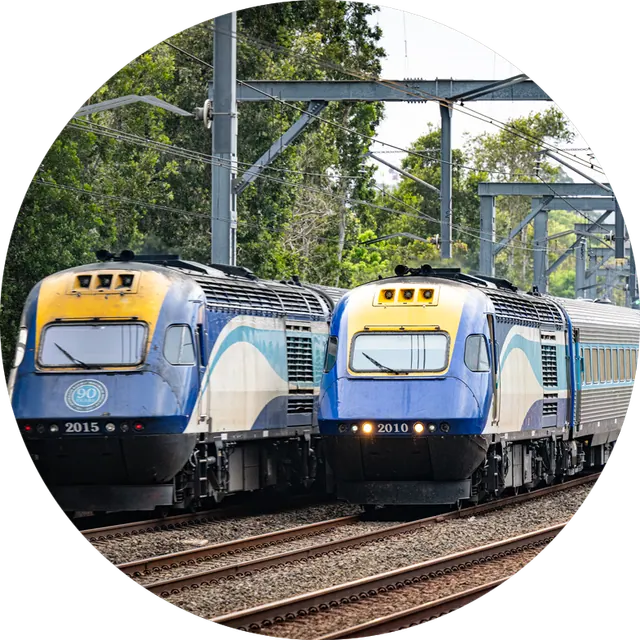
Drivers, signallers and controllers work 24/7 rotating rosters with early starts and nights. A fatigue lapse can mean a signal passed at danger, a collision or a derailment.
Reg Watch
Regulatory change that affects how you manage fatigue in rail: what has changed in the last 12 months, and what is on the way.
Upcoming changeExpected from 2027
The Workplace Fairness Act 2025, which will bar discrimination including on disability and mental health conditions, has passed but is not yet in force; MOM targets commencement around end-2027.
Regulatory changes checked as at 1 October 2026.
Regulation
No published Singapore rule sets duty hours or rest periods for train captains. LTA requires operators to run a safety management system as a licence condition, which is where fatigue controls belong, but no numeric fatigue standard is published. The Employment Act caps hours only for staff within its salary thresholds, so train captains above them have no statutory hours cap. Early-morning and late-night running puts much of the work in high-fatigue hours.
 LTA
 MOM
Logos identify the regulator and don’t imply endorsement.
The Land Transport Authority (LTA) regulates Singapore's MRT and LRT networks, licensing SMRT Trains and SBS Transit under the Rapid Transit Systems Act and requiring each to run a safety management system. MOM enforces the baseline safety and employment law for rail staff, including train captains.
As a licensed operator you must maintain the safety management system LTA requires, and carry the baseline duty to assess and control the risks of the work - which MOM's fatigue guidelines say should include fatigue, with caution over safety-critical work between 2am and 6am. For train captains and depot staff within the salary thresholds, the Employment Act caps work at 12 hours a day and overtime at 72 hours a month.
LTA holds licensing powers over operators and uses them: in July 2025 it imposed a S$2.4 million financial penalty on SMRT over the September 2024 East-West Line disruption, an equipment failure rather than a fatigue case. Baseline WSH Act penalties also apply: up to S$500,000 for a company and S$200,000 and/or two years' jail for an individual (WSH Act maxima, 2026).
The S$2.4 million penalty on SMRT in 2025, with a direction to invest at least S$600,000 in capability, shows the scale of LTA's licensing lever; LTA said SMRT's own costs from the disruption exceeded S$10 million. Baseline WSH Act fines and work injury compensation limits (from 1 November 2025) apply as well.
On the record
No Singapore court, coroner, investigator or regulator has published a finding linking fatigue to an incident in rail. Fatigue risk still falls under the Workplace Safety and Health Act duty and MOM's fatigue management guidelines.
Sources: Rapid Transit Systems Act; Land Transport Authority; LTA statements on SMRT (June and July 2025); Workplace Safety and Health Act 2006; WSH Council and MOM Fatigue Management Guidelines (2010); Employment Act 1968, Part IV.
Fatigue-critical roles
The roles where a fatigued worker is most likely to cause serious harm, the tasks that carry the risk, and why fatigue builds up in them.
| Role | Risk | High-risk tasks | Why fatigue builds |
|---|---|---|---|
Traffic controller, Operations Control CentreRules
| Critical risk | Setting routes and controlling train movements overnight; issuing manual authorities and track occupancy permits in degraded working; protecting worksites | 12 h night shifts in 24/7 signal boxes and control centres; low-traffic vigilance overnight then morning peak |
Possession in-charge (engineering hours)Rules
| Critical risk | Setting up and handing back track possessions in the short engineering-hours window after last train; protecting maintenance crews | Night engineering hours roughly 01:00-04:30 after last train, then day rest |
Train captain (SMRT Trains, SBS Transit)Rules
| High risk | Monitoring automatic train operation from the cab; manual driving in degraded mode; door and platform screen door checks; detrainment on track | Shift rosters from first train about 05:30 to after last train past midnight; early report times |
Permanent way technician (engineering hours)Rules
| High risk | Operating tampers, ballast regulators and road-rail vehicles in night possessions; working near live lines; machine travel to and from site | Night possessions, long shutdown shifts, remote work and travel, drive home after nights |
How the suite fits
Grades describe how strongly a product connects to an obligation. None discharges an obligation, and none carries a compliance warranty.
Sleepfit screens sleep health across your rail staff, supporting the risk assessment reg 3 of the WSH (Risk Management) Regulations requires you to conduct. No published Singapore rail rule names a sleep screen. It screens; diagnosis stays with your clinicians.
About SleepfitFatiguefit4Duty records a point-of-duty fatigue check for your train captains and controllers, supporting your s 12(1) WSH Act duty. No published Singapore rail rule names the check. A fitness-for-duty check, not a fitness-for-duty decision - the duty call stays with you.
About Fatiguefit4DutyAwareness eLearning gives your rail staff recorded fatigue education, supporting your duty under s 12(3)(e) of the WSH Act to provide adequate instruction, information and training. No published Singapore rail rule names fatigue training.
About Awareness eLearningWas It Fatigue? structures a fatigue review after an incident, supporting the risk assessment review reg 7 of the Risk Management Regulations requires after an injury. Reporting rules name no cause. A structured judgement aid, not a determination of cause.
About Was It Fatigue?SleepWellBaby supports parents among your rail staff through the most broken months of infant sleep. No Singapore rule reaches sleep in new-parent households; it is offered as a benefit.
About SleepWellBabyRecommended bundle
Every bundle is priced on prevalence: your whole cohort gets access, and you pay for the share predicted to need each product. How pricing works.
Proactive fatigue risk: assess, manage and train, with sleep screening underneath.
Assess, manage, investigate: from the Census to the point of duty to the post-incident review.
Why this pairing in Singapore
No published Singapore rail rule names a fatigue tool, so this supports your WSH Act s 12 duty. Sleepfit screens your train captains, Fatiguefit4Duty adds a point-of-duty check and Awareness eLearning trains with a record. Fatigue Lifecycle adds Was It Fatigue? for the reg 7 review.
Tell us roughly how many people you employ. Your snapshot models how many are likely sleeping poorly and what it costs, from published research for rail. Then choose who you’d cover, and we’ll take you to the right next step.
