Mining & Resources · Singapore

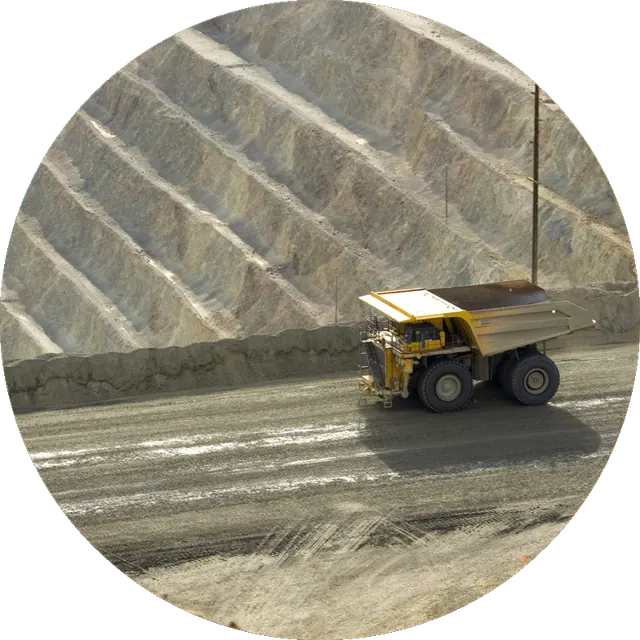
From 12-hour shifts to the drive home, sleep sets the pace in mining.

Crews work 12-hour rotating shifts, nights and FIFO or DIDO rosters, then often drive long distances home. Fatigue around heavy mobile plant and processing hazards can be fatal.

Change coming 1 Dec 2026

Mining & Resources workforce

Who this page covers

  • Coal mining - open cut and underground
  • FIFO camps and site services on a mine (also see Retail & Hospitality)
  • Gold, copper, nickel and other metal ore mining
  • Iron ore mining
  • Mineral exploration and drilling
  • Mineral processing on a mining lease (also see Manufacturing)
  • Mining contractors - drill and blast, load and haul, underground development
  • Mining tyre and maintenance services on site
  • Quarrying - hard rock, sand and gravel

Reg Watch

What’s changed, and what’s coming

Regulatory change that affects how you manage fatigue in mining & resources: what has changed in the last 12 months, and what is on the way.

Upcoming changeExpected from 1 December 2026Within 12 months

From 1 Dec 2026 MOM makes four heat-stress measures mandatory for workers exposed to heat, including a heat-stress training programme, cool water and emergency cooling. The Workplace Fairness Act 2025 (covering disability and mental health conditions) is targeted to commence around end-2027.

Regulatory changes checked as at 1 October 2026.

Regulation

Who regulates it, and what they expect

Mining is not a Singapore sector: the country's granite quarries have closed and it imports the sand and aggregate it uses. There is no mining-specific fatigue rule. Singapore-based firms serving overseas mines - commodity traders, shipping and engineering businesses - employ their local staff under the baseline.

Regulated by
  • Ministry of ManpowerMOM

Logos identify the regulator and don’t imply endorsement.

Who regulates it

Singapore has no mining industry and no mining regulator; mining is not among the WSH Council's industry categories. Any quarrying or extraction work would fall under MOM and the baseline.

Your obligations

No mining obligations apply. Singapore-based staff of mining-linked businesses are covered by the baseline: the safety duty, Employment Act hours caps for staff within the salary thresholds, and work injury insurance for manual and lower-paid staff.

Consequences

No mining-specific penalties apply. Baseline WSH Act penalties cover any Singapore workplace: up to S$500,000 for a company and S$200,000 and/or two years' jail for an individual (WSH Act maxima, 2026).

Penalties

No mining-specific figures apply; baseline figures cover Singapore-based staff.

On the record

No Singapore court, coroner, investigator or regulator has published a finding linking fatigue to an incident in mining. Fatigue risk still falls under the Workplace Safety and Health Act duty and MOM's fatigue management guidelines.

Sources: Workplace Safety and Health Council industry categories; Workplace Safety and Health Act 2006; Employment Act 1968, Part IV.

How the suite fits

How each product connects to your obligations

Grades describe how strongly a product connects to an obligation. None discharges an obligation, and none carries a compliance warranty.

Sleepfit

Supports your general duty of care

Singapore has no mining-specific regime; extraction work sits under the WSH Act. Sleepfit screens sleep health across your workforce, supporting the risk assessment reg 3 of the Risk Management Regulations requires. It screens; diagnosis stays with your clinicians.

About Sleepfit

Fatiguefit4Duty

Supports your general duty of care

Singapore has no mining-specific safety regime. Fatiguefit4Duty records a point-of-duty fatigue check for your plant operators, supporting your general duty under s 12(1) of the WSH Act. A fitness-for-duty check, not a fitness-for-duty decision - the duty call stays with you.

About Fatiguefit4Duty

Awareness eLearning

Supports your general duty of care

Awareness eLearning gives your workforce recorded fatigue education, supporting your general duty under s 12(3)(e) of the WSH Act to provide adequate instruction, information and training. MOM's fatigue guidelines recommend it; no rule names it.

About Awareness eLearning

Was It Fatigue?

Supports your general duty of care

Was It Fatigue? structures a fatigue review after an incident, supporting the risk assessment review reg 7 of the Risk Management Regulations requires after an injury. Reporting rules name no cause. A structured judgement aid, not a determination of cause.

About Was It Fatigue?

SleepWellBaby

SleepWellBaby supports parents among your workforce through the most broken months of infant sleep. No Singapore rule reaches sleep in new-parent households; it is offered as a benefit.

About SleepWellBaby

Recommended bundle

Where we’d start in mining & resources

Every bundle is priced on prevalence: your whole cohort gets access, and you pay for the share predicted to need each product. How pricing works.

Why this pairing in Singapore

Singapore has no mining regime; extraction work sits under the WSH Act s 12 duty. Sleepfit screens your plant operators, Fatiguefit4Duty adds a point-of-duty check and Awareness eLearning trains with a record. Fatigue Lifecycle adds Was It Fatigue? for the reg 7 review.

See what sleep and fatigue mean for your mining & resources workforce.

Tell us roughly how many people you employ. Your snapshot models how many are likely sleeping poorly and what it costs, from published research for mining & resources. Then choose who you’d cover, and we’ll take you to the right next step.

A sample workforce snapshot on a tablet: modelled sleep problems and the cost of poor sleep for 1,400 people in transport and logistics.