Mining & Resources · Canada

From 12-hour shifts to the drive home, sleep sets the pace in mining.

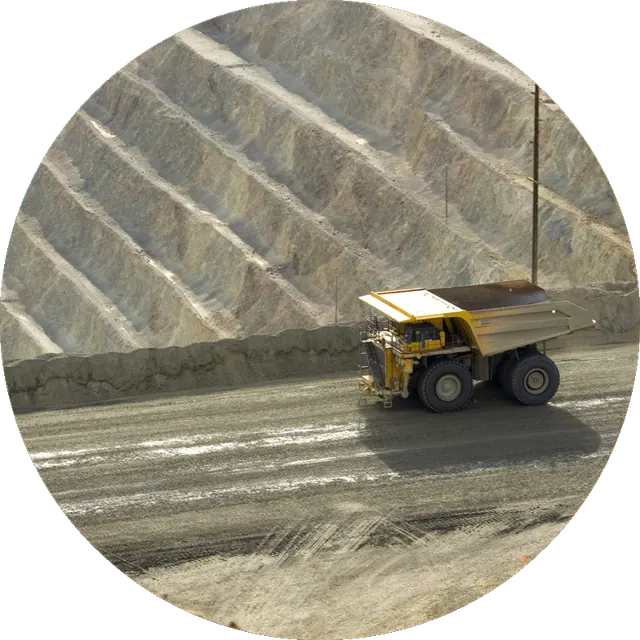
Crews work 12-hour rotating shifts, nights and FIFO or DIDO rosters, then often drive long distances home. Fatigue around heavy mobile plant and processing hazards can be fatal.

Regulation changed Jun 22, 2026Change coming Oct 6, 2026

Mining & Resources workforce

Who this page covers

  • Coal mining - open cut and underground
  • FIFO camps and site services on a mine (also see Retail & Hospitality)
  • Gold, copper, nickel and other metal ore mining
  • Iron ore mining
  • Mineral exploration and drilling
  • Mineral processing on a mining lease (also see Manufacturing)
  • Mining contractors - drill and blast, load and haul, underground development
  • Mining tyre and maintenance services on site
  • Quarrying - hard rock, sand and gravel

Reg Watch

What’s changed, and what’s coming

Regulatory change that affects how you manage fatigue in mining & resources: what has changed in the last 12 months, and what is on the way.

Recent changeFrom June 22, 2026

Specific to mining & resources

In BC, the revised Mines Code (effective 22 June 2026) requires a bullying, harassment and violence program and updates exposure-limit adjustments for shifts longer than 8 hours.

Read the change

Upcoming changeExpected from October 6, 2026Within 12 months

Quebec employers have until 6 October 2026 to have a prevention program (20 or more workers) or action plan in place that addresses psychosocial risks, including heavy workload.

Regulatory changes checked as at October 1, 2026.

Regulation

Who regulates it, and what they expect

Mine safety in Canada is provincial and the rules differ province to province. Ontario's Regulation 854 (Mines and Mining Plants) is a technical code - ground control, ventilation, explosives, hoisting - with no fatigue or shift-length requirement. British Columbia's Health, Safety and Reclamation Code for Mines sets no hours limit either; its shift adjustment provision lowers airborne contaminant exposure limits on shifts longer than eight hours, an industrial hygiene rule rather than a fatigue one. Saskatchewan's Mines Regulations, 2018 is the one mining code with a maximum hours provision, and it binds hoist operators alone.

Who regulates it

Mining is regulated province by province, so who enforces what depends on where you operate: Ontario's Ministry of Labor under the Occupational Health and Safety Act and Regulation 854, British Columbia's Chief Inspector of Mines under the Mines Act and the Health, Safety and Reclamation Code, Saskatchewan's mines inspectorate, and Alberta OHS. None of them administers a general fatigue or hours-of-work standard for miners.

Your obligations

What you owe depends on the province. Everywhere you owe the general duty to take every reasonable precaution for worker safety, and fatigue falls inside it as a recognized hazard - British Columbia's OHS Regulation says so in terms, directing employers and workers to treat fatigue as a source of impairment. On top sit the technical duties of your province's mining code (ground control, ventilation, explosives, hoisting) and that province's employment standards rest minimums, which differ: Ontario guarantees 11 consecutive hours free each day and 8 between shifts, other provinces set their own. No mining code requires a fatigue program.

Consequences

Fatigue is enforced through the general safety duty, not a fatigue offence, and the route depends on the province. In Ontario the Ministry of Labor prosecutes under the Occupational Health and Safety Act; in British Columbia mine safety sits with the Chief Inspector of Mines under the Mines Act, with its own inspection, order and prosecution powers. Mining draws close regulatory attention everywhere on its fatality record, so a fatigued operator behind a fall-of-ground, hoisting or mobile-equipment incident is examined as any other failure to control a known hazard - and a due diligence defense is built from the fatigue program you held before the incident, not after.

Penalties

Maximum fines are set province by province and are not uniform. Ontario's, in force in 2026: up to $2,000,000 for a corporation (raised from $1.5 million in October 2023), $1,500,000 for a director or officer and $500,000 for any other individual (both set in 2022), plus a $500,000 minimum fine since December 2024 where a repeat offence kills or seriously injures a worker. British Columbia, Alberta and Saskatchewan set their own, different maximums.

Sources: Ontario Occupational Health and Safety Act and Regulation 854 (Mines and Mining Plants); BC Health, Safety and Reclamation Code for Mines (2026) and Mines Act; Saskatchewan Mines Regulations, 2018; WorkSafeBC OHS Regulation ss.4.19-4.20; provincial employment standards legislation.

Fatigue-critical roles

Where fatigue matters most in mining & resources

The roles where a fatigued worker is most likely to cause serious harm, the tasks that carry the risk, and why fatigue builds up in them.

RoleRiskHigh-risk tasksWhy fatigue builds
Heavy hauler operator (oil sands) / haul truck driver
Rules
Regulatory designation
None specific - provincial mines regs (Ont. Reg 854; BC HSRC; Alberta OHS Code); NWT/Nunavut mine regs fatigue element (unverified)
Hours and rest
Provincial ESA with mining averaging agreements; camp rotations (e.g. 7/7, 14/14)
Critical riskDriving a 200-300 t haul truck through the 02:00-06:00 window; ramp descents, dumping at crest/edge, intersections with light vehicles; monotony between loads12 h day/night rotations on fly-in or camp schedules (7/7, 14/14), winter darkness, long drives out of camp at rotation end
Underground equipment operator (LHD/scoop operator), Common Core miner
Rules
Regulatory designation
None specific - provincial mines regs (Ont. Reg 854; BC HSRC; Alberta OHS Code); NWT/Nunavut mine regs fatigue element (unverified); Ontario Common Core training
Hours and rest
Provincial ESA, e.g. Ont. ESA: 11 h daily rest, 8 h between shifts, 48 h/wk unless agreed
Critical riskOperating loaders (LHD/bogger), continuous miners or shuttle cars in confined headings; tele-remote bogging at the stope brow; vehicle-pedestrian interaction in low light12 h rotating day/night underground with no daylight cues, heat, FIFO swings, long travel in and out of the decline
Hoist operator (hoistman)
Rules
Regulatory designation
Hoist operator (Saskatchewan Mines Regs 2018 ss 10-82, 10-83; Ont. Reg 854 hoisting)
Hours and rest
Saskatchewan: hoist-operator hours limits in ss 10-82, 10-83 (not read); elsewhere provincial ESA
Critical riskDriving the shaft winder carrying people and rock; signalling, speed and overwind control; long low-stimulus monitoring through the night8-12 h shifts incl. nights, long low-stimulus monitoring, often alone in the winder house
Shift boss / supervisor
Rules
Regulatory designation
Supervisor under provincial mines regs (Ont. Reg 854; BC HSRC shiftboss certificate)
Hours and rest
Provincial ESA, e.g. Ont. ESA: 11 h daily rest, 8 h between shifts, 48 h/wk unless agreed
Critical riskPre-shift and in-shift inspection for gas, ground and ventilation; deciding whether crews may enter; gas testing and reporting at the end of a night shift12 h rotating shifts with inspections timed at the start of each shift, including the 04:00-06:00 low
Blaster
Rules
Regulatory designation
Certified blaster (provincial blasting certificate, e.g. BC HSRC Part 8; Ont. Reg 854)
Hours and rest
Provincial ESA, e.g. Ont. ESA: 11 h daily rest, 8 h between shifts, 48 h/wk unless agreed
High riskCharging and tying-in blast holes, misfire handling, clearing and guarding the blast area, firing near shift change; re-entry decisions after the blastBlasting at shift change or end of night shift, time pressure to fire on schedule, 12 h rotations
Mine dispatcher / control room operator
Rules
Regulatory designation
None specific - provincial mines regs (Ont. Reg 854; BC HSRC; Alberta OHS Code); NWT/Nunavut mine regs fatigue element (unverified)
Hours and rest
Provincial ESA, e.g. Ont. ESA: 11 h daily rest, 8 h between shifts, 48 h/wk unless agreed
High riskMonitoring autonomous haul fleets and gas/ventilation telemetry overnight; isolating and recovering autonomous trucks; coordinating emergency response12 h night shifts on screens in remote operations centers, low stimulation and high vigilance demand
Millwright / heavy-duty mechanic (mine)
Rules
Regulatory designation
None specific - provincial mines regs (Ont. Reg 854; BC HSRC; Alberta OHS Code); NWT/Nunavut mine regs fatigue element (unverified)
Hours and rest
Provincial ESA, e.g. Ont. ESA: 11 h daily rest, 8 h between shifts, 48 h/wk unless agreed
High riskIsolation and lock-out of HV and mobile plant, work under raised loads, haul truck tyre changes, conveyor repairs during night shutdowns12 h rotating shifts, night shutdowns and call-outs, overtime during planned shutdowns
Rotational camp worker driving home
Rules
Regulatory designation
None specific - general duty; commuting outside provincial OHS jurisdiction in most cases
Hours and rest
Provincial ESA, e.g. Ont. ESA: 11 h daily rest, 8 h between shifts, 48 h/wk unless agreed
High riskDriving 1-4 h home or to the airport after the final 12 h night shift; driving light vehicles on unsealed mine roads at shift changeDrive-out on the last day of a swing after consecutive night shifts, often with sleep debt carried over

Stories

When fatigue made the record

Published findings and prosecutions from regulators, courts and investigators in Canada.

Jul 1966 · New Brunswick, Canada

Supreme Court holds mine worker who kept driving while sleepy fully liable for supervisor's death

  • Safety
  • Legal

After a 12-hour shift at a mine development and a night out, a mine worker drove his supervisor home in the early hours, felt sleepy and wanted to stop but dozed off before he could, and the car hit a culvert, killing his passenger. The lower courts dismissed the family's claim on the basis the passenger had accepted the risk. The Supreme Court of Canada reversed this, holding that knowingly continuing to drive while sleepy was conduct a passenger could not reasonably foresee, so the passenger bore no blame.

Case CA-mining-01Report an issue

See all mining & resources news

How the suite fits

How each product connects to your obligations

Grades describe how strongly a product connects to an obligation. None discharges an obligation, and none carries a compliance warranty.

Sleepfit

Supports your general duty of care

Canadian mining law is provincial and territorial, and the health obligation that holds across Canada is the general duty to protect worker health. No sleep screen is required of you. Sleepfit supports that duty. It screens; diagnosis stays with your clinicians.

Assessed by reference to US regulation.

About Sleepfit

Fatiguefit4Duty

Supports your general duty of care

Across Canada's provincial and territorial mining regimes, the fitness obligation that holds everywhere is the general duty. Fatiguefit4Duty supports it for safety-sensitive roles. A fitness-for-duty check, not a fitness-for-duty decision - the duty call stays with you.

Assessed by reference to US regulation.

About Fatiguefit4Duty

Awareness eLearning

Supports your general duty of care

Across Canada's mining regimes, the training obligation that holds everywhere is your general duty to provide information, instruction and training. Awareness eLearning supplies fatigue and sleep content with a completion record for site crews.

Assessed by reference to US regulation.

About Awareness eLearning

Was It Fatigue?

Supports your general duty of care

Across Canada's mining regimes, the investigation obligation that holds everywhere is the general duty to investigate accidents. Was It Fatigue? supports a structured look at sleep and roster history. A structured judgment aid, not a determination of cause.

Assessed by reference to US regulation.

About Was It Fatigue?

SleepWellBaby

No Canadian mining rule reaches sleep in new-parent households. SleepWellBaby is offered as a benefit to parents on your sites and rosters, including fly-in fly-out crews, not as a compliance step.

About SleepWellBaby

Recommended bundle

Where we’d start in mining & resources

Every bundle is priced on prevalence: your whole cohort gets access, and you pay for the share predicted to need each product. How pricing works.

Why this pairing in Canada

Canadian mining law is provincial and territorial; the duty that holds everywhere is the general one to protect worker health. Sleepfit screens, Fatiguefit4Duty adds a pre-shift check and Awareness eLearning trains site crews. Fatigue Lifecycle adds accident investigation support.

See what sleep and fatigue mean for your mining & resources workforce.

Tell us roughly how many people you employ. Your snapshot models how many are likely sleeping poorly and what it costs, from published research for mining & resources. Then choose who you’d cover, and we’ll take you to the right next step.

A sample workforce snapshot on a tablet: modeled sleep problems and the cost of poor sleep for 1,400 people in transport and logistics.