Mining & Resources · New Zealand

From 12-hour shifts to the drive home, sleep sets the pace in mining.

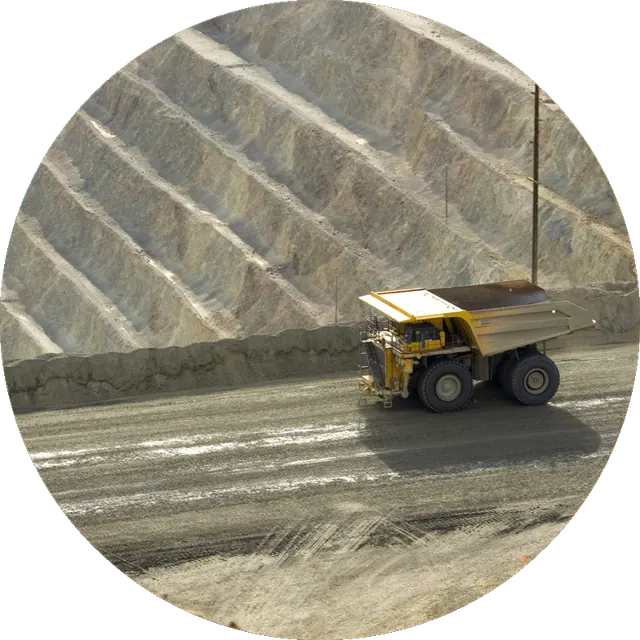
Crews work 12-hour rotating shifts, nights and FIFO or DIDO rosters, then often drive long distances home. Fatigue around heavy mobile plant and processing hazards can be fatal.

Regulation changed 9 Jul 2026Change coming 1 Apr 2027

Mining & Resources workforce

Who this page covers

  • Coal mining - open cut and underground
  • FIFO camps and site services on a mine (also see Retail & Hospitality)
  • Gold, copper, nickel and other metal ore mining
  • Iron ore mining
  • Mineral exploration and drilling
  • Mineral processing on a mining lease (also see Manufacturing)
  • Mining contractors - drill and blast, load and haul, underground development
  • Mining tyre and maintenance services on site
  • Quarrying - hard rock, sand and gravel

Reg Watch

What’s changed, and what’s coming

Regulatory change that affects how you manage fatigue in mining & resources: what has changed in the last 12 months, and what is on the way.

Recent changeFrom 9 July 2026

Applies across industries in New Zealand

The Health and Safety at Work Amendment Act 2026 became law on 9 July 2026. Your duties do not change until most of it commences on 1 April 2027, so use the lead time to evidence fatigue as a serious-harm risk.

Read the change

Upcoming changeExpected from 1 April 2027Within 12 months

From 1 April 2027 HSWA centres on 'critical risks'. Hazards under the mining and petroleum regulations are listed in Schedule 1A, so your regulated risks sit in the critical tier; fatigue elsewhere counts only where likely to cause death or notifiable harm. Following an approved code is deemed compliance; officer duties become governance-level.

Regulatory changes checked as at 1 October 2026.

Regulation

Who regulates it, and what they expect

New Zealand mining is one of the few sectors where fatigue is named in regulation, though the duty is narrower than it is often described. Under the Mining Operations and Quarrying Operations Regulations 2016, a mining operation that has identified a principal hazard capable of long-term harm to worker health must hold a principal control plan for worker health, and that plan must include strategies for dealing with fatigue. Quarries and alluvial mines are not required to hold one. No regulation sets a maximum shift length or a minimum rest period for mine workers.

Regulated by
  • WorkSafe New ZealandWorkSafe

Logos identify the regulator and don’t imply endorsement.

Who regulates it

New Zealand mining and quarrying operators are regulated by WorkSafe New Zealand under both the general safety law and a dedicated set of mining and quarrying regulations introduced after the 2010 Pike River mine disaster. WorkSafe runs a specialist extractives team that oversees this sector specifically, on top of the general bodies that apply to every industry.

Your obligations

If you run a mining operation and have identified a principal hazard that can cause long-term harm to worker health, your principal control plan for worker health must treat hours of work and fatigue as hazards to monitor and control, and must set out strategies for fatigue and for drug and alcohol use in proportion to the hazards on site. WorkSafe's extractives guidance expects that assessment to take in travel time to and from remote sites and shift patterns, not just time on the job. Quarrying and alluvial operations are not required to hold that plan, but every operator still has to manage fatigue as a foreseeable risk.

Consequences

WorkSafe's extractives inspectors can call for your health and safety management system, principal hazard management plans and control plans at any time, and can issue improvement and prohibition notices that stop work until fatigue controls are in place. If a worker is hurt or killed and the fatigue strategies the plan was meant to contain are missing or were never used, that is evidence in a prosecution rather than a paperwork problem, because a specific named requirement has been failed and not only a general duty. Directors, officers and the site senior executive can be charged personally alongside the company, and convictions are published.

Penalties

Health and Safety at Work Act 2015 maximums, unchanged since 2015 and current in August 2026: reckless exposure to a risk of death or serious injury - $3,000,000 for a company, $600,000 and up to five years' prison for an officer, $300,000 for a worker; without recklessness - $1,500,000/$300,000/$150,000; other breaches - $500,000/$100,000/$50,000. Courts fix reparation to the victim or family before the fine, often exceeding it. The mining rules add no separate scale.

On the record

No New Zealand court, coroner, investigator or regulator has published a finding linking fatigue to an incident in mining. The duty to manage fatigue still sits within the primary duty of care under the Health and Safety at Work Act 2015.

Sources: Health and Safety at Work (Mining Operations and Quarrying Operations) Regulations 2016, reg 108; WorkSafe New Zealand extractives guidance; Health and Safety at Work Act 2015; WorkSafe New Zealand v Michael Vining Contracting Ltd [2018] NZDC 6971.

Fatigue-critical roles

Where fatigue matters most in mining & resources

The roles where a fatigued worker is most likely to cause serious harm, the tasks that carry the risk, and why fatigue builds up in them.

RoleRiskHigh-risk tasksWhy fatigue builds
Dump truck operator
Rules
Regulatory designation
Worker at a mining operation: reg 108 health control plan must address 'hours of work and fatigue' (MOQO Regs 2016)
Hours and rest
No statutory maximum; ERA 2000 ss 69ZD-69ZE rest and meal breaks
Critical riskDriving a 200-300 t haul truck through the 02:00-06:00 window; ramp descents, dumping at crest/edge, intersections with light vehicles; monotony between loads12 h day/night rotations, 4+ consecutive nights, FIFO/DIDO swings (e.g. 8/6, 14/7) and a long drive home after the last night
Underground loader operator
Rules
Regulatory designation
Worker at a mining operation: reg 108 health control plan must address 'hours of work and fatigue' (MOQO Regs 2016)
Hours and rest
No statutory maximum; ERA 2000 ss 69ZD-69ZE rest and meal breaks
Critical riskOperating loaders (LHD/bogger), continuous miners or shuttle cars in confined headings; tele-remote bogging at the stope brow; vehicle-pedestrian interaction in low light12 h rotating day/night underground with no daylight cues, heat, FIFO swings, long travel in and out of the decline
Winding engine operator
Rules
Regulatory designation
Winding engine operator certificate of competence (MOQO Regs 2016)
Hours and rest
No statutory maximum; ERA 2000 ss 69ZD-69ZE rest and meal breaks
Critical riskDriving the shaft winder carrying people and rock; signalling, speed and overwind control; long low-stimulus monitoring through the night8-12 h shifts incl. nights, long low-stimulus monitoring, often alone in the winder house
Mine deputy
Rules
Regulatory designation
Certificate of competence holder - mine deputy / underground mine manager (MOQO Regs 2016)
Hours and rest
No statutory maximum; ERA 2000 ss 69ZD-69ZE rest and meal breaks
Critical riskPre-shift and in-shift inspection for gas, ground and ventilation; deciding whether crews may enter; gas testing and reporting at the end of a night shift12 h rotating shifts with inspections timed at the start of each shift, including the 04:00-06:00 low
Shotfirer
Rules
Regulatory designation
Certified handler (HSW (Hazardous Substances) Regs 2017) and mine/quarry shotfirer competence (MOQO Regs 2016)
Hours and rest
No statutory maximum; ERA 2000 ss 69ZD-69ZE rest and meal breaks
High riskCharging and tying-in blast holes, misfire handling, clearing and guarding the blast area, firing near shift change; re-entry decisions after the blastBlasting at shift change or end of night shift, time pressure to fire on schedule, 12 h rotations
Mine maintenance fitter / electrician
Rules
Regulatory designation
Worker at a mining operation: reg 108 health control plan must address 'hours of work and fatigue' (MOQO Regs 2016); registered electrical worker (Electricity Act 1992)
Hours and rest
No statutory maximum; ERA 2000 ss 69ZD-69ZE rest and meal breaks
High riskIsolation and lock-out of HV and mobile plant, work under raised loads, haul truck tyre changes, conveyor repairs during night shutdowns12 h rotating shifts, night shutdowns and call-outs, overtime during planned shutdowns

How the suite fits

How each product connects to your obligations

Grades describe how strongly a product connects to an obligation. None discharges an obligation, and none carries a compliance warranty.

Sleepfit

Supports a named obligation

Regulation 108 of the Mining Operations and Quarrying Operations Regulations 2016 requires your worker health control plan to monitor and control hours of work and fatigue. It names no screen. Sleepfit supports that plan. It screens; diagnosis stays with your clinicians.

Assessed by reference to Australian regulation.

About Sleepfit

Fatiguefit4Duty

Supports a named obligation

Your worker health control plan under regulation 108 of the Mining Operations and Quarrying Operations Regulations 2016 must provide strategies to deal with fatigue. A fitness-for-duty check, not a fitness-for-duty decision - the duty call stays with you.

About Fatiguefit4Duty

Awareness eLearning

Supports a named obligation

Regulation 108 of the Mining Operations and Quarrying Operations Regulations 2016 requires strategies to deal with fatigue in your worker health control plan; it does not name training. Awareness eLearning supports those strategies.

About Awareness eLearning

Was It Fatigue?

Supports your general duty of care

The mining regulations name no fatigue assessment after an event, and s 56 of the Health and Safety at Work Act 2015 requires notification without naming a cause. Was It Fatigue? supports your review. A structured judgement aid, not a determination of cause.

About Was It Fatigue?

SleepWellBaby

No New Zealand mining rule reaches sleep in new-parent households; regulation 108 concerns mine workers' health at work. SleepWellBaby is offered to parents of infants in your workforce as a benefit.

About SleepWellBaby

Recommended bundle

Where we’d start in mining & resources

Every bundle is priced on prevalence: your whole cohort gets access, and you pay for the share predicted to need each product. How pricing works.

Why this pairing in New Zealand

Regulation 108 of the Mining Operations and Quarrying Operations Regulations 2016 makes your worker health control plan deal with fatigue. Sleepfit screens, Fatiguefit4Duty adds a pre-shift check and Awareness eLearning trains, all supporting that plan. Fatigue Lifecycle adds review.

See what sleep and fatigue mean for your mining & resources workforce.

Tell us roughly how many people you employ. Your snapshot models how many are likely sleeping poorly and what it costs, from published research for mining & resources. Then choose who you’d cover, and we’ll take you to the right next step.

A sample workforce snapshot on a tablet: modelled sleep problems and the cost of poor sleep for 1,400 people in transport and logistics.