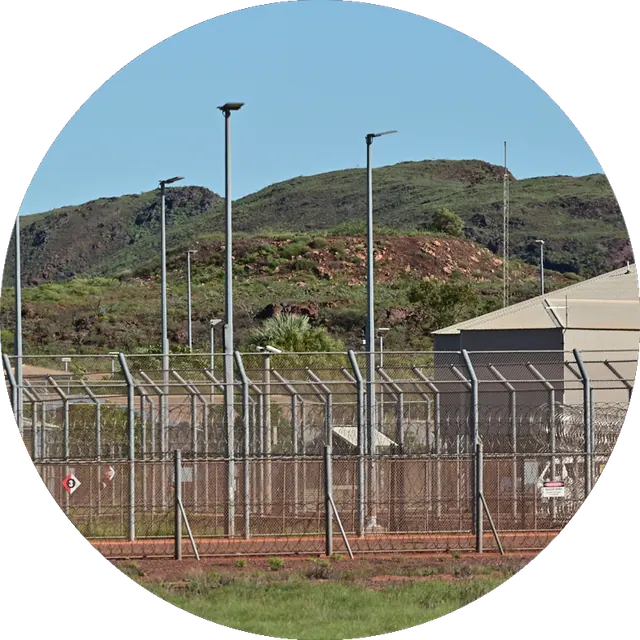
Corrections runs 24/7. Sleep shapes every shift inside.
Custodial officers work 24/7 rotating rosters with nights, overtime and extended shifts. Fatigue impairs vigilance, threat assessment and de-escalation where incidents escalate fast.
Regulatory change that affects how you manage fatigue in corrections & custodial services: what has changed in the last 12 months, and what is on the way.
Recent changeFrom 6 April 2026
Applies across industries in the United Kingdom
In Great Britain, from 6 Apr 2026 sick pay is due from the first day of sickness and you must keep holiday records for 6 years; from 1 Oct 2026 most tribunal claims can be brought up to 6 months after the event.
Upcoming changeExpected from 30 October 2026Within 12 months
From October 2026 (expected 30 Oct) you must take all reasonable steps to prevent sexual harassment of staff, including by customers and other third parties. From 1 Jan 2027 unfair dismissal protection starts after 6 months' service. Guaranteed hours and shift-notice rights for zero-hours workers are listed for 2027, timing to follow consultation.
Regulatory changes checked as at 1 October 2026.
Regulation
Who regulates it, and what they expect
No government instrument sets shift-length or rest limits for prison officers beyond the general UK hours rules, which apply in full, opt-out included. What sets the sector apart is enforcement. Health and safety law binds the Crown, but the provisions creating enforcement notices and criminal offences do not, so a publicly run prison cannot be served a statutory notice or prosecuted for a safety failure. The regulator issues a Crown censure instead - its maximum sanction against a government body, carrying no fine. Private operators have no such protection.
Regulated by
HSE
Logos identify the regulator and don’t imply endorsement.
Who regulates it
Public prisons in England and Wales are run by HM Prison and Probation Service, an executive agency of the Ministry of Justice, and prison officers are Crown servants. Health and safety law binds the Crown, but the parts creating enforcement notices and criminal offences do not, so the regulator censures rather than prosecutes. Privately run prisons are ordinary companies with no such protection.
Your obligations
Prison operators, public and private, owe the same general duty to keep staff and prisoners safe, and the same standard UK hours rules apply to officers as any other worker - weekly hours cap, daily and weekly rest, rest breaks, with the usual opt-out technically available, though the prison officers' union has publicly raised concerns that staff shortages create real pressure to work extra overtime. Night-shift protections and reasonable adjustments for sleep disorders apply as elsewhere. Publicly-run prisons self-insure rather than buying compulsory injury insurance; private operators must carry it like any other company.
Consequences
For a privately run prison the consequences are the ordinary ones: prosecution with an unlimited Crown Court fine, employment tribunal claims over rest and hours, and civil claims from injured staff. For a publicly run prison they are not. Because the enforcement and offence provisions of health and safety law do not bind the Crown, the regulator cannot serve a statutory notice or prosecute; it uses non-statutory notices and, at the top of the scale, a Crown censure, a public finding that a prosecutable failing occurred, with no fine attached. HMPPS was notified of one in May 2026 over radon at HMP Dartmoor. Individual managers remain personally prosecutable.
Penalties
A Crown censure carries no financial penalty - the regulator calls it the maximum sanction available against a Crown body, so exposure is reputational and political, not monetary. A private operator faces the full range: sentencing under the 2016 definitive guideline scales fines to turnover, Crown Court fines are unlimited, individuals face up to two years' imprisonment, and corporate manslaughter for a large organisation starts at £7.5m within a £4.8m to £20m range.
On the record
No UK court, coroner, investigator or regulator has published a finding linking fatigue to an incident in corrections. The duty to manage fatigue still sits within the general duties of the Health and Safety at Work etc. Act 1974.
Sources: Health and Safety at Work etc. Act 1974, section 48; HSE Enforcement Policy Statement; Corporate Manslaughter and Corporate Homicide Act 2007; Working Time Regulations 1998; HM Prison and Probation Service.
Fatigue-critical roles
Where fatigue matters most in corrections & custodial services
The roles where a fatigued worker is most likely to cause serious harm, the tasks that carry the risk, and why fatigue builds up in them.
Certified detention custody officer (Immigration and Asylum Act 1999 s 154)
Hours and rest
WTR 1998: 48 h average (opt-out possible), 11 h daily rest, reg 7 night health assessment
High risk
Night supervision of detainees; welfare checks of at-risk detainees; use of force and removal escorts
12 h shifts with nights, overtime, overnight removal escorts
How the suite fits
How each product connects to your obligations
Grades describe how strongly a product connects to an obligation. None discharges an obligation, and none carries a compliance warranty.
Sleepfit
Supports a named obligation
Where your prison officers work nights, regulation 7 of the Working Time Regulations 1998 says you must offer a free health assessment before night work starts and at regular intervals. Sleepfit supports it. It screens; diagnosis stays with your clinicians.
No UK rule names a pre-duty fitness check for custodial services. Fatiguefit4Duty supports your general duty under s 2 of the Health and Safety at Work etc. Act 1974. A fitness-for-duty check, not a fitness-for-duty decision - the duty call stays with you.
Awareness eLearning supports the training you must give under s 2(2)(c) of the Health and Safety at Work etc. Act 1974 and regulation 13 of the 1999 Management Regulations with fatigue and sleep content. No UK rule names fatigue training for custodial services.
RIDDOR 2013 requires you to report and record specified incidents in custodial services but names no cause, and no fatigue review is required. Was It Fatigue? supports your own investigation. A structured judgement aid, not a determination of cause.
No UK rule reaches sleep in new-parent households in custodial services. SleepWellBaby supports your working parents through the most disrupted period of their own sleep; it is offered as a wellbeing benefit, not a compliance step.
Working Time Regulations 1998 reg 7 requires a free health assessment for your night prison officers; Sleepfit screening supports it. Fatiguefit4Duty adds a pre-shift check and Awareness eLearning trains under HSWA 1974 s 2(2)(c). Shift worker is the lighter option.
See what sleep and fatigue mean for your corrections & custodial services workforce.
Tell us roughly how many people you employ. Your snapshot models how many are likely sleeping poorly and what it costs, from published research for corrections & custodial services. Then choose who you’d cover, and we’ll take you to the right next step.