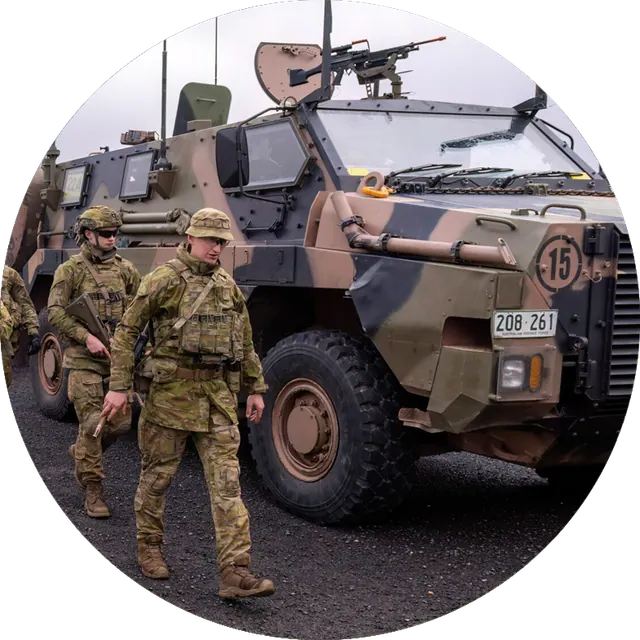
Personnel face high operational tempo, short and broken sleep and long deployments; defence civilians work shifts too. Fatigue degrades vigilance and decisions where errors can be fatal.
The position that the Defence Forces sit outside Ireland's working-time law ended on 20 January 2025. S.I. No. 11 of 2025 removed Defence Forces members from the blanket exclusion in section 3(1) of the Organisation of Working Time Act 1997 and replaced it with a defined list. Personnel are now covered by the Act's rest, break and 48-hour average week rules except when engaged in specified activities: active service, overseas deployment, sailing orders, aid to the civil power, explosive ordnance duties, fire crew duty at Casement Aerodrome, Army Ranger Wing operations, induction and special forces training, and activities directed by Government.
Regulated by
HSA
Logos identify the regulator and don’t imply endorsement.
Who regulates it
Since 20 January 2025 the Workplace Relations Commission has jurisdiction over Defence Forces working-time complaints outside the listed operational activities; before that, none. The Department of Defence and the Defence Forces set duty hours through Defence Forces Regulations, and the Health and Safety Authority enforces the general safety duty, which itself does not apply on active service or operational duty at sea.
Your obligations
Since 20 January 2025 the Organisation of Working Time Act 1997 applies to Defence Forces members outside the listed operational activities, so rosters must deliver 11 consecutive hours' daily rest, in-shift breaks, 24 hours' weekly rest and an average working week of no more than 48 hours. The exclusions are activity-based, not rank-based or unit-based, so the same person moves in and out of coverage as duties change and you must be able to show which hours fell where. Safety law applies as well, though it is switched off for active service, operational duty at sea, aid to the civil power and the training directly associated with those.
Consequences
This is now a live enforcement exposure. Outside the listed operational activities a member can bring a working-time complaint to the Workplace Relations Commission, which can order compensation - a route that did not exist before January 2025. Records decide these cases: where an operational exclusion is relied on, it has to be evidenced activity by activity. The Health and Safety Authority can also prosecute for failing to manage fatigue as a foreseeable risk in barracks, training and other non-operational work, and an injured member's compensation still runs through a fault-based personal injury claim.
Penalties
Safety prosecutions carry up to €5,000 and 12 months' imprisonment on summary conviction, and up to €3,000,000 and two years on indictment, with the regulator's investigation costs ordered against you as well. Working-time offences carry a fine of up to €2,500, and the Workplace Relations Commission can award up to two years' remuneration. State Injury Benefit is €254 a week for up to 26 weeks; anything beyond that requires a personal injury claim. These are the 2026 figures.
On the record
No Irish court, coroner, investigator or regulator has published a finding linking fatigue to an incident in defence. The duty to manage fatigue still sits within the general duties of the Safety, Health and Welfare at Work Act 2005.
Sources: Organisation of Working Time Act 1997, ss.3(1), 3(1A) and 15; European Communities (Organisation of Working Time) (Defence Forces) Regulations 2025 (S.I. No. 11 of 2025); Safety, Health and Welfare at Work Act 2005, ss.6 and 78.
Fatigue-critical roles
Where fatigue matters most in defence & military
The roles where a fatigued worker is most likely to cause serious harm, the tasks that carry the risk, and why fatigue builds up in them.
Role
Risk
High-risk tasks
Why fatigue builds
Air Corps aircrewRules
Regulatory designation
Defence Forces member - OWTA applies outside s 3(1A) excluded activities
Hours and rest
OWTA ss 11-16 outside excluded activities (11 h daily rest, 48 h average)
Critical risk
Night and NVG flying; long-range and air-to-air refuelling sorties; low-level flying; operations across time zones after short rest
Early and night sorties, surge flying in exercises and operations, deployments across time zones, standby
Officer of the watch (Naval Service)Rules
Regulatory designation
Defence Forces member - OWTA applies outside s 3(1A) excluded activities
Hours and rest
OWTA ss 11-16 outside excluded activities (11 h daily rest, 48 h average)
Critical risk
Bridge and operations-room watchkeeping on 1-in-2 or 1-in-3 rotations; restricted-water navigation; replenishment at sea; combat system operation
Watch rotations fragmenting sleep, long periods at sea, drills during rest
Driver (Defence Forces transport)Rules
Regulatory designation
Defence Forces member - OWTA applies outside s 3(1A) excluded activities
Hours and rest
OWTA ss 11-16 outside excluded activities (11 h daily rest, 48 h average)
Critical risk
Driving heavy and armoured vehicles in convoy at night and under NVG; road moves after exercise night shifts; ammunition and fuel transport
Exercises and deployments with sleep restriction, 24 h operations, long road moves
Aircraft technician (Air Corps)Rules
Regulatory designation
Defence Forces member - OWTA applies outside s 3(1A) excluded activities
Hours and rest
OWTA ss 11-16 outside excluded activities (11 h daily rest, 48 h average)
Critical risk
Night-shift maintenance and arming of aircraft; flight-control and weapons-loading tasks; surge maintenance during exercises
Shift work with surges, flight-line night shifts, deployed 12 h shifts
Guard (Defence Forces)Rules
Regulatory designation
Defence Forces member - OWTA applies outside s 3(1A) excluded activities
Hours and rest
OWTA ss 11-16 outside excluded activities (11 h daily rest, 48 h average)
High risk
Night sentry and gate duty with live weapons; armed guard of munitions and aircraft; vigilance patrols
Night guard rotations (e.g. 2-on/4-off) on top of the normal working day, monotony
Ordnance Corps EOD officer / technicianRules
Regulatory designation
Defence Forces member - OWTA applies outside s 3(1A) excluded activities
Hours and rest
OWTA ss 11-16 outside excluded activities (11 h daily rest, 48 h average)
High risk
Render-safe procedures on explosive ordnance; ammunition inspection and repair; night call-outs to IED and EOD tasks
On-call duty with night call-outs, deployments, long tasks in heat and protective equipment
How the suite fits
How each product connects to your obligations
Grades describe how strongly a product connects to an obligation. None discharges an obligation, and none carries a compliance warranty.
Sleepfit
Supports your general duty of care
Sleepfit supports the s 19 risk assessment and s 22 health surveillance duties that apply to the Defence Forces, subject to exclusions for active service and similar duties. No Irish rule names a sleep screen here. It screens; diagnosis stays with your clinicians.
For your Defence Forces personnel, Fatiguefit4Duty supports your duties under ss 8 and 19 of the Safety, Health and Welfare at Work Act 2005. No Irish rule names a start-of-duty check. A fitness-for-duty check, not a fitness-for-duty decision - the duty call stays with you.
Awareness eLearning supplies fatigue and sleep content with a completion record for your Defence Forces personnel, supporting the general training duty in s 8(2)(g) and s 10 of the Safety, Health and Welfare at Work Act 2005. Your training programme stays yours.
Was It Fatigue? supports your review of incidents involving your Defence Forces personnel and of your s 19 risk assessment. Irish accident reporting rules require notification to the HSA, not a fatigue assessment. A structured judgement aid, not a determination of cause.
No Irish Defence Forces rule reaches sleep in new-parent households. SleepWellBaby is offered to the working parents among your Defence Forces personnel as a wellbeing benefit, not as a step any Irish regulation requires.
The SHWW Act 2005 applies to the Defence Forces outside active service exclusions; no rule names a fatigue tool. Sleepfit supports s 22 health surveillance, Fatiguefit4Duty adds a pre-task check and Awareness eLearning trains. Fatigue Lifecycle adds incident review.
See what sleep and fatigue mean for your defence & military workforce.
Tell us roughly how many people you employ. Your snapshot models how many are likely sleeping poorly and what it costs, from published research for defence & military. Then choose who you’d cover, and we’ll take you to the right next step.