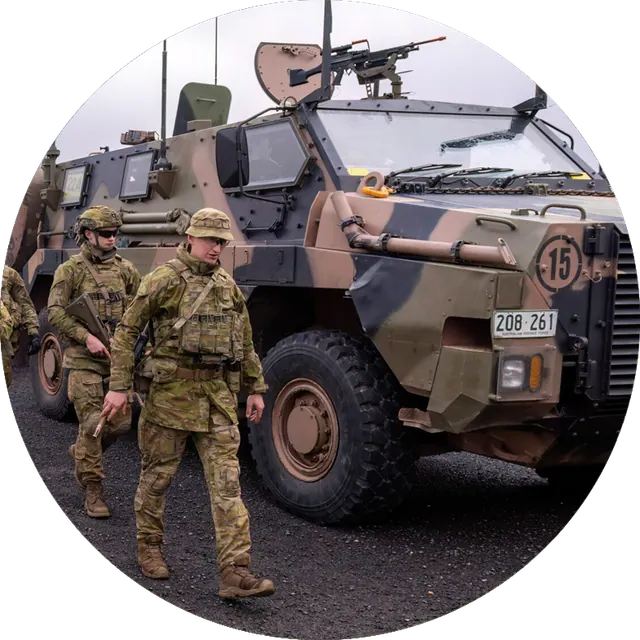
Personnel face high operational tempo, short and broken sleep and long deployments; defence civilians work shifts too. Fatigue degrades vigilance and decisions where errors can be fatal.
Regulatory change that affects how you manage fatigue in defence & military: what has changed in the last 12 months, and what is on the way.
Recent changeFrom 9 July 2026
Applies across industries in New Zealand
The Health and Safety at Work Amendment Act 2026 became law on 9 July 2026. Your duties do not change until most of it commences on 1 April 2027, so use the lead time to evidence fatigue as a serious-harm risk.
Upcoming changeExpected from 1 April 2027Within 12 months
From 1 April 2027 HSWA centres on 'critical risks'. Fatigue is not on the Schedule 1A list, so it counts only where it is likely to cause death or notifiable harm. Firms under 20 workers manage critical risks only; following an approved code is deemed compliance; officer duties become governance-level.
Regulatory changes checked as at 1 October 2026.
Regulation
Who regulates it, and what they expect
Defence is the one place in New Zealand where the safety rulebook can be narrower than an ordinary employer's rather than wider. The Health and Safety at Work Act 2015 applies to the Defence Force and its civilian staff for everyday work, but section 7 lets the Chief of Defence Force declare specified activities to be 'operational activities', and those sit outside the Act. The High Court upheld such a declaration in December 2022 over counter-terrorism training, and the charge WorkSafe had brought over a soldier's death was dismissed in March 2023. Everything not declared operational carries the ordinary duty to manage fatigue.
Regulated by
WorkSafe
Logos identify the regulator and don’t imply endorsement.
Who regulates it
Defence sits in an unusual position in New Zealand. The same safety regulator (WorkSafe) and law (the Health and Safety at Work Act) apply to the Defence Force for everyday work - but the law also lets the Chief of Defence Force declare high-risk training and operations exempt from it entirely. A separate law governs how government bodies like the Defence Force are prosecuted and fined, differently from a private company.
Your obligations
For everyday Defence work - bases, workshops, maintenance, administration and the civilian workforce - the duty is the same as any New Zealand employer's: eliminate or minimise fatigue risk so far as is reasonably practicable, and be able to evidence it. Where the Chief of Defence Force has declared an activity operational under section 7, the Act does not apply to it and WorkSafe has no jurisdiction. That is a court-tested position, not an assumption - but the declaration must be a genuine and intelligible exercise of the power, so the carve-out is narrower than 'anything military'.
Consequences
For non-operational work the consequences are ordinary: improvement and prohibition notices, prosecution, fines and reparation. Crown status changes the mechanics, not the exposure - the Defence Force is charged in its own name and is liable to the same penalties a company would face, paid from its own funds. Where a valid operational declaration covers the activity, WorkSafe cannot prosecute at all: that is what happened after a NZSAS soldier died during a 2019 helicopter training exercise, with the charge dismissed in March 2023. The internal duty of care, the coronial process and the reputational cost remain in every case.
Penalties
Under the Health and Safety at Work Act 2015 an organisation faces up to $3m for reckless exposure to death or serious injury, $1.5m where it is not reckless and $500,000 for a duty breach; a director or senior officer faces $600,000, $300,000 or $100,000. Those maximums apply to the Defence Force as to a company, with fines and reparation paid from its own funds. For an activity validly declared operational the exposure is nil, because the Act does not reach it.
On the record
No New Zealand court, coroner, investigator or regulator has published a finding linking fatigue to an incident in defence. The Court of Inquiry into the 2024 loss of HMNZS Manawanui did not list fatigue among its contributing factors.
Sources: New Zealand Defence Force v District Court and WorkSafe [2022] NZHC 3559; Health and Safety at Work Act 2015 s7 and ss47-49; Crown Organisations (Criminal Liability) Act 2002 ss8 and 12; WorkSafe penalty guidance; coronial findings reported December 2025.
Fatigue-critical roles
Where fatigue matters most in defence & military
The roles where a fatigued worker is most likely to cause serious harm, the tasks that carry the risk, and why fatigue builds up in them.
Role
Risk
High-risk tasks
Why fatigue builds
RNZAF aircrewRules
Regulatory designation
NZDF member - HSWA applies except activities declared operational (s 7)
Hours and rest
None statutory
Critical risk
Night and NVG flying; long-range and air-to-air refuelling sorties; low-level flying; operations across time zones after short rest
Early and night sorties, surge flying in exercises and operations, deployments across time zones, standby
Officer of the watch (RNZN)Rules
Regulatory designation
NZDF member - HSWA applies except activities declared operational (s 7)
Hours and rest
None statutory
Critical risk
Bridge and operations-room watchkeeping on 1-in-2 or 1-in-3 rotations; restricted-water navigation; replenishment at sea; combat system operation
Watch rotations fragmenting sleep, long periods at sea, drills during rest
Driver (NZ Army)Rules
Regulatory designation
NZDF member - HSWA applies except activities declared operational (s 7)
Hours and rest
None statutory
Critical risk
Driving heavy and armoured vehicles in convoy at night and under NVG; road moves after exercise night shifts; ammunition and fuel transport
Exercises and deployments with sleep restriction, 24 h operations, long road moves
Aircraft technician (RNZAF)Rules
Regulatory designation
NZDF member - HSWA applies except activities declared operational (s 7)
Hours and rest
None statutory
Critical risk
Night-shift maintenance and arming of aircraft; flight-control and weapons-loading tasks; surge maintenance during exercises
Shift work with surges, flight-line night shifts, deployed 12 h shifts
SentryRules
Regulatory designation
NZDF member - HSWA applies except activities declared operational (s 7)
Hours and rest
None statutory
High risk
Night sentry and gate duty with live weapons; armed guard of munitions and aircraft; vigilance patrols
Night guard rotations (e.g. 2-on/4-off) on top of the normal working day, monotony
Ammunition technician (NZ Army)Rules
Regulatory designation
NZDF member - HSWA applies except activities declared operational (s 7)
Hours and rest
None statutory
High risk
Render-safe procedures on explosive ordnance; ammunition inspection and repair; night call-outs to IED and EOD tasks
On-call duty with night call-outs, deployments, long tasks in heat and protective equipment
How the suite fits
How each product connects to your obligations
Grades describe how strongly a product connects to an obligation. None discharges an obligation, and none carries a compliance warranty.
Sleepfit
Supports your general duty of care
The Health and Safety at Work Act 2015 applies to the Defence Force except declared operational activities under s 7. Your s 36(3)(g) duty to monitor worker health covers non-operational work, and Sleepfit supports it. It screens; diagnosis stays with your clinicians.
No New Zealand law names a pre-duty check for service personnel; s 7 of the Health and Safety at Work Act 2015 excludes declared operational activities, and s 36 applies elsewhere. A fitness-for-duty check, not a fitness-for-duty decision - the duty call stays with you.
Section 36(3)(f) of the Health and Safety at Work Act 2015 requires the training needed to protect personnel in non-operational work, without naming fatigue. Awareness eLearning supports it with fatigue and sleep content.
Your s 56 notification duty under the Health and Safety at Work Act 2015 names no cause, and declared operational activities fall outside the Act under s 7. Was It Fatigue? supports your own inquiries. A structured judgement aid, not a determination of cause.
No New Zealand defence rule reaches sleep in new-parent households. SleepWellBaby is offered to parents of infants in your service and civilian workforce as a benefit, not a compliance step.
HSWA 2015 applies to the Defence Force except declared operational activities (s 7). For non-operational work, Sleepfit screens under s 36(3)(g), Fatiguefit4Duty adds a pre-task check and Awareness eLearning trains. Fatigue Lifecycle adds review for your own inquiries.
See what sleep and fatigue mean for your defence & military workforce.
Tell us roughly how many people you employ. Your snapshot models how many are likely sleeping poorly and what it costs, from published research for defence & military. Then choose who you’d cover, and we’ll take you to the right next step.