Defense & Military · United States

Readiness in defense is built on sleep.

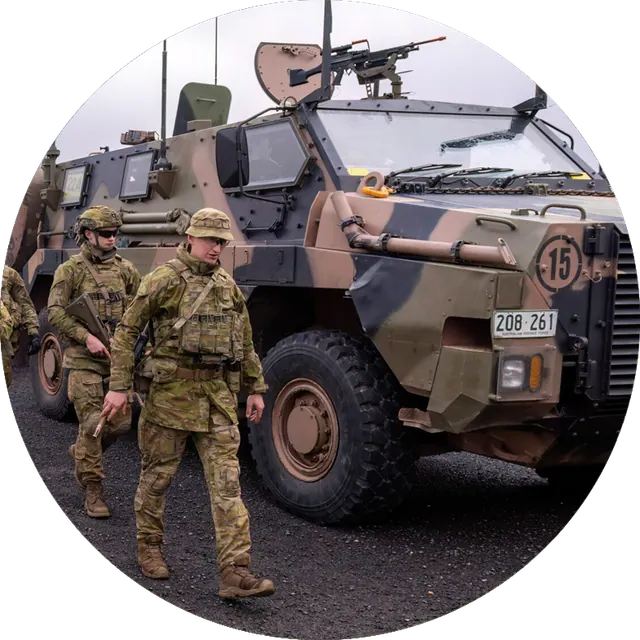
Personnel face high operational tempo, short and broken sleep and long deployments; defense civilians work shifts too. Fatigue degrades vigilance and decisions where errors can be fatal.

Defense & Military workforce

Who this page covers

  • Armed forces
  • Defense civilians

Regulation

Who regulates it, and what they expect

Defense sits outside the ordinary regulatory picture for uniformed personnel: military personnel and uniquely military operations are excluded from OSHA by executive order, and the department sets its own fatigue policy. DoD Instruction 1010.10 asks component heads to build at least seven hours of sleep per 24 hours into duty schedules, training plans and battle plans, but only as mission requirements permit. The surface Navy goes further, requiring circadian watchbills and a minimum 7.5-hour sleep opportunity every 24 hours. The civilian workforce and on-base contractors are covered by ordinary workplace safety law.

Regulated by
  • U.S. Department of DefenseDoD

Logos identify the regulator and don’t imply endorsement.

Who regulates it

Federal OSHA does not reach uniformed personnel or military-unique operations - a 1980 executive order sets that exclusion. The Department of Defense runs its own safety and fatigue policy, with the surface Navy adding a crew endurance instruction. DoD's 700,000 civilian employees are covered by the federal-agency safety program, and contractors on base are covered by OSHA as private employers. GAO provides oversight.

Your obligations

Uniformed personnel are outside OSHA, so the obligation is the department's own. DoD Instruction 1010.10 directs component heads to mitigate sleep deprivation and to build at least seven hours of sleep per 24 hours into schedules and plans, as mission requirements permit. The surface Navy's crew endurance instruction of 11 December 2020 is firmer: circadian watchbills, a minimum 7.5-hour sleep opportunity per 24 hours, and workdays that should not routinely exceed twelve. Air Force flight operations carry mandatory crew rest rules. Civilian staff are covered by the federal-agency safety program, the ADA and FMLA.

Consequences

There is no OSHA fine for uniformed personnel; fatigue failures surface through mishap investigation boards, Inspector General complaints, relief of commanders and Congressional oversight, and they are paid for in readiness. In March 2026 the Government Accountability Office reported that most service members still sleep six hours or fewer a night against the department's own seven-hour figure, and that three of the nine fatigue recommendations it made in 2024 remain open. For civilian staff the exposure is safety findings and abatement plus accommodation and leave claims; contractors face standard OSHA citation.

Penalties

No civil penalty attaches to fatigue for uniformed personnel, and the federal-agency program covering civilian staff provides for findings and abatement rather than fines. On-base private contractors face standard OSHA maximums, at 2025 levels in force for 2026: $16,550 serious, $165,514 willful or repeat.

Sources: Executive Order 12196 (1980); 29 CFR Part 1960; DoD Instruction 1010.10; Naval Surface Forces crew endurance instruction 3120.2A (2020); GAO reports GAO-24-105917 (2024) and GAO-21-366 (2021); NTSB Marine Accident Report MAR-19/01.

Fatigue-critical roles

Where fatigue matters most in defense & military

The roles where a fatigued worker is most likely to cause serious harm, the tasks that carry the risk, and why fatigue builds up in them.

RoleRiskHigh-risk tasksWhy fatigue builds
Military aviator (USAF, USN/USMC, Army Aviation)
Rules
Regulatory designation
Uniformed service member - outside OSHA (EO 12196); DoDI 1010.10 sleep targets 'as mission requirements permit'
Hours and rest
Service crew-rest rules (e.g. AFMAN 11-202 Vol 3, OPNAVINST 3710.7) - internal
Critical riskNight and NVG flying; long-range and air-to-air refuelling sorties; low-level flying; operations across time zones after short restEarly and night sorties, surge flying in exercises and operations, deployments across time zones, standby
Officer of the deck (OOD) / surface warfare officer
Rules
Regulatory designation
Uniformed service member - outside OSHA (EO 12196); DoDI 1010.10 sleep targets 'as mission requirements permit'
Hours and rest
COMNAVSURFPAC/LANTINST 3120.2A: circadian watchbills, 7.5 h sleep opportunity in 24 h (internal)
Critical riskBridge and operations-room watchkeeping on 1-in-2 or 1-in-3 rotations; restricted-water navigation; replenishment at sea; combat system operationWatch rotations fragmenting sleep, long periods at sea, drills during rest
Motor transport operator (Army 88M; USMC 3531)
Rules
Regulatory designation
Uniformed service member - outside OSHA (EO 12196); DoDI 1010.10 sleep targets 'as mission requirements permit'
Hours and rest
Service instructions only; no enforceable DoD-wide fatigue standard
Critical riskDriving heavy and armored vehicles in convoy at night and under NVG; road moves after exercise night shifts; ammunition and fuel transportExercises and deployments with sleep restriction, 24 h operations, long road moves
Aircraft maintainer (crew chief, weapons loader)
Rules
Regulatory designation
Uniformed service member - outside OSHA (EO 12196); DoDI 1010.10 sleep targets 'as mission requirements permit'
Hours and rest
Service instructions only; no enforceable DoD-wide fatigue standard
Critical riskNight-shift maintenance and arming of aircraft; flight-control and weapons-loading tasks; surge maintenance during exercisesShift work with surges, flight-line night shifts, deployed 12 h shifts
Security forces / military police sentry
Rules
Regulatory designation
Uniformed service member - outside OSHA (EO 12196); DoDI 1010.10 sleep targets 'as mission requirements permit'
Hours and rest
Service instructions only; no enforceable DoD-wide fatigue standard
High riskNight sentry and gate duty with live weapons; armed guard of munitions and aircraft; vigilance patrolsNight guard rotations (e.g. 2-on/4-off) on top of the normal working day, monotony
Explosive ordnance disposal (EOD) technician
Rules
Regulatory designation
Uniformed service member - outside OSHA (EO 12196); DoDI 1010.10 sleep targets 'as mission requirements permit'
Hours and rest
Service instructions only; no enforceable DoD-wide fatigue standard
High riskRender-safe procedures on explosive ordnance; ammunition inspection and repair; night call-outs to IED and EOD tasksOn-call duty with night call-outs, deployments, long tasks in heat and protective equipment

Stories

When fatigue made the record

Published findings and prosecutions from regulators, courts and investigators in the United States.

  • May 2020 · Florida, United States

    Fatigued fighter pilot lands too fast at night; $176m jet destroyed

    • Safety
    • Financial

    On a night sortie a fighter jet touched down at about 202 knots, far above normal landing speed, and the aircraft was destroyed after its flight controls fought the pilot's inputs; the pilot ejected with non-life-threatening injuries. The accident investigation board found that cognitive degradation due to fatigue substantially contributed. The pilot had frequently been getting poor, interrupted sleep and rated his own cognitive degradation well above his usual baseline at the end of the mission.

    Case US-defence-03Report an issue

Story 1 of 15

See all defense & military news

How the suite fits

How each product connects to your obligations

Grades describe how strongly a product connects to an obligation. None discharges an obligation, and none carries a compliance warranty.

Sleepfit

Supports your general duty of care

No US rule requires sleep screening of military or civilian defense staff; DoDI 1010.10 encourages adequate sleep for service members. Sleepfit supports it and your 29 CFR 1960 program. It screens; diagnosis stays with your clinicians.

About Sleepfit

Fatiguefit4Duty

Supports your general duty of care

No US rule sets a fitness-for-duty fatigue check for defense staff; DoDI 1010.10 encourages sleep for service members. Fatiguefit4Duty supports your fatigue program. A fitness-for-duty check, not a fitness-for-duty decision - the duty call stays with you.

About Fatiguefit4Duty

Awareness eLearning

Supports your general duty of care

No binding rule names fatigue training for defense staff or contractors; DoDI 1010.10 promotes adequate sleep without a curriculum. Awareness eLearning supplies fatigue and sleep content with a completion record.

About Awareness eLearning

Was It Fatigue?

Supports your general duty of care

No defense rule makes fatigue a required element of a mishap investigation. Was It Fatigue? supports your mishap board with a structured account of sleep and duty history. A structured judgment aid, not a determination of cause.

About Was It Fatigue?

SleepWellBaby

No obligation is engaged here. Sleep support for civilian staff with infants is a voluntary wellbeing measure, outside both the military instructions and the federal-agency safety program.

About SleepWellBaby

Recommended bundle

Where we’d start in defense & military

Every bundle is priced on prevalence: your whole cohort gets access, and you pay for the share predicted to need each product. How pricing works.

Why this pairing in the United States

No US rule names a fatigue tool for defense staff; DoDI 1010.10 encourages sleep for service members and 29 CFR 1960 sets the agency safety program. Sleepfit screens, Fatiguefit4Duty adds a pre-task check, Awareness eLearning trains. Fatigue Lifecycle adds mishap review.

See what sleep and fatigue mean for your defense & military workforce.

Tell us roughly how many people you employ. Your snapshot models how many are likely sleeping poorly and what it costs, from published research for defense & military. Then choose who you’d cover, and we’ll take you to the right next step.

A sample workforce snapshot on a tablet: modeled sleep problems and the cost of poor sleep for 1,400 people in transport and logistics.