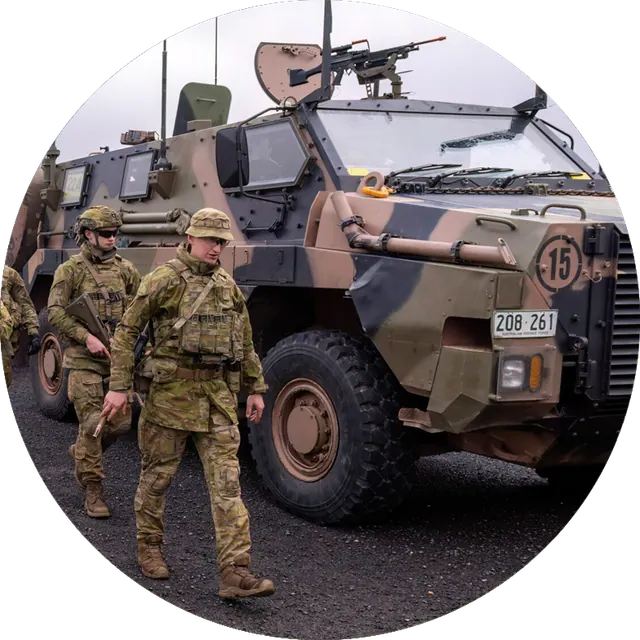
Personnel face high operational tempo, short and broken sleep and long deployments; defence civilians work shifts too. Fatigue degrades vigilance and decisions where errors can be fatal.
Regulatory change that affects how you manage fatigue in defence & military: what has changed in the last 12 months, and what is on the way.
Recent changeFrom 6 April 2026
Applies across industries in the United Kingdom
In Great Britain, from 6 Apr 2026 sick pay is due from the first day of sickness and you must keep holiday records for 6 years; from 1 Oct 2026 most tribunal claims can be brought up to 6 months after the event.
Upcoming changeExpected from 30 October 2026Within 12 months
From October 2026 (expected 30 Oct) you must take all reasonable steps to prevent sexual harassment of staff, including by customers and other third parties. From 1 Jan 2027 unfair dismissal protection starts after 6 months' service. Guaranteed hours and shift-notice rights for zero-hours workers are listed for 2027, timing to follow consultation.
Regulatory changes checked as at 1 October 2026.
Regulation
Who regulates it, and what they expect
Defence departs from the UK baseline, but not toward extra protection. Working time law disapplies the core hours and rest provisions where characteristics peculiar to the armed forces inevitably conflict with them - an operational necessity test, not a blanket exemption, so training, base and administrative work stay covered. The duty to manage fatigue as a hazard is never disapplied. Defence aviation goes further: the Military Aviation Authority's Regulatory Article 2345 on aircrew fatigue management sets maximum flying times, cockpit alert states and compulsory rest periods for aircrew.
Regulated by
MAA
Logos identify the regulator and don’t imply endorsement.
Who regulates it
The Ministry of Defence employs UK armed forces personnel as a Crown body. The Defence Safety Authority is its internal safety regulator, and within it the Military Aviation Authority regulates defence air safety, including aircrew fatigue. Health and safety law binds the Crown, but the parts creating enforcement notices and criminal offences do not, so the safety regulator censures the MOD rather than prosecuting it.
Your obligations
Where operational necessity does not genuinely conflict with working time law - most training, base and administrative activity - you must comply in full, like any other UK employer. Where it does, those hours and rest provisions fall away, but the duty to manage fatigue so far as is reasonably practicable does not: it must be met through your own safety management system. Defence aviation is also governed by the Military Aviation Authority's aircrew fatigue management article, which fixes maximum flying times, cockpit alert states and compulsory rest periods. A service complaint must precede any tribunal claim.
Consequences
Health and safety law binds the Crown, but the provisions creating enforcement notices and criminal offences do not, so the MOD cannot be served a statutory notice, prosecuted or fined for a safety failure. The regulator uses non-statutory notices and, at the top of the scale, a Crown censure: a formal public finding that a prosecutable breach occurred. Individual Crown servants remain prosecutable, and corporate manslaughter law reaches Crown bodies, with carve-outs for combat, hazardous training for it and special forces work. Combat immunity bars claims from actual combat, not claims about training.
Penalties
There is no fine to quantify against the MOD: a Crown censure, which the regulator calls the maximum sanction available against a Crown body, carries no financial penalty. The monetary cost lands elsewhere - on contractors, prosecuted and sentenced under the 2016 definitive guideline, with turnover-banded, unlimited Crown Court fines and up to two years' imprisonment for individuals - and on the MOD through civil damages. Corporate manslaughter still reaches the Crown.
On the record
No UK court, coroner, investigator or regulator has published a finding linking fatigue to an incident in defence. The duty to manage fatigue still sits within the general duties of the Health and Safety at Work etc. Act 1974.
Sources: Health and Safety at Work etc. Act 1974, section 48; HSE Enforcement Policy Statement; Working Time Regulations 1998; Corporate Manslaughter and Corporate Homicide Act 2007; MAA Regulatory Article 2345, Aircrew Fatigue Management; Smith v Ministry of Defence [2013] UKSC 41.
Fatigue-critical roles
Where fatigue matters most in defence & military
The roles where a fatigued worker is most likely to cause serious harm, the tasks that carry the risk, and why fatigue builds up in them.
Role
Risk
High-risk tasks
Why fatigue builds
Military aircrew (RAF, Fleet Air Arm, Army Air Corps)Rules
Regulatory designation
Service person; aircrew under MAA RA 2345 Aircrew Fatigue Management (Issue 5)
Hours and rest
RA 2345 flying and duty limits and compulsory rest (MAA regulatory article)
Critical risk
Night and NVG flying; long-range and air-to-air refuelling sorties; low-level flying; operations across time zones after short rest
Early and night sorties, surge flying in exercises and operations, deployments across time zones, standby
Officer of the watch (Royal Navy)Rules
Regulatory designation
Service person - HSWA applies; WTR reg 18(2)(a) disapplies regs 4, 6, 7(1) only where armed-forces activity inevitably conflicts
Hours and rest
WTR 1998 applies outside operational conflict; reg 25 disapplies only reg 9 and young-worker rules
Critical risk
Bridge and operations-room watchkeeping on 1-in-2 or 1-in-3 rotations; restricted-water navigation; replenishment at sea; combat system operation
Watch rotations fragmenting sleep, long periods at sea, drills during rest
Driver (Royal Logistic Corps)Rules
Regulatory designation
Service person - HSWA applies; WTR reg 18(2)(a) disapplies regs 4, 6, 7(1) only where armed-forces activity inevitably conflicts
Hours and rest
WTR 1998 applies outside operational conflict; reg 25 disapplies only reg 9 and young-worker rules
Critical risk
Driving heavy and armoured vehicles in convoy at night and under NVG; road moves after exercise night shifts; ammunition and fuel transport
Exercises and deployments with sleep restriction, 24 h operations, long road moves
Aircraft engineering technician (RAF)Rules
Regulatory designation
Service person - HSWA applies; WTR reg 18(2)(a) disapplies regs 4, 6, 7(1) only where armed-forces activity inevitably conflicts
Hours and rest
WTR 1998 applies outside operational conflict; reg 25 disapplies only reg 9 and young-worker rules
Critical risk
Night-shift maintenance and arming of aircraft; flight-control and weapons-loading tasks; surge maintenance during exercises
Shift work with surges, flight-line night shifts, deployed 12 h shifts
Guard / sentry; MOD Guard Service officer (civilian)Rules
Regulatory designation
Service person; MOD Guard Service civilians are full WTR workers
Hours and rest
WTR 1998 applies outside operational conflict; reg 25 disapplies only reg 9 and young-worker rules
High risk
Night sentry and gate duty with live weapons; armed guard of munitions and aircraft; vigilance patrols
Night guard rotations (e.g. 2-on/4-off) on top of the normal working day, monotony
Ammunition technician (RLC)Rules
Regulatory designation
Service person - HSWA applies; WTR reg 18(2)(a) disapplies regs 4, 6, 7(1) only where armed-forces activity inevitably conflicts
Hours and rest
WTR 1998 applies outside operational conflict; reg 25 disapplies only reg 9 and young-worker rules
High risk
Render-safe procedures on explosive ordnance; ammunition inspection and repair; night call-outs to IED and EOD tasks
On-call duty with night call-outs, deployments, long tasks in heat and protective equipment
How the suite fits
How each product connects to your obligations
Grades describe how strongly a product connects to an obligation. None discharges an obligation, and none carries a compliance warranty.
Sleepfit
Supports a named obligation
For personnel on nights, regulation 7 of the Working Time Regulations 1998 says you must offer a free health assessment before night work and at regular intervals, unless service demands inevitably conflict. Sleepfit supports it. It screens; diagnosis stays with your clinicians.
No UK rule names a pre-duty fitness check for defence establishments. Fatiguefit4Duty supports your general duty under s 2 of the Health and Safety at Work etc. Act 1974. A fitness-for-duty check, not a fitness-for-duty decision - the duty call stays with you.
Awareness eLearning supports the training you must give under s 2(2)(c) of the Health and Safety at Work etc. Act 1974 and regulation 13 of the 1999 Management Regulations with fatigue and sleep content. No UK rule names fatigue training for defence establishments.
RIDDOR 2013 requires you to report and record specified incidents in defence establishments but names no cause, and no fatigue review is required. Was It Fatigue? supports your own investigation. A structured judgement aid, not a determination of cause.
No UK rule reaches sleep in new-parent households in defence establishments. SleepWellBaby supports your working parents through the most disrupted period of their own sleep; it is offered as a wellbeing benefit, not a compliance step.
Working Time Regulations 1998 reg 7 requires a free health assessment for your night personnel; Sleepfit screening supports it. Fatiguefit4Duty adds a pre-shift check under HSWA 1974 s 2 and Awareness eLearning trains. Fatigue Lifecycle adds incident review beyond RIDDOR.
See what sleep and fatigue mean for your defence & military workforce.
Tell us roughly how many people you employ. Your snapshot models how many are likely sleeping poorly and what it costs, from published research for defence & military. Then choose who you’d cover, and we’ll take you to the right next step.