Forestry starts early and ends far from home. Sleep carries crews through.
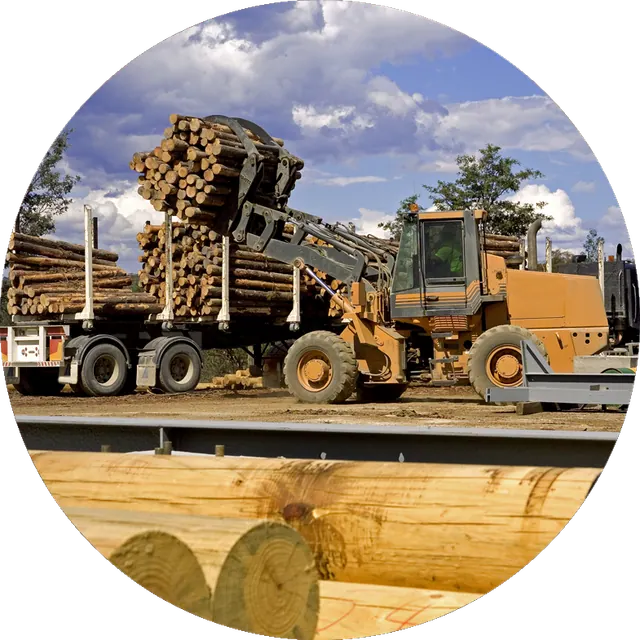
Crews start early, drive long distances to remote sites and work chainsaws and heavy machinery, with multi-day fire deployments in season. Fatigue in felling and log haulage can be fatal.
Irish forestry has no fatigue-specific statute and no fatigue-specific regulator. The Health and Safety Authority publishes a forestry Code of Practice plus ten technical guidance sheets covering chainsaw work, felling, harvesting, extraction and contractor selection, and those set the benchmark a forestry employer is judged against. That material is machine and technique focused rather than human-factors focused, so your duty to manage fatigue rests on the general obligation to assess every foreseeable risk. Crews, whether Coillte's own or a contractor's, keep the standard rest, break and 48-hour week protections.
Regulated by
HSA
Logos identify the regulator and don’t imply endorsement.
Who regulates it
Forestry safety in Ireland falls under the Health and Safety Authority (HSA), which publishes forestry-specific guidance covering hazards like chainsaw work, felling and machinery. Coillte, the state forestry company, and industry body IFFPA operate within that same framework rather than any separate regulator. Forestry licensing and land management are handled by a different department, unconnected to workplace safety.
Your obligations
Forestry employers and contractors must manage risk so far as is reasonably practicable, carry out a written risk assessment and hold a safety statement; a self-employed cutter carries the same duties for his or her own work. The Authority's forestry Code of Practice and its guidance sheets on chainsaw use, felling, harvesting and extraction are the reference standard, and a code of practice is admissible in evidence against you in a prosecution. Where that guidance sets no fatigue or hours benchmark, you must define and record your own. Crews keep 11 hours' daily rest, in-shift breaks, a weekly rest day and an average 48-hour week.
Consequences
There is no forestry-specific enforcement route. The Health and Safety Authority can inspect a site unannounced, serve an improvement or prohibition notice that stops a machine or a practice on the spot, and prosecute the employer, the contractor or the self-employed operator; a director or manager whose consent, connivance or neglect contributed can be prosecuted personally. In any prosecution the Authority's forestry Code of Practice is admissible in evidence. A worker denied rest, or worked past the weekly average, can complain separately to the Workplace Relations Commission, and a serious injury can bring a negligence claim decided on fault.
Penalties
Safety, Health and Welfare at Work Act 2005 penalties, in force in 2026 as set in 2010, reach a self-employed operator like any employer: up to €5,000 and 12 months' imprisonment summarily; up to €3,000,000 and two years on indictment, plus costs. Working-time awards reach two years' pay. Ireland has no no-fault workers' compensation - injury claims are fault-based, via the Injuries Resolution Board and the courts - and employers' liability insurance is not compulsory.
On the record
No Irish court, coroner, investigator or regulator has published a finding linking fatigue to an incident in forestry. The duty to manage fatigue still sits within the general duties of the Safety, Health and Welfare at Work Act 2005.
Sources: Health and Safety Authority forestry guidance and the Code of Practice for Managing Safety and Health in Forestry Operations; Safety, Health and Welfare at Work Act 2005, sections 7, 19, 20, 61, 77-78 and 80; Organisation of Working Time Act 1997, sections 11 to 13 and 15.
Fatigue-critical roles
Where fatigue matters most in forestry
The roles where a fatigued worker is most likely to cause serious harm, the tasks that carry the risk, and why fatigue builds up in them.
Role
Risk
High-risk tasks
Why fatigue builds
Timber lorry driverRules
Regulatory designation
Driver in scope of Reg (EC) 561/2006; mobile worker (S.I. 36/2012); Driver CPC (S.I. 359/2008)
Hours and rest
Reg 561/2006: 9 h driving (10 h twice weekly), 45 min after 4.5 h, 11 h daily rest; S.I. 36/2012: 48 h avg, 10 h if night work
Critical risk
Hauling loaded logging trucks on steep unsealed forest roads and highways, pre-dawn departures, load securing, off-highway haul in dust
Starts at 02:00-04:00, 12-14 h days, trip-rate pay, remote routes
Chainsaw operatorRules
Regulatory designation
None specific - general duty (SHWWA 2005 ss 8, 19); HSA forestry guidance (no fatigue content)
Hours and rest
OWTA 1997: 48 h avg (no opt-out), 11 h daily rest; night worker avg 8 h in 24 (s 16)
High risk
Manual felling on steep slopes, back-cut and wedge decisions, hung-up and wind-thrown trees, working within striking distance of other fallers
Pre-dawn starts with 1-2 h travel to the block, heavy physical load, heat or cold, piece-rate pay
Harvester operatorRules
Regulatory designation
None specific - general duty (SHWWA 2005 ss 8, 19)
Hours and rest
OWTA 1997: 48 h avg (no opt-out), 11 h daily rest; night worker avg 8 h in 24 (s 16)
High risk
Operating harvesters, forwarders and feller-bunchers through night shift on steep or wet ground; rollover and tree-strike risk; winch-assist operations
Grades describe how strongly a product connects to an obligation. None discharges an obligation, and none carries a compliance warranty.
Sleepfit
Supports your general duty of care
For your forestry crews, Sleepfit supports s 19 risk assessment and s 22 health surveillance under the Safety, Health and Welfare at Work Act 2005, and Regulation 157 assessment of any night workers. It screens; diagnosis stays with your clinicians.
For your forestry crews, Fatiguefit4Duty supports your duties under ss 8 and 19 of the Safety, Health and Welfare at Work Act 2005. No Irish rule names a start-of-duty check. A fitness-for-duty check, not a fitness-for-duty decision - the duty call stays with you.
Awareness eLearning supplies fatigue and sleep content with a completion record for your forestry crews, supporting the general training duty in s 8(2)(g) and s 10 of the Safety, Health and Welfare at Work Act 2005. Your training programme stays yours.
Was It Fatigue? supports your review of incidents involving your forestry crews and of your s 19 risk assessment. Irish accident reporting rules require notification to the HSA, not a fatigue assessment. A structured judgement aid, not a determination of cause.
No Irish workplace rule reaches sleep in new-parent households. SleepWellBaby is offered to the working parents among your forestry crews as a wellbeing benefit, not as a step any Irish regulation requires.
No Irish rule names a fatigue tool, so this supports your duties under ss 8 and 19 of the SHWW Act 2005. Sleepfit screens your forestry crews for sleep disorders; Fatiguefit4Duty adds a point-of-duty self-check. Prevention adds Awareness eLearning with a completion record.
See what sleep and fatigue mean for your forestry workforce.
Tell us roughly how many people you employ. Your snapshot models how many are likely sleeping poorly and what it costs, from published research for forestry. Then choose who you’d cover, and we’ll take you to the right next step.