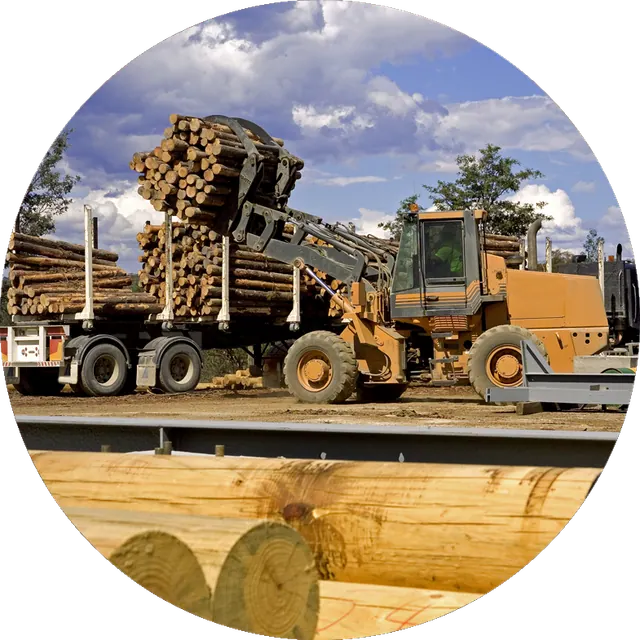
Forestry · United States

Forestry starts early and ends far from home. Sleep carries crews through.

Crews start early, drive long distances to remote sites and work chainsaws and heavy machinery, with multi-day fire deployments in season. Fatigue in felling and log haulage can be fatal.

Regulation changed Jun 4, 2026Change coming Oct 2027

Forestry workforce

Who this page covers

  • Harvesting and logging crews
  • Land-manager fire crews
  • Silviculture and plantation management

Reg Watch

What’s changed, and what’s coming

Regulatory change that affects how you manage fatigue in forestry: what has changed in the last 12 months, and what is on the way.

Recent changeFrom June 4, 2026

Applies across industries in the United States

If you have workers in Colorado exposed to extreme heat or cold, a law signed 4 June 2026 requires a temperature illness prevention plan and worker training, with your plan due to the state by 1 September 2028.

Read the change

Upcoming changeExpected from October 2027Within 12 months

OSHA's heat injury and illness standard, proposed August 2024, is still a proposal: a supplemental proposal is projected for December 2026 and final action for October 2027, with no compliance date set. Colorado plans are due 1 September 2028; Virginia must adopt heat rules by 1 May 2028.

Regulatory changes checked as at October 1, 2026.

Regulation

Who regulates it, and what they expect

Forestry splits in two. OSHA's logging standard is detailed on chainsaws, felling and machinery and contains nothing at all on hours, rest or fatigue, and neither Oregon's nor Washington's own logging rules go further. The real hours rule sits on the road: log truck drivers in interstate commerce fall under federal hours-of-service limits, and the agricultural exemptions do not reach log haulage. Wildland fire crews plan to a two-to-one work-rest ratio that comes from interagency policy rather than from law.

Regulated by
  • Occupational Safety and Health AdministrationOSHA

Logos identify the regulator and don’t imply endorsement.

Who regulates it

OSHA regulates logging safety directly, but its Logging Operations standard covers equipment and technique, not rest or fatigue. Wildland firefighting is different: the National Wildfire Coordinating Group, the interagency body setting operational standards for federal and state fire crews, has its own well-established work/rest guidance, even though it isn't an OSHA rule.

Your obligations

Logging operators get no fatigue rulebook from OSHA. The logging standard requires training in hazard recognition and safe work practices and says nothing about hours or rest, so the general duty to keep the workplace free of recognized hazards is what you answer to. Your log truck drivers are in a different position: in interstate commerce they are subject to federal hours-of-service limits and the record-keeping that goes with them, and the agricultural commodity exemptions do not cover unprocessed forest products.

Consequences

In the woods, a fatigue-linked injury is cited under the general duty to keep a workplace free of recognized hazards, at $16,550 a serious violation and $165,514 a willful or repeat violation at 2025 levels in force for 2026, on top of compensation costs that are severe because logging injuries are catastrophic. On the road the exposure is separate and federal, falling on the carrier as well as the driver, and an hours-of-service breach stops the truck through an out-of-service order rather than a fine.

Penalties

OSHA maxima at 2025 levels, in force for 2026: $16,550 per serious violation and $165,514 per willful or repeat violation. Federal hours-of-service breaches carry their own penalties and out-of-service orders against driver and carrier.

Sources: OSHA Logging Operations standard (29 CFR 1910.266); National Wildfire Coordinating Group Work/Rest Guidelines; Interagency Standards for Fire and Fire Aviation Operations (the wildland fire Redbook), Chapter 7; US OSHA General Duty Clause and penalty schedule.

Fatigue-critical roles

Where fatigue matters most in forestry

The roles where a fatigued worker is most likely to cause serious harm, the tasks that carry the risk, and why fatigue builds up in them.

RoleRiskHigh-risk tasksWhy fatigue builds
Feller-buncher / skidder operator
Rules
Regulatory designation
None specific - general duty (OSH Act s 5(a)(1))
Hours and rest
No federal hours cap for adults; FLSA prices overtime only
Critical riskOperating harvesters, forwarders and feller-bunchers through night shift on steep or wet ground; rollover and tree-strike risk; winch-assist operationsDouble-shift harvesting (e.g. 05:00-15:00 / 15:00-01:00), lone operation in remote blocks, monotony
Log truck driver
Rules
Regulatory designation
CDL driver performing safety-sensitive functions (49 CFR 382.107); carrier must not permit fatigued driving (49 CFR 392.3)
Hours and rest
49 CFR 395.3: 11 h driving after 10 h off, 14 h window, 60/70 h in 7/8 days; short-haul 395.1(e)
Critical riskHauling loaded logging trucks on steep unsealed forest roads and highways, pre-dawn departures, load securing, off-highway haul in dustStarts at 02:00-04:00, 12-14 h days, trip-rate pay, remote routes
Wildland firefighter (hotshot / engine / hand crew)
Rules
Regulatory designation
None specific - federal agency operational policy (NWCG)
Hours and rest
NWCG work/rest guidelines (policy, not law): plan 2:1 work/rest; shifts over 16 h need justification
Critical riskFireline construction with hand tools and chainsaws, burning-out, mop-up on steep ground, driving tankers on forest tracks, multi-day deploymentsShifts of 12-16 h+ for days on end, night firefighting, camp sleep, long travel to and from the fire
Faller / timber cutter
Rules
Regulatory designation
None specific - general duty (OSH Act s 5(a)(1)); OSHA logging standard (29 CFR 1910.266) - no fatigue content
Hours and rest
No federal hours cap for adults; FLSA prices overtime only
High riskManual felling on steep slopes, back-cut and wedge decisions, hung-up and wind-thrown trees, working within striking distance of other fallersPre-dawn starts with 1-2 h travel to the block, heavy physical load, heat or cold, piece-rate pay
Reforestation worker (tree planter)
Rules
Regulatory designation
None specific - general duty (OSH Act s 5(a)(1))
Hours and rest
No federal hours cap for adults; FLSA prices overtime only
High riskDriving crew vans on logging roads at dawn, planting and spraying on steep ground, pruning and thinning with chainsawsCamp-based rotations, 10-12 h days incl. 1-3 h of unsealed-road travel, piece rates

Stories

When fatigue made the record

Published findings and prosecutions from regulators, courts and investigators in the United States.

  • Oct 2015 · Louisiana, United States

    Logging truck driver past the 14-hour duty limit crosses centerline; three killed

    • Safety
    • Legal

    A loaded logging truck crossed the centerline of a highway and hit a pickup head-on, killing three people and seriously injuring one. FMCSA and state police found the driver had operated his truck beyond the 14-hour daily on-duty limit that day, with numerous further hours breaches in the previous seven days; he also tested positive for amphetamines and methamphetamine. FMCSA declared him an imminent hazard and ordered him off interstate commercial driving.

    Case US-forestry-01Report an issue

See all forestry news

How the suite fits

How each product connects to your obligations

Grades describe how strongly a product connects to an obligation. None discharges an obligation, and none carries a compliance warranty.

Sleepfit

Supports your general duty of care

Neither the federal logging standard nor the Oregon and Washington rules ask anything of you on sleep. Sleepfit supports your general duty case under s 5(a)(1) of the OSH Act, as a voluntary program. It screens; diagnosis stays with your clinicians.

About Sleepfit

Fatiguefit4Duty

Supports your general duty of care

Nothing in the logging standard requires a fitness check, so this supports the general duty to keep a workplace free of recognized hazards rather than any specific rule. Driver hours are governed separately.

About Fatiguefit4Duty

Awareness eLearning

Supports your general duty of care

The logging standard requires training on recognizing and controlling health and safety hazards in logging, without naming fatigue. Awareness eLearning supports that training with fatigue content.

About Awareness eLearning

Was It Fatigue?

Supports your general duty of care

No forestry rule tells you to investigate whether fatigue contributed, so this supports the record you build for yourself after a serious injury rather than a requirement you must meet.

About Was It Fatigue?

SleepWellBaby

No forestry rule in the United States reaches sleep in new-parent households. SleepWellBaby supports crews whose sleep is broken by an infant at home; it is offered as a wellbeing benefit, not a compliance step.

About SleepWellBaby

Recommended bundle

Where we’d start in forestry

Every bundle is priced on prevalence: your whole cohort gets access, and you pay for the share predicted to need each product. How pricing works.

Recommended · Levels 2 and 3

Shift Worker Bundle

Sleep screening and a point-of-duty check for the workers who need it most.

Why this pairing in the United States

The logging standard, 29 CFR 1910.266, names no fatigue tool; this supports your s 5(a)(1) case. Sleepfit screens your logging crews for sleep disorders, confidentially; Fatiguefit4Duty adds a point-of-duty self-check. Prevention adds Awareness eLearning with a completion record.

See what sleep and fatigue mean for your forestry workforce.

Tell us roughly how many people you employ. Your snapshot models how many are likely sleeping poorly and what it costs, from published research for forestry. Then choose who you’d cover, and we’ll take you to the right next step.

A sample workforce snapshot on a tablet: modeled sleep problems and the cost of poor sleep for 1,400 people in transport and logistics.