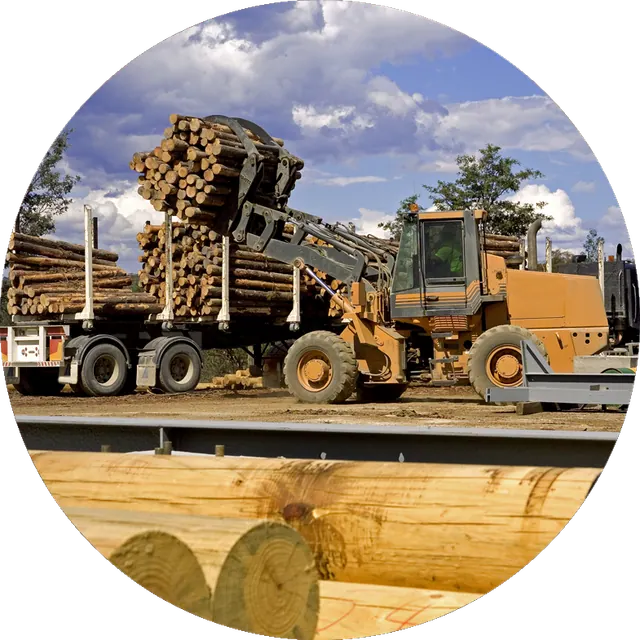
Forestry · New Zealand

Forestry starts early and ends far from home. Sleep carries crews through.

Crews start early, drive long distances to remote sites and work chainsaws and heavy machinery, with multi-day fire deployments in season. Fatigue in felling and log haulage can be fatal.

Regulation changed 9 Jul 2026Change coming 1 Apr 2027

Forestry workforce

Who this page covers

  • Harvesting and logging crews
  • Land-manager fire crews
  • Silviculture and plantation management

Reg Watch

What’s changed, and what’s coming

Regulatory change that affects how you manage fatigue in forestry: what has changed in the last 12 months, and what is on the way.

Recent changeFrom 9 July 2026

Applies across industries in New Zealand

The Health and Safety at Work Amendment Act 2026 became law on 9 July 2026. Your duties do not change until most of it commences on 1 April 2027, so use the lead time to evidence fatigue as a serious-harm risk.

Read the change

Upcoming changeExpected from 1 April 2027Within 12 months

From 1 April 2027 HSWA centres on 'critical risks', and following an approved code becomes deemed compliance. The 2025 forestry and harvesting code (approved 28 July 2025) gets that safe-harbour status from commencement. Fatigue is not on the Schedule 1A list, so it counts only where likely to cause death or notifiable harm.

Regulatory changes checked as at 1 October 2026.

Regulation

Who regulates it, and what they expect

Forestry is the one New Zealand sector with a detailed, government-approved fatigue framework. WorkSafe's approved code of practice for forestry and harvesting operations, approved by the Minister in July 2025, devotes a section to fatigue: log the hours worked, build in a minimum 15-minute break every three hours or two 30-minute breaks a day, roster to natural sleep rhythms, limit consecutive night shifts, keep high-risk tasks out of the 3am to 5am window, and do not let a fatigued worker keep working. It also sets out a worked fatigue agreement covering sleep opportunity, two full nights off a week, and maximum shift and weekly hours.

Regulated by
  • WorkSafe New ZealandWorkSafe

Logos identify the regulator and don’t imply endorsement.

Who regulates it

Forestry has its own dedicated safety rulebook. WorkSafe New Zealand publishes an official Code of Practice specifically for forestry and harvesting operations, which courts treat as the benchmark for a responsible employer. The industry also funds a dedicated safety body (Safetree, backed by the Forest Owners Association) producing forestry-specific training, and NZ researchers have run real studies on forestry worker fatigue.

Your obligations

The approved code of practice is not law in itself, but it is WorkSafe's published statement of good practice in forestry, and a court can have regard to it in deciding whether you met your duty. It expects you to log hours worked, cap overtime, avoid incentives to work excessive hours, build in a minimum 15-minute break every three hours or two 30-minute breaks a day, roster to natural sleep rhythms, limit runs of night shifts, train crews to recognise fatigue, and stop a fatigued worker working. Its worked fatigue agreement, covering sleep opportunity, nights off and maximum shift and weekly hours, is the template it invites you to adapt.

Consequences

Not following the code is not itself an offence, but it makes a prosecution far harder to defend: WorkSafe and the court will ask why the published good practice for your industry was not followed, and a foreseeable risk left unmanaged is treated as aggravating at sentencing. WorkSafe can issue improvement and prohibition notices and prosecute the company in the District Court, and directors and other officers can be charged personally for failing their due-diligence duty. Forestry is enforced hard, and the sentencing record shows courts responding sharply to companies told about a hazard that did nothing. From 1 April 2027 compliance with an approved code gains stronger safe-harbour status.

Penalties

Health and Safety at Work Act 2015 fines are unchanged since 2015: up to $1.5m for a company and $300,000 for an officer where a worker is exposed to death or serious injury, and $3m and $600,000 for reckless breaches. Real forestry outcomes sit well inside that range. In July 2021 the Gisborne District Court fined Pakiri Logging $468,000 and Ernslaw One $288,000 over a worker's death, and ordered $256,408 in reparation on top of the fines.

On the record

No New Zealand court, coroner, investigator or regulator has published a finding linking fatigue to an incident in forestry. The duty to manage fatigue still sits within the primary duty of care under the Health and Safety at Work Act 2015.

Sources: WorkSafe New Zealand Approved Code of Practice for forestry and harvesting operations; MBIE Forestry Sector Health and Safety at Work Strategy; Safetree industry safety resources; published New Zealand academic research and court prosecution records.

Fatigue-critical roles

Where fatigue matters most in forestry

The roles where a fatigued worker is most likely to cause serious harm, the tasks that carry the risk, and why fatigue builds up in them.

RoleRiskHigh-risk tasksWhy fatigue builds
Harvester / skidder operator
Rules
Regulatory designation
None specific - general duty (HSWA 2015 s 36; fatigue named in s 16 'hazard'); forestry ACOP s 3.5.20 (must not allow a fatigued worker to work)
Hours and rest
No statutory maximum; ACOP (not binding law): hours log, limit consecutive nights
Critical riskOperating harvesters, forwarders and feller-bunchers through night shift on steep or wet ground; rollover and tree-strike risk; winch-assist operationsDouble-shift harvesting (e.g. 05:00-15:00 / 15:00-01:00), lone operation in remote blocks, monotony
Log truck driver
Rules
Regulatory designation
Driver of a work-time vehicle (Land Transport Rule: Work Time and Logbooks 2007)
Hours and rest
Work Time Rule: 30 min break after 5.5 h; max 13 h work per cumulative work day; 10 h continuous rest; 70 h then 24 h off
Critical riskHauling loaded logging trucks on steep unsealed forest roads and highways, pre-dawn departures, load securing, off-highway haul in dustStarts at 02:00-04:00, 12-14 h days, trip-rate pay, remote routes
Rural firefighter / forestry fire crew
Rules
Regulatory designation
None specific - general duty (HSWA 2015 s 36; fatigue named in s 16 'hazard')
Hours and rest
No statutory maximum; ERA 2000 ss 69ZD-69ZE rest and meal breaks
Critical riskFireline construction with hand tools and chainsaws, burning-out, mop-up on steep ground, driving tankers on forest tracks, multi-day deploymentsShifts of 12-16 h+ for days on end, night firefighting, camp sleep, long travel to and from the fire
Tree faller
Rules
Regulatory designation
None specific - general duty (HSWA 2015 s 36; fatigue named in s 16 'hazard'); Approved Code of Practice for forestry and harvesting (Aug 2025) s 3.5.16-3.5.20 fatigue controls
Hours and rest
No statutory maximum; ACOP (not binding law): hours log, 15 min break every 3 h, limit consecutive nights
High riskManual felling on steep slopes, back-cut and wedge decisions, hung-up and wind-thrown trees, working within striking distance of other fallersPre-dawn starts with 1-2 h travel to the block, heavy physical load, heat or cold, piece-rate pay
Silviculture worker (planter / pruner)
Rules
Regulatory designation
None specific - general duty (HSWA 2015 s 36; fatigue named in s 16 'hazard')
Hours and rest
No statutory maximum; ERA 2000 ss 69ZD-69ZE rest and meal breaks
High riskDriving crew vans on logging roads at dawn, planting and spraying on steep ground, pruning and thinning with chainsawsCamp-based rotations, 10-12 h days incl. 1-3 h of unsealed-road travel, piece rates

How the suite fits

How each product connects to your obligations

Grades describe how strongly a product connects to an obligation. None discharges an obligation, and none carries a compliance warranty.

Fatiguefit4Duty

Supports a named obligation

WorkSafe's approved code of practice for forestry and harvesting (2025) expects you to check each worker's fitness, including fatigue, before work starts (s 6.1.3) and not to let a fatigued worker work (s 3.5.20). Fatiguefit4Duty records that pre-start check. A fitness-for-duty check, not a fitness-for-duty decision - the duty call stays with you.

About Fatiguefit4Duty

Awareness eLearning

Supports a named obligation

WorkSafe's approved code of practice for forestry and harvesting (2025) expects you to train workers to recognise the signs of fatigue and how to avoid it (Table 3). Awareness eLearning supplies that fatigue content with a completion record.

About Awareness eLearning

Sleepfit

Supports your general duty of care

No New Zealand forestry rule names a sleep screen. Section 36(3)(g) of the Health and Safety at Work Act 2015 requires you to monitor worker health, and Sleepfit supports that for harvesting and roading crews. It screens; diagnosis stays with your clinicians.

About Sleepfit

Was It Fatigue?

Supports your general duty of care

You must notify WorkSafe of a notifiable event under s 56 of the Health and Safety at Work Act 2015; no New Zealand forestry rule requires you to assess fatigue. A structured judgement aid, not a determination of cause.

About Was It Fatigue?

SleepWellBaby

No New Zealand forestry rule reaches sleep in new-parent households. SleepWellBaby is offered to parents of infants in your workforce as a benefit that protects their own sleep, not as a compliance step.

About SleepWellBaby

Recommended bundle

Where we’d start in forestry

Every bundle is priced on prevalence: your whole cohort gets access, and you pay for the share predicted to need each product. How pricing works.

Alternative · Levels 2 and 3

Shift Worker Bundle

Sleep screening and a point-of-duty check for the workers who need it most.

Why this pairing in New Zealand

WorkSafe's approved forestry code expects a pre-start fatigue check and fatigue training. Fatiguefit4Duty records the check, Awareness eLearning supplies the training with a record and Sleepfit screens crews for sleep disorders. Shift worker is the lighter option.

See what sleep and fatigue mean for your forestry workforce.

Tell us roughly how many people you employ. Your snapshot models how many are likely sleeping poorly and what it costs, from published research for forestry. Then choose who you’d cover, and we’ll take you to the right next step.

A sample workforce snapshot on a tablet: modelled sleep problems and the cost of poor sleep for 1,400 people in transport and logistics.