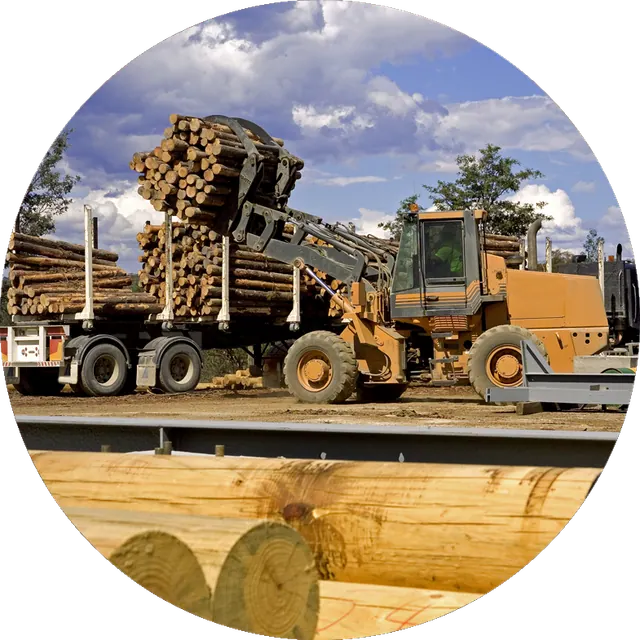
Forestry starts early and ends far from home. Sleep carries crews through.
Crews start early, drive long distances to remote sites and work chainsaws and heavy machinery, with multi-day fire deployments in season. Fatigue in felling and log haulage can be fatal.
Regulatory change that affects how you manage fatigue in forestry: what has changed in the last 12 months, and what is on the way.
Recent changeFrom 6 April 2026
Applies across industries in the United Kingdom
In Great Britain, from 6 Apr 2026 sick pay is due from the first day of sickness and you must keep holiday records for 6 years; from 1 Oct 2026 most tribunal claims can be brought up to 6 months after the event.
Upcoming changeExpected from 30 October 2026Within 12 months
From October 2026 (expected 30 Oct) you must take all reasonable steps to prevent sexual harassment of staff, including by customers and other third parties. From 1 Jan 2027 unfair dismissal protection starts after 6 months' service. Guaranteed hours and shift-notice rights for zero-hours workers are listed for 2027, timing to follow consultation.
Regulatory changes checked as at 1 October 2026.
Regulation
Who regulates it, and what they expect
No forestry-specific fatigue or working-hours law exists, even though HSE calls tree work one of the most dangerous industries in Britain and the sector has real, dedicated safety infrastructure. The industry's own accord publishes more than twenty guides covering vehicles, machinery, processing, site welfare and emergency planning, but none on fatigue, lone-working hours or rest. HSE's tree work guidance tells the same story - detailed on chainsaws, working at height, noise, vibration and musculoskeletal injury, with no fatigue section. Your crews rely on exactly the same general working-time and safety duties as any other UK worker.
Regulated by
HSE
Logos identify the regulator and don’t imply endorsement.
Who regulates it
HSE regulates forestry and tree work as it does any other industry - there is no separate forestry regulator. The sector adds its own active industry body, the Forest Industry Safety Accord, formed in 2012, which brings forestry organisations together to commit to raising standards and publishes a large library of numbered safety guides. HSE's tree work guidance also points to the Arboriculture and Forestry Advisory Group.
Your obligations
Forestry employers' fatigue duties are the same as any UK employer's: a 48-hour average week unless the worker opts out, 11 hours' daily rest, weekly rest, a 20-minute break on shifts over six hours, and the general duty to manage fatigue so far as is reasonably practicable. Self-employed forestry workers carry that duty personally - agriculture and forestry were deliberately kept in scope when most self-employed people were taken out of it in 2015. Businesses in the industry safety accord also commit to its guides on training, site welfare and emergency planning, which touch fatigue-relevant conditions without setting any hours or rest rule.
Consequences
The consequences for breaching hours or safety rules in forestry are the same as for any UK employer - employment tribunal claims and safety-regulator enforcement, including prosecution and fines that scale with company size. The industry's own safety guides are not law, and not following one triggers no penalty from the industry body - but if an incident happens and recognised industry good practice was not followed, that can count against you in a safety prosecution or legal claim, as any well-established industry standard can be used as a benchmark of what a responsible employer should have done.
Penalties
Prosecutions are sentenced under the Sentencing Council's 2016 guideline by culpability, harm and turnover: up to £450,000 for a micro contractor turning over under £2m, £1.6m for a small business and £10m for a large one, with no ceiling in the Crown Court. Individuals, self-employed operators included, face up to two years' imprisonment. A death can be charged as corporate manslaughter, at £180,000 to £20m. HSE charges £188 an hour (April 2026 rate).
On the record
No UK court, coroner, investigator or regulator has published a finding linking fatigue to an incident in forestry. The duty to manage fatigue still sits within the general duties of the Health and Safety at Work etc. Act 1974.
Sources: Forest Industry Safety Accord (ukfisa.com); HSE tree work guidance; Working Time Regulations 1998; Health and Safety at Work etc. Act 1974; HSE HSG256 on shift work; Sentencing Council guideline (2016); HSE Fee for Intervention (April 2026).
Fatigue-critical roles
Where fatigue matters most in forestry
The roles where a fatigued worker is most likely to cause serious harm, the tasks that carry the risk, and why fatigue builds up in them.
Role
Risk
High-risk tasks
Why fatigue builds
Timber haulage driverRules
Regulatory designation
Driver in scope of assimilated Reg 561/2006 and RT(WT) Regs 2005 (mobile worker), or GB domestic drivers' hours
Hours and rest
EU/AETR: 9 h driving (10 h twice weekly), 45 min break after 4.5 h, 11 h daily rest; GB domestic: 10 h driving, 11 h duty
Critical risk
Hauling loaded logging trucks on steep unsealed forest roads and highways, pre-dawn departures, load securing, off-highway haul in dust
Starts at 02:00-04:00, 12-14 h days, trip-rate pay, remote routes
Chainsaw operator / fellerRules
Regulatory designation
None specific - general duty (HSWA 1974 s 2; MHSWR 1999 reg 3); Lantra/NPTC chainsaw certificate (PUWER 1998 reg 9 training)
Hours and rest
WTR 1998: 48 h avg (opt-out allowed), 11 h daily rest, night work avg 8 h in 24 (reg 6)
High risk
Manual felling on steep slopes, back-cut and wedge decisions, hung-up and wind-thrown trees, working within striking distance of other fallers
Pre-dawn starts with 1-2 h travel to the block, heavy physical load, heat or cold, piece-rate pay
Harvester / forwarder operatorRules
Regulatory designation
None specific - general duty (HSWA 1974 s 2; MHSWR 1999 reg 3)
Hours and rest
WTR 1998: 48 h avg (opt-out allowed), 11 h daily rest, night work avg 8 h in 24 (reg 6)
High risk
Operating harvesters, forwarders and feller-bunchers through night shift on steep or wet ground; rollover and tree-strike risk; winch-assist operations
Grades describe how strongly a product connects to an obligation. None discharges an obligation, and none carries a compliance warranty.
Sleepfit
Supports your general duty of care
No UK rule names a sleep screen for forestry and harvesting. Sleepfit supports your regulation 3 risk assessment under the Management of Health and Safety at Work Regulations 1999 where poor sleep is a foreseeable risk. It screens; diagnosis stays with your clinicians.
No UK rule names a pre-duty fitness check for forestry and harvesting. Fatiguefit4Duty supports your general duty under s 2 of the Health and Safety at Work etc. Act 1974. A fitness-for-duty check, not a fitness-for-duty decision - the duty call stays with you.
Awareness eLearning supports the training you must give under s 2(2)(c) of the Health and Safety at Work etc. Act 1974 and regulation 13 of the 1999 Management Regulations with fatigue and sleep content. No UK rule names fatigue training for forestry and harvesting.
RIDDOR 2013 requires you to report and record specified incidents in forestry and harvesting but names no cause, and no fatigue review is required. Was It Fatigue? supports your own investigation. A structured judgement aid, not a determination of cause.
No UK rule reaches sleep in new-parent households in forestry and harvesting. SleepWellBaby supports your working parents through the most disrupted period of their own sleep; it is offered as a wellbeing benefit, not a compliance step.
No UK rule names a fatigue tool, so this supports your HSWA 1974 s 2 duty and reg 3 risk assessment. Sleepfit screens your harvesting crews for sleep disorders; Fatiguefit4Duty adds a point-of-duty self-check. Prevention adds Awareness eLearning with a completion record.
See what sleep and fatigue mean for your forestry workforce.
Tell us roughly how many people you employ. Your snapshot models how many are likely sleeping poorly and what it costs, from published research for forestry. Then choose who you’d cover, and we’ll take you to the right next step.