Forestry · Australia

Forestry starts early and ends far from home. Sleep carries crews through.

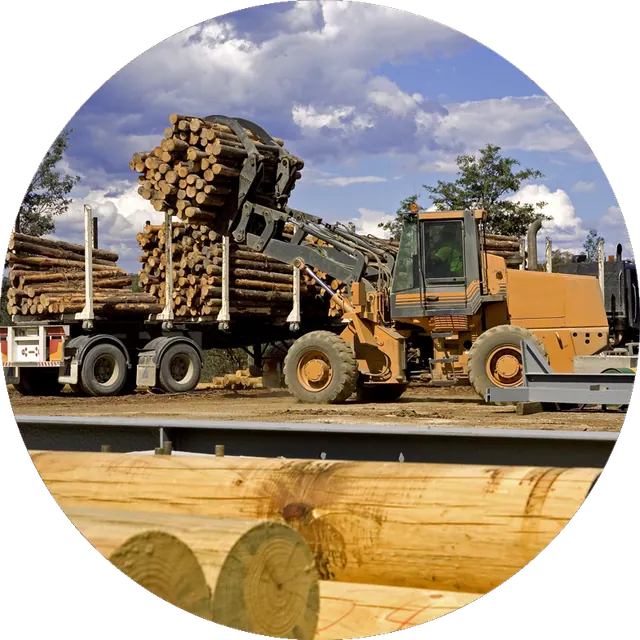
Crews start early, drive long distances to remote sites and work chainsaws and heavy machinery, with multi-day fire deployments in season. Fatigue in felling and log haulage can be fatal.

Regulation changed 27 Mar 2026

Forestry workforce

Who this page covers

  • Harvesting and logging crews
  • Land-manager fire crews
  • Silviculture and plantation management

Reg Watch

What’s changed, and what’s coming

Regulatory change that affects how you manage fatigue in forestry: what has changed in the last 12 months, and what is on the way.

Recent changeFrom 27 March 2026

Specific to forestry

NSW codes on forest harvesting (December 2025) and tree works (27 March 2026) now apply, and from 1 July 2026 you must follow them, and the NSW fatigue code, or manage to an equal or higher standard.

Read the change

Upcoming changeNo date set yet

Safe Work Australia's Best Practice Review of the model WHS laws was due to go to WHS ministers in August 2026. It is not yet public and no amendments are proposed, so no change date is set.

Regulatory changes checked as at 1 October 2026.

Regulation

Who regulates it, and what they expect

Forestry has no fatigue statute of its own, but New South Wales now has two approved codes that reach it. The forest harvesting code, reissued in December 2025, names fatigue among the hazards operators must identify and control, and a general code on managing the risk of fatigue at work followed in February 2026. From 1 July 2026 a New South Wales operator must either comply with an approved code or manage the hazard to an equivalent or higher standard. Log haulage sits under national heavy vehicle fatigue law.

Regulated by
  • Safe Work AustraliaSWA

Logos identify the regulator and don’t imply endorsement.

Who regulates it

State workplace safety regulators, including SafeWork NSW and SafeWork SA, Safe Work Australia, and - for bushfire deployment - state fire and land-management agencies and the national fire and emergency peak body, AFAC.

Your obligations

You must identify and control fatigue as a workplace hazard so far as is reasonably practicable. In New South Wales the forest harvesting code names fatigue as a hazard on a harvesting site, and a separate approved code on managing the risk of fatigue at work has applied since February 2026. From 1 July 2026 you must comply with an approved code or show you achieved an equivalent or higher standard. Your log trucks are separately regulated: above the prescribed mass they are fatigue-regulated heavy vehicles with statutory work and rest limits.

Consequences

Fatigue failures are enforced by your state regulator on the general work health and safety penalty scale, through improvement and prohibition notices as well as prosecution, with industrial manslaughter available where a worker dies. In New South Wales the codes bite harder from 1 July 2026, because an operator who departs from a published expectation has to show it achieved an equivalent or higher standard. Log haulage carries separate heavy vehicle penalties reaching everyone in the chain of responsibility.

Penalties

Work health and safety maxima at 1 July 2026 levels: Category 1 body corporate $11,606,824 (NSW), $12,321,000 (ACT), $3,500,000 (WA) and $3,000,000 (Qld, SA, Tas, NT). Heavy vehicle fatigue breaches are penalised separately across the chain of responsibility.

Sources: SafeWork NSW Code of Practice - Safety in forest harvesting (December 2025); SafeWork NSW Code of Practice - Managing the risk of fatigue at work (February 2026); Work Health and Safety Act 2011 and state equivalents; NSW Rural Fire Service fatigue management standard.

Fatigue-critical roles

Where fatigue matters most in forestry

The roles where a fatigued worker is most likely to cause serious harm, the tasks that carry the risk, and why fatigue builds up in them.

RoleRiskHigh-risk tasksWhy fatigue builds
Harvester / forwarder operator
Rules
Regulatory designation
None specific - general duty (WHS Act s 19; WHS Regs psychosocial hazards incl. fatigue); NSW forest harvesting Code (fatigue s 12.5)
Hours and rest
No statutory cap: FW Act s 62 (38 h + reasonable additional hours); award or EA rest terms
Critical riskOperating harvesters, forwarders and feller-bunchers through night shift on steep or wet ground; rollover and tree-strike risk; winch-assist operationsDouble-shift harvesting (e.g. 05:00-15:00 / 15:00-01:00), lone operation in remote blocks, monotony
Log truck driver
Rules
Regulatory designation
Fatigue-regulated heavy vehicle driver (HVNL s 7, GVM > 12 t); WA: commercial vehicle driver (WHS (General) Regs 2022 Pt 4.10)
Hours and rest
HVNL standard hours (solo truck): max 12 h work and min 7 h continuous stationary rest in any 24 h; BFM/AFM by accreditation
Critical riskHauling loaded logging trucks on steep unsealed forest roads and highways, pre-dawn departures, load securing, off-highway haul in dustStarts at 02:00-04:00, 12-14 h days, trip-rate pay, remote routes
Forest firefighter (state forest agency / project firefighter)
Rules
Regulatory designation
None specific - general duty (WHS Act s 19; WHS Regs psychosocial hazards incl. fatigue)
Hours and rest
No statutory cap: FW Act s 62 (38 h + reasonable additional hours); award or EA rest terms
Critical riskFireline construction with hand tools and chainsaws, burning-out, mop-up on steep ground, driving tankers on forest tracks, multi-day deploymentsShifts of 12-16 h+ for days on end, night firefighting, camp sleep, long travel to and from the fire
Tree faller (manual faller)
Rules
Regulatory designation
None specific - general duty (WHS Act s 19; WHS Regs psychosocial hazards incl. fatigue); NSW Safety in forest harvesting Code of Practice (Dec 2025) names fatigue (s 12.5)
Hours and rest
No statutory cap: FW Act s 62 (38 h + reasonable additional hours); award or EA rest terms
High riskManual felling on steep slopes, back-cut and wedge decisions, hung-up and wind-thrown trees, working within striking distance of other fallersPre-dawn starts with 1-2 h travel to the block, heavy physical load, heat or cold, piece-rate pay
Silviculture worker / planter
Rules
Regulatory designation
None specific - general duty (WHS Act s 19; WHS Regs psychosocial hazards incl. fatigue)
Hours and rest
No statutory cap: FW Act s 62 (38 h + reasonable additional hours); award or EA rest terms
High riskDriving crew vans on logging roads at dawn, planting and spraying on steep ground, pruning and thinning with chainsawsCamp-based rotations, 10-12 h days incl. 1-3 h of unsealed-road travel, piece rates

Stories

When fatigue made the record

Published findings and prosecutions from regulators, courts and investigators in Australia.

  • May 2023 · Tasmania, Australia

    Tasmanian logging company missed 251 driver fatigue breaches in a year

    • Legal
    • Financial

    A Tasmanian logging company's heavy vehicle operations recorded 251 fatigue-related breaches over 12 months that neither the company nor its director detected. The National Heavy Vehicle Regulator prosecuted both under the Heavy Vehicle National Law, and the court imposed fines and two supervisory orders to fix fatigue management and training.

    Case AU-forestry-01Report an issue

See all forestry news

How the suite fits

How each product connects to your obligations

Grades describe how strongly a product connects to an obligation. None discharges an obligation, and none carries a compliance warranty.

Sleepfit

Supports your general duty of care

No Australian forestry rule names a sleep screen. Sleepfit supports your s 19 WHS duty to manage fatigue; in NSW the approved fatigue code, which names sleep disorders, must be followed or matched. It screens; diagnosis stays with your clinicians.

About Sleepfit

Fatiguefit4Duty

Supports your general duty of care

No forestry rule names a fitness check on a harvesting site; your WHS duty to control fatigue applies, and the NSW fatigue code suggests a pre-work self-assessment where risk is high. A fitness-for-duty check, not a fitness-for-duty decision - the duty call stays with you.

About Fatiguefit4Duty

Awareness eLearning

Supports your general duty of care

Your WHS duty to inform and train does not name fatigue; in NSW the approved fatigue code does, and must be followed or matched. Awareness eLearning supplies fatigue and sleep content with a completion record for your crews.

About Awareness eLearning

Was It Fatigue?

Supports your general duty of care

Serious incidents must be notified, and no Australian rule names a fatigue review of their cause. Was It Fatigue? supports your own investigation of the worker's sleep beforehand. A structured judgement aid, not a determination of cause.

About Was It Fatigue?

SleepWellBaby

No Australian forestry rule reaches sleep in new-parent households. SleepWellBaby supports crews whose sleep is broken by an infant at home; it is offered as a wellbeing benefit, not a compliance step.

About SleepWellBaby

Recommended bundle

Where we’d start in forestry

Every bundle is priced on prevalence: your whole cohort gets access, and you pay for the share predicted to need each product. How pricing works.

Recommended · Levels 2 and 3

Shift Worker Bundle

Sleep screening and a point-of-duty check for the workers who need it most.

Why this pairing in Australia

No forestry rule names a fatigue tool, so this supports your s 19 WHS duty. Sleepfit screens your harvesting crews for sleep disorders; Fatiguefit4Duty adds a point-of-duty self-check with a record. Prevention adds Awareness eLearning with a completion record.

See what sleep and fatigue mean for your forestry workforce.

Tell us roughly how many people you employ. Your snapshot models how many are likely sleeping poorly and what it costs, from published research for forestry. Then choose who you’d cover, and we’ll take you to the right next step.

A sample workforce snapshot on a tablet: modelled sleep problems and the cost of poor sleep for 1,400 people in transport and logistics.