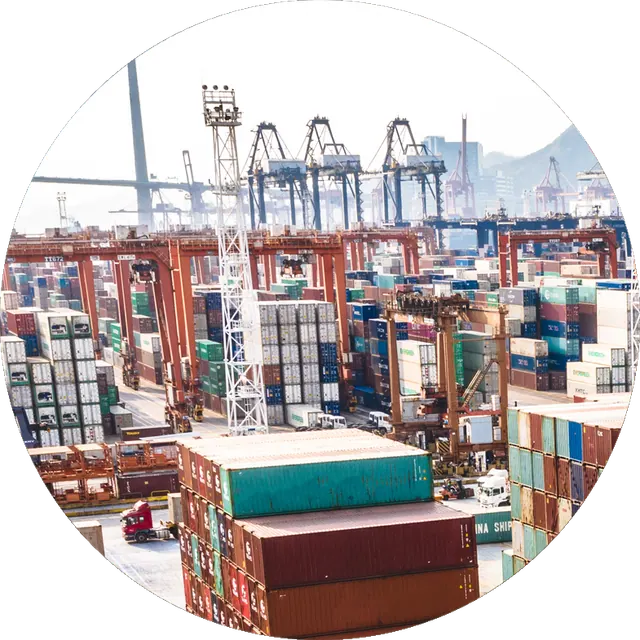
Ports & Stevedoring · New Zealand

Round-the-clock ports move on rested crews.

Crane, straddle and lashing crews work round-the-clock rotating and call-in shifts beside heavy moving plant, where a lapse in reaction or judgement can be fatal.

Regulation changed 9 Jul 2026Change coming 1 Apr 2027

Ports & Stevedoring workforce

Who this page covers

  • Bulk terminals - coal, iron ore, grain
  • Container parks and port logistics (also see Transport & Logistics)
  • Container terminals
  • Inland intermodal terminals
  • Port authorities and harbour operations
  • Ro-ro and automotive terminals
  • Stevedoring labour pools and casual waterfront workforce

Reg Watch

What’s changed, and what’s coming

Regulatory change that affects how you manage fatigue in ports & stevedoring: what has changed in the last 12 months, and what is on the way.

Recent changeFrom 9 July 2026

Applies across industries in New Zealand

The Health and Safety at Work Amendment Act 2026 became law on 9 July 2026. Your duties do not change until most of it commences on 1 April 2027, so use the lead time to evidence fatigue as a serious-harm risk.

Read the change

Upcoming changeExpected from 1 April 2027Within 12 months

From 1 April 2027 HSWA centres on 'critical risks', and following an approved code becomes deemed compliance. The 2024 code for loading and unloading cargo gets that safe-harbour status from commencement. Fatigue is not on the Schedule 1A list, so it counts only where likely to cause death or notifiable harm.

Regulatory changes checked as at 1 October 2026.

Regulation

Who regulates it, and what they expect

No New Zealand law sets fatigue rules for port work alone; fatigue sits inside your primary duty under the Health and Safety at Work Act 2015. Three sector instruments shape that duty on the wharf: the Approved Code of Practice for loading and unloading cargo at ports and on ships (2024), which lists fatigue as a hazard to assess; the ports industry's fatigue risk management system guidelines (2022); and Maritime NZ's 2026 position statement that operators follow those guidelines or an equivalent.

Regulated by
  • Maritime New ZealandMaritime NZ
  • WorkSafe New ZealandWorkSafe

Logos identify the regulator and don’t imply endorsement.

Who regulates it

Maritime New Zealand and WorkSafe New Zealand share health and safety regulation of ports under the Health and Safety at Work Act 2015, and Maritime New Zealand has set out its fatigue expectations of port and stevedoring operators in a 2026 position statement. The Port Health and Safety Leadership Group - ports, stevedores, unions and the regulator - wrote the sector's fatigue guidelines and cargo code.

Your obligations

Manage fatigue so far as is reasonably practicable across landside and marine roles. Maritime NZ's position is that port and stevedoring operators must manage fatigue as a system hazard and can meet that duty by following the ports fatigue guidelines or a method of an equivalent or higher standard: a fatigue policy, fatigue risk assessment of rosters and tasks, assurance, and training for workers and managers. Include fatigue in your cargo-operation risk assessment under the approved code. The guidelines are not law; the duty they describe is.

Consequences

Maritime NZ says it will examine fatigue controls on inspection and consider fatigue when it responds to events. Breaches of the primary duty are prosecuted in three offence tiers, and sentencing adds reparation for families and injured workers. In 2023 Port of Auckland was fined $561,000 after a lasher was killed by a falling container - a case with no fatigue finding. The approved code is admissible evidence of what was reasonably practicable.

Penalties

Maximum fines for an organisation are $500,000, $1.5 million and $3 million across the three offence tiers of the Health and Safety at Work Act 2015 - set in 2015, unindexed and unchanged in 2026. An officer faces $100,000, $300,000 or $600,000, with up to 5 years' imprisonment at the top tier. Reparation and the regulator's costs are ordered on top of any fine.

Sources: Health and Safety at Work Act 2015; Approved Code of Practice for loading and unloading cargo at ports and on ships (2024); Building a Fatigue Risk Management System: good practice guidelines for the ports industry (2022); Maritime NZ Position Statement PS 17 (2026).

Fatigue-critical roles

Where fatigue matters most in ports & stevedoring

The roles where a fatigued worker is most likely to cause serious harm, the tasks that carry the risk, and why fatigue builds up in them.

RoleRiskHigh-risk tasksWhy fatigue builds
Crane driver (STS)
Rules
Regulatory designation
None specific - general duty (HSWA s 36); ACOP loading and unloading cargo (2024); Maritime NZ PS 17 FRMS expectation
Hours and rest
None statutory; ERA 2000 rest and meal breaks
Critical riskLifting containers over lashers and the vessel from a cab about 40 m up on night shifts; repetitive cycle work; hatch-cover and twin liftsRotating day, evening and night shifts, short-notice call-ups and double shifts, isolated cab
Straddle driver
Rules
Regulatory designation
None specific - general duty (HSWA s 36); ACOP loading and unloading cargo (2024); Maritime NZ PS 17 FRMS expectation
Hours and rest
None statutory; ERA 2000 rest and meal breaks
High riskDriving straddle carriers or terminal tractors among people and machines at night; reach-stacker lifts in the stack; truck interchangeRotating shifts with nights, overtime, long periods of repetitive driving
Lasher / stevedore
Rules
Regulatory designation
None specific - general duty (HSWA s 36); ACOP loading and unloading cargo (2024); Maritime NZ PS 17 FRMS expectation
Hours and rest
None statutory; ERA 2000 rest and meal breaks
High riskLashing and unlashing containers on deck and in bays at night under suspended loads; climbing lashing bridges; twistlock handlingShort-notice shift allocation, nights and weekends, double shifts, outdoor work in weather
Hatchman / signaller
Rules
Regulatory designation
None specific - general duty (HSWA s 36); ACOP loading and unloading cargo (2024); Maritime NZ PS 17 FRMS expectation
Hours and rest
None statutory; ERA 2000 rest and meal breaks
High riskDirecting crane lifts by radio or hand signal where the operator cannot see; hatch-cover lifts; breakbulk slingingRotating shifts with nights, long periods standing at the hatch, weather
Linesman
Rules
Regulatory designation
None specific - general duty (HSWA s 36); ACOP loading and unloading cargo (2024); Maritime NZ PS 17 FRMS expectation
Hours and rest
None statutory; ERA 2000 rest and meal breaks
High riskHandling mooring lines during berthing and unberthing at night; working in snap-back zones; line-boat workOn-call call-outs to ship movements at any hour, broken sleep between movements, night jobs
Harbour control / VTS operator (port company)
Rules
Regulatory designation
None specific - general duty (HSWA s 36); ACOP loading and unloading cargo (2024); Maritime NZ PS 17 FRMS expectation
Hours and rest
None statutory; ERA 2000 rest and meal breaks
High riskMonitoring vessel traffic and issuing traffic information overnight; coordinating pilot boardings and berth movements; low-stimulus monitoring 02:00-06:0024/7 rotating shifts, night shifts, screen monotony

Stories

When fatigue made the record

Published findings and prosecutions from regulators, courts and investigators in New Zealand.

  • Dec 2024 · New Zealand

    Stevedoring firm entitled to bargain to scrap four-consecutive 12-hour shift limit; fatigue experts agree controls must come first

    • Legal

    During collective bargaining, a stevedoring contractor proposed replacing a rule requiring a 36-hour stand-down after four consecutive shifts (in practice a limit of four consecutive 12-hour shifts) with a fortnightly maximum of 108 hours; non-union staff had already agreed to weekly and fortnightly caps of 60 and 108 hours. The union argued this would force members to accept unsafe working hours, but the union's fatigue expert and the company's roster expert largely agreed that whether longer runs of shifts were safe could not be judged without seeing the fatigue controls. The Employment Relations Authority said it was not deciding whether the change was safe. It found the company was entitled to bargain for the change and had not breached good faith, assuming it would carefully analyse the fatigue effects and put controls in place.

    Case NZ-ports-04Report an issue

See all ports & stevedoring news

How the suite fits

How each product connects to your obligations

Grades describe how strongly a product connects to an obligation. None discharges an obligation, and none carries a compliance warranty.

Sleepfit

Supports your general duty of care

Section 36 of the Health and Safety at Work Act 2015 reaches fatigue, and the ports fatigue guidelines ask you to consider sleep disorders; no rule names a sleep screen. Sleepfit supports that duty. It screens; diagnosis stays with your clinicians.

About Sleepfit

Fatiguefit4Duty

Supports your general duty of care

Maritime NZ expects port operators to follow the ports fatigue guidelines or an equivalent, and those guidelines include worker self-assessment of fatigue; no rule requires it. Fatiguefit4Duty supports it. A fitness-for-duty check, not a fitness-for-duty decision - the duty call stays with you.

About Fatiguefit4Duty

Awareness eLearning

Supports your general duty of care

The ports fatigue guidelines, which Maritime NZ treats as the benchmark for your section 36 duty, include training on sleep loss and the body clock; they are guidance, not law. Awareness eLearning supplies that content; your training programme stays yours.

About Awareness eLearning

Was It Fatigue?

Supports your general duty of care

You must notify notifiable events under s 56 of the Health and Safety at Work Act 2015; the ports fatigue guidelines describe checking whether fatigue contributed. Was It Fatigue? supports that review. A structured judgement aid, not a determination of cause.

About Was It Fatigue?

SleepWellBaby

No New Zealand port rule reaches sleep in new-parent households. SleepWellBaby is offered to parents in your port workforce as a benefit that protects their own sleep, not as a compliance step.

About SleepWellBaby

Recommended bundle

Where we’d start in ports & stevedoring

Every bundle is priced on prevalence: your whole cohort gets access, and you pay for the share predicted to need each product. How pricing works.

Why this pairing in New Zealand

Maritime NZ treats the ports fatigue guidelines as the benchmark for your s 36 duty; they suggest self-assessment and training. Fatiguefit4Duty supports self-assessment, Awareness eLearning supplies training and Sleepfit screens. Fatigue Lifecycle adds incident review.

See what sleep and fatigue mean for your ports & stevedoring workforce.

Tell us roughly how many people you employ. Your snapshot models how many are likely sleeping poorly and what it costs, from published research for ports & stevedoring. Then choose who you’d cover, and we’ll take you to the right next step.

A sample workforce snapshot on a tablet: modelled sleep problems and the cost of poor sleep for 1,400 people in transport and logistics.