Ports & Stevedoring · Australia

Round-the-clock ports move on rested crews.

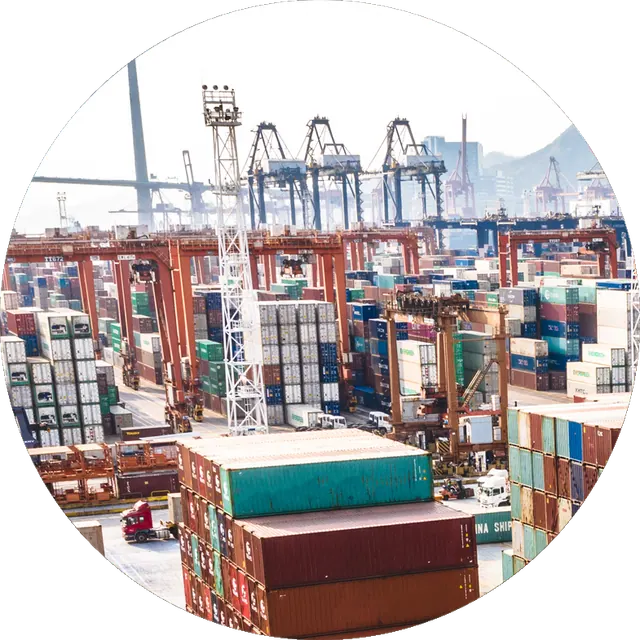
Crane, straddle and lashing crews work round-the-clock rotating and call-in shifts beside heavy moving plant, where a lapse in reaction or judgement can be fatal.

Varies by jurisdiction: New South Wales – Fatigue-regulated

Regulation changed 1 July 2026

Ports & Stevedoring workforce

Who this page covers

  • Bulk terminals - coal, iron ore, grain
  • Container parks and port logistics (also see Transport & Logistics)
  • Container terminals
  • Inland intermodal terminals
  • Port authorities and harbour operations
  • Ro-ro and automotive terminals
  • Stevedoring labour pools and casual waterfront workforce

Reg Watch

What’s changed, and what’s coming

Regulatory change that affects how you manage fatigue in ports & stevedoring: what has changed in the last 12 months, and what is on the way.

Recent changeFrom 1 July 2026

Applies across industries in Australia

From 1 July 2026 NSW requires you to follow approved codes, including the fatigue code, or manage risk to an equal or higher standard. Victoria's psychological health regulations apply from 1 December 2025.

Read the change

Upcoming changeNo date set yet

Safe Work Australia's Best Practice Review of the model WHS laws was due to go to WHS ministers in August 2026. It is not yet public and no amendments are proposed, so no change date is set.

Regulatory changes checked as at 1 October 2026.

Regulation

Who regulates it, and what they expect

No Australian law sets fatigue rules for the waterfront alone. Fatigue sits inside your general WHS duty. The Managing risks in stevedoring Code of Practice is approved in the Commonwealth, New South Wales, Queensland, Western Australia and Tasmania, and published by the Northern Territory and South Australian regulators; section 5.9 names fatigue and says a fatigue management plan may be developed. Victoria has no equivalent code. In New South Wales, from 1 July 2026, you must follow an approved code or manage the hazard to an equivalent or higher standard.

Regulated by
  • Safe Work AustraliaSWA

Logos identify the regulator and don’t imply endorsement.

Who regulates it

Your state or territory WHS regulator enforces the general duty and approved codes at your terminal: SafeWork NSW, WorkSafe Victoria, WorkSafe Queensland, WorkSafe WA, SafeWork SA, WorkSafe Tasmania, NT WorkSafe, or Comcare for Commonwealth licensees. The Australian Transport Safety Bureau investigates stevedore deaths on board ships, and the Fair Work Commission approves terminal enterprise agreements.

Your obligations

Manage fatigue so far as is reasonably practicable as part of your primary duty: identify it in the risk assessment for cargo operations and control it through shift rostering, breaks between shifts, double shifts and work in adverse weather. The stevedoring code expects adequate breaks between shifts and contemplates a fatigue management plan. Workers must cooperate with your fatigue and fitness-for-work policies, and the code says they should tell a supervisor when fatigued. Enterprise agreements add minimum breaks between shifts; they are agreements, not law.

Consequences

Breaches are prosecuted under the WHS Acts in three offence categories, and every jurisdiction has an industrial or workplace manslaughter offence where negligent conduct causes a death. An approved code is admissible in a prosecution as evidence of what was known and reasonably practicable; in New South Wales, from 1 July 2026, departing from it without an equivalent alternative is itself a breach an inspector can act on. A stevedore death on board a ship can also bring a public ATSB investigation.

Penalties

WHS maximums at 1 July 2025 levels, the latest Safe Work Australia table in force for 2026. Category 1, body corporate: $17,034,000 Cth, $11,150,183 NSW, $3,500,000 WA, $3,000,000 Qld, SA, Tas and NT. Individual as PCBU or officer: $3,407,000 Cth, $2,318,844 NSW, $680,000 WA, $600,000 Qld, SA, Tas and NT. Industrial manslaughter, body corporate: $20,000,000 NSW down to $10,000,000 Qld and WA.

Sources: Work Health and Safety Acts and Regulations; Managing risks in stevedoring Code of Practice (Safe Work Australia, 2016, as approved in each jurisdiction); model Code of Practice: Managing the risk of fatigue at work (2025); ATSB report MO-2012-010, Weaver Arrow.

Fatigue-critical roles

Where fatigue matters most in ports & stevedoring

The roles where a fatigued worker is most likely to cause serious harm, the tasks that carry the risk, and why fatigue builds up in them.

RoleRiskHigh-risk tasksWhy fatigue builds
Quay crane / STS crane driver
Rules
Regulatory designation
High risk work licence where the crane class needs one (WHS Regs Sch 3); general duty (WHS Act s 19); stevedoring code s 5.9
Hours and rest
Enterprise agreement rest terms (e.g. DP World Sydney EA 2024 cl 14.3: 10 h between shifts) - agreement, not law
Critical riskLifting containers over lashers and the vessel from a cab about 40 m up on night shifts; repetitive cycle work; hatch-cover and twin liftsRotating day, evening and night shifts, short-notice call-ups and double shifts, isolated cab
Straddle driver / reach-stacker operator
Rules
Regulatory designation
None specific - general duty (WHS Act s 19); Managing risks in stevedoring code s 5.9 (enforceable comply-or-equivalent in NSW from 1 Jul 2026)
Hours and rest
Enterprise agreement rest terms (e.g. DP World Sydney EA 2024 cl 14.3: 10 h between shifts) - agreement, not law
High riskDriving straddle carriers or terminal tractors among people and machines at night; reach-stacker lifts in the stack; truck interchangeRotating shifts with nights, overtime, long periods of repetitive driving
Lasher / stevedore (wharfie)
Rules
Regulatory designation
None specific - general duty (WHS Act s 19); Managing risks in stevedoring code s 5.9 (enforceable comply-or-equivalent in NSW from 1 Jul 2026)
Hours and rest
Enterprise agreement rest terms (e.g. DP World Sydney EA 2024 cl 14.3: 10 h between shifts) - agreement, not law
High riskLashing and unlashing containers on deck and in bays at night under suspended loads; climbing lashing bridges; twistlock handlingShort-notice shift allocation, nights and weekends, double shifts, outdoor work in weather
Dogman / hatchman
Rules
Regulatory designation
High risk work licence - dogging (WHS Regs Sch 3); general duty (WHS Act s 19)
Hours and rest
Enterprise agreement rest terms (e.g. DP World Sydney EA 2024 cl 14.3: 10 h between shifts) - agreement, not law
High riskDirecting crane lifts by radio or hand signal where the operator cannot see; hatch-cover lifts; breakbulk slingingRotating shifts with nights, long periods standing at the hatch, weather
Linesman / mooring line handler
Rules
Regulatory designation
None specific - general duty (WHS Act s 19); Managing risks in stevedoring code s 5.9 (enforceable comply-or-equivalent in NSW from 1 Jul 2026)
Hours and rest
Enterprise agreement rest terms (e.g. DP World Sydney EA 2024 cl 14.3: 10 h between shifts) - agreement, not law
High riskHandling mooring lines during berthing and unberthing at night; working in snap-back zones; line-boat workOn-call call-outs to ship movements at any hour, broken sleep between movements, night jobs
VTS operator (harbour control)
Rules
Regulatory designation
VTS operator (AMSA VTS framework under the Navigation Act 2012; IALA V-103 qualification)
Hours and rest
None statutory; WHS duty and port authority rostering
High riskMonitoring vessel traffic and issuing traffic information overnight; coordinating pilot boardings and berth movements; low-stimulus monitoring 02:00-06:0024/7 rotating shifts, night shifts, screen monotony

Stories

When fatigue made the record

Published findings and prosecutions from regulators, courts and investigators in Australia.

  • Nov 2016 · South Australia, Australia

    Grain terminal rosters a worker on his weekend off citing its fatigue policy: Commission rules the policy is a check, not a substitute for the agreed roster rules

    • Legal

    During the grain harvest, a grain terminal operator rostered a worker on his rostered weekend off, saying that using him helped manage the fatigue of other workers under its fatigue management policy. The Commission held that the policy is an important check on who can be given extra shifts, but it does not replace the agreement's selection rules, and on the evidence the policy would not have prevented other qualified operators from working that day.

    Case AU-ports-04Report an issue

See all ports & stevedoring news

How the suite fits

How each product connects to your obligations

Grades describe how strongly a product connects to an obligation. None discharges an obligation, and none carries a compliance warranty.

Sleepfit

Supports your general duty of care

No Australian rule names a sleep screen for port work; section 5.9 of the stevedoring code names fatigue but no screening. Sleepfit supports your primary duty, and the fatigue Code where approved, by measuring sleep obtained. It screens; diagnosis stays with your clinicians.

About Sleepfit

Fatiguefit4Duty

Supports your general duty of care

Section 5.9 of the stevedoring code expects workers to tell a supervisor when fatigued and to follow fitness-for-work policies; no rule names a check. Fatiguefit4Duty supports that. A fitness-for-duty check, not a fitness-for-duty decision - the duty call stays with you.

About Fatiguefit4Duty

Awareness eLearning

Supports your general duty of care

The stevedoring code's training section does not name fatigue; the fatigue Code, approved in New South Wales and the Northern Territory, expects fatigue training. Awareness eLearning supplies fatigue and sleep content; your training programme stays yours.

About Awareness eLearning

Was It Fatigue?

Supports your general duty of care

Your WHS notification duty names no cause, and no Australian rule requires a fatigue review after an incident at a terminal or on board. Was It Fatigue? supports your own investigation. A structured judgement aid, not a determination of cause.

About Was It Fatigue?

SleepWellBaby

No Australian rule reaches sleep in new-parent households on the waterfront. SleepWellBaby is offered to parents in your terminal workforce as a benefit that protects their own sleep, not as a compliance step.

About SleepWellBaby

Recommended bundle

Where we’d start in ports & stevedoring

Every bundle is priced on prevalence: your whole cohort gets access, and you pay for the share predicted to need each product. How pricing works.

Why this pairing in Australia

Section 5.9 of the stevedoring code expects workers to report fatigue; s 19 of the WHS Act names no tool. Fatiguefit4Duty supports that report with a point-of-duty check; Sleepfit screens crews; Awareness eLearning trains with a record. Fatigue Lifecycle adds incident review.

See what sleep and fatigue mean for your ports & stevedoring workforce.

Tell us roughly how many people you employ. Your snapshot models how many are likely sleeping poorly and what it costs, from published research for ports & stevedoring. Then choose who you’d cover, and we’ll take you to the right next step.

A sample workforce snapshot on a tablet: modelled sleep problems and the cost of poor sleep for 1,400 people in transport and logistics.