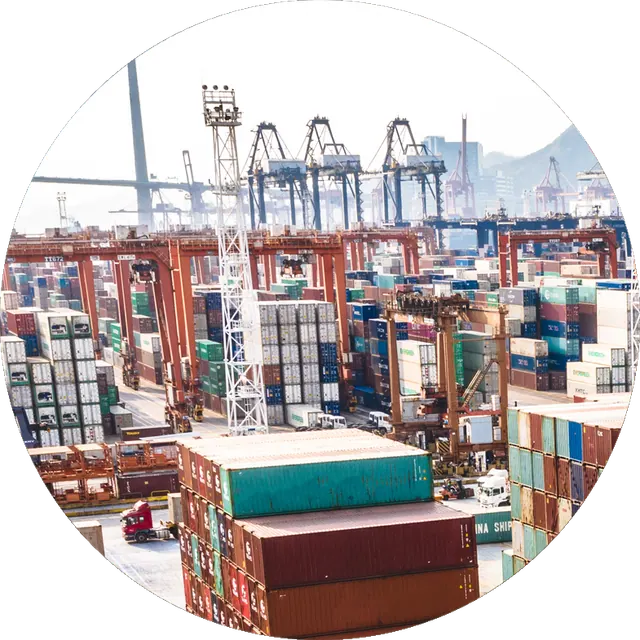
Crane, straddle and lashing crews work round-the-clock rotating and call-in shifts beside heavy moving plant, where a lapse in reaction or judgement can be fatal.
Stevedoring labour pools and casual waterfront workforce
Reg Watch
What’s changed, and what’s coming
Regulatory change that affects how you manage fatigue in ports & stevedoring: what has changed in the last 12 months, and what is on the way.
Upcoming changeExpected from 1 December 2026Within 12 months
From 1 Dec 2026 MOM makes four heat-stress measures mandatory for workers exposed to heat, including a heat-stress training programme, cool water and emergency cooling. The Workplace Fairness Act 2025 (covering disability and mental health conditions) is targeted to commence around end-2027.
Regulatory changes checked as at 1 October 2026.
Regulation
Who regulates it, and what they expect
No Singapore law sets fatigue rules for port terminal work. The Workplace Safety and Health Act 2006 requires you to keep workers safe so far as is reasonably practicable, and the Risk Management Regulations require you to assess and control the risks of cargo handling, crane and prime mover operations, including fatigue from round-the-clock shifts. The WSH Council and MOM fatigue management guidelines (2010) show how, but they are guidance.
Regulated by
MOM
Logos identify the regulator and don’t imply endorsement.
Who regulates it
The Ministry of Manpower enforces the Workplace Safety and Health Act 2006 at port terminals, with guidance from the Workplace Safety and Health Council. The Maritime and Port Authority of Singapore regulates the port, vessels and seafarers; each terminal employer owes the safety duties for cargo-handling work.
Your obligations
Conduct a risk assessment of your terminal operations, eliminate or minimise foreseeable risks, and review the assessment after any bodily injury and at least every three years. Give workers adequate instruction, information, training and supervision, and report incidents to MOM. For workmen on up to S$4,500 basic a month, the Employment Act caps work at 12 hours a day and overtime at 72 hours a month. MOM's fatigue guidelines recommend shifts of no more than 12 hours and fatigue reporting; they do not require them.
Consequences
WSH Act offences are criminal, and MOM can issue stop-work orders that halt terminal operations until risks are controlled. Since 1 June 2024, failing to conduct a risk assessment that is a major cause of serious harm carries a higher penalty. Employment Act hours breaches are separate offences. Work injury compensation is payable regardless of fault.
Penalties
WSH Act maximums in 2026: S$500,000 for a company and S$200,000 and/or two years' imprisonment for an individual, higher for repeat offenders; stop-work order breaches S$500,000 plus S$20,000 a day. Work injury compensation limits from 1 November 2025: S$91,000 to S$269,000 for death and S$116,000 to S$346,000 for permanent incapacity.
On the record
No Singapore court, coroner, investigator or regulator has published a finding linking fatigue to an incident in port and terminal work. MOM's 2010 fatigue management guidelines, confirmed current in January 2026, recommend fatigue reporting.
Sources: Workplace Safety and Health Act 2006, s 12; WSH (Risk Management) Regulations; WSH (Incident Reporting) Regulations; Employment Act 1968, Part IV; WSH Council and MOM, Fatigue Management Guidelines (2010).
Fatigue-critical roles
Where fatigue matters most in ports & stevedoring
The roles where a fatigued worker is most likely to cause serious harm, the tasks that carry the risk, and why fatigue builds up in them.
Crane operator under WSH (Operation of Cranes) Regs 2011; general duty (WSHA s 12)
Hours and rest
Employment Act Part IV: 12 h/day, 72 h OT/month within salary thresholds
Critical risk
Remotely operating automated quay cranes from a control room at Tuas or Pasir Panjang; supervising several cranes on night shifts
12 h rotating shifts in a 24/7 terminal, night shifts, screen-based monotony
Prime mover driver / automated yard crane operator (PSA)Rules
Regulatory designation
None specific - general duty (WSHA s 12); WSH (Risk Management) Regs reg 3
Hours and rest
Employment Act Part IV: 12 h/day, 72 h OT/month within salary thresholds
High risk
Driving straddle carriers or terminal tractors among people and machines at night; reach-stacker lifts in the stack; truck interchange
Rotating shifts with nights, overtime, long periods of repetitive driving
Lashing workerRules
Regulatory designation
None specific - general duty (WSHA s 12); WSH (Risk Management) Regs reg 3
Hours and rest
Employment Act Part IV: 12 h/day, 72 h OT/month within salary thresholds
High risk
Lashing and unlashing containers on deck and in bays at night under suspended loads; climbing lashing bridges; twistlock handling
Short-notice shift allocation, nights and weekends, double shifts, outdoor work in weather
Signalman (lifting team)Rules
Regulatory designation
Signalman in a lifting team (WSH (Operation of Cranes) Regs 2011)
Hours and rest
Employment Act Part IV: 12 h/day, 72 h OT/month within salary thresholds
High risk
Directing crane lifts by radio or hand signal where the operator cannot see; hatch-cover lifts; breakbulk slinging
Rotating shifts with nights, long periods standing at the hatch, weather
Mooring line handler / linesmanRules
Regulatory designation
None specific - general duty (WSHA s 12); WSH (Risk Management) Regs reg 3
Hours and rest
Employment Act Part IV: 12 h/day, 72 h OT/month within salary thresholds
High risk
Handling mooring lines during berthing and unberthing at night; working in snap-back zones; line-boat work
On-call call-outs to ship movements at any hour, broken sleep between movements, night jobs
VTS officer, Port Operations Control Centre (MPA)Rules
Regulatory designation
Statutory board employee (MPA); general duty (WSHA s 12)
Hours and rest
Internal MPA rostering
High risk
Monitoring vessel traffic and issuing traffic information overnight; coordinating pilot boardings and berth movements; low-stimulus monitoring 02:00-06:00
24/7 rotating shifts, night shifts, screen monotony
How the suite fits
How each product connects to your obligations
Grades describe how strongly a product connects to an obligation. None discharges an obligation, and none carries a compliance warranty.
Sleepfit
Supports your general duty of care
Sleepfit screens sleep health across your terminal crews, supporting the risk assessment reg 3 of the WSH (Risk Management) Regulations requires you to conduct. No Singapore rule names a sleep screen. It screens; diagnosis stays with your clinicians.
Fatiguefit4Duty records a point-of-duty fatigue check for your quay crane and prime mover operators, supporting your duty under s 12(1) of the WSH Act. No Singapore rule names the check. A fitness-for-duty check, not a fitness-for-duty decision - the duty call stays with you.
Awareness eLearning gives your terminal crews recorded fatigue education, supporting your duty under s 12(3)(e) of the WSH Act to provide adequate instruction, information and training. MOM's fatigue guidelines recommend it; no rule names it.
Was It Fatigue? structures a fatigue review after a terminal incident, supporting the risk assessment review reg 7 of the Risk Management Regulations requires after an injury. Reporting rules name no cause. A structured judgement aid, not a determination of cause.
SleepWellBaby supports parents among your terminal crews through the most broken months of infant sleep. No Singapore rule reaches sleep in new-parent households; it is offered as a benefit.
No Singapore port rule names a fatigue tool, so this supports your WSH Act s 12 duty. Sleepfit screens your crane operators, Fatiguefit4Duty adds a point-of-duty check and Awareness eLearning trains with a record. Fatigue Lifecycle adds Was It Fatigue? for the reg 7 review.
See what sleep and fatigue mean for your ports & stevedoring workforce.
Tell us roughly how many people you employ. Your snapshot models how many are likely sleeping poorly and what it costs, from published research for ports & stevedoring. Then choose who you’d cover, and we’ll take you to the right next step.