Ports & Stevedoring · United Kingdom

Round-the-clock ports move on rested crews.

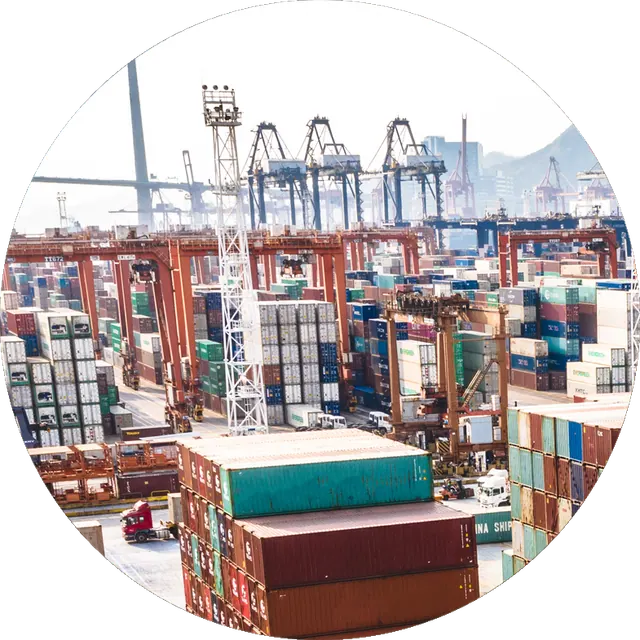
Crane, straddle and lashing crews work round-the-clock rotating and call-in shifts beside heavy moving plant, where a lapse in reaction or judgement can be fatal.

Regulation changed 6 Apr 2026Change coming 30 Oct 2026

Ports & Stevedoring workforce

Who this page covers

  • Bulk terminals - coal, iron ore, grain
  • Container parks and port logistics (also see Transport & Logistics)
  • Container terminals
  • Inland intermodal terminals
  • Port authorities and harbour operations
  • Ro-ro and automotive terminals
  • Stevedoring labour pools and casual waterfront workforce

Reg Watch

What’s changed, and what’s coming

Regulatory change that affects how you manage fatigue in ports & stevedoring: what has changed in the last 12 months, and what is on the way.

Recent changeFrom 6 April 2026

Applies across industries in the United Kingdom

In Great Britain, from 6 Apr 2026 sick pay is due from the first day of sickness and you must keep holiday records for 6 years; from 1 Oct 2026 most tribunal claims can be brought up to 6 months after the event.

Read the change


Upcoming changeExpected from 30 October 2026Within 12 months

From October 2026 (expected 30 Oct) you must take all reasonable steps to prevent sexual harassment of staff, including by customers and other third parties. From 1 Jan 2027 unfair dismissal protection starts after 6 months' service. Guaranteed hours and shift-notice rights for zero-hours workers are listed for 2027, timing to follow consultation.

Regulatory changes checked as at 1 October 2026.

Regulation

Who regulates it, and what they expect

No UK law sets fatigue rules for dock work alone: the Docks Regulations 1988 were revoked in April 2014. Your duty is the general duty under the Health and Safety at Work etc. Act 1974 and a suitable and sufficient risk assessment, read with HSE's Safety in docks Approved Code of Practice (L148). Working-time law applies to dock workers, including the free health assessment you must offer night workers, which reaches crews on regular night shifts at a round-the-clock terminal.

Regulated by
  • Health and Safety ExecutiveHSE

Logos identify the regulator and don’t imply endorsement.

Who regulates it

The Health and Safety Executive enforces health and safety at docks in Great Britain and approved the Safety in docks Approved Code of Practice (L148). The Employment Tribunal enforces working-time rights, including the night-worker health assessment. Port Skills and Safety, the ports industry body, publishes sector guidance that is not law.

Your obligations

Ensure health and safety so far as is reasonably practicable and risk-assess fatigue where shift patterns make it foreseeable. Under the L148 code, keep authorised drivers and lifting-equipment operators under review so they remain fit and competent, and treat anyone impaired by alcohol or drugs as unfit; its guidance adds monitoring working hours and fatigue, including for labour-supplied workers. Offer night workers a free health assessment before night work and at regular intervals, and keep to the working-time limits, some of which dock work may vary with compensatory rest.

Consequences

HSE can serve improvement and prohibition notices, recover its costs, and prosecute the organisation and, where a breach arose through their consent, connivance or neglect, directors and managers, who face up to two years' imprisonment. A failure to follow L148 is admissible in a prosecution and leaves you to show you complied another way. Night-worker and rest claims go to the Employment Tribunal, and injured workers sue in negligence.

Penalties

HSE charges £188 an hour from 1 April 2026 for its time once it finds a material breach. Fines follow the sentencing guideline in force since 2016 and still applied in 2026, scaled to turnover: at the worst culpability and harm, a £4 million starting point and a £2.6m-£10m range at turnover of £50m or more, and courts go above that range for very large organisations. Directors and managers face up to two years' imprisonment.

Sources: Health and Safety at Work etc. Act 1974; Management of Health and Safety at Work Regulations 1999; Working Time Regulations 1998, reg 7; HSE, Safety in docks Approved Code of Practice (L148, 2014); HSE, Managing shift work (HSG256).

Fatigue-critical roles

Where fatigue matters most in ports & stevedoring

The roles where a fatigued worker is most likely to cause serious harm, the tasks that carry the risk, and why fatigue builds up in them.

RoleRiskHigh-risk tasksWhy fatigue builds
Crane driver (quay crane)
Rules
Regulatory designation
Authorised operator monitored for fitness (HSE L148 ACOP paras 103-105); night worker (WTR 1998 reg 2)
Hours and rest
WTR 1998: 48 h average (opt-out possible); docks derogation from rest rules with compensatory rest; reg 7 night health assessment
Critical riskLifting containers over lashers and the vessel from a cab about 40 m up on night shifts; repetitive cycle work; hatch-cover and twin liftsRotating day, evening and night shifts, short-notice call-ups and double shifts, isolated cab
Straddle carrier driver / RTG operator
Rules
Regulatory designation
Authorised driver monitored for fitness (HSE L148 ACOP paras 103-105); night worker (WTR reg 2)
Hours and rest
WTR 1998: 48 h average (opt-out possible); docks derogation from rest rules with compensatory rest; reg 7 night health assessment
High riskDriving straddle carriers or terminal tractors among people and machines at night; reach-stacker lifts in the stack; truck interchangeRotating shifts with nights, overtime, long periods of repetitive driving
Docker / lasher
Rules
Regulatory designation
Night worker (WTR 1998 reg 2); dock work under HSE L148 ACOP
Hours and rest
WTR 1998: 48 h average (opt-out possible); docks derogation from rest rules with compensatory rest; reg 7 night health assessment
High riskLashing and unlashing containers on deck and in bays at night under suspended loads; climbing lashing bridges; twistlock handlingShort-notice shift allocation, nights and weekends, double shifts, outdoor work in weather
Signaller / banksman (hatchman)
Rules
Regulatory designation
Night worker (WTR 1998 reg 2); dock work under HSE L148 ACOP
Hours and rest
WTR 1998: 48 h average (opt-out possible); docks derogation from rest rules with compensatory rest; reg 7 night health assessment
High riskDirecting crane lifts by radio or hand signal where the operator cannot see; hatch-cover lifts; breakbulk slingingRotating shifts with nights, long periods standing at the hatch, weather
Mooring boatman / linesman
Rules
Regulatory designation
Night worker (WTR 1998 reg 2); dock work under HSE L148 ACOP
Hours and rest
WTR 1998: 48 h average (opt-out possible); docks derogation from rest rules with compensatory rest; reg 7 night health assessment
High riskHandling mooring lines during berthing and unberthing at night; working in snap-back zones; line-boat workOn-call call-outs to ship movements at any hour, broken sleep between movements, night jobs
VTS officer (harbour authority)
Rules
Regulatory designation
VTS operator (MCA-accredited, IALA V-103); night worker (WTR reg 2)
Hours and rest
WTR 1998: 48 h average (opt-out possible); docks derogation from rest rules with compensatory rest; reg 7 night health assessment
High riskMonitoring vessel traffic and issuing traffic information overnight; coordinating pilot boardings and berth movements; low-stimulus monitoring 02:00-06:0024/7 rotating shifts, night shifts, screen monotony

Stories

When fatigue made the record

Published findings and prosecutions from regulators, courts and investigators in the United Kingdom.

Oct 2022 · England, United Kingdom

Tanker damages estuary jetty under severely fatigued port pilot

  • Safety

A chemical tanker, under the conduct of a port authority pilot, struck a jetty in a river estuary and grounded; the jetty was severely damaged and took 11 months to recover. The Marine Accident Investigation Branch found the pilot was highly likely to have been severely fatigued.

Case UK-ports-01Report an issue

See all ports & stevedoring news

How the suite fits

How each product connects to your obligations

Grades describe how strongly a product connects to an obligation. None discharges an obligation, and none carries a compliance warranty.

Sleepfit

Supports a named obligation

Regulation 7 of the Working Time Regulations 1998 says you must offer night workers on your terminal a free health assessment before night work and at regular intervals. Sleepfit supports it. It screens; diagnosis stays with your clinicians.

About Sleepfit

Fatiguefit4Duty

Supports your general duty of care

The Safety in docks code (L148) expects authorised drivers and lifting-equipment operators to be monitored so they remain fit; it names no fatigue check. Fatiguefit4Duty supports that. A fitness-for-duty check, not a fitness-for-duty decision - the duty call stays with you.

About Fatiguefit4Duty

Awareness eLearning

Supports your general duty of care

Section 2(2)(c) of the Health and Safety at Work etc. Act 1974 and regulation 13 of the 1999 Management Regulations require training but do not name fatigue. Awareness eLearning supplies fatigue and sleep content for dock crews and supervisors.

About Awareness eLearning

Was It Fatigue?

Supports your general duty of care

RIDDOR 2013 requires you to report specified dock incidents but names no cause, and no UK rule requires a fatigue review. Was It Fatigue? supports your own investigation. A structured judgement aid, not a determination of cause.

About Was It Fatigue?

SleepWellBaby

No UK rule reaches sleep in new-parent households in port work. SleepWellBaby supports your working parents through the most disrupted period of their own sleep, as a wellbeing benefit, not a compliance step.

About SleepWellBaby

Recommended bundle

Where we’d start in ports & stevedoring

Every bundle is priced on prevalence: your whole cohort gets access, and you pay for the share predicted to need each product. How pricing works.

Why this pairing in the United Kingdom

WTR 1998 reg 7 requires a free health assessment for your night terminal staff; Sleepfit screening supports it. The docks code (L148) suggests monitoring operators' fitness; Fatiguefit4Duty supports that. Awareness eLearning trains. Fatigue Lifecycle adds incident review.

See what sleep and fatigue mean for your ports & stevedoring workforce.

Tell us roughly how many people you employ. Your snapshot models how many are likely sleeping poorly and what it costs, from published research for ports & stevedoring. Then choose who you’d cover, and we’ll take you to the right next step.

A sample workforce snapshot on a tablet: modelled sleep problems and the cost of poor sleep for 1,400 people in transport and logistics.