Warehousing & Distribution · Singapore

Warehousing runs through the night. Sleep keeps the floor moving.

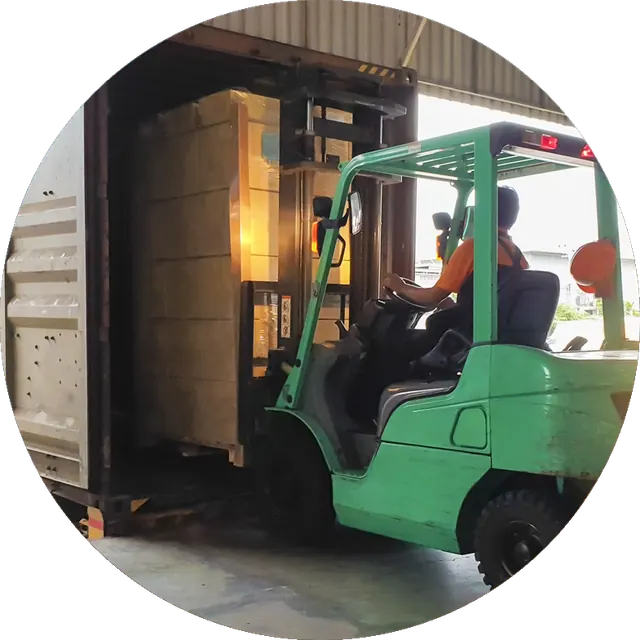
Distribution centres run night and rotating shifts with repetitive picking, packing and forklift work. Fatigue raises the risk of forklift and vehicle incidents, injuries and picking errors.

Warehousing & Distribution workforce

Who this page covers

  • Cold storage
  • E-commerce fulfilment centres
  • Grain storage and receival
  • Parcel sortation hubs
  • Supermarket and retail distribution centres
  • Third-party logistics warehouses
  • Wholesale distribution - grocery and pharmaceutical

Reg Watch

What’s changed, and what’s coming

Regulatory change that affects how you manage fatigue in warehousing & distribution: what has changed in the last 12 months, and what is on the way.

Upcoming changeExpected from 2027

A tripartite review of the Employment Act, including Part IV hours coverage, is due to report in 2H 2026; any change needs new legislation. The Workplace Fairness Act 2025 (covering disability and mental health conditions) is targeted to commence around end-2027.

Regulatory changes checked as at 1 October 2026.

Regulation

Who regulates it, and what they expect

Warehousing has no fatigue rule beyond the baseline and no rule on algorithm-driven scheduling; the Platform Workers Act 2024 covers ride-hail and delivery platform workers, not warehouse staff. Two baseline points bind tightly: most floor work is manual, so work injury insurance is compulsory whatever the pay, and many operatives earn within the Employment Act thresholds, so the hours caps apply.

Regulated by
  • Ministry of ManpowerMOM

Logos identify the regulator and don’t imply endorsement.

Who regulates it

Warehousing has no sector regulator for working conditions. MOM enforces the baseline safety and employment law, including rules on forklift operation and manual handling.

Your obligations

Baseline duties apply: keep staff safe and assess the risks of the work, including forklift operation, manual handling and night shifts; insure all manual workers for work injury regardless of pay; and apply Employment Act caps - 12 hours a day, 72 hours' overtime a month, a weekly rest day of 30 continuous hours for shift workers - to staff within the salary thresholds.

Consequences

Baseline penalties apply: WSH Act fines of up to S$500,000 for a company and S$200,000 and/or two years' jail for an individual (WSH Act maxima, 2026); since 1 June 2024, up to S$50,000 for failing to conduct a risk assessment that is a major cause of serious harm; and Employment Act hours breaches of up to S$5,000 per offence.

Penalties

Baseline figures apply. Work injury compensation limits rose on 1 November 2025, to up to S$346,000 for permanent incapacity and S$53,000 for medical expenses - the exposure for forklift and handling injuries.

On the record

No Singapore court, coroner, investigator or regulator has published a finding linking fatigue to an incident in warehousing. Fatigue risk still falls under the Workplace Safety and Health Act duty and MOM's fatigue management guidelines.

Sources: Workplace Safety and Health Act 2006; Employment Act 1968, Part IV; Work Injury Compensation Act 2019; Platform Workers Act 2024.

Fatigue-critical roles

Where fatigue matters most in warehousing & distribution

The roles where a fatigued worker is most likely to cause serious harm, the tasks that carry the risk, and why fatigue builds up in them.

RoleRiskHigh-risk tasksWhy fatigue builds
Delivery driver
Rules
Regulatory designation
None specific - no driving-hours statute (MOT reply 12 Sep 2022); general duty (WSHA s 12)
Hours and rest
Employment Act Part IV only (covered bands); MOM worker-lorry rule: 30 min rest after 6 h site work for dual-role drivers
Critical riskOvernight linehaul between DCs and early-morning store deliveries, reversing into store docks, manual unloading at the end of a long shiftOvernight runs, early starts (03:00-05:00), multi-drop schedules
Forklift driver
Rules
Regulatory designation
None specific - general duty (WSHA s 12); MOM-accredited forklift course
Hours and rest
Employment Act Part IV (covered pay bands): 12 h/day cap, 72 OT h/month, weekly rest day
High riskHigh-bay reach truck and order-picker work at height overnight, loading trailers at docks, travelling in aisles shared with pickersNight and rotating shifts in DCs running 24/7, peak-season overtime, rate-based targets
Warehouse assistant / picker
Rules
Regulatory designation
None specific - general duty (WSHA 2006 s 12)
Hours and rest
Employment Act Part IV (covered pay bands): 12 h/day cap, 72 OT h/month, weekly rest day
High riskPick-to-light and voice picking at rate, team lifts, working beside powered pallet jacks and conveyors overnightFixed nights or rotating shifts, algorithmic rate targets, peak-season overtime, long commutes
Prime mover yard driver / dock loader
Rules
Regulatory designation
None specific - general duty (WSHA 2006 s 12)
Hours and rest
Employment Act Part IV (covered pay bands): 12 h/day cap, 72 OT h/month, weekly rest day
High riskCoupling and uncoupling trailers, reversing to docks in the dark, trailer creep and drive-away incidents at the dock edge, loading at speedNight and weekend shifts, continuous short shunts, time pressure from linehaul departures
Maintenance technician
Rules
Regulatory designation
None specific - general duty (WSHA 2006 s 12)
Hours and rest
Employment Act Part IV (covered pay bands): 12 h/day cap, 72 OT h/month, weekly rest day
High riskClearing faults inside AS/RS, sorter and conveyor systems under lock-out overnight, working at height on mezzanines, electrical fault-findingNight cover so automation runs 24/7, call-outs and peak-season overtime

How the suite fits

How each product connects to your obligations

Grades describe how strongly a product connects to an obligation. None discharges an obligation, and none carries a compliance warranty.

Sleepfit

Supports your general duty of care

Sleepfit screens sleep health across your warehouse staff, supporting the risk assessment reg 3 of the WSH (Risk Management) Regulations requires you to conduct. No Singapore rule names a sleep screen. It screens; diagnosis stays with your clinicians.

About Sleepfit

Fatiguefit4Duty

Supports your general duty of care

Fatiguefit4Duty records a point-of-duty fatigue check for your forklift and reach-truck operators, supporting your duty under s 12(1) of the WSH Act. No Singapore rule names the check. A fitness-for-duty check, not a fitness-for-duty decision - the duty call stays with you.

About Fatiguefit4Duty

Awareness eLearning

Supports your general duty of care

Awareness eLearning gives your warehouse staff recorded fatigue education, supporting your general duty under s 12(3)(e) of the WSH Act to provide adequate instruction, information and training. MOM's fatigue guidelines recommend it; no rule names it.

About Awareness eLearning

Was It Fatigue?

Supports your general duty of care

Was It Fatigue? structures a fatigue review after an incident, supporting the risk assessment review reg 7 of the Risk Management Regulations requires after an injury. Reporting rules name no cause. A structured judgement aid, not a determination of cause.

About Was It Fatigue?

SleepWellBaby

SleepWellBaby supports parents among your warehouse staff through the most broken months of infant sleep. No Singapore rule reaches sleep in new-parent households; it is offered as a benefit.

About SleepWellBaby

Recommended bundle

Where we’d start in warehousing & distribution

Every bundle is priced on prevalence: your whole cohort gets access, and you pay for the share predicted to need each product. How pricing works.

Recommended · Levels 2 and 3

Shift Worker Bundle

Sleep screening and a point-of-duty check for the workers who need it most.

Why this pairing in Singapore

No Singapore rule names a fatigue tool, so this supports your WSH Act 2006 s 12 duty and reg 3 risk assessment. Sleepfit screens your forklift operators for sleep disorders; Fatiguefit4Duty adds a point-of-duty self-check. Prevention adds Awareness eLearning with a completion record.

See what sleep and fatigue mean for your warehousing & distribution workforce.

Tell us roughly how many people you employ. Your snapshot models how many are likely sleeping poorly and what it costs, from published research for warehousing & distribution. Then choose who you’d cover, and we’ll take you to the right next step.

A sample workforce snapshot on a tablet: modelled sleep problems and the cost of poor sleep for 1,400 people in transport and logistics.