Warehousing & Distribution · United States

Warehousing runs through the night. Sleep keeps the floor moving.

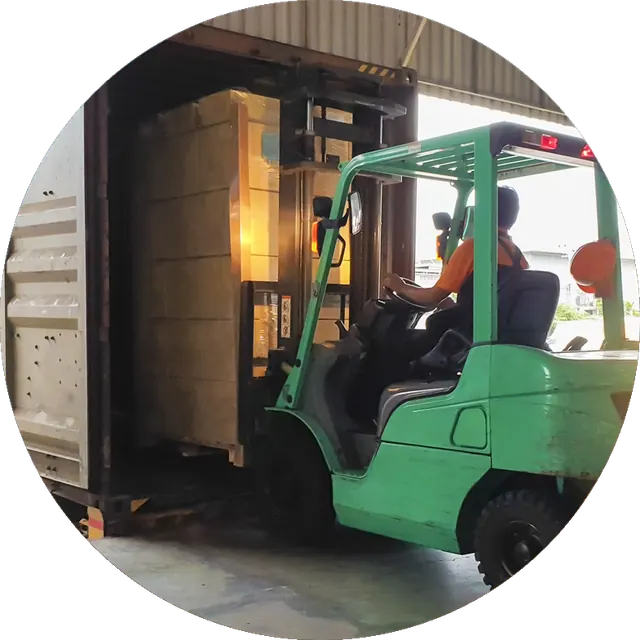
Distribution centers run night and rotating shifts with repetitive picking, packing and forklift work. Fatigue raises the risk of forklift and vehicle incidents, injuries and picking errors.

Change coming Oct 2027

Warehousing & Distribution workforce

Who this page covers

  • Cold storage
  • E-commerce fulfilment centers
  • Grain storage and receival
  • Parcel sortation hubs
  • Supermarket and retail distribution centers
  • Third-party logistics warehouses
  • Wholesale distribution - grocery and pharmaceutical

Reg Watch

What’s changed, and what’s coming

Regulatory change that affects how you manage fatigue in warehousing & distribution: what has changed in the last 12 months, and what is on the way.

Upcoming changeExpected from October 2027Within 12 months

OSHA's heat injury and illness standard, proposed August 2024, is still a proposal: a supplemental proposal is projected for December 2026 and final action for October 2027, with no compliance date set. Colorado must publish a model heat and cold illness prevention plan by 1 July 2028 (a model, not yet an employer duty), and Virginia's Safety and Health Codes Board must adopt heat illness rules by 1 May 2028.

Regulatory changes checked as at November 2, 2026.

Regulation

Who regulates it, and what they expect

There is no national warehouse fatigue or work-pace law, and no federal quota rule. Five states now regulate warehouse quotas: California, New York, Minnesota, Washington and Oregon. They work the same way. They do not cap hours. They ban a quota that stops a worker taking a meal or rest break, using the bathroom or following safety law, and they require the quota to be given in writing. Thresholds vary, typically 100 or 250 employees at one site or 1,000 in the state. Minnesota also requires a written ergonomics program, and New York an injury reduction program.

Regulated by
  • Occupational Safety and Health AdministrationOSHA

Logos identify the regulator and don’t imply endorsement.

Who regulates it

California's Labor Commissioner, the New York Department of Labor and Washington's Department of Labor and Industries each enforce their own state warehouse quota law. Minnesota's Department of Labor and Industry enforces a separate warehouse ergonomics rule. Federal OSHA covers everything else and runs a standing national emphasis program aimed specifically at warehousing and distribution center operations.

Your obligations

If you run a covered warehouse in California, New York, Minnesota, Washington or Oregon, you cannot set a quota that prevents a worker taking a meal, rest or prayer break, using the bathroom, or complying with health and safety law, and you must give each worker the quota in plain language and in writing. Workers can ask for their own work speed data, and you must provide it, along with peer data in some states. New York requires a written injury reduction program from June 2025 and Minnesota a written ergonomics program. Everywhere else the federal safety and disability baseline applies.

Consequences

In California the Labor Commissioner issues citations and workers can sue directly, with the penalty counted per worker per pay period, which is how quota cases reach seven figures. New York's Department of Labor assesses civil penalties and the Attorney General can act separately. Nationally, warehousing and distribution sits under an OSHA national emphasis program, so inspections are programmed rather than complaint-driven, and inspectors must consider ergonomic and heat hazards whenever they see them.

Penalties

California's quota penalty starts at $100 per violation, counted per worker per pay period, so exposure scales with headcount and duration rather than severity. The other quota states set their own schedules. Outside quota claims the federal ceiling is $16,550 for a serious violation and $165,514 for a willful or repeat one, both 2025 levels carried into 2026.

Sources: California Labor Code sections 2100 to 2112 and the Labor Commissioner's June 2024 Amazon citation; New York's Warehouse Worker Protection Act; Washington's 2023 warehouse employee law; Minnesota Statutes section 182.677; OSHA's warehousing national emphasis program.

Fatigue-critical roles

Where fatigue matters most in warehousing & distribution

The roles where a fatigued worker is most likely to cause serious harm, the tasks that carry the risk, and why fatigue builds up in them.

RoleRiskHigh-risk tasksWhy fatigue builds
Delivery / linehaul driver
Rules
Regulatory designation
CDL driver performing safety-sensitive functions (49 CFR 382.107); carrier must not permit fatigued driving (49 CFR 392.3)
Hours and rest
49 CFR 395.3: 11 h driving after 10 h off, 14 h window, 60/70 h in 7/8 days; short-haul 395.1(e)
Critical riskOvernight linehaul between DCs and early-morning store deliveries, reversing into store docks, manual unloading at the end of a long shiftOvernight runs, early starts (03:00-05:00), multi-drop schedules
Forklift / reach truck operator
Rules
Regulatory designation
Powered industrial truck operator, trained and evaluated (29 CFR 1910.178(l))
Hours and rest
No federal hours cap for adults; FLSA prices overtime only
High riskHigh-bay reach truck and order-picker work at height overnight, loading trailers at docks, traveling in aisles shared with pickersNight and rotating shifts in DCs running 24/7, peak-season overtime, rate-based targets
Warehouse associate (picker / packer)
Rules
Regulatory designation
None specific - general duty (OSH Act s 5(a)(1)); California warehouse quota law (Cal. Labor Code ss 2100-2112) where covered
Hours and rest
No federal cap; Cal. Labor Code s 2100+: quotas may not prevent meal/rest breaks
High riskPick-to-light and voice picking at rate, team lifts, working beside powered pallet jacks and conveyors overnightFixed nights or rotating shifts, algorithmic rate targets, peak-season overtime, long commutes
Yard jockey / dock worker
Rules
Regulatory designation
None specific - general duty (OSH Act s 5(a)(1))
Hours and rest
No federal hours cap for adults; FLSA prices overtime only
High riskCoupling and uncoupling trailers, reversing to docks in the dark, trailer creep and drive-away incidents at the dock edge, loading at speedNight and weekend shifts, continuous short shunts, time pressure from linehaul departures
Maintenance technician (MHE)
Rules
Regulatory designation
None specific - general duty (OSH Act s 5(a)(1))
Hours and rest
No federal hours cap for adults; FLSA prices overtime only
High riskClearing faults inside AS/RS, sorter and conveyor systems under lock-out overnight, working at height on mezzanines, electrical fault-findingNight cover so automation runs 24/7, call-outs and peak-season overtime

Seasonal fatigue risk

When fatigue risk rises in warehousing & distribution.

Season alone moves fatigue risk modestly. The sharper effects come from specific weeks and workloads. These are the periods that matter for warehousing & distribution in the United States in 2027, including the ones that affect every workforce.

  1. 14 Mar · Measured

    Clocks spring forward

    Fatal crashes up about 6% the following week; mining injuries up 5.7% the next Monday

  2. Jun to Aug · Measured

    Hottest nights, longest days

    Warm nights and long days shorten sleep

  3. Jul · Documented

    Prime Day

    Serious injuries up 48% week on week at one employer

  4. 7 Nov · Measured

    Clocks go back

    No net change in crash risk; pedestrian risk rises in dark evenings

  5. Nov to Dec · Documented

    Peak trading season

    Overtime and new starters

Measured: a published study found a change in sleep, injuries or crashes. Documented: a recorded change in workload or exposure, such as overtime or deployments. Dates are for 2027 and move each year. Our reading of published evidence, refreshed every November.

Stories

When fatigue made the record

Published findings and prosecutions from regulators, courts and investigators in the United States.

  • Feb 2013 · Virginia, United States

    Distribution center analyst with sleep apnea removed after repeated desk sleeping; employers need not let staff sleep as an accommodation

    • Legal

    An inventory analyst at a Virginia state distribution center had sleep apnea and was adjusting to a new CPAP mask, with her provider warning she might have daytime fatigue and sleepiness. Over more than a year she was repeatedly warned about falling asleep at her desk, encouraged to see her provider, and offered active duties in the warehouse to stay awake. After she was seen asleep for 1 to 5 minutes after lunch, she was removed, and the hearing officer upheld the removal, holding that agencies are not obliged to let employees sleep as an accommodation for sleep apnea.

    Case US-warehousing-01Report an issue

See all warehousing & distribution news

How the platform fits

How each product connects to your obligations

Grades describe how strongly a product connects to an obligation. None discharges an obligation, and none carries a compliance warranty.

Sleepfit

Supports your general duty of care

No US warehouse rule requires sleep-health checks. Sleepfit supports the recognized-hazard case under s 5(a)(1) of the OSH Act for night and rotating rosters, run as a voluntary, confidential program. It identifies employees who may benefit from clinical evaluation; diagnosis stays with your clinicians.

About Sleepfit

Fatiguefit4Duty

Supports your general duty of care

Quota law asks whether your targets stop someone taking a break. It does not ask about fatigue, and no state law does. Fatiguefit4Duty supports the safety case your general duty of care rests on.

About Fatiguefit4Duty

Awareness eLearning

Supports your general duty of care

No state or federal warehouse rule names fatigue training, and the quota laws are silent on it. Awareness eLearning supplies fatigue and sleep content with a completion record, supporting your general duty case for night supervisors.

About Awareness eLearning

Was It Fatigue?

Supports your general duty of care

Federal rules make you record the injury, not work out why it happened, and fatigue is never named. Was It Fatigue? supports a cause analysis that includes fatigue in a high-throughput site.

About Was It Fatigue?

SleepWellBaby

Nothing in warehouse quota law or federal safety law reaches sleep in new-parent households. SleepWellBaby supports parents working nights and rotating shifts; it is offered as a wellbeing benefit, not a compliance step.

About SleepWellBaby

Level 4: fatigue-related errors

When fatigue gets through, catch the error.

Level 4 controls trap or detect fatigue-related errors before they cause harm. They are designed into equipment, tasks and procedures by others: we don’t supply or endorse them, and we can point you to providers. These are the types that apply in warehousing & distribution.

  • Detect fatigue in the task

    In-cab fatigue and distraction detection

    A camera watches the operator's eyes, gaze and head position and alerts them, and often a monitoring center, at signs of drowsiness or distraction.

    What it doesn’t do: It reacts once impairment shows; it does not predict fatigue, measure sleep or fix rosters.

    Examples: Road freight and buses: in-cab cameras with 24/7 monitoring. Mining: haul-truck operator monitoring. Warehousing: forklift kits.

  • Trap the error

    Collision avoidance for mobile plant

    Detects nearby vehicles and people and warns, advises or automatically slows or stops the machine.

    What it doesn’t do: It traps the interaction, not the impairment, and does not replace site design or other controls.

    Examples: Mining: proximity detection on haul trucks and underground machines. Ports and construction: people-and-plant separation.

  • Procedural cross-check

    Two-person checks

    A second qualified person checks critical actions so one tired person's slip is caught.

    What it doesn’t do: Both people may be fatigued on the same roster, so it relies on fatigue-aware rostering behind it.

    Examples: Rail: two-person crews and call-outs. Aviation: two-pilot cross-checks. Utilities: switching verification. Hospitals: double checks.

  • Remove exposure

    Scheduling critical tasks away from the early-morning low

    Moves the highest-risk tasks out of the early-morning hours when errors are most likely.

    What it doesn’t do: It reduces exposure but does not trap the error; it depends on planners knowing when fatigue peaks.

    Examples: Maintenance: critical work scheduled off night shift. Hospitals: elective procedures in daytime.

Most of the evidence for fatigue-detection technology comes from the vendors themselves. Ask for independent evaluation before you rely on it.

In warehousing & distribution and related industries, trusted by

See what sleep and fatigue mean for your warehousing & distribution workforce.

Tell us roughly how many people you employ. Your snapshot models how many are likely sleeping poorly and what it costs, from published research for warehousing & distribution. Then tell us what you want to focus on, and we’ll show you how open access would work for you, and what it would cost.

A sample workforce snapshot on a tablet: modeled sleep problems and the cost of poor sleep for 1,400 people in transport and logistics.