Warehousing & Distribution · New Zealand

Warehousing runs through the night. Sleep keeps the floor moving.

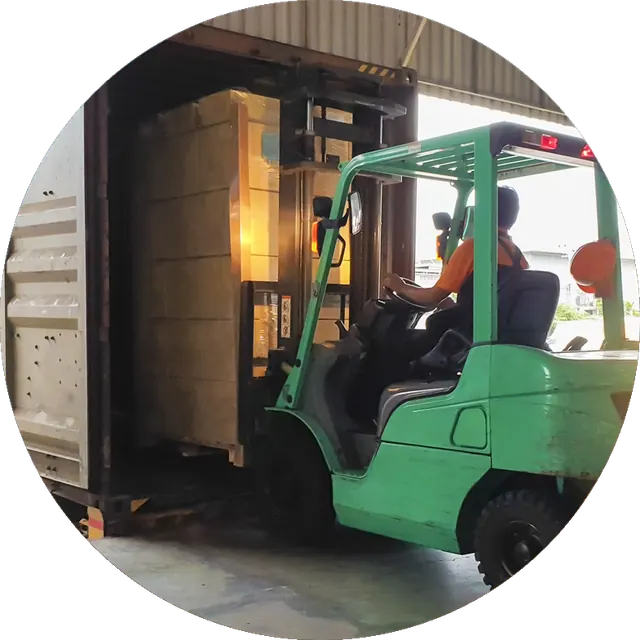
Distribution centres run night and rotating shifts with repetitive picking, packing and forklift work. Fatigue raises the risk of forklift and vehicle incidents, injuries and picking errors.

Regulation changed 9 Jul 2026Change coming 1 Apr 2027

Warehousing & Distribution workforce

Who this page covers

  • Cold storage
  • E-commerce fulfilment centres
  • Grain storage and receival
  • Parcel sortation hubs
  • Supermarket and retail distribution centres
  • Third-party logistics warehouses
  • Wholesale distribution - grocery and pharmaceutical

Reg Watch

What’s changed, and what’s coming

Regulatory change that affects how you manage fatigue in warehousing & distribution: what has changed in the last 12 months, and what is on the way.

Recent changeFrom 9 July 2026

Applies across industries in New Zealand

The Health and Safety at Work Amendment Act 2026 became law on 9 July 2026. Your duties do not change until most of it commences on 1 April 2027, so use the lead time to evidence fatigue as a serious-harm risk.

Read the change

Upcoming changeExpected from 1 April 2027Within 12 months

From 1 April 2027 HSWA centres on 'critical risks'; fatigue is not on the Schedule 1A list, so it counts only where likely to cause death or notifiable harm. Where the Land Transport Act manages the same risk, complying with it can satisfy the matching HSWA duty. Small firms (under 20 workers) manage critical risks only.

Regulatory changes checked as at 1 October 2026.

Regulation

Who regulates it, and what they expect

There is no warehousing-specific fatigue law in New Zealand, and nothing here regulates productivity quotas or algorithm-driven pace of work the way some overseas jurisdictions have begun to. Warehouse fatigue sits under the general duty to control foreseeable risks. One statutory limit does reach into the warehouse: staff who also drive heavy goods vehicles are covered by the transport work time rules, and the hours they spend loading, unloading and on paperwork count towards those limits before they get behind the wheel.

Regulated by
  • WorkSafe New ZealandWorkSafe

Logos identify the regulator and don’t imply endorsement.

Who regulates it

There is no warehousing-specific safety regulator in New Zealand. Warehouse employers answer to the same bodies as any other business - WorkSafe New Zealand for safety, the Human Rights Commission for discrimination, employment authorities for hours and rest breaks, and ACC for injury compensation. Where staff drive heavy vehicles, the NZ Transport Agency's work time and logbook rules apply as well, enforced by Police.

Your obligations

Warehouse and distribution employers must manage fatigue as a foreseeable safety risk - night picking and packing, peak-season overtime, and forklift and machinery work where a tired operator is a real hazard. There are no warehouse-specific hour limits. But if your staff also drive heavy goods vehicles, the transport work time rules bind them and you: a maximum 13-hour cumulative work day, a 30-minute break after five and a half hours, at least 10 hours continuous rest, and no more than 70 hours before a 24-hour break. Loading, unloading, cleaning and admin all count as work time.

Consequences

For warehouse work, a fatigue-related incident is judged against the general duty: was the risk foreseeable, and what did you do about it. WorkSafe can issue improvement and prohibition notices and prosecute the company and its directors personally, and courts fix compensation to the injured worker or family before setting a fine. Where staff drive heavy vehicles, work time and logbook breaches are enforced separately again, against the driver and the operator, so rostering someone into a shift that leaves no room for their required rest is the operator's problem as much as the driver's.

Penalties

Health and Safety at Work Act 2015 maximums, unchanged since 2015 and current in August 2026: reckless exposure to a risk of death or serious injury - $3,000,000 for a company, $600,000 and up to five years' prison for an officer, $300,000 for a worker; without recklessness - $1,500,000/$300,000/$150,000; other breaches - $500,000/$100,000/$50,000. Courts fix reparation to the victim or family before the fine, often exceeding it. Work time breaches are fined separately.

Sources: Health and Safety at Work Act 2015; WorkSafe New Zealand fatigue and shift-work guidance; Land Transport Rule: Work Time and Logbooks 2007; WorkSafe New Zealand v Michael Vining Contracting Ltd [2018] NZDC 6971.

Fatigue-critical roles

Where fatigue matters most in warehousing & distribution

The roles where a fatigued worker is most likely to cause serious harm, the tasks that carry the risk, and why fatigue builds up in them.

RoleRiskHigh-risk tasksWhy fatigue builds
Linehaul / delivery driver
Rules
Regulatory designation
Driver of a work-time vehicle (Land Transport Rule: Work Time and Logbooks 2007)
Hours and rest
Work Time Rule: 30 min break after 5.5 h; max 13 h work per cumulative work day; 10 h continuous rest; 70 h then 24 h off
Critical riskOvernight linehaul between DCs and early-morning store deliveries, reversing into store docks, manual unloading at the end of a long shiftOvernight runs, early starts (03:00-05:00), multi-drop schedules
Forklift operator
Rules
Regulatory designation
None specific - general duty (HSWA s 36); F endorsement only if driven on a road
Hours and rest
No statutory maximum; ERA 2000 ss 69ZD-69ZE rest and meal breaks
High riskHigh-bay reach truck and order-picker work at height overnight, loading trailers at docks, travelling in aisles shared with pickersNight and rotating shifts in DCs running 24/7, peak-season overtime, rate-based targets
Storeperson / picker
Rules
Regulatory designation
None specific - general duty (HSWA 2015 s 36; fatigue named in s 16 'hazard')
Hours and rest
No statutory maximum; ERA 2000 ss 69ZD-69ZE rest and meal breaks
High riskPick-to-light and voice picking at rate, team lifts, working beside powered pallet jacks and conveyors overnightFixed nights or rotating shifts, algorithmic rate targets, peak-season overtime, long commutes
Yard shunter / dock hand
Rules
Regulatory designation
None specific - general duty (HSWA 2015 s 36; fatigue named in s 16 'hazard')
Hours and rest
No statutory maximum; ERA 2000 ss 69ZD-69ZE rest and meal breaks
High riskCoupling and uncoupling trailers, reversing to docks in the dark, trailer creep and drive-away incidents at the dock edge, loading at speedNight and weekend shifts, continuous short shunts, time pressure from linehaul departures
Maintenance technician
Rules
Regulatory designation
None specific - general duty (HSWA 2015 s 36; fatigue named in s 16 'hazard')
Hours and rest
No statutory maximum; ERA 2000 ss 69ZD-69ZE rest and meal breaks
High riskClearing faults inside AS/RS, sorter and conveyor systems under lock-out overnight, working at height on mezzanines, electrical fault-findingNight cover so automation runs 24/7, call-outs and peak-season overtime

Stories

When fatigue made the record

Published findings and prosecutions from regulators, courts and investigators in New Zealand.

Jan 2012 · Canterbury, New Zealand

Forklift driver found asleep twice on parked forklift; dismissal unjustified as medical cause not ruled out

  • Legal
  • Financial

A long-serving forklift driver in a fresh produce company's inwards goods store was found asleep on his parked forklift twice in one shift, once slumped over the wheel so that a colleague first feared he was dead, and went home saying his diabetes was playing up. An occupational physician noted a disordered sleep pattern but no barrier to safe forklift work, and the company then dismissed him for sleeping on the job. The Employment Relations Authority held the dismissal unjustified because the company could not properly rule out his medical conditions as the cause without further inquiry, and awarded three months' wages and NZ$12,000 compensation.

Case NZ-warehousing-01Report an issue

See all warehousing & distribution news

How the suite fits

How each product connects to your obligations

Grades describe how strongly a product connects to an obligation. None discharges an obligation, and none carries a compliance warranty.

Sleepfit

Supports your general duty of care

No New Zealand warehousing and distribution rule names a sleep screen. Section 36(3)(g) of the Health and Safety at Work Act 2015 requires you to monitor worker health, and Sleepfit supports that for night-shift and driving staff. It screens; diagnosis stays with your clinicians.

About Sleepfit

Fatiguefit4Duty

Supports your general duty of care

Your s 36 duty reaches fatigue, which s 16 of the Health and Safety at Work Act 2015 names as a source of hazard; the Work Time and Logbooks Rule only limits driving hours. A fitness-for-duty check, not a fitness-for-duty decision - the duty call stays with you.

About Fatiguefit4Duty

Awareness eLearning

Supports your general duty of care

Section 36(3)(f) of the Health and Safety at Work Act 2015 requires the training needed to protect workers but does not name fatigue. Awareness eLearning supports it with fatigue and sleep content for night-shift and driving staff.

About Awareness eLearning

Was It Fatigue?

Supports your general duty of care

You must notify WorkSafe of a notifiable event under s 56 of the Health and Safety at Work Act 2015; no New Zealand warehousing and distribution rule requires you to assess fatigue. A structured judgement aid, not a determination of cause.

About Was It Fatigue?

SleepWellBaby

No New Zealand warehousing and distribution rule reaches sleep in new-parent households. SleepWellBaby is offered to parents of infants in your workforce as a benefit that protects their own sleep, not as a compliance step.

About SleepWellBaby

Recommended bundle

Where we’d start in warehousing & distribution

Every bundle is priced on prevalence: your whole cohort gets access, and you pay for the share predicted to need each product. How pricing works.

Recommended · Levels 2 and 3

Shift Worker Bundle

Sleep screening and a point-of-duty check for the workers who need it most.

Why this pairing in New Zealand

HSWA 2015 s 36 reaches fatigue, a hazard under s 16, but names no tool. Sleepfit screens your night-shift staff for sleep disorders, supporting s 36(3)(g) health monitoring; Fatiguefit4Duty adds a point-of-duty self-check. Prevention adds Awareness eLearning with a completion record.

See what sleep and fatigue mean for your warehousing & distribution workforce.

Tell us roughly how many people you employ. Your snapshot models how many are likely sleeping poorly and what it costs, from published research for warehousing & distribution. Then choose who you’d cover, and we’ll take you to the right next step.

A sample workforce snapshot on a tablet: modelled sleep problems and the cost of poor sleep for 1,400 people in transport and logistics.