Warehousing & Distribution · United Kingdom

Warehousing runs through the night. Sleep keeps the floor moving.

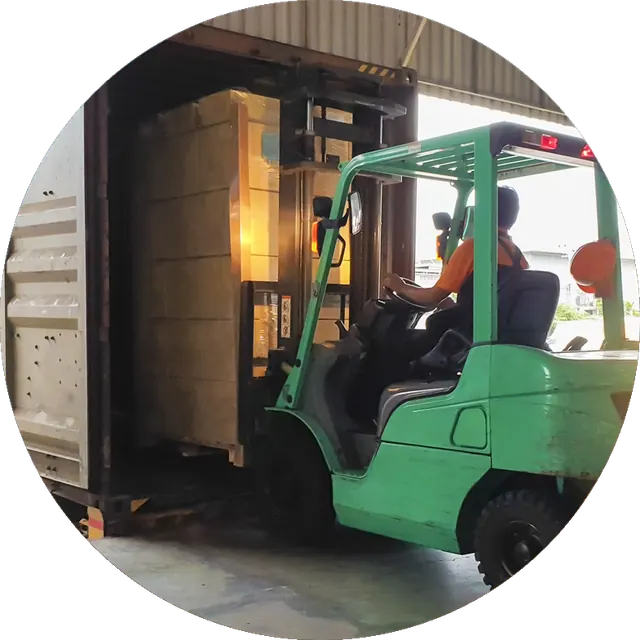
Distribution centres run night and rotating shifts with repetitive picking, packing and forklift work. Fatigue raises the risk of forklift and vehicle incidents, injuries and picking errors.

Regulation changed 6 Apr 2026Change coming 30 Oct 2026

Warehousing & Distribution workforce

Who this page covers

  • Cold storage
  • E-commerce fulfilment centres
  • Grain storage and receival
  • Parcel sortation hubs
  • Supermarket and retail distribution centres
  • Third-party logistics warehouses
  • Wholesale distribution - grocery and pharmaceutical

Reg Watch

What’s changed, and what’s coming

Regulatory change that affects how you manage fatigue in warehousing & distribution: what has changed in the last 12 months, and what is on the way.

Recent changeFrom 6 April 2026

Applies across industries in the United Kingdom

In Great Britain, from 6 Apr 2026 sick pay is due from the first day of sickness and you must keep holiday records for 6 years; from 1 Oct 2026 most tribunal claims can be brought up to 6 months after the event.

Read the change

Upcoming changeExpected from 30 October 2026Within 12 months

From October 2026 (expected 30 Oct) you must take all reasonable steps to prevent sexual harassment of staff, including by customers and other third parties. From 1 Jan 2027 unfair dismissal protection starts after 6 months' service. Guaranteed hours and shift-notice rights for zero-hours workers are listed for 2027, timing to follow consultation.

Regulatory changes checked as at 1 October 2026.

Regulation

Who regulates it, and what they expect

No UK law regulates warehouse work rates, pick quotas or algorithmic pacing, and none is in prospect: the Employment Rights Act 2025 contains nothing on algorithmic management, and warehousing has no equivalent of the hours rules that bind drivers. Your obligations are the general ones - control fatigue as a hazard, meet the working time limits, make reasonable adjustments. Data protection law adds one narrow right: where a decision with significant effect, such as dismissal, is taken by an algorithm alone, the worker can require human involvement. That governs decisions, not pace or hours.

Regulated by
  • Health and Safety ExecutiveHSE

Logos identify the regulator and don’t imply endorsement.

Who regulates it

There's no dedicated warehousing fatigue regulator in the UK. Warehouse workers are covered by the same bodies as any employee: the Health and Safety Executive, Employment Tribunals, and civil courts/insurance. Where an employer uses algorithms to monitor pace or make dismissal decisions, the privacy regulator (ICO) also has a role - but that's a general data-protection rule, not warehouse-specific.

Your obligations

Warehouse employers follow the general rules: control fatigue as a hazard, including fatigue from high-intensity, target-driven and night work; meet the 48-hour average week with the individual opt-out, daily and weekly rest, in-shift breaks and night worker health assessments; and make reasonable adjustments where a sleep disorder amounts to a disability. HSE is explicit that complying with the Working Time Regulations alone does not meet the fatigue duty. If an algorithm alone takes a decision with significant effect on a worker, such as dismissal, data protection law requires that they can ask for human involvement.

Consequences

A fatigue-related failure in a warehouse is enforced as a breach of the general duty to control a foreseeable risk: improvement or prohibition notices, recovery of HSE's investigation time, and prosecution. Rate and quota design is not itself unlawful, but it becomes evidence - if targets set the pace and fatigue was never assessed, that goes to culpability as well as harm. Managers can be prosecuted personally for neglect. Workers can bring hours, rest break and disability claims in an Employment Tribunal, and misuse of automated decision-making is separately enforceable by the Information Commissioner.

Penalties

HSE prosecutes under the Health and Safety at Work etc. Act 1974, sentenced on the Sentencing Council's 2016 guideline: fines banded by turnover - micro under £2m, small £2m-£10m, medium £10m-£50m, large above £50m - and by culpability and harm. At the top band a large organisation starts at £4m, range £2.6m-£10m, higher again for very large turnovers. Crown Court fines are unlimited; individuals face up to 2 years in prison. HSE also charges £188 an hour to investigate.

On the record

No UK court, coroner, investigator or regulator has published a finding linking fatigue to an incident in warehousing. The duty to manage fatigue still sits within the general duties of the Health and Safety at Work etc. Act 1974.

Sources: Health and Safety at Work etc. Act 1974; Working Time Regulations 1998; Employment Rights Act 2025; UK GDPR and Data Protection Act 2018 automated decision-making rules; HSE fatigue guidance; Sentencing Council guideline (2016); Eyres v Atkinsons Kitchens [2007] EWCA Civ 365.

Fatigue-critical roles

Where fatigue matters most in warehousing & distribution

The roles where a fatigued worker is most likely to cause serious harm, the tasks that carry the risk, and why fatigue builds up in them.

RoleRiskHigh-risk tasksWhy fatigue builds
HGV driver (trunking / store delivery)
Rules
Regulatory designation
Driver in scope of assimilated Reg 561/2006 and RT(WT) Regs 2005 (mobile worker), or GB domestic drivers' hours
Hours and rest
EU/AETR: 9 h driving (10 h twice weekly), 45 min break after 4.5 h, 11 h daily rest; GB domestic: 10 h driving, 11 h duty
Critical riskOvernight linehaul between DCs and early-morning store deliveries, reversing into store docks, manual unloading at the end of a long shiftOvernight runs, early starts (03:00-05:00), multi-drop schedules
FLT / reach truck driver
Rules
Regulatory designation
Lift truck operator - adequate training (PUWER 1998 reg 9; ACOP L117); night worker (WTR 1998 reg 2) - free health assessment, reg 7
Hours and rest
WTR 1998: 48 h avg (opt-out allowed), 11 h daily rest, night work avg 8 h in 24 (reg 6)
High riskHigh-bay reach truck and order-picker work at height overnight, loading trailers at docks, travelling in aisles shared with pickersNight and rotating shifts in DCs running 24/7, peak-season overtime, rate-based targets
Warehouse operative (picker / packer)
Rules
Regulatory designation
Night worker (WTR 1998 reg 2) - free health assessment, reg 7
Hours and rest
WTR 1998: 48 h avg (opt-out allowed), 11 h daily rest, night work avg 8 h in 24 (reg 6)
High riskPick-to-light and voice picking at rate, team lifts, working beside powered pallet jacks and conveyors overnightFixed nights or rotating shifts, algorithmic rate targets, peak-season overtime, long commutes
Shunter / goods-in operative
Rules
Regulatory designation
Night worker (WTR 1998 reg 2) - free health assessment, reg 7
Hours and rest
WTR 1998: 48 h avg (opt-out allowed), 11 h daily rest, night work avg 8 h in 24 (reg 6)
High riskCoupling and uncoupling trailers, reversing to docks in the dark, trailer creep and drive-away incidents at the dock edge, loading at speedNight and weekend shifts, continuous short shunts, time pressure from linehaul departures
MHE engineer
Rules
Regulatory designation
Night worker (WTR 1998 reg 2) - free health assessment, reg 7
Hours and rest
WTR 1998: 48 h avg (opt-out allowed), 11 h daily rest, night work avg 8 h in 24 (reg 6)
High riskClearing faults inside AS/RS, sorter and conveyor systems under lock-out overnight, working at height on mezzanines, electrical fault-findingNight cover so automation runs 24/7, call-outs and peak-season overtime

How the suite fits

How each product connects to your obligations

Grades describe how strongly a product connects to an obligation. None discharges an obligation, and none carries a compliance warranty.

Sleepfit

Supports a named obligation

Where your warehouse staff work nights, regulation 7 of the Working Time Regulations 1998 says you must offer a free health assessment before night work starts and at regular intervals. Sleepfit supports it. It screens; diagnosis stays with your clinicians.

About Sleepfit

Fatiguefit4Duty

Supports your general duty of care

No UK rule names a pre-duty fitness check for warehousing and distribution. Fatiguefit4Duty supports your general duty under s 2 of the Health and Safety at Work etc. Act 1974. A fitness-for-duty check, not a fitness-for-duty decision - the duty call stays with you.

About Fatiguefit4Duty

Awareness eLearning

Supports your general duty of care

Awareness eLearning supports the training you must give under s 2(2)(c) of the Health and Safety at Work etc. Act 1974 and regulation 13 of the 1999 Management Regulations with fatigue and sleep content. No UK rule names fatigue training for warehousing and distribution.

About Awareness eLearning

Was It Fatigue?

Supports your general duty of care

RIDDOR 2013 requires you to report and record specified incidents in warehousing and distribution but names no cause, and no fatigue review is required. Was It Fatigue? supports your own investigation. A structured judgement aid, not a determination of cause.

About Was It Fatigue?

SleepWellBaby

No UK rule reaches sleep in new-parent households in warehousing and distribution. SleepWellBaby supports your working parents through the most disrupted period of their own sleep; it is offered as a wellbeing benefit, not a compliance step.

About SleepWellBaby

Recommended bundle

Where we’d start in warehousing & distribution

Every bundle is priced on prevalence: your whole cohort gets access, and you pay for the share predicted to need each product. How pricing works.

Alternative · Levels 2 and 3

Shift Worker Bundle

Sleep screening and a point-of-duty check for the workers who need it most.

Why this pairing in the United Kingdom

Working Time Regulations 1998 reg 7 requires a free health assessment for your night warehouse staff; Sleepfit screening supports it. Fatiguefit4Duty adds a pre-shift check and Awareness eLearning trains under HSWA 1974 s 2(2)(c). Shift worker is the lighter option.

See what sleep and fatigue mean for your warehousing & distribution workforce.

Tell us roughly how many people you employ. Your snapshot models how many are likely sleeping poorly and what it costs, from published research for warehousing & distribution. Then choose who you’d cover, and we’ll take you to the right next step.

A sample workforce snapshot on a tablet: modelled sleep problems and the cost of poor sleep for 1,400 people in transport and logistics.