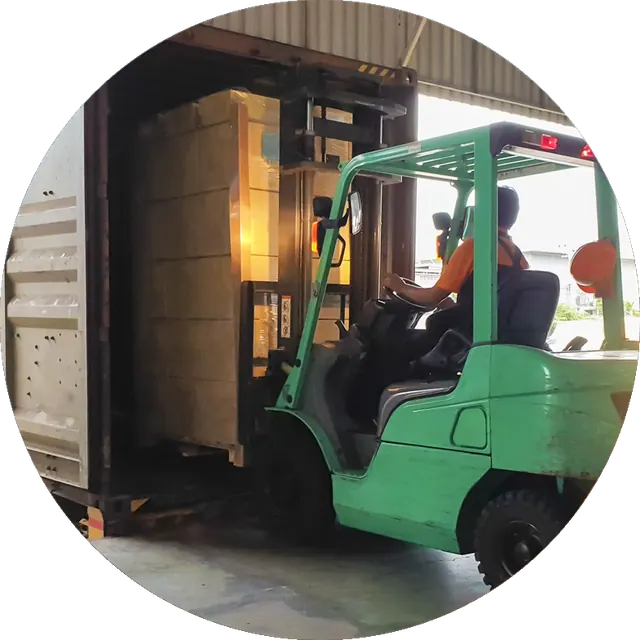
Warehousing & Distribution · Australia

Warehousing runs through the night. Sleep keeps the floor moving.

Distribution centres run night and rotating shifts with repetitive picking, packing and forklift work. Fatigue raises the risk of forklift and vehicle incidents, injuries and picking errors.

Regulation changed 1 Aug 2026

Warehousing & Distribution workforce

Who this page covers

  • Cold storage
  • E-commerce fulfilment centres
  • Grain storage and receival
  • Parcel sortation hubs
  • Supermarket and retail distribution centres
  • Third-party logistics warehouses
  • Wholesale distribution - grocery and pharmaceutical

Reg Watch

What’s changed, and what’s coming

Regulatory change that affects how you manage fatigue in warehousing & distribution: what has changed in the last 12 months, and what is on the way.

Recent changeFrom 1 August 2026

Specific to warehousing & distribution

If you load, unload or consign heavy vehicles, the amended HVNL from 1 August 2026 applies to your chain role and bars drivers from driving while unfit, including fatigued. NSW codes are enforceable from 1 July 2026.

Read the change

Upcoming changeNo date set yet

Safe Work Australia's Best Practice Review of the model WHS laws was due to go to WHS ministers in August 2026. It is not yet public and no amendments are proposed, so no change date is set.

Regulatory changes checked as at 1 October 2026.

Regulation

Who regulates it, and what they expect

Australia has no warehouse quota or work-pace law and nothing that regulates productivity targets in a distribution centre. Your fatigue obligation is the general work health and safety duty: identify what your rosters, night work and peak seasons do to people, and control it so far as is reasonably practicable. In New South Wales the September 2025 fatigue code of practice has been approved, and from 1 July 2026 an approved code is enforceable there. Separately, if your site loads, packs, consigns or dispatches heavy vehicles, you are a party in the heavy vehicle chain of responsibility.

Regulated by
  • Safe Work AustraliaSWA

Logos identify the regulator and don’t imply endorsement.

Who regulates it

Your state work health and safety regulator enforces fatigue duties in the warehouse. The Fair Work Ombudsman enforces the breaks and overtime set by the Storage Services and Wholesale Award. Where heavy vehicles are loaded or dispatched from your site, the National Heavy Vehicle Regulator can reach your business, everywhere except Western Australia and the Northern Territory. There is no dedicated warehouse regulator.

Your obligations

Manage fatigue as a workplace hazard: assess what night shifts, rotating rosters and peak-season overtime do to pickers, packers and forklift operators, and control it so far as is reasonably practicable. Give the meal break of 30 to 60 minutes after no more than 5 hours and the two paid 10-minute rest breaks the Storage Services and Wholesale Award sets, and release a worker who has had fewer than 10 hours between finishing overtime and starting the next day. If you load, pack, consign or dispatch heavy vehicles, your schedules must not force a driver into a fatigue breach.

Consequences

A fatigue-related incident is investigated by your state work health and safety regulator, which can issue improvement and prohibition notices, stop an operation on the spot and prosecute, with the top tier reaching millions for a company and industrial manslaughter available in every jurisdiction. In New South Wales, from 1 July 2026 you must either follow the approved fatigue code or manage the hazard to an equivalent or higher standard. Missing award breaks is pursued separately by the Fair Work Ombudsman. And your loading dock's schedule can put your business, not just the carrier, in front of the heavy vehicle regulator.

Penalties

There is no warehouse-specific fatigue penalty. Exposure sits in the work health and safety ladder, where each jurisdiction sets and indexes its own maximum: at 1 July 2026 levels a category 1 offence runs to $17,728,000 for a Commonwealth body corporate and $3,000,000 in Queensland, South Australia, Tasmania and the Northern Territory. Chain of responsibility breaches carry their own penalties, applied to your business as a party in the chain.

Sources: Your state's Work Health and Safety Act and Regulations; Safe Work Australia's model Code of Practice: Managing the risk of fatigue at work (September 2025) and state approved-code lists; the Storage Services and Wholesale Award 2020; the Heavy Vehicle National Law.

Fatigue-critical roles

Where fatigue matters most in warehousing & distribution

The roles where a fatigued worker is most likely to cause serious harm, the tasks that carry the risk, and why fatigue builds up in them.

RoleRiskHigh-risk tasksWhy fatigue builds
Linehaul / delivery driver
Rules
Regulatory designation
Fatigue-regulated heavy vehicle driver (HVNL s 7, GVM > 12 t); WA: commercial vehicle driver (WHS (General) Regs 2022 Pt 4.10); DC is a chain-of-responsibility party (HVNL)
Hours and rest
HVNL standard hours (solo truck): max 12 h work and min 7 h continuous stationary rest in any 24 h; BFM/AFM by accreditation
Critical riskOvernight linehaul between DCs and early-morning store deliveries, reversing into store docks, manual unloading at the end of a long shiftOvernight runs, early starts (03:00-05:00), multi-drop schedules
Forklift / reach truck driver
Rules
Regulatory designation
High risk work licence holder - forklift LF/LO (WHS Regs reg 81, Sch 3)
Hours and rest
No statutory cap: FW Act s 62 (38 h + reasonable additional hours); award or EA rest terms
High riskHigh-bay reach truck and order-picker work at height overnight, loading trailers at docks, travelling in aisles shared with pickersNight and rotating shifts in DCs running 24/7, peak-season overtime, rate-based targets
Storeperson / picker-packer
Rules
Regulatory designation
None specific - general duty (WHS Act s 19; WHS Regs psychosocial hazards incl. fatigue)
Hours and rest
No statutory cap: FW Act s 62 (38 h + reasonable additional hours); award or EA rest terms
High riskPick-to-light and voice picking at rate, team lifts, working beside powered pallet jacks and conveyors overnightFixed nights or rotating shifts, algorithmic rate targets, peak-season overtime, long commutes
Yard shunter / dock hand
Rules
Regulatory designation
None specific - general duty (WHS Act s 19; WHS Regs psychosocial hazards incl. fatigue); off-road yard tractors sit outside HVNL hours; loading duties are chain-of-responsibility functions (HVNL s 26C)
Hours and rest
No statutory cap: FW Act s 62 (38 h + reasonable additional hours); award or EA rest terms
High riskCoupling and uncoupling trailers, reversing to docks in the dark, trailer creep and drive-away incidents at the dock edge, loading at speedNight and weekend shifts, continuous short shunts, time pressure from linehaul departures
Maintenance technician (materials handling)
Rules
Regulatory designation
None specific - general duty (WHS Act s 19; WHS Regs psychosocial hazards incl. fatigue); licensed electrician (state licence)
Hours and rest
No statutory cap: FW Act s 62 (38 h + reasonable additional hours); award or EA rest terms
High riskClearing faults inside AS/RS, sorter and conveyor systems under lock-out overnight, working at height on mezzanines, electrical fault-findingNight cover so automation runs 24/7, call-outs and peak-season overtime

Stories

When fatigue made the record

Published findings and prosecutions from regulators, courts and investigators in Australia.

July 2024 · Victoria, Australia

Commission rules 12-hour fatigue break applies after overtime at a cold storage warehouse

  • Legal

A union took a dispute to the Fair Work Commission over whether a grocery wholesaler's enterprise agreement required a 12-hour break between all periods of work, or only between shifts of ordinary hours. Workers at the cold storage warehouse worked 10-hour shifts of packing and forklift work in a chilled environment. The Commission accepted that the clause exists to give employees adequate breaks to rest and manage fatigue, and held that the 12-hour break applies after overtime as well, with overtime rates payable when the break is cut short - even when the worker agrees to a shorter break.

Case AU-warehousing-01Report an issue

See all warehousing & distribution news

How the suite fits

How each product connects to your obligations

Grades describe how strongly a product connects to an obligation. None discharges an obligation, and none carries a compliance warranty.

Sleepfit

Supports your general duty of care

Your duty is to manage fatigue so far as is reasonably practicable, and in New South Wales the approved code now sets the bar. Sleepfit supports that with measurement rather than assumption.

About Sleepfit

Fatiguefit4Duty

Supports your general duty of care

Nothing requires a fitness check on a warehouse floor, but forklifts, dock traffic and night shifts are where the duty bites. Fatiguefit4Duty supports the safety-sensitive cohort only.

About Fatiguefit4Duty

Awareness eLearning

Supports your general duty of care

Your duty to inform and train covers fatigue like any other hazard, and in New South Wales the approved code is now enforceable. Awareness eLearning supports supervisors running night shifts.

About Awareness eLearning

Was It Fatigue?

Supports your general duty of care

Safety law makes you notify a serious incident, not work out whether fatigue caused it. Was It Fatigue? supports that analysis before a regulator or a court does the analysis for you.

About Was It Fatigue?

SleepWellBaby

No Australian warehouse or safety rule reaches sleep in new-parent households. SleepWellBaby supports parents working nights and rotating rosters; it is offered as a wellbeing benefit, not a compliance step.

About SleepWellBaby

Recommended bundle

Where we’d start in warehousing & distribution

Every bundle is priced on prevalence: your whole cohort gets access, and you pay for the share predicted to need each product. How pricing works.

Recommended · Levels 2 and 3

Shift Worker Bundle

Sleep screening and a point-of-duty check for the workers who need it most.

Why this pairing in Australia

Your s 19 WHS duty names no tool; in NSW the approved fatigue code sets the bar. Sleepfit screens your night-shift staff for sleep disorders; Fatiguefit4Duty adds a point-of-duty self-check with a record. Prevention adds Awareness eLearning with a completion record.

See what sleep and fatigue mean for your warehousing & distribution workforce.

Tell us roughly how many people you employ. Your snapshot models how many are likely sleeping poorly and what it costs, from published research for warehousing & distribution. Then choose who you’d cover, and we’ll take you to the right next step.

A sample workforce snapshot on a tablet: modelled sleep problems and the cost of poor sleep for 1,400 people in transport and logistics.