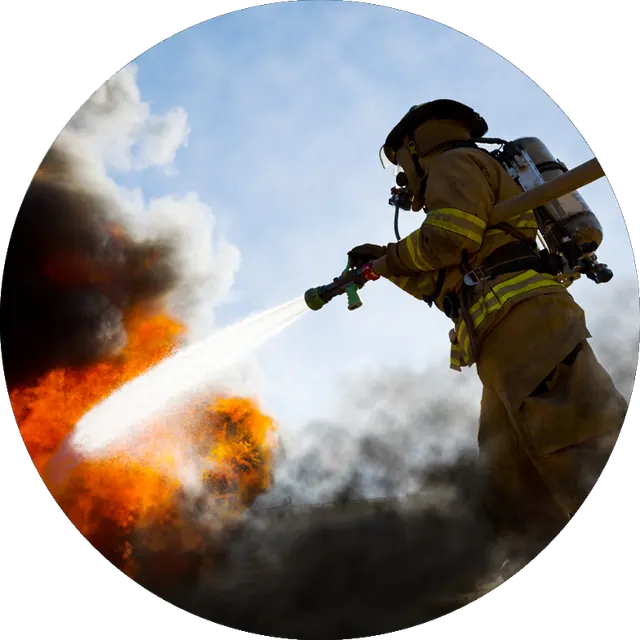
Emergency services answer every call. Sleep shapes how they answer it.
Police, fire and ambulance crews work 24/7 rosters, extended shifts and unpredictable call-outs. Fatigue impairs decisions under pressure and makes emergency driving and the drive home riskier.
Regulatory change that affects how you manage fatigue in emergency services: what has changed in the last 12 months, and what is on the way.
Recent changeFrom 6 April 2026
Applies across industries in the United Kingdom
In Great Britain, from 6 Apr 2026 sick pay is due from the first day of sickness and you must keep holiday records for 6 years; from 1 Oct 2026 most tribunal claims can be brought up to 6 months after the event.
Upcoming changeExpected from 30 October 2026Within 12 months
From October 2026 (expected 30 Oct) you must take all reasonable steps to prevent sexual harassment of staff, including by customers and other third parties. From 1 Jan 2027 unfair dismissal protection starts after 6 months' service. Guaranteed hours and shift-notice rights for zero-hours workers are listed for 2027, timing to follow consultation.
Regulatory changes checked as at 1 October 2026.
Regulation
Who regulates it, and what they expect
Emergency services differ from the general UK position in two narrow ways. Working time law can be disapplied for the police and certain civil protection activities, but only where the characteristics peculiar to the service inevitably conflict with it - routine station, control room and administrative shifts stay covered, and the duty to manage fatigue is never switched off. Second, support is voluntary: policing's national wellbeing service runs a sleep and fatigue programme, and its 2026 survey found 56% regularly physically exhausted and 63% regularly working beyond contracted hours.
Regulated by
HSE
Logos identify the regulator and don’t imply endorsement.
Who regulates it
Police, fire and ambulance services follow the same safety rules as any UK employer, plus one carve-out and one voluntary programme. Hours rules can be set aside for police and civil protection work where operational demands make compliance impossible, like the armed forces exception. Policing has its own wellbeing body ('Oscar Kilo') running sleep and fatigue support. Firefighters' shifts are set via a national union agreement.
Your obligations
For the large majority of police, fire and ambulance work - everything short of genuine live operational necessity - the standard UK rules on 48-hour average weeks, daily and weekly rest, and rest breaks apply fully, as for any employer, and so does the safety regulator's expectation that fatigue be actively managed. Only where real operational necessity genuinely conflicts with those rules can they be set aside, and even then the duty to manage fatigue risk remains. Fire and rescue services separately operate under nationally agreed shift patterns. Police forces need not take up the voluntary wellbeing programme.
Consequences
Where the standard hours rules apply, which is most of the time for most staff, the consequences look exactly like the UK baseline - employment tribunal claims for missed rest, and safety-regulator enforcement action, including prosecution and cost-recovery charges, if fatigue isn't being properly managed. Where the genuine operational exception applies, those specific statutory hours claims aren't available, but the safety regulator's broader duty to manage fatigue risk still applies. A breach of firefighters' negotiated shift-pattern terms is handled as an industrial relations or contract issue rather than a statutory penalty.
Penalties
There is no fatigue-specific penalty for emergency services; exposure runs through general safety law. A prosecution is sentenced under the definitive guideline in force since 1 February 2016, which scales fines to turnover and leaves them unlimited in the Crown Court, with up to two years' imprisonment for individuals. Corporate manslaughter for a large organisation starts at £7.5m within a £4.8m to £20m range, and investigation time is recovered at £188 an hour.
On the record
No UK court, coroner, investigator or regulator has published a finding linking fatigue to an incident in emergency services. The duty to manage fatigue still sits within the general duties of the Health and Safety at Work etc. Act 1974.
Sources: Working Time Regulations 1998, regulation 18; R (Fire Brigades Union) v South Yorkshire Fire and Rescue Authority [2018] EWHC 1229 (Admin); College of Policing / Oscar Kilo National Police Workforce and Wellbeing Survey 2026; Fire and Rescue National Framework for England.
Fatigue-critical roles
Where fatigue matters most in emergency services
The roles where a fatigued worker is most likely to cause serious harm, the tasks that carry the risk, and why fatigue builds up in them.
Role
Risk
High-risk tasks
Why fatigue builds
Paramedic (HCPC registered) / emergency medical technicianRules
Regulatory designation
Registered paramedic (Health and Care Professions Order 2001); night worker (WTR 1998 reg 2)
Hours and rest
WTR 1998: 48 h average, 11 h daily rest, reg 7 night health assessment - relieved only on genuine operational conflict
Critical risk
Driving under lights and sirens; drug calculations and airway management at 03:00; end-of-shift jobs and long hospital handovers
10-14 h night shifts, late finishes from end-of-shift jobs, 24 h shifts in some services, hospital ramping
Firefighter (wholetime)Rules
Regulatory designation
None specific - general duty (HSWA s 2); night worker (WTR 1998 reg 2); reg 18(2)(a) carve-out only where operations inevitably conflict
Hours and rest
WTR 1998 with civil-protection carve-out only on operational conflict; Grey Book shift systems (contractual)
Critical risk
Driving appliances under emergency conditions straight from sleep; fireground command and breathing-apparatus entry at night; prolonged incidents
10 h day / 14 h night or 24 h shifts, sleep broken by night call-outs, overtime recalls
Police constableRules
Regulatory designation
Holder of the office of constable; WTR applies with reg 18(2)(a) operational carve-out
Hours and rest
WTR 1998: 48 h average, 11 h daily rest, reg 7 night health assessment - relieved only on genuine operational conflict
Critical risk
Pursuit and emergency driving at night; use-of-force and firearms decisions late in a shift; court attendance after night shifts
Rotating 24/7 shifts, forced overtime and recalls, court on rest days, long incidents
On-call (retained) firefighterRules
Regulatory designation
On-call firefighter (Grey Book); worker under WTR 1998
Hours and rest
WTR 1998: 48 h average, 11 h daily rest, reg 7 night health assessment - relieved only on genuine operational conflict
Critical risk
Responding by pager from home or a primary job at night; driving to the station and the appliance; incidents on top of a full day's work
On-call cover on top of primary employment, night pager call-outs
Emergency call handler / dispatcher (999)Rules
Regulatory designation
None specific - general duty (HSWA s 2); night worker (WTR 1998 reg 2); reg 18(2)(a) carve-out only where operations inevitably conflict
Hours and rest
WTR 1998: 48 h average, 11 h daily rest, reg 7 night health assessment - relieved only on genuine operational conflict
High risk
Triaging emergency calls and dispatching resources overnight; address and location errors; managing surges and long-running incidents
12 h rotating shifts with nights, mandatory overtime from vacancies, monotony then surges
How the suite fits
How each product connects to your obligations
Grades describe how strongly a product connects to an obligation. None discharges an obligation, and none carries a compliance warranty.
Sleepfit
Supports a named obligation
Where your responders work nights, regulation 7 of the Working Time Regulations 1998 says you must offer a free health assessment before night work and at regular intervals, outside excluded emergency work. Sleepfit supports it. It screens; diagnosis stays with your clinicians.
No UK rule names a pre-duty fitness check for emergency services. Fatiguefit4Duty supports your general duty under s 2 of the Health and Safety at Work etc. Act 1974. A fitness-for-duty check, not a fitness-for-duty decision - the duty call stays with you.
Awareness eLearning supports the training you must give under s 2(2)(c) of the Health and Safety at Work etc. Act 1974 and regulation 13 of the 1999 Management Regulations with fatigue and sleep content. No UK rule names fatigue training for emergency services.
RIDDOR 2013 requires you to report and record specified incidents in emergency services but names no cause, and no fatigue review is required. Was It Fatigue? supports your own investigation. A structured judgement aid, not a determination of cause.
No UK rule reaches sleep in new-parent households in emergency services. SleepWellBaby supports your working parents through the most disrupted period of their own sleep; it is offered as a wellbeing benefit, not a compliance step.
Working Time Regulations 1998 reg 7 requires a free health assessment for your night responders; Sleepfit screening supports it. Fatiguefit4Duty adds a pre-shift check under HSWA 1974 s 2 and Awareness eLearning trains. Fatigue Lifecycle adds incident review beyond RIDDOR.
See what sleep and fatigue mean for your emergency services workforce.
Tell us roughly how many people you employ. Your snapshot models how many are likely sleeping poorly and what it costs, from published research for emergency services. Then choose who you’d cover, and we’ll take you to the right next step.